







Regarding platform steel grating, this article explains in turn what platform steel grating is, its application scope and engineering fields, and its installation and construction, providing actionable criteria rather than theory alone. If you have drawings or site dimensions on hand, check each point against them; the same order applies to galvanized grating.
What is platform steel grating
Below we first briefly explain the relevant concepts and basic construction to make the following parameters and sizing content easier to understand.
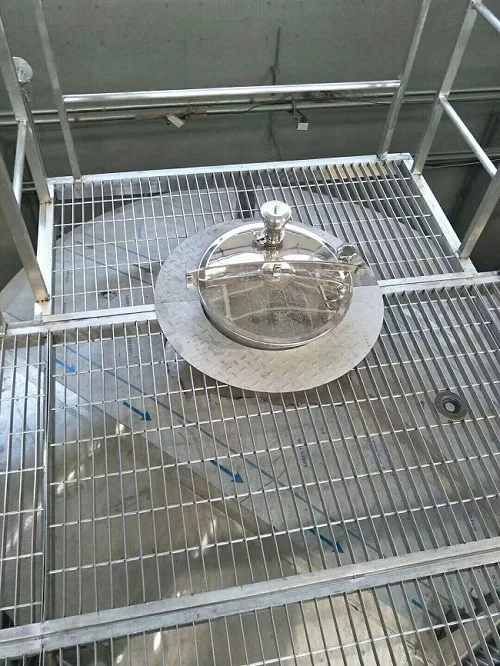
What is the fall protection standard for platform steel grating? Platform steel grating serves large multi-level industrial platforms, such as offshore oil production platforms and power plant desulfurization and denitrification platforms. If a heavy object falls from above while people are working below, it will certainly injure them, so fall protection must be considered in the design of platform steel grating.
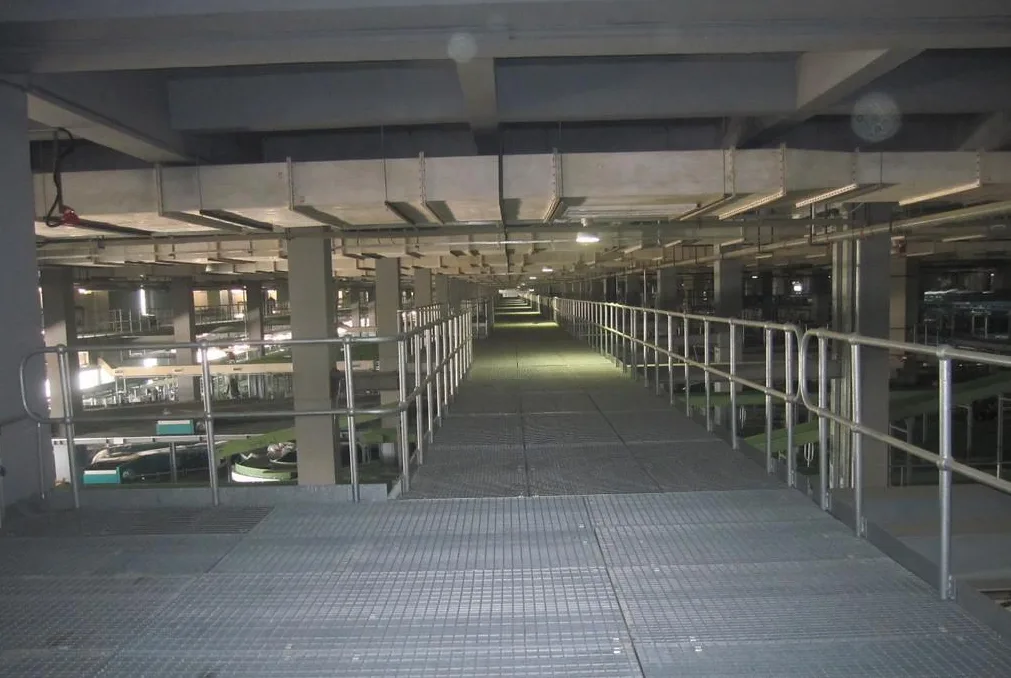
Once you grasp these basic concepts, the specifications and sizing recommendations that follow will be much easier to understand.
The most easily overlooked items in a spec sheet are tolerances and end treatment. Platform steel grating usually has machining allowance along its length; for recessed installation, banding and corner-cut requirements should be stated in advance. Galvanized grating is handled similarly in these details, so mark them clearly on the drawings.
Scope of Application & Engineering Fields
Main applications are as follows:
To prevent objects from falling through the mesh openings of trench cover and platform steel grating, the aperture of the platform grating must be reduced; how far depends on the situation.
1. To prevent objects from falling through platform steel grating, no gap larger than the mesh opening should be left anywhere on the grating. The clear opening pitch of platform stainless steel grating must not allow a 35mm sphere to pass through.
2. Areas with foot traffic are subject to stricter requirements. On galvanized steel grating platforms where people pass, the clear opening pitch must not allow a sphere larger than 20mm in diameter to pass through; otherwise the platform grating must be modified, for example by adding steel plate on top to form compound steel grating.
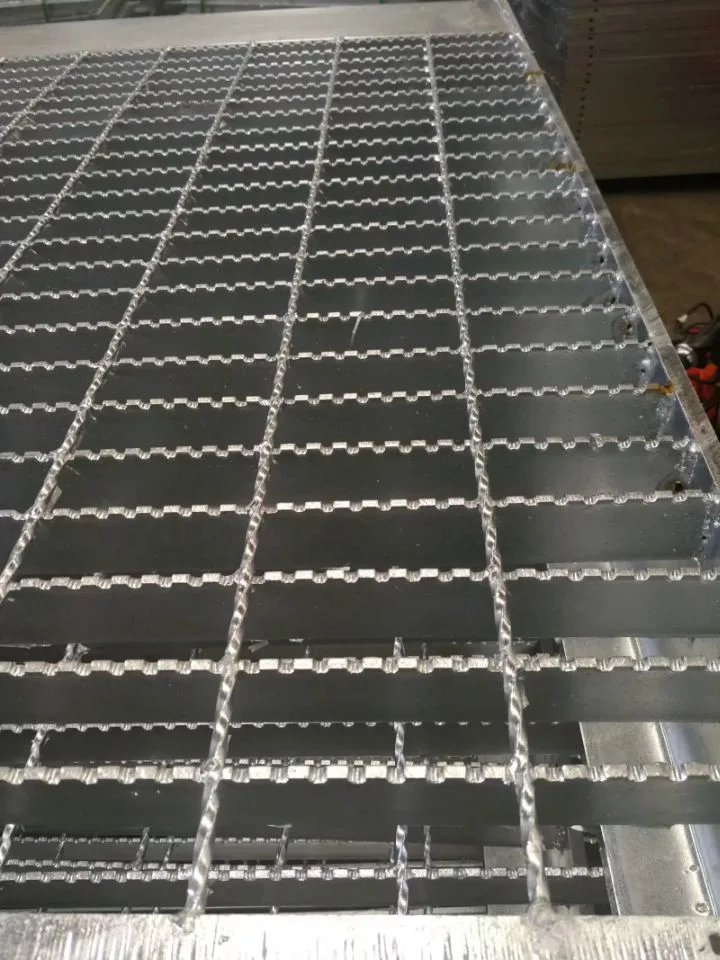
If your working conditions fall outside the above range, you can provide site photos and dimensions, and our technicians will help assess them.
When selecting material, do not simply chase the highest grade. The material of platform steel grating should match the load requirements and service environment; over-specifying adds unnecessary cost. See the products page for the corresponding treatment of hot-dip galvanized steel grating, and choose according to actual conditions.
Installation and construction key points of platform steel grating
On-site construction generally follows the steps and technical requirements below; complete the technical disclosure before starting work:
3. To reduce the risk of falling objects, weld the grating in place during installation, since welding is more secure than installation clips. Platform steel grating mounted on steel structures must not move laterally or detach from the supporting frame after installation, and the bearing bars must rest on the supports for at least 25mm at each end.
If platform steel grating needs to be removable, it must be fixed with dedicated installation clips to prevent the grating from shifting.
Installation clips are supplied by the manufacturer; carbon steel clips must be hot-dip galvanized, and the clip surface should also be hot-dip galvanized. Bolt diameter must not be less than 8mm, and each piece of platform steel grating must use at least 4 clips.
After installation, check each panel's fixing points and flatness; put into use only after confirming no warping or looseness.
For the installation sequence, lay out first and fix later; avoid adjusting while laying. Once the layout drawing of platform steel grating is confirmed, avoid cutting on site wherever possible. If adjustment is needed, the fixing and banding details of hot-dip galvanized steel grating should be adjusted accordingly to avoid leaving loose spots.
Further reading: Sizing reference for galvanized grating and hot-dip galvanized steel grating
Galvanized grating and hot-dip galvanized steel grating are different specification forms within the same product system. The selection logic is the same as described in this article: first the usage type, then span and load to determine specifications, and finally the environment to determine surface treatment. Their corrosion protection and anti-slip requirements may differ; state them separately when ordering rather than writing one general technical requirement.
- For all product specifications and theoretical weights by series, visit Steel Grating Product Center
- To estimate cost by size and quantity, use Instant Quote PageSubmit Requirements
- To see how similar projects were executed, refer to Project Cases field applications
FAQ
Where can I find specific specifications?
our websiteProductsCommon specifications and theoretical weights are organized by series, also available in Instant Quote PageEstimate by size, or contact us directly for sizing advice.
What is most often overlooked during installation and acceptance?
First, bearing bars installed in the wrong direction reduce load capacity; second, insufficient fixing points or missing zinc touch-up paint; third, support beam spacing inconsistent with the layout drawing. These three items are most often overlooked on site.
Why do different manufacturers quote different weights for the same specifications?
The main difference lies in the actual measured thickness and tolerance control of the bearing bars. When bars are supplied at the lower tolerance limit, weight per unit area falls below the theoretical value, and load capacity drops accordingly. We recommend specifying thickness tolerance clearly when purchasing.
The above is for sizing and construction reference. To verify specific parameters or request a quotation, please visitInstant Quote Page, or contact our technical staff.
If you already have drawings or site dimensions, submit them directly and we will help verify specifications and layout, avoiding on-site cutting and rework caused by mismatched models. Without drawings, site photos and approximate dimensions are enough for an estimate.