
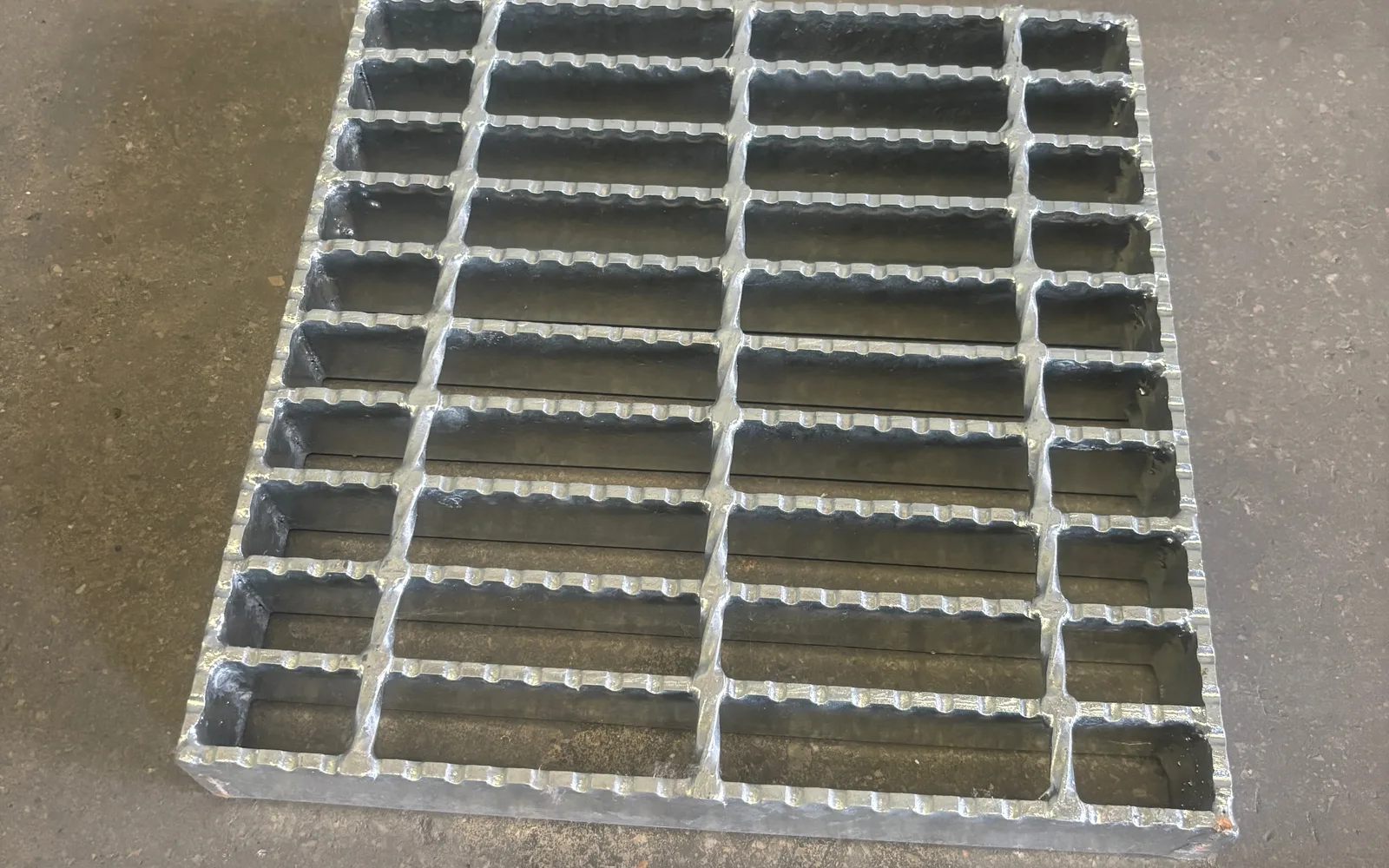
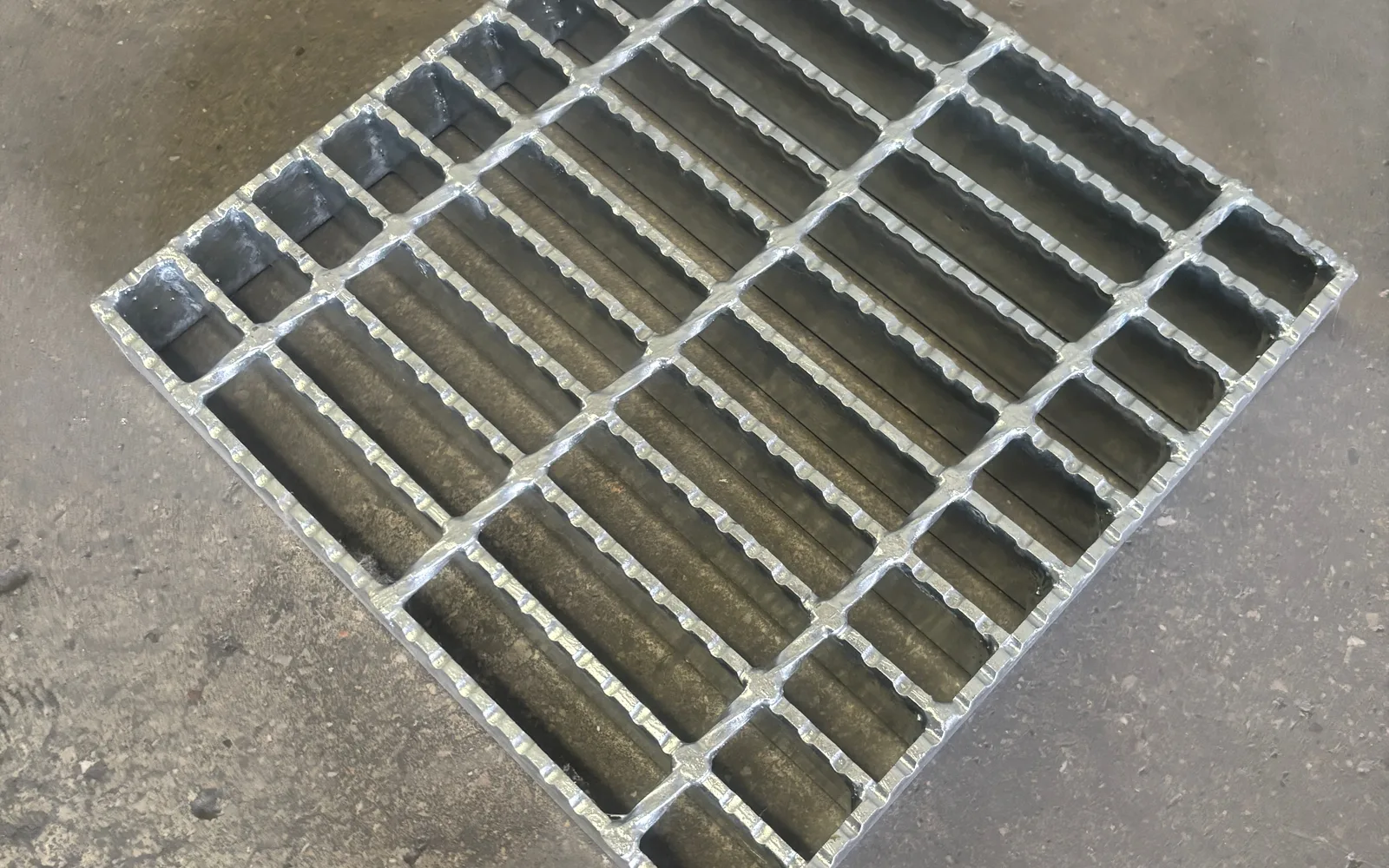
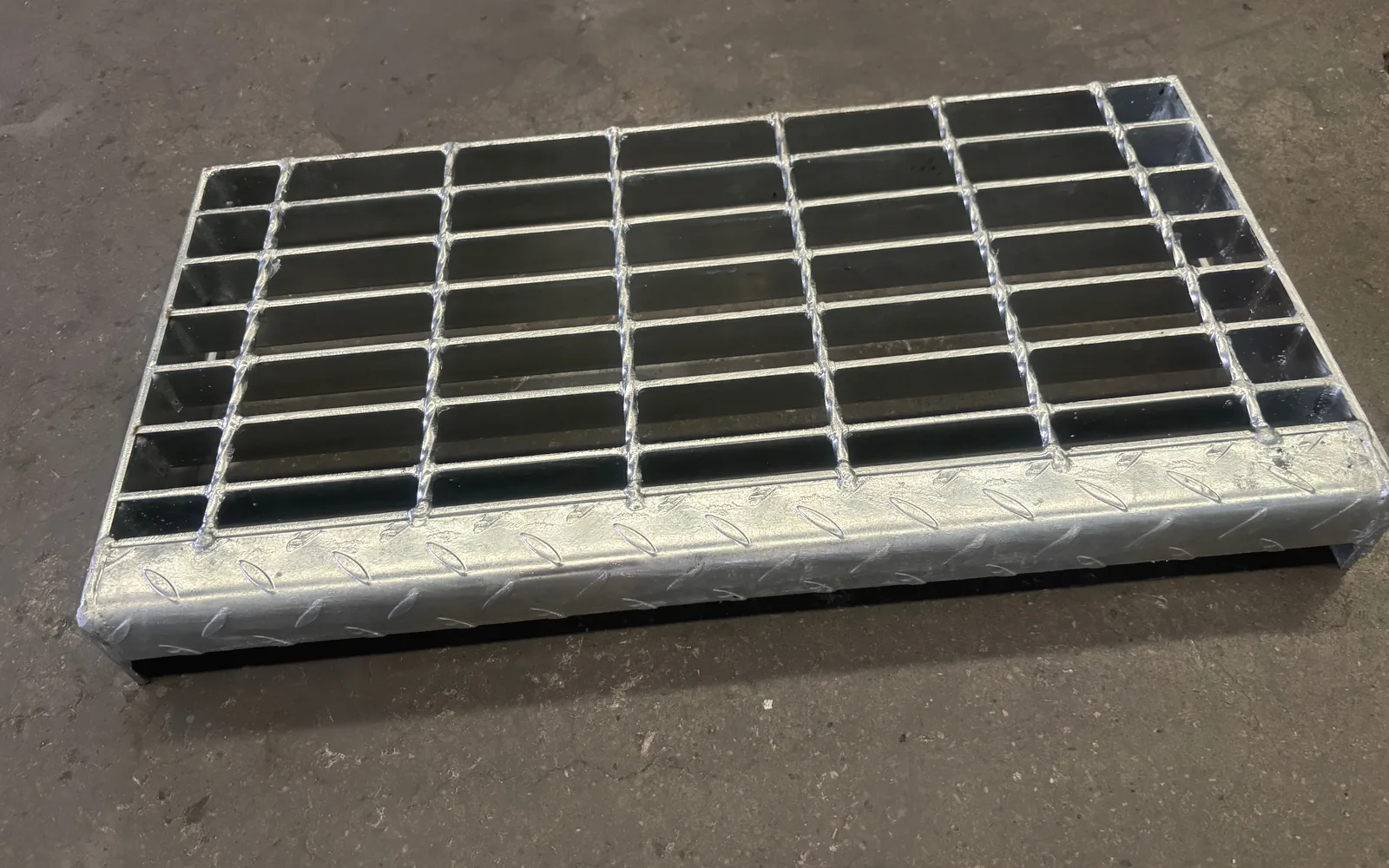




Stair treads in stock are custom-made to actual stair dimensions, and more data must be collected before ordering than for platform panels. This page lists stringer spacing, step count, anti-slip options and end treatments, and points out common omissions to help you submit an accurate list in one go.
Items to Confirm When Selecting Stair Treads in Stock
This page does not list a fixed specification table, as such products are usually custom-fabricated to site conditions. We recommend confirming each item in the table above before inquiry: once mismatched with actual site conditions, refabrication is often required later.ProductsCommon specifications are organized by series for reference.
| Items to Confirm | What Needs to Be Clarified | Common Practices |
|---|---|---|
| Tread Dimensions | Width and length, whether end plates are included | Determine by actual stair dimensions |
| Anti-Slip Type | Serrated bearing bars or anti-slip raised patterns | Required for oily, wet or outdoor environments |
| Connection Method | Welded to stringers or bolted | Determine by on-site construction conditions |
| Quantity Summary | Number of steps and matching side plates | Count by actual number of steps and reserve spares |
| Anti-Corrosion Requirements | Indoor or outdoor use | Hot-dip galvanizing recommended for outdoor and humid environments |
| End Treatment | Whether banding and anti-slip nosing are needed | End banding and anti-slip nosing recommended |
What Are Stair Treads
Stair treads are a specification form within the steel grating product series, with corresponding standards for structure, materials and processing. Understanding their basic definition and forming principle is the prerequisite for checking parameters and judging suitability, as explained below.
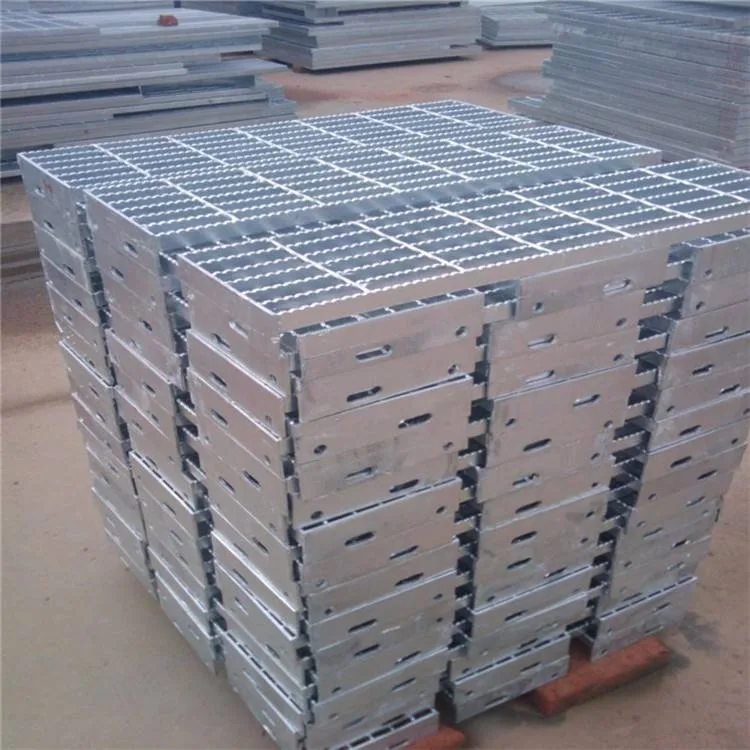
Steel stair treads are made from steel grating (steel grating is made by arranging flat bearing bars at a set pitch with cross bars and welding them into a steel product with square openings). The surface is generally treated with hot-dip galvanizing or electro-galvanizing.
Once you grasp these basic concepts, the specifications and sizing recommendations that follow will be much easier to understand.
Common Models and Dimensions of Stair Treads
Specifications are the most frequently checked items in selection. The common models, pitch combinations and corresponding unit weights of stair treads are summarized below as a technical basis for procurement and production scheduling:
Stair tread tolerances: width W ±3mm, length L -3mm. The protection plate is 65mm × 5mm, nosing cut only when required by the customer; special specifications can be custom-made. The edge trimming plates on both sides are welded to each bearing bar with single-side welds of not less than 3mm fillet weld.
The above are common specifications; actual ordered dimensions and tolerance requirements shall be confirmed against the layout drawing.
Types of Steel Stair Treads
Stair treads can be classified by processing method and use. Determine the category first, then check specific parameters:
(1) By installation method: welded stair treads and bolt-fixed stair treads. Welded stair treads are steel grating itself, while bolt-fixed stair treads require 65X5mm flat bars added as side plates.
(2) By anti-slip requirement: treads with front nosing (checkered plate or bar steel) and treads without nosing. T325/30/100 (suitable for tread widths greater than 215mm and not greater than 305mm), T255/30/100 (suitable for tread widths greater than 215mm and not greater than 305mm).
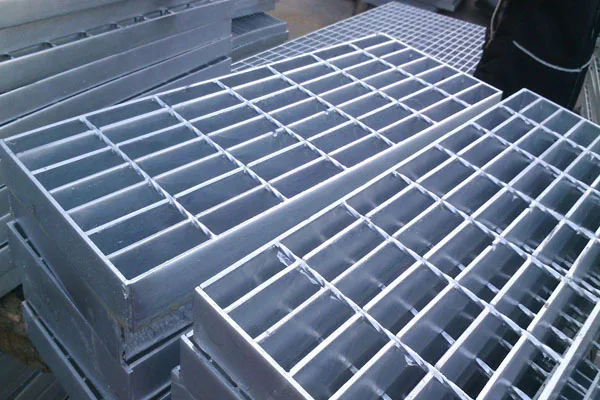
Determine the category first and then the specific model; this saves detours and makes comparison with other materials easier.
Selection Points for Stair Treads in Stock
Confirm each item in the order below during selection to avoid most later rework. Record the conclusion of each step and submit it with your inquiry:
- Step 1 · Confirm Stair Stringer Spacing and Tread Width: The actual load-bearing length of the tread depends on stringer spacing; the width can be set per common traffic requirements.
- Step 2 · Confirm Anti-Slip Requirements: For stairs with oil, standing water or outdoor exposure, serrated bearing bars or anti-slip raised surfaces are recommended.
- Step 3 · Confirm End Connection Method: Including the welded or bolted connection form with stringers, and whether banding and end closure plates are needed.
- Step 4 · Confirm Quantities and Accessories: Count by the actual number of steps, and check whether anti-slip nosings, side plates and fasteners are needed.
Once the above conditions are confirmed, proceed to Instant Quote PageEstimate quantities by dimensions, or send the condition list to customer service for model recommendations from our technicians.
Applications of Steel Stair Treads
Stair treads are used across many industrial and municipal scenarios. The most typical applications are listed below to help you quickly judge suitability:
Steel stair treads are mainly used for industrial platforms, stair treads, handrails, walkway flooring, railway bridge walkways, elevated tower platforms, drainage trench covers, manhole covers, road grilles, multi-story parking, and fences for institutions, schools, factories, enterprises, sports grounds and garden villas; they can also be used for residential outer windows and balcony railings, and guardrails of highways and railways.
If your working conditions fall outside the above range, you can provide site photos and dimensions, and our technicians will help assess them.
Common Stair Tread Dimensions
T1 to T4, 30mm pitch: 125 155 185 215 245 275 305
T1 to T2, 40mm pitch: 125 165 205 245 285 325
T3 to T4, 40mm pitch: 115 155 195 235 275 315
T1 to T2, 60mm pitch: 185 245 305
T1 to T2, 60mm pitch: 155 215 275
For economy, modular widths are recommended (Series 1: 125, 155, 185, 215, 245, 275; Series 2: 125, 165, 205, 245, 275mm, etc.) with lengths in multiples of 100mm (e.g., 500, 600, 700, 800, 900, 1000, 1200mm).
Application Conditions Comparison for Stair Treads in Stock
The same specifications last very differently in different environments. The table below gives recommended practices by common service environment for your selection reference:
| Operating Environment | Recommended Practices | Note: |
|---|---|---|
| Indoor Dry Environments | Made of standard carbon steel with surface treatment as required | Focus on span and load; environmental impact is minimal |
| Outdoor and Open-Air Environments | Hot-dip galvanized surface treatment recommended | Check zinc coating integrity and re-zinc cut edges |
| Humid or Water Treatment Environments | Use a higher corrosion protection grade with matching fasteners | Regularly inspect fixing points and surface corrosion |
| Pedestrian and Maintenance Walkways | Choose standard series, balancing walking comfort | Focus on surface flatness and end banding |
| High-Temperature or Large Temperature-Difference Environments | Select material and connection method by temperature | Watch for loosening caused by thermal expansion and contraction |
| Temporary or Short-Term Use | Can be configured with the light-duty series | For short schedules, prioritize easy disassembly and turnover |
Custom Fabrication & Quotation
Before ordering, we recommend providing site photos, trench or platform dimensions and traffic requirements together, so we can give the model and layout plan in one go and reduce on-site cutting and rework. Common specifications are usually in stock; lead times for shaped parts and bulk orders depend on specification and quantity. For reference on similar projects, seeProject Cases; for a quotation, go directly to Instant Quote Page.
FAQ
Which surface treatment should I choose?
Hot-dip galvanizing is recommended for outdoor or humid environments; for dry indoor environments, untreated or painted is fine; coastal, chemical and other strongly corrosive environments need thicker zinc coatings or stainless steel, depending on the expected service life.
Can it be custom-made to site dimensions?
Yes. Bearing bar specs, pitch, panel dimensions and banding forms can all be custom-made to drawings; cutouts, corner notches and shaped cutting are also supported. For bulk orders, a layout drawing can be confirmed before production.
How Is the Price of Stair Treads Calculated?
Usually calculated as the theoretical weight for the model times the material unit price, plus hot-dip galvanizing or other surface treatment costs, and fluctuating with steel and zinc prices. You canInstant Quote PageEnter specifications and dimensions for a quick estimate.
The above are the common parameters and application scenarios of stair treads. Models vary greatly with span and load, so we recommendInstant Quote PageEnter actual dimensions for an estimate, or contact customer service to confirm the final selection.