
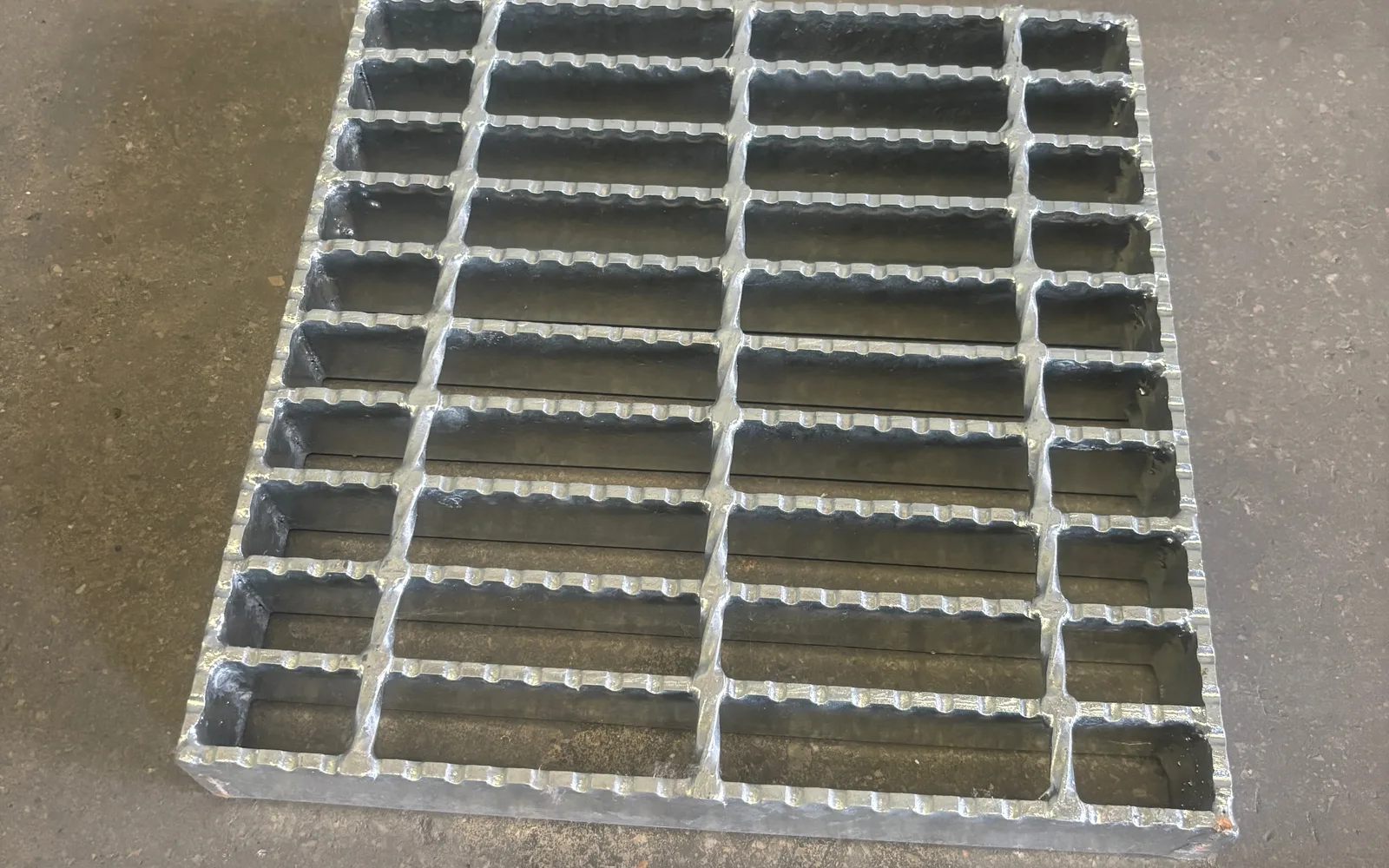
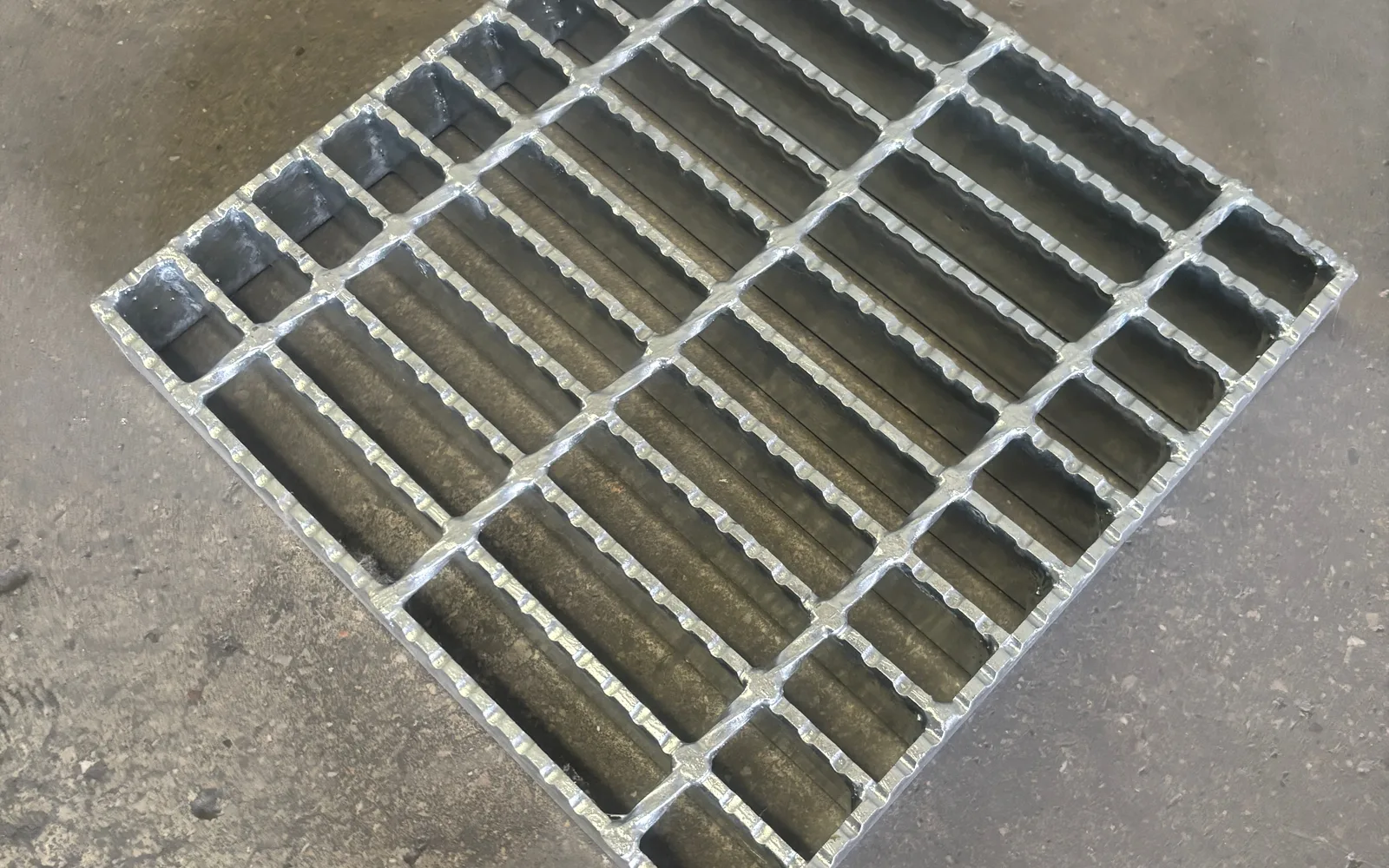
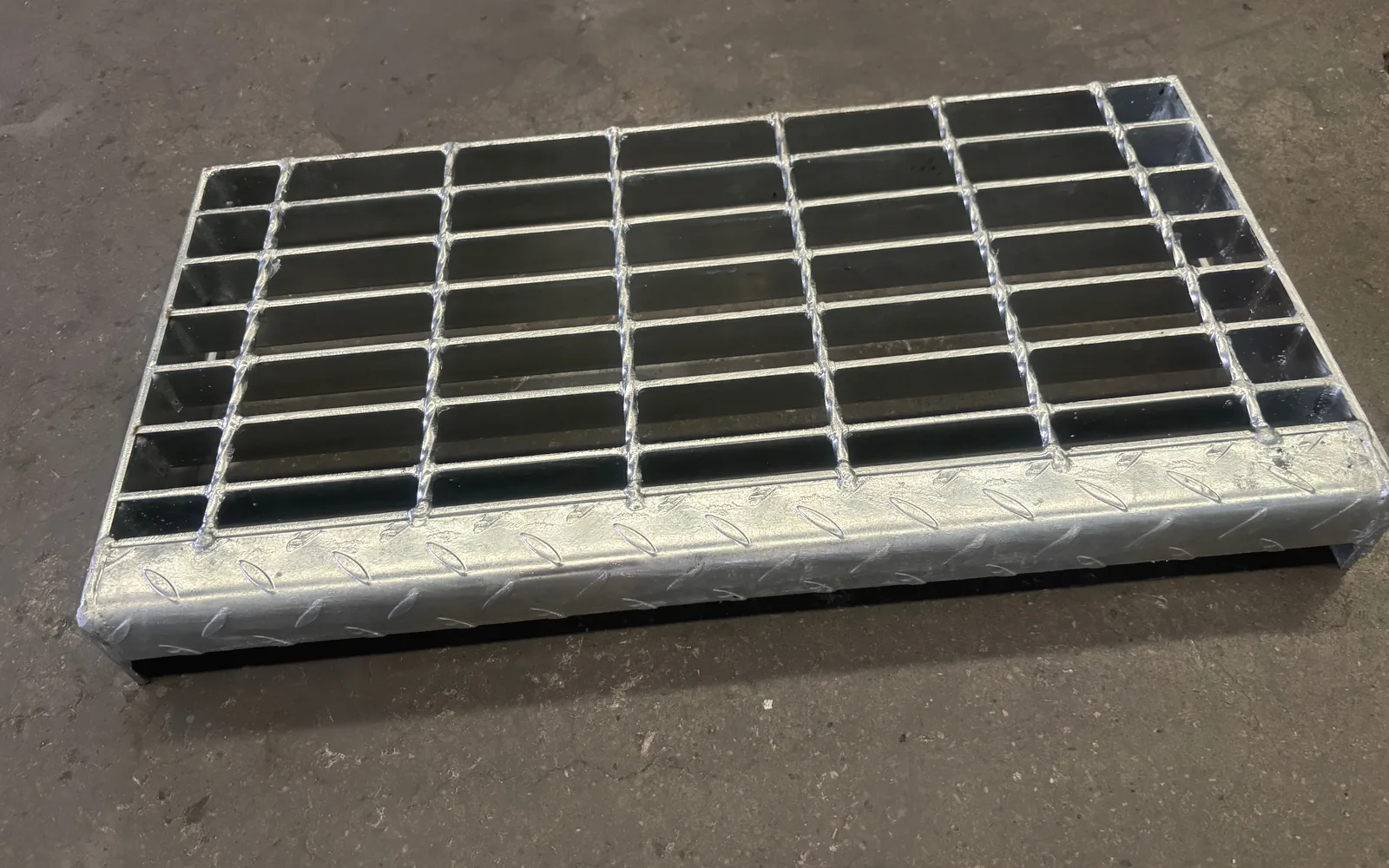




Hot-dip galvanized steel grating is one of the most widely used steel grating products in industrial and municipal engineering, and hot-dip galvanized steel grating is the common name for its companion or same-series products. This page covers specification reading, material and surface treatment, applicable conditions, installation and fixing, customization and quotation item by item. If you already have drawings or site dimensions, you can check them directly against the items here, or go toInstant Quote Page to estimate quantities.
Items to Confirm When Selecting Hot-Dip Galvanized Steel Grating
This page does not list a fixed specification table, as such products are usually custom-fabricated to site conditions. We recommend confirming each item in the table above before inquiry: once mismatched with actual site conditions, refabrication is often required later.ProductsCommon specifications are organized by series for reference.
| Items to Confirm | What Needs to Be Clarified | Common Practices |
|---|---|---|
| Service Load | Pedestrian, maintenance access or vehicle traffic | Verify by actual traffic type |
| Material Requirements | Carbon steel or stainless steel, grade requirements | Determine by corrosion grade of service environment |
| Surface Treatment | Hot-dip galvanized, painted, or untreated | Hot-dip galvanizing recommended for outdoor and humid environments |
| End Treatment | Whether banding or end plates are needed | Banding recommended for open edges |
| Acceptance Requirements | Acceptance Criteria for Flatness, Tolerances and Appearance | Recommended to specify in the technical agreement |
| Packaging & Shipping | Whether packing and moisture protection are needed | Packing and cushioning recommended for long-distance shipping |
Hot-Dip Galvanized Steel Grating
Material and surface treatment are the core factors determining the service life of hot-dip galvanized steel grating. Common material grades, surface treatment processes and their applicable environments are as follows:
Hot-dip galvanized steel grating is also called hot-dip galvanized steel grating. Grating is a steel product made by arranging flat bearing bars and cross bars at set intervals in a cross pattern and welding them into a square grid. Steel grating is generally made of carbon steel and hot-dip galvanized on the surface to prevent oxidation; stainless steel can also be used. As a new material and product, steel grating is being used ever more widely, and its many superior properties and good cost-performance show strong application prospects.
Once material and surface treatment are decided, we recommend writing zinc coating thickness and appearance requirements into the technical agreement.
Features of Hot-Dip Galvanized Grating
The main performance features of hot-dip galvanized steel grating can be summarized as follows, for checking item by item during scheme comparison and technical briefings:
- Toe plates (kick plates), checkered plate guards and mounting connectors can be welded around the edges as accessories.
- Banding can use flat bars of a different size from the bearing bars, or angle steel, channel steel, square tubes, etc.
- Handles and hinges can be installed on platform steel grating that needs frequent moving or opening.
- The banding weld standard for platform steel grating is: Series 1, one weld every five bars; Series 2, one weld every four bars; Series 3, one weld every three bars. The weld is a single-side fillet weld of not less than 3mm, with a weld length of 20mm.
Overall, selection should weigh span, load and service environment together.
Hot-Dip Galvanized Steel Grating Specifications
The most frequently checked item in selection is the specification parameters. Common models, pitch combinations and corresponding unit weights of hot-dip galvanized steel grating are listed below as a technical basis for procurement and production scheduling:
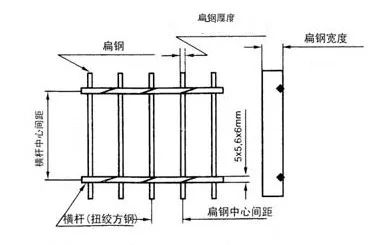
Bearing bar pitch: 30, 40, 60mm, etc.; recommended: 30, 40mm.
Cross bar pitch: 30, 38, 50, 76, 100mm; 50 and 100mm are recommended.
Dimensions: commonly 6x6mm twisted square bars; small-size galvanized steel grating uses 5X5mm twisted square bars; stainless steel commonly uses 5mm round bars.
Bearing bar pitch: the center distance between two adjacent bearing bars, commonly 30mm or 40mm.
Cross bar pitch: the center distance between two adjacent cross bars is usually 50mm or 100mm; other pitches can be produced on request.
The above are common specifications; actual ordered dimensions and tolerance requirements shall be confirmed against the layout drawing.
Types of Hot-Dip Galvanized Steel Grating
Material and surface treatment are the core factors determining the service life of hot-dip galvanized steel grating. Common material grades, surface treatment processes and their applicable environments are as follows:
Once material and surface treatment are decided, we recommend writing zinc coating thickness and appearance requirements into the technical agreement.
Depending on bearing bar type, hot-dip galvanized steel grating is mainly divided into the following three types
| Component | Material and Specifications |
|---|---|
| Flat Type | Plain hot-dip galvanized steel grating is the most widely used hot-dip galvanized steel grating, mainly for platforms, walkways, various trench covers and stair treads. |
| Serrated | Compared with plain hot-dip galvanized steel grating, serrated galvanized steel grating provides better anti-slip performance. |
| I-Shape | Compared with plain hot-dip galvanized steel grating, I-type bar steel grating offers lighter weight and better economy without significantly reducing load capacity. |
Selection Points for Hot-Dip Galvanized Steel Grating
Confirm each item in the order below during selection to avoid most later rework. Record the conclusion of each step and submit it with your inquiry:
- Step 1 · Define Span and Support Conditions: First measure the clear span between support beams, then confirm the support surface width is sufficient; these two items determine the usable series range.
- Step 2 · Verify Service Load: Check separately for pedestrian, maintenance or vehicular traffic; maintenance and vehicular use differ greatly in bearing bar requirements.
- Step 3 · Determine Material and Surface Treatment: Ordinary carbon steel works for dry indoor environments; hot-dip galvanizing is recommended for outdoor or humid environments; chemical and coastal environments need separate confirmation.
- Step 4 · Confirm Shape and Fixing Method: Including whether cutouts, corner notches and banding are needed, and whether to use welded fixing or special clips.
Once the above conditions are confirmed, proceed to Instant Quote PageEstimate quantities by dimensions, or send the condition list to customer service for model recommendations from our technicians.
Applications of Hot-Dip Galvanized Steel Grating
Widely used for platforms, walkways, trestles, trench covers, manhole covers, ladders and fences in petrochemical, power, tap water, sewage treatment, port terminals, architectural decoration, shipbuilding, self-propelled parking, municipal engineering and environmental sanitation.
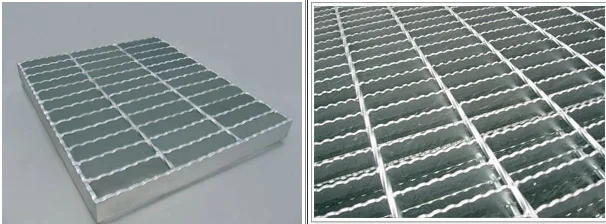
Applicable Conditions for Hot-Dip Galvanized Steel Grating
The same specifications last very differently in different environments. The table below gives recommended practices by common service environment for your selection reference:
| Operating Environment | Recommended Practices | Note: |
|---|---|---|
| Indoor Dry Environments | Made of standard carbon steel with surface treatment as required | Focus on span and load; environmental impact is minimal |
| Outdoor and Open-Air Environments | Hot-dip galvanized surface treatment recommended | Check zinc coating integrity and re-zinc cut edges |
| Chemical or Coastal Environments | Confirm material and anti-corrosion scheme per medium | Avoid galvanic corrosion from direct contact between different metals |
| Pedestrian and Maintenance Walkways | Choose standard series, balancing walking comfort | Focus on surface flatness and end banding |
| High-Temperature or Large Temperature-Difference Environments | Select material and connection method by temperature | Watch for loosening caused by thermal expansion and contraction |
| Temporary or Short-Term Use | Can be configured with the light-duty series | For short schedules, prioritize easy disassembly and turnover |
Custom Fabrication & Quotation
Hot-dip galvanized steel grating supports made-to-drawing customization: overall dimensions, bearing bar size and pitch, banding form, cutouts and corner cuts can all be processed to site conditions; special-shaped parts and batch orders can be scheduled after a layout drawing is confirmed. To estimate quantities, you canInstant Quote PageTry a size-based estimate; for model recommendations, browse ProductsCompare with similar specifications, then confirm with our service team.
FAQ
What Are the Common Specifications of Hot-Dip Galvanized Steel Grating?
Common specifications are determined by combinations of bearing bar width and thickness, bearing bar pitch, and cross bar pitch; different combinations correspond to different load capacities and theoretical weights. Our Products section lists common models by series; you can also send span and load requirements to customer service for sizing help.
Can it be custom-made to site dimensions?
Yes. Bearing bar specs, pitch, panel dimensions and banding forms can all be custom-made to drawings; cutouts, corner notches and shaped cutting are also supported. For bulk orders, a layout drawing can be confirmed before production.
What mistakes are easy to make during installation?
Three main points: first, bearing bars installed in the wrong direction so loads are carried by cross bars; second, insufficient or missing fixing points; third, welding slag not removed and zinc-rich paint not reapplied after welding. These three cause the most on-site problems.
The above are the main specifications and selection points for hot-dip galvanized steel grating. If you need to determine a specific model by site span and load, you canInstant Quote PageQuick estimation, or contact customer service directly for sizing advice and layout drawings.