







Many projects focus only on price when purchasing hot-dip galvanized steel grating, ignoring specification matching and anti-corrosion requirements, which often leads to rework later. This article lists the conditions to confirm in order - performance features, material and anti-corrosion requirements, and basic concepts - and explains how to choose for common working conditions. The parts relating to hot-dip galvanized steel grating can be used directly as a technical briefing reference.
Performance Features of Hot-Dip Galvanized Steel Grating
Main features can be summarized as follows:
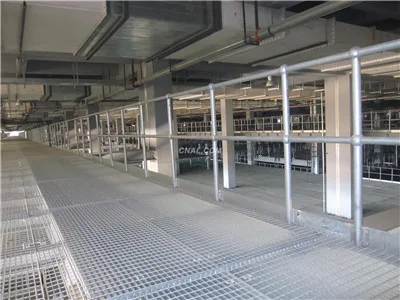
A car spray and baking booth built with hot-dip galvanized grating is of fully assembled construction, with custom glass wool wall panels: 0.6mm color-coated steel sheet inside and out, a frame and glass wool filled in the middle. It offers high strength, low thermal conductivity, strong flame retardance, excellent insulation and no deformation, with a total wall thickness of 60mm. Hot-dip galvanized grating is mainly laid at the bottom of the booth, where it provides high strength, flame retardance and dimensional stability. The 300mm-high support base is formed from quality galvanized sheet bent and assembled with steel structural beams, giving high strength, resistance to a certain impact and long service life.
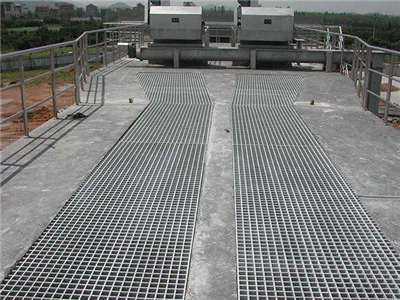
The booth floor is fully covered with electro-galvanized hot-dip galvanized grating, which supports the weight of the workpiece and allows paint mist to settle. The booth is trimmed with aluminum alloy framing all around, giving the whole spray booth an elegant, durable appearance. The main door is a traditional flat-panel design with 3 tempered glass observation windows for convenient monitoring of spraying work. The full floor grid of electro-galvanized grating also supports the workpiece weight while letting paint mist settle.
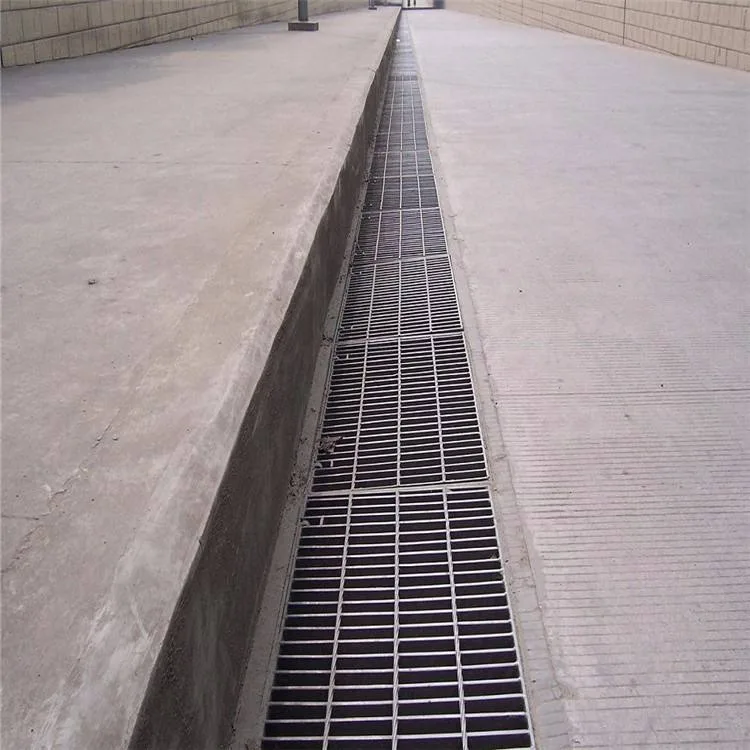
Overall, selection should weigh span, load and service environment together.
Regarding corrosion protection, one thing is easily overlooked: on-site cutting and welding damage the original coating, and these areas need zinc touch-up after construction, otherwise rust often starts from the cut edges. Hot-dip galvanized steel grating has the same issue; it is best to include this in the technical requirements at the construction disclosure.
Material and Anti-Corrosion Requirements
Common materials and surface treatments are as follows:
Cars are heavy, yet they sit naturally on hot-dip galvanized grating given its load capacity; paint mist falling on the grating surface does not accumulate, so the clean appearance is maintained and the whole painting process is made easier. Today hot-dip galvanized grating is used more and more widely: we take advantage of its high load capacity, heat resistance, long life, strong corrosion resistance and open mesh appearance to make work and production more convenient, and it has become a familiar sight wherever it appears.
Once material and surface treatment are decided, we recommend writing zinc coating thickness and appearance requirements into the technical agreement.
Choosing a surface treatment is essentially a trade-off between upfront cost and later maintenance. Requirements can be relaxed when hot-dip galvanized steel grating is used indoors in dry conditions, but should be raised outdoors or in damp environments. The same logic applies when selecting hot-dip galvanized steel grating.
Further Reading: Selection Points for Hot-Dip Galvanized Steel Grating
If a project uses hot-dip galvanized steel grating together with hot-dip galvanized steel grating, we recommend planning them on the same layout drawing. This way edge closing, fixing and cutouts at junctions can be handled uniformly, avoiding dimension conflicts during installation and making later maintenance easier.
- For all product specifications and theoretical weights by series, visit Steel Grating Product Center
- To estimate cost by size and quantity, use Instant Quote PageSubmit Requirements
- To see how similar projects were executed, refer to Project Cases field applications
FAQ
How to choose between hot-dip galvanizing and cold galvanizing?
The two anti-corrosion mechanisms differ: hot-dip galvanizing immerses steel in molten zinc to form a metallurgically bonded coating, thick and long-lasting, suitable for outdoor and humid environments; cold galvanizing is electrochemical deposition with a thinner, more uniform appearance, suitable for dry indoor environments or applications requiring high dimensional precision.
Where can I find specific specifications?
our websiteProductsCommon specifications and theoretical weights are organized by series, also available in Instant Quote PageEstimate by size, or contact us directly for sizing advice.
Why do different manufacturers quote different weights for the same specifications?
The main difference lies in the actual measured thickness and tolerance control of the bearing bars. When bars are supplied at the lower tolerance limit, weight per unit area falls below the theoretical value, and load capacity drops accordingly. We recommend specifying thickness tolerance clearly when purchasing.
The above is for sizing and construction reference. To verify specific parameters or request a quotation, please visitInstant Quote Page, or contact our technical staff.
The above is general guidance. For a specific project, we still recommend submitting span, load class and service environment to our technicians for review. Steel grating is a load-bearing component; rework caused by wrong specification choices costs far more than the time spent on upfront calculation.