
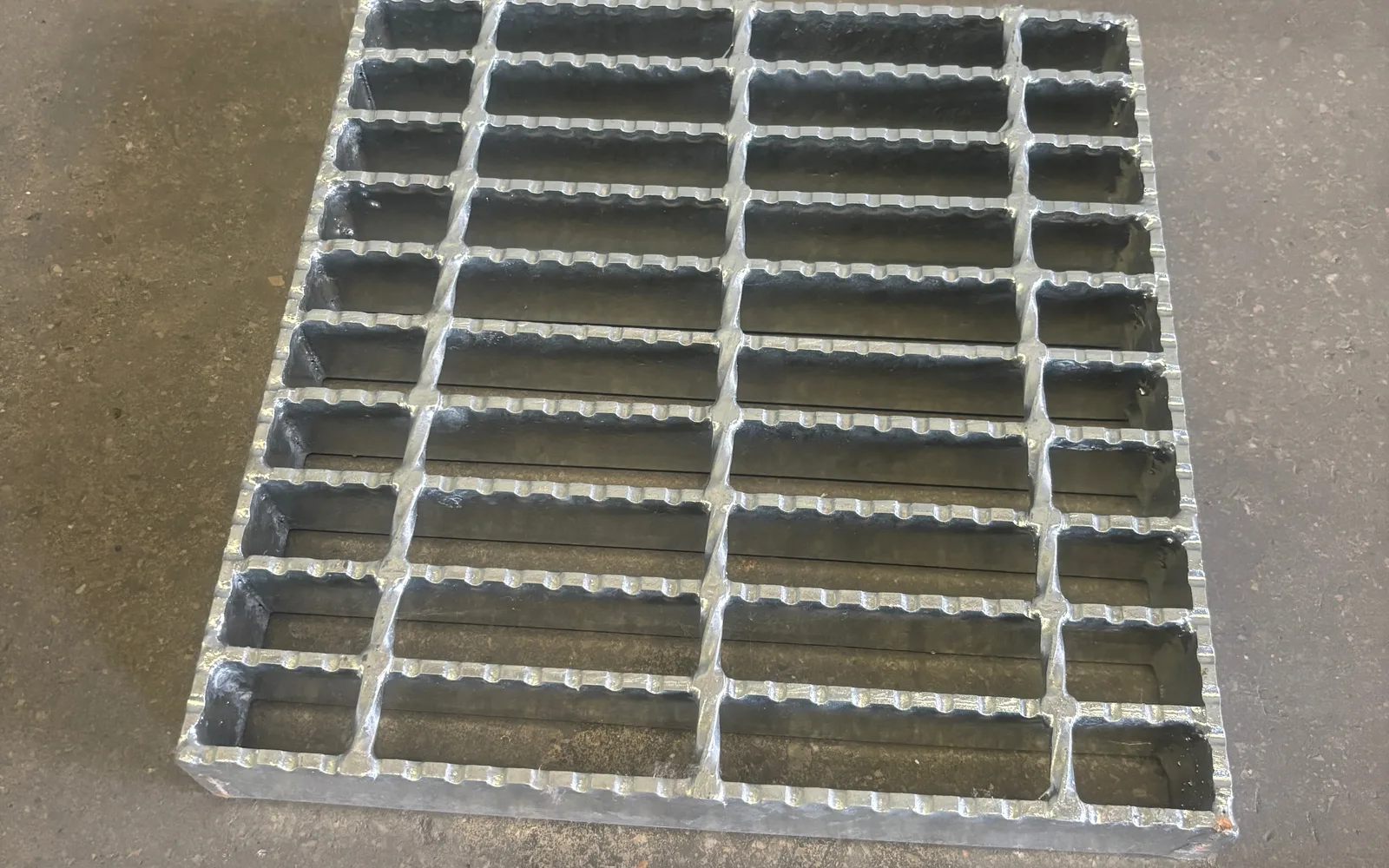
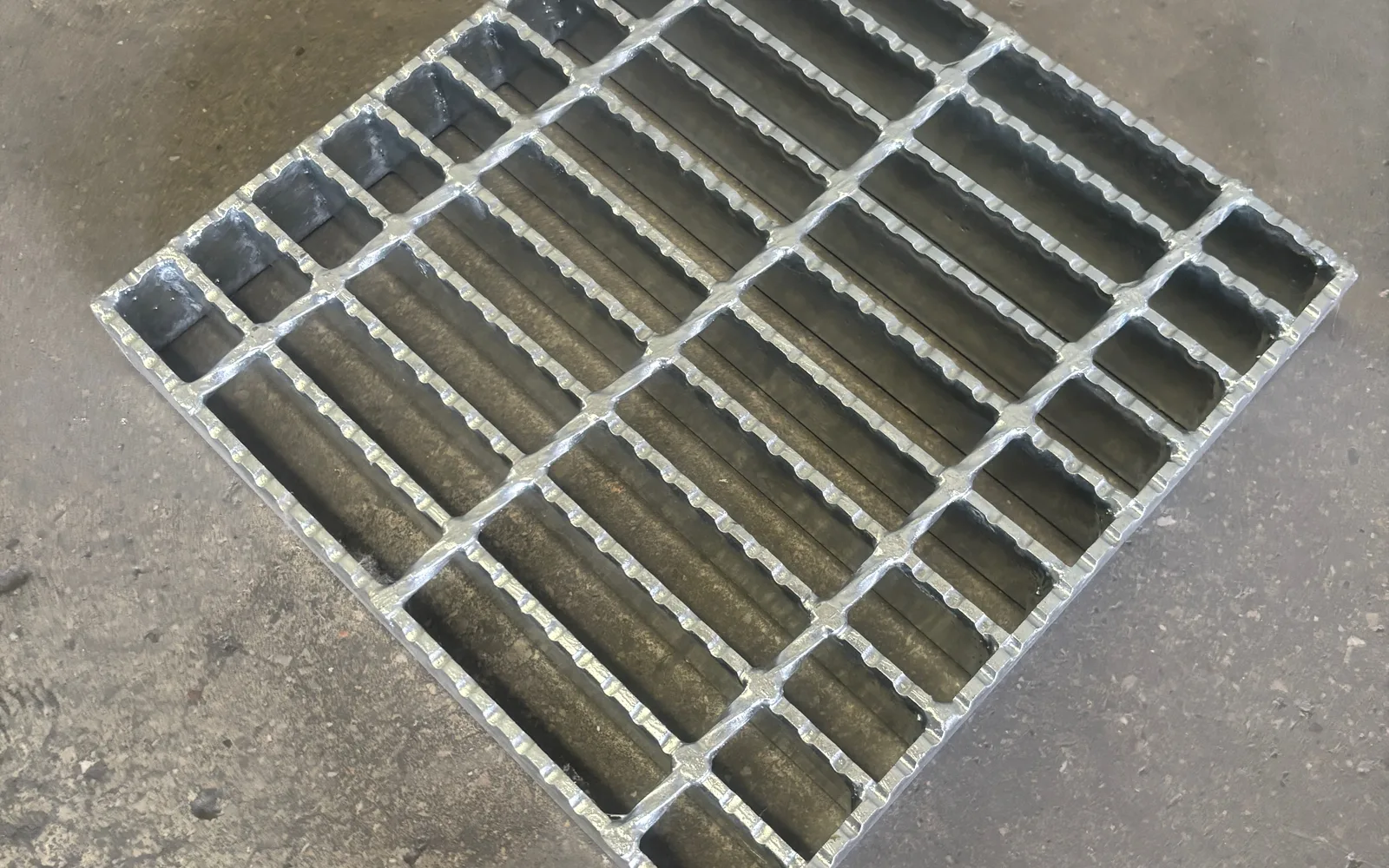
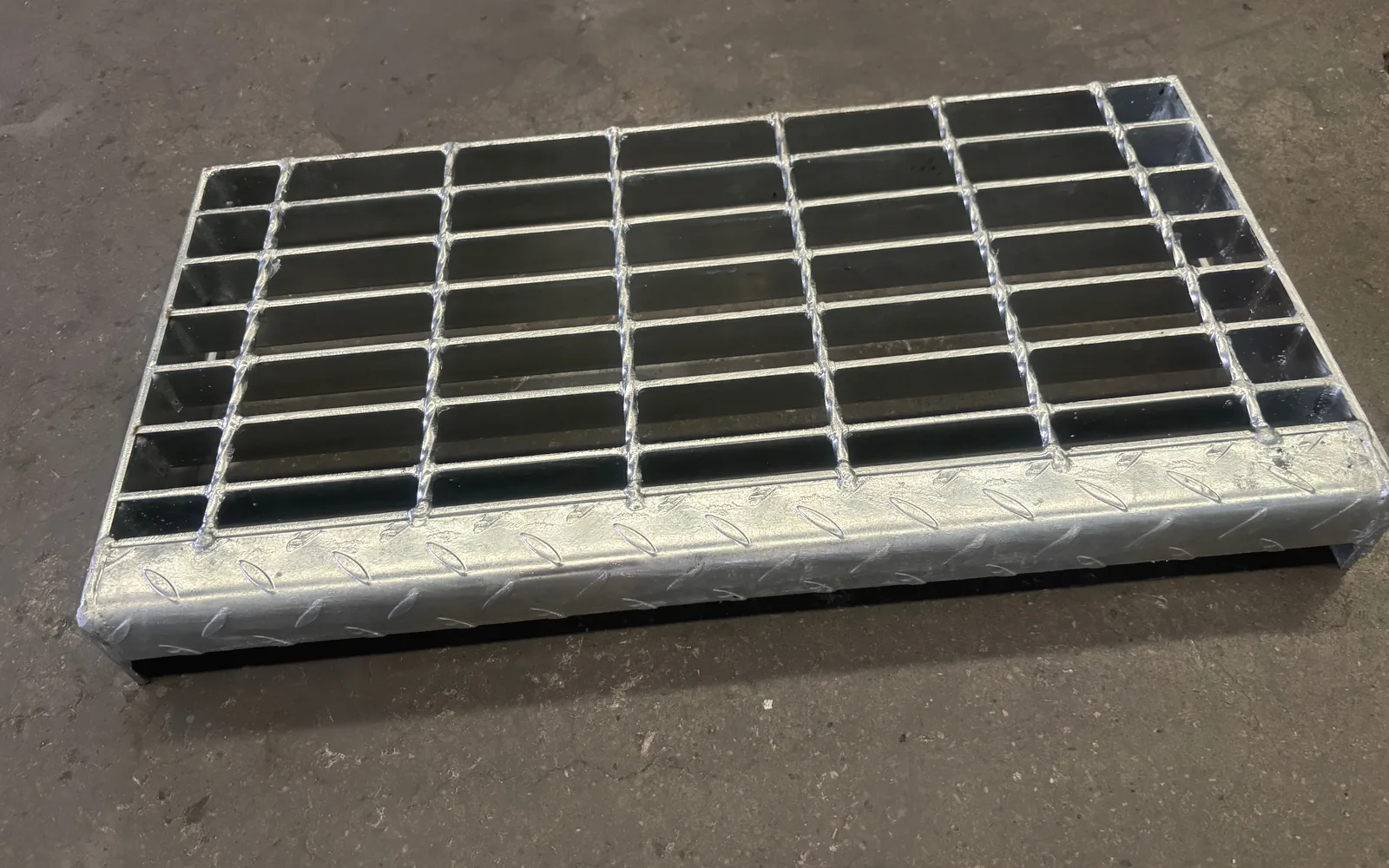




Walkway steel grating is a widely used steel grating product in recent years. It is the most widely used type across industrial sectors and offers the strongest resistance to surface impact; grating with a cross bar pitch of 50mm in particular has strong resistance to lateral impact. It is mainly used for platforms in factories, workshops, mines and ports. Attractive and easy to install, it is a new-generation building product.
The core of walkway steel grating selection comes down to span, load and environment: span determines the series, load determines flat bar size and pitch, and environment determines surface treatment. This page follows that order and explains common combinations of hot-dip galvanized steel grating in real projects, giving you a complete framework for evaluation.
Items to Confirm When Selecting Walkway Steel Grating
This page does not list a fixed specification table, as such products are usually custom-fabricated to site conditions. We recommend confirming each item in the table above before inquiry: once mismatched with actual site conditions, refabrication is often required later.ProductsCommon specifications are organized by series for reference.
| Items to Confirm | What Needs to Be Clarified | Common Practices |
|---|---|---|
| Span and Support | Clear span between support beams and support surface width | Determine by field-measured dimensions |
| Material Requirements | Carbon steel or stainless steel, grade requirements | Determine by corrosion grade of service environment |
| Surface Treatment | Hot-dip galvanized, painted, or untreated | Hot-dip galvanizing recommended for outdoor and humid environments |
| Fixing Method | Welded fixing or special clips | Removable covers recommended for positions requiring maintenance |
| End Treatment | Whether banding or end plates are needed | Banding recommended for open edges |
| Packaging & Shipping | Whether packing and moisture protection are needed | Packing and cushioning recommended for long-distance shipping |
Classification of Walkway Steel Grating
Walkway steel grating can be classified as follows by processing method and application. It is advisable to determine the category first, then check the specific parameters:
| Type | Features and Uses |
|---|---|
| By surface treatment, it can be divided into | hot-dip galvanized steel grating, cold galvanized steel grating, spray-painted steel grating and untreated steel grating (black plate). |
| By flat bar type, it can be divided into | serrated steel grating, I-bar steel grating and standard flat steel grating. |
| By special application, it can be divided into | compound steel grating, shaped steel grating, etc. |
Determine the category first and then the specific model; this saves detours and makes comparison with other materials easier.
Specifications of Walkway Steel Grating
Different specifications correspond to different load capacities and theoretical weights. Common specification parameters of walkway steel grating are shown in the table below; actual order dimensions and tolerance requirements are subject to confirmation of the layout drawing:
- Steel grating with a 30mm bearing bar pitch is the most widely used type in industry; among common steel grating series it offers the strongest resistance to surface impact.
- Steel grating with a 40mm bearing bar pitch is the most economical and lightweight type, and the ideal choice where spans are smallest.
- Steel grating with a 60mm bearing bar pitch and 50mm cross bar pitch was developed specifically for mining applications. It solves the problem of minerals splashing onto the panel surface, and is often specified for processing plants, transfer stations and crushing systems in the mining industry.
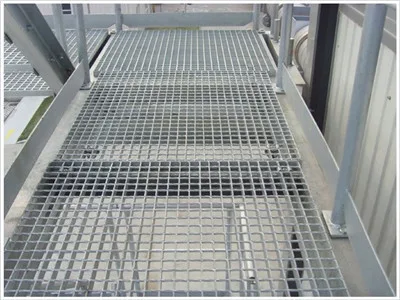
Walkway steel grating is suitable for alloy, building materials, power stations, boilers, shipbuilding, petrochemical, chemical, general factory buildings and municipal construction, and features ventilation and light transmission, slip resistance, high load capacity, an attractive and durable finish, easy cleaning and simple installation. Toe plates (edge guards), checkered plate guards and installation connectors can be welded around the perimeter. Edge banding can use flat bars of a different size from the bearing bars, or angle steel, channel steel and square tubes. Handles and hinges can also be fitted to grating panels that need to be moved or opened frequently.
The above are common specifications; actual ordered dimensions and tolerance requirements shall be confirmed against the layout drawing.
Selection Points for Walkway Steel Grating
Confirm each item in the order below during selection to avoid most later rework. Record the conclusion of each step and submit it with your inquiry:
- Step 1 · Define Span and Support Conditions: First measure the clear span between support beams, then confirm the support surface width is sufficient; these two items determine the usable series range.
- Step 2 · Verify Service Load: Check separately for pedestrian, maintenance or vehicular traffic; maintenance and vehicular use differ greatly in bearing bar requirements.
- Step 3 · Determine Material and Surface Treatment: Ordinary carbon steel works for dry indoor environments; hot-dip galvanizing is recommended for outdoor or humid environments; chemical and coastal environments need separate confirmation.
- Step 4 · Confirm Shape and Fixing Method: Including whether cutouts, corner notches and banding are needed, and whether to use welded fixing or special clips.
Once the above conditions are confirmed, proceed to Instant Quote PageEstimate quantities by dimensions, or send the condition list to customer service for model recommendations from our technicians.
Comparison of Applicable Working Conditions for Walkway Steel Grating
The same specifications last very differently in different environments. The table below gives recommended practices by common service environment for your selection reference:
| Operating Environment | Recommended Practices | Note: |
|---|---|---|
| Outdoor and Open-Air Environments | Hot-dip galvanized surface treatment recommended | Check zinc coating integrity and re-zinc cut edges |
| Humid or Water Treatment Environments | Use a higher corrosion protection grade with matching fasteners | Regularly inspect fixing points and surface corrosion |
| Vehicle Traffic Areas | Check load class against vehicle types | Note that bearing bars must run parallel to traffic direction |
| High-Temperature or Large Temperature-Difference Environments | Select material and connection method by temperature | Watch for loosening caused by thermal expansion and contraction |
| Clean Rooms and Food & Pharmaceutical | Prioritize surface treatment and cleaning convenience | Avoid dust-collecting structures and cleaning dead corners |
| Temporary or Short-Term Use | Can be configured with the light-duty series | For short schedules, prioritize easy disassembly and turnover |
Custom Fabrication & Quotation
Common specifications are usually in stock; lead times for shaped parts and bulk orders are determined by specification and production scheduling. For projects needing site measurement and layout design, provide photos and dimensions and we will assist with drawings to reduce on-site cutting. For practices on similar projects, seeProject Cases, for model comparison see Products.
FAQ
What Are the Common Specifications of Walkway Steel Grating?
Common specifications are determined by combinations of bearing bar width and thickness, bearing bar pitch, and cross bar pitch; different combinations correspond to different load capacities and theoretical weights. Our Products section lists common models by series; you can also send span and load requirements to customer service for sizing help.
What mistakes are easy to make during installation?
Three main points: first, bearing bars installed in the wrong direction so loads are carried by cross bars; second, insufficient or missing fixing points; third, welding slag not removed and zinc-rich paint not reapplied after welding. These three cause the most on-site problems.
Can it be custom-made to site dimensions?
Yes. Bearing bar specs, pitch, panel dimensions and banding forms can all be custom-made to drawings; cutouts, corner notches and shaped cutting are also supported. For bulk orders, a layout drawing can be confirmed before production.
The above covers the common parameters and application scenarios of walkway steel grating. Models vary considerably with span and load, so it is recommended toInstant Quote PageEnter actual dimensions for an estimate, or contact customer service to confirm the final selection.