







On steel grating, this article explains the design loads of platform walkways, basic concepts and specifications, with practical, actionable checks rather than theory alone. If you have drawings or site dimensions at hand, verify them point by point; the same sequence also applies to hot-dip galvanized steel grating.
Application Scenarios for the Design Loads of Steel Grating Platform Walkways
Typical applications mainly include the following categories, which can help you judge suitability for your project:
Design Loads for Steel Grating Platform Walkways
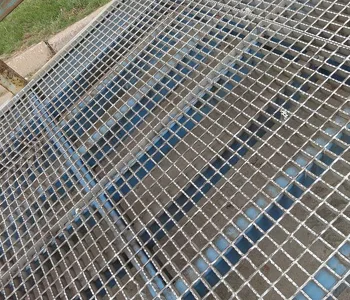
1. The design load of steel grating platforms shall comply with GB50009.
2. Steel grating working platforms are usually designed for a uniformly distributed load of 2kN/m2 at the most unfavorable position of the platform.
If your working conditions fall outside the above range, you can provide site photos and dimensions, and our technicians will help assess them.
Steel grating is used more widely than many people think, from industrial platforms to municipal landscaping. The difference: industrial applications focus on load capacity and corrosion protection, while municipal ones also consider appearance, theft prevention and pedestrian safety. Common practices for hot-dip galvanized steel grating in these settings can be found on the project cases page.
Additional Notes on Design Loads for Steel Grating Platform Walkways
Additional key points are as follows:
Within a 200mm*200mm area, it shall withstand a concentrated load of 1.5kN.
The above points can serve as a pre-purchase checklist; confirm each item before moving to the quotation stage.
Quotations for the same specification may vary between batches as steel prices fluctuate, which is normal for steel products such as grating. If the procurement schedule allows, lock in the price early; purchasing of hot-dip galvanized steel grating can be planned to the same rhythm.
Scope of Application & Engineering Fields
3. Maintenance platforms are generally designed for a uniformly distributed load of 4kN/m2.
To judge whether a site can use steel grating, three quick checks suffice: whether there are corrosive media, whether traffic is pedestrian or vehicular, and roughly what span range. Once these three are clear, the required specifications and surface treatment of hot-dip galvanized steel grating can basically be determined.
Key Points on Design Loads for Steel Grating Platform Walkways
4. For single-person steel grating walkways, the uniformly distributed load capacity shall be not less than 3kN/m2.
5. For two-way steel grating walkways, the uniformly distributed load capacity shall be not less than 5kN/m2.
6. For steel grating walkways carrying dense pedestrian traffic, the uniformly distributed load capacity shall be not less than 7.5kN/m2.
7. Under the design load, the deflection of the steel grating shall not exceed 1/200 of the span, and in no case more than 4mm.
8. Where steel grating panels have cutouts, the remaining area shall still meet the design load requirements.
It should be noted that the exact detailing of steel grating varies with project conditions; what is given here is a general approach, not a fixed answer. In practice, confirm the site span, support conditions and traffic requirements first, then work through this section point by point. Where hot-dip galvanized steel grating is involved, the same logic applies, and a re-check before ordering is still recommended.
Standards and Acceptance Requirements for Design Loads of Steel Grating Platform Walkways
9. The relationship between applied load and deflection for steel grating platforms shall be calculated according to the principles of GB50017.
For installation sequence, lay out first and fix afterwards - never cut and adjust as you go. Once the grating layout drawing is confirmed, avoid random cutting on site; where adjustments are unavoidable, change the fixing and edge finishing of the hot-dip galvanized steel grating at the same time to avoid loose panels.
Further notes: How to combine hot-dip galvanized steel grating and hot-dip galvanized steel grating in use
Hot-dip galvanized steel grating and hot-dip galvanized steel grating are different specification forms within the same product system. The selection logic is the same as described in this article: first the usage type, then span and load to determine specifications, and finally the environment to determine surface treatment. Their corrosion protection and anti-slip requirements may differ; state them separately when ordering rather than writing one general technical requirement.
- For all product specifications and theoretical weights by series, visit Steel Grating Product Center
- To estimate cost by size and quantity, use Instant Quote PageSubmit Requirements
- To see how similar projects were executed, refer to Project Cases field applications
FAQ
What information is needed for custom sizes?
Usually you need to provide the panel dimensions (length x width), bearing bar specs and direction, center-to-center pitch of bearing bars and cross bars, surface treatment, and special requirements such as cutouts, corner notches and banding. Site photos or sketches are even better.
What maintenance is required during daily use?
Maintenance mainly involves periodically checking whether fasteners are loose, whether touch-up paint has peeled off, and whether the panel surface shows obvious deformation or rust. Issues found should be dealt with promptly; overall maintenance is minimal.
Where can I find specific specifications?
our websiteProductsCommon specifications and theoretical weights are organized by series, also available in Instant Quote PageEstimate by size, or contact us directly for sizing advice.
The above is for sizing and construction reference. To verify specific parameters or request a quotation, please visitInstant Quote Page, or contact our technical staff.
Note that this article presents sizing approaches and general practice, and does not constitute a strength commitment for any specific project. For load-bearing safety-critical areas, the design drawings and on-site calculations shall prevail; contact our technical staff if in doubt.