
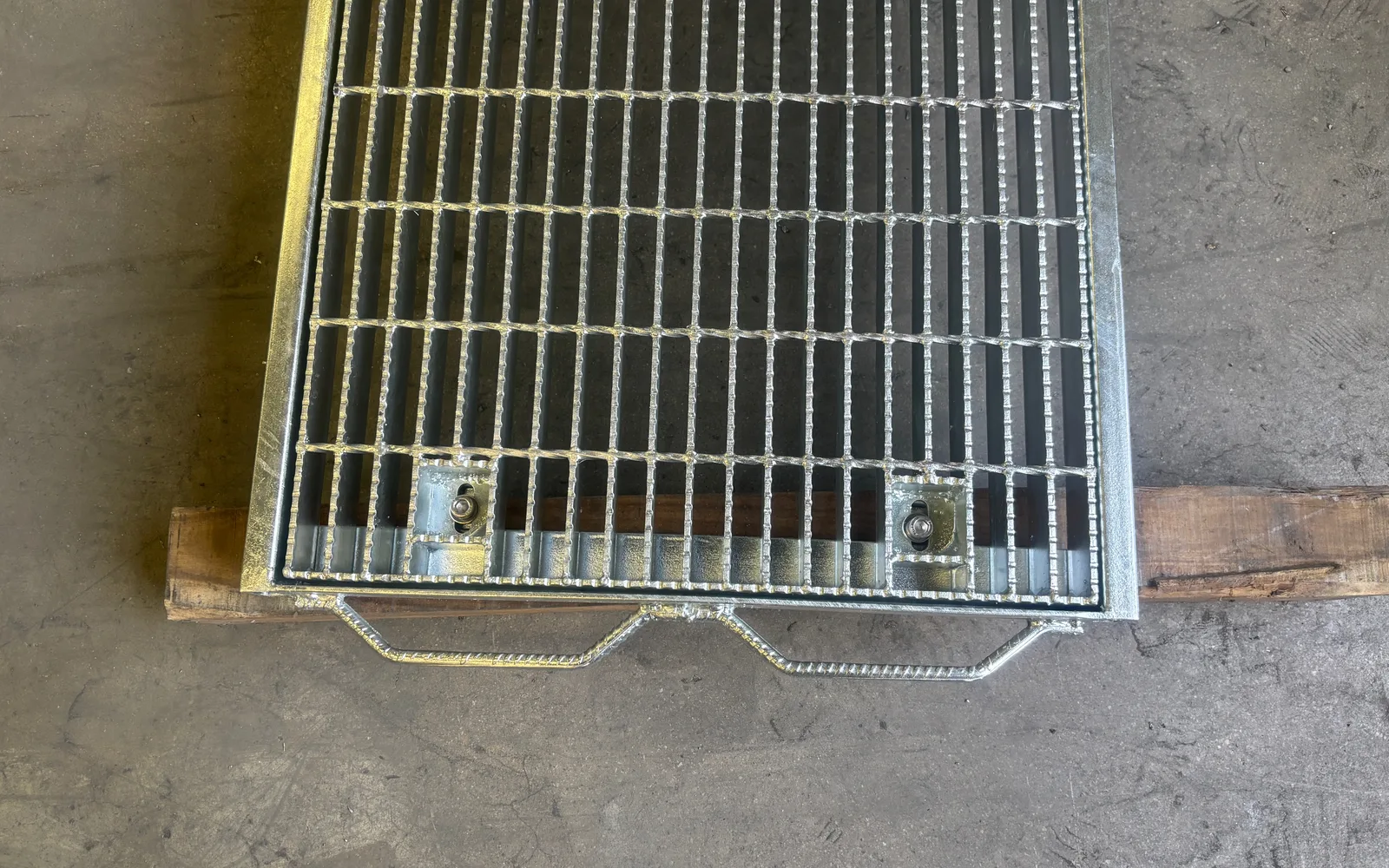
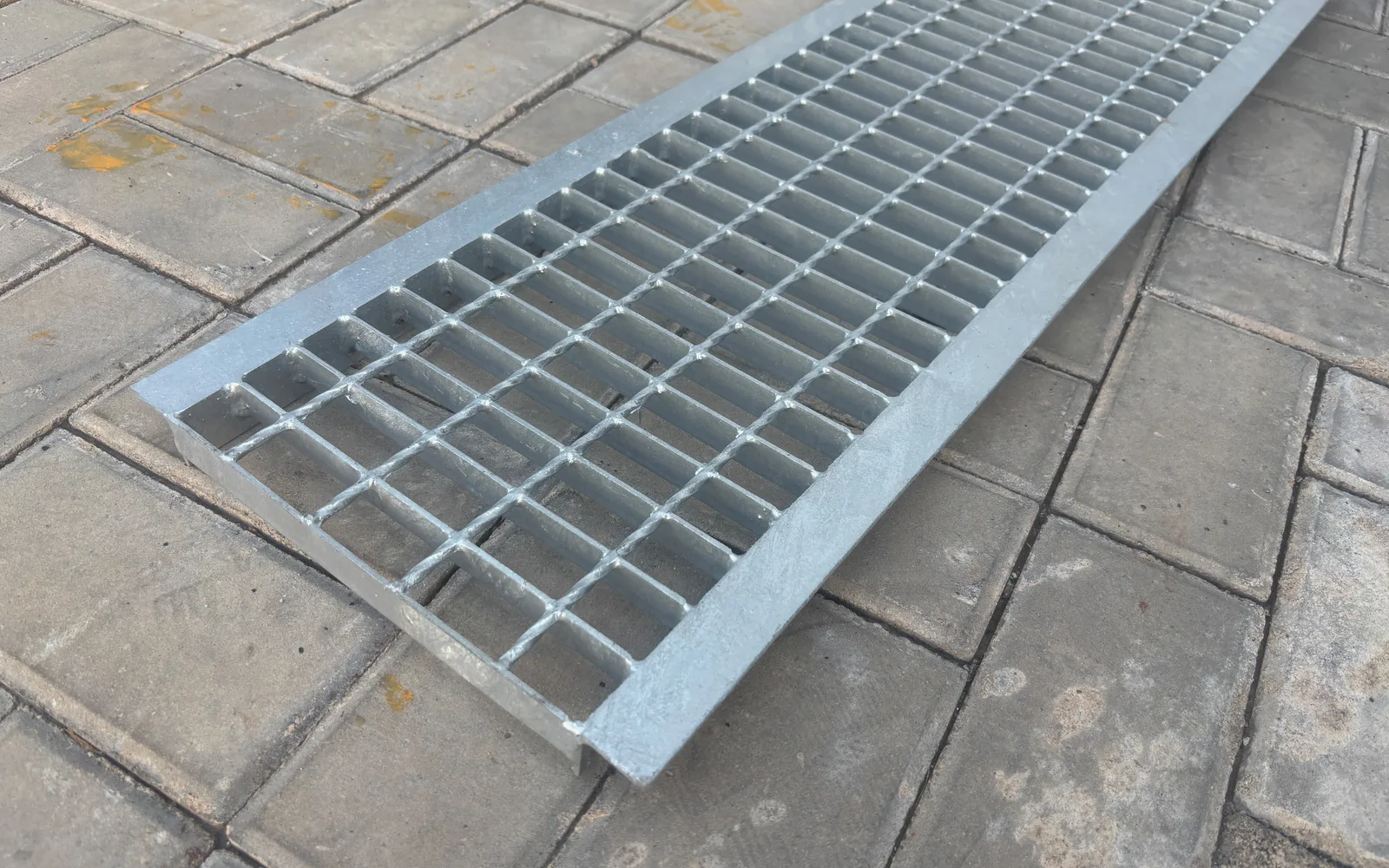
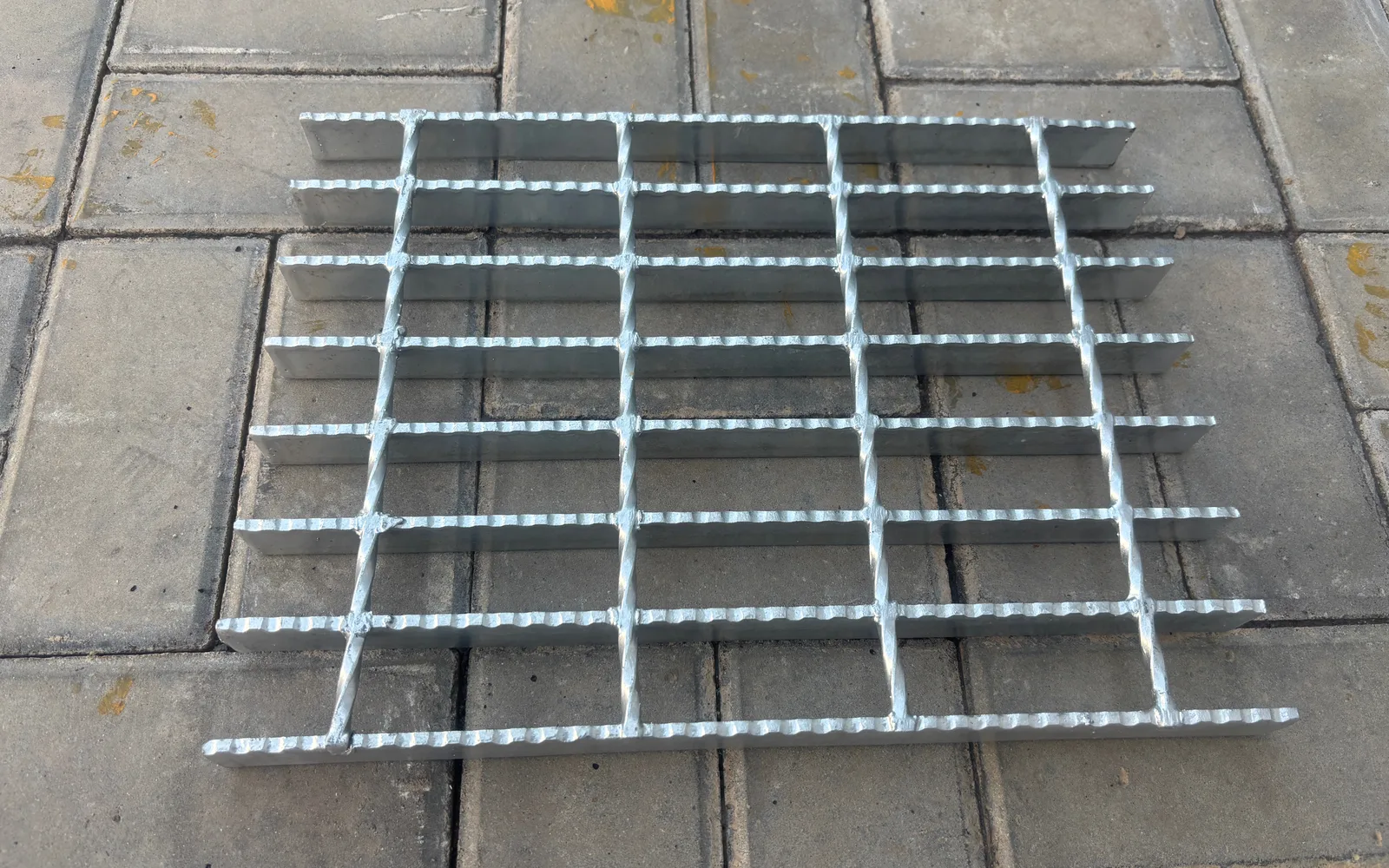




About chemical platform steel grating, this article explains what chemical platform steel grating is, price influencing factors, and basic concepts item by item, giving judgment methods that can be executed directly rather than only theory. Those with drawings or on-site dimensions can check the key points one by one; hot-dip galvanized steel grating can follow the same judgment order.
Chemical platform steel grating is a product that can be customized to drawings: overall dimensions, flat bar size, pitch, binding, and cutouts can all be determined according to site conditions. This page explains its composition and common specification forms, and gives selection suggestions for different service environments; for size-based estimation, you can directly use Instant Quote Page.
Items to Confirm When Selecting Chemical Platform Steel Grating
This page does not list a fixed specification table, as such products are usually custom-fabricated to site conditions. We recommend confirming each item in the table above before inquiry: once mismatched with actual site conditions, refabrication is often required later.ProductsCommon specifications are organized by series for reference.
| Items to Confirm | What Needs to Be Clarified | Common Practices |
|---|---|---|
| Span and Support | Clear span between support beams and support surface width | Determine by field-measured dimensions |
| Surface Treatment | Hot-dip galvanized, painted, or untreated | Hot-dip galvanizing recommended for outdoor and humid environments |
| Dimensions | Panel length and width, whether openings or notches are needed | Custom fabrication per layout drawing |
| Fixing Method | Welded fixing or special clips | Removable covers recommended for positions requiring maintenance |
| End Treatment | Whether banding or end plates are needed | Banding recommended for open edges |
| Acceptance Requirements | Acceptance Criteria for Flatness, Tolerances and Appearance | Recommended to specify in the technical agreement |
What Is Chemical Platform Steel Grating
Chemical platform steel grating is a common steel grating component in industrial plants and municipal engineering, with wide application and a complete specification system. This section first clarifies its definition, structural forms, and common names to avoid deviations in later communication caused by inconsistent naming.
Platform steel grating, also called hot-dip galvanized steel grating platform, is the most widely used steel grating in various industrial fields and offers the strongest resistance to surface impact. It is widely used for platforms, walkways, trestles, trench covers, manhole covers, ladders, and fences in chemical, power, water supply, sewage treatment, port and dock, architectural decoration, shipbuilding, parking, municipal engineering, and sanitation engineering fields. Attractive in appearance and easy to install, it is a new-generation building product.
Once you grasp these basic concepts, the specifications and sizing recommendations that follow will be much easier to understand.
A practical tip for confirming specifications: write all four items - flat bar size, bearing bar pitch, cross bar pitch, and overall dimensions - into the purchase list together. Stating only one or two of them easily leads to goods that do not match. The specification notation of chemical platform steel grating is fully compared on the product page; before ordering, check each panel one by one against the layout drawing, and the same applies to hot-dip galvanized steel grating.
Price Factors
When calculating the procurement cost of chemical platform steel grating, it is usually the theoretical weight corresponding to the specification multiplied by the unit price, plus surface treatment costs. The main influencing factors are as follows:
Our company produces a wide range of products and can design and manufacture for customers according to different environments, load capacities, spans, shapes, colors, and cost requirements. We strive to meet the needs of every customer with higher-quality products, better prices, more complete after-sales service, and a continuously enriched product line.
Confirm the above items before requesting a quote; the quotation will be more accurate and back-and-forth communication reduced.
What is most easily overlooked when reading specification tables are tolerances and end treatment. The length direction of chemical platform steel grating usually has machining allowance; if embedded installation is used on site, banding and corner-cutting requirements should be stated in advance. Hot-dip galvanized steel grating is handled similarly in such details, so it is advisable to mark them clearly on the drawings as well.
Further reading: Selection points for hot-dip galvanized steel grating and hot-dip galvanized steel grating
If a project uses both hot-dip galvanized steel grating and hot-dip galvanized steel grating, we recommend planning them on the same layout drawing. This way edge closing, fixing and cutouts at junctions can be handled uniformly, avoiding dimension conflicts during installation and making later maintenance easier.
- For all product specifications and theoretical weights by series, visit Steel Grating Product Center
- To estimate cost by size and quantity, use Instant Quote PageSubmit Requirements
- To see how similar projects were executed, refer to Project Cases field applications
Key Points for Selecting Chemical Platform Steel Grating
Confirm each item in the order below during selection to avoid most later rework. Record the conclusion of each step and submit it with your inquiry:
- Step 1 · Define Span and Support Conditions: First measure the clear span between support beams, then confirm the support surface width is sufficient; these two items determine the usable series range.
- Step 2 · Verify Service Load: Check separately for pedestrian, maintenance or vehicular traffic; maintenance and vehicular use differ greatly in bearing bar requirements.
- Step 3 · Determine Material and Surface Treatment: Ordinary carbon steel works for dry indoor environments; hot-dip galvanizing is recommended for outdoor or humid environments; chemical and coastal environments need separate confirmation.
- Step 4 · Confirm Shape and Fixing Method: Including whether cutouts, corner notches and banding are needed, and whether to use welded fixing or special clips.
Once the above conditions are confirmed, proceed to Instant Quote PageEstimate quantities by dimensions, or send the condition list to customer service for model recommendations from our technicians.
Working Conditions Comparison for Chemical Platform Steel Grating
The same specifications last very differently in different environments. The table below gives recommended practices by common service environment for your selection reference:
| Operating Environment | Recommended Practices | Note: |
|---|---|---|
| Indoor Dry Environments | Made of standard carbon steel with surface treatment as required | Focus on span and load; environmental impact is minimal |
| Outdoor and Open-Air Environments | Hot-dip galvanized surface treatment recommended | Check zinc coating integrity and re-zinc cut edges |
| Humid or Water Treatment Environments | Use a higher corrosion protection grade with matching fasteners | Regularly inspect fixing points and surface corrosion |
| Chemical or Coastal Environments | Confirm material and anti-corrosion scheme per medium | Avoid galvanic corrosion from direct contact between different metals |
| Vehicle Traffic Areas | Check load class against vehicle types | Note that bearing bars must run parallel to traffic direction |
| Clean Rooms and Food & Pharmaceutical | Prioritize surface treatment and cleaning convenience | Avoid dust-collecting structures and cleaning dead corners |
Custom Fabrication & Quotation
Common specifications are usually in stock; lead times for shaped parts and bulk orders are determined by specification and production scheduling. For projects needing site measurement and layout design, provide photos and dimensions and we will assist with drawings to reduce on-site cutting. For practices on similar projects, seeProject Cases, for model comparison see Products.
FAQ
How long from order to installation?
Standard specifications have shorter lead times; shaped parts, thicker zinc coatings or bulk orders need appropriately longer ones. Exact lead times depend on specification and quantity; consult customer service.
How to handle deformation or damage that occurs later?
First confirm the location and cause of the deformation; in most cases it results from loose fixings or local overload. Replacing the single panel is enough, with no full removal needed; contact customer service with site photos for assessment.
What specifications are generally chosen for this type of project?
Specific specifications need to be calculated and determined according to span, load, and traffic requirements. Common practices for similar projects can refer to the description in this article; the final model is recommended to be confirmed by technical personnel according to site conditions.
The above is the implementation of the chemical platform steel grating project. Similar projects can refer to the above practices; specific models need to be calculated according to the on-site span and load. Contact customer service for selection advice.
If you already have drawings or site dimensions, submit them directly and we will help verify specifications and layout, avoiding on-site cutting and rework caused by mismatched models. Without drawings, site photos and approximate dimensions are enough for an estimate.