







Many buyers focus only on price when purchasing galvanized steel grating, overlooking specification matching and corrosion protection, which leads to rework later. This article lists the conditions to confirm in the order of specification parameters, application scope and engineering fields, and what a galvanized steel grating platform is, explaining how to make trade-offs under common conditions. Content related to hot-dip galvanized steel grating can serve directly as technical disclosure reference.
Specification Parameters of Galvanized Steel Grating Platforms
Main specification comparison is as follows:
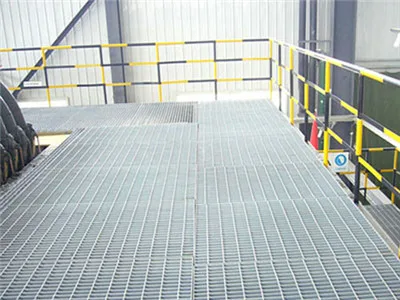
Galvanized structural platform grating is widely used across industries. Its specifications are as follows:
The above are common specifications; actual ordered dimensions and tolerance requirements shall be confirmed against the layout drawing.
Bigger is not always better. The selection of galvanized steel grating should be as economical as possible while meeting load requirements; over-thickening increases self-weight and cost and complicates installation. The product page offers a fuller comparison for galvanized grating; refer to it before deciding.
Scope of Application & Engineering Fields
Typical applications mainly include the following categories, which can help you judge suitability for your project:
1. Composition: a platform structure usually consists of decking, main and secondary beams, columns, column bracing, ladders, and handrails.
2. Classification: by usage requirements, platforms can be indoor and elevated platforms, platforms under static or dynamic loads, auxiliary production platforms, and medium or heavy-duty operating platforms. - By support treatment, platform structures are further divided into:
- Platforms resting directly on triangular brackets or corbels of plant columns, usually serving as safety passages or simple medium-duty operating platforms.
- Platforms supported on one side by plant columns or building walls, with independent columns on the other side.
- Platforms supported on large equipment.
- Fully independent platforms.
Platforms subject to large dynamic loads or carrying very heavy equipment should be designed detached from plant columns and supported directly on independent columns. Layout of galvanized structural platform grating
1. Meet process and production operation requirements and ensure clearance for passage and operation. The clear height for passage should generally be no less than 1.8M, and protective handrails should be installed around the platform, usually 1M high. When platform height exceeds 2M, a toe board 100-150mm high should also be installed below the handrail. The platform should have ladders for access, with a width of no less than 600mm.
If your working conditions fall outside the above range, you can provide site photos and dimensions, and our technicians will help assess them.
The application range of galvanized steel grating is actually wider than many people think, from industrial platforms to municipal and garden projects. Industrial scenarios focus on load capacity and corrosion resistance, while municipal scenarios also consider appearance, anti-theft, and pedestrian safety. Common practices for galvanized steel grating in these scenarios can be viewed on the project cases page.
What Is a Galvanized Steel Grating Platform
This section first clarifies the basic concepts, structural forms and common names, laying the groundwork for what follows.
2. When determining the plan dimensions, elevations, beam grid, and column layout of the platform structure, in addition to usage requirements, the arrangement of beams and columns should consider the location of equipment loads and other large concentrated loads on the platform, as well as the suspension of large-diameter industrial pipes; 3. The layout of the platform structure should be economical and rational with direct, clear load paths. The beam grid should match the span; for larger beam spans, spacing should also increase. Make full use of the allowable span of the decking and arrange the beam grid rationally for better economy. Galvanized structural platform grating comes in many forms with complete functions. It is a widely used steel grating product with strong resistance to surface impact; grating with 50mm cross bar pitch in particular has strong resistance to lateral impact. Platform steel grating suits alloy, building materials, power plants, boilers, shipbuilding, petrochemicals, chemicals, general factory buildings, municipal construction, and other industries. It is ventilated and translucent, anti-slip, strong in load capacity, attractive, durable, and easy to clean and install - a new-generation building product. Toe plates (kick plates), checkered plate guards, and installation connectors can be welded around the edges. Edging can use flat bars of different specifications from the bearing bars, or angle steel, channel steel, or square tubes; handles and hinges can be installed on gratings that need frequent moving or opening.
Once you grasp these basic concepts, the specifications and sizing recommendations that follow will be much easier to understand.
A practical tip for confirming specifications: write all four items - flat bar specs, bearing bar pitch, cross bar pitch, and overall dimensions - into the purchase list together; specifying only one or two often leads to mismatched deliveries. The complete specification marking of galvanized steel grating is on the product page; number and check panel by panel against the layout drawing before ordering, and the same applies to hot-dip galvanized steel grating.
Features of Platform Steel Grating
Main features can be summarized as follows:
- Toe plates (kick plates), checkered plate guards and mounting connectors can be welded around the edges as accessories.
- Edging can use flat bars of different specifications from the bearing bars, or angle steel, channel steel, or square tubes.
- Handles and hinges can be installed on platform steel grating that needs frequent moving or opening. The biggest feature of galvanized structural platform grating is its fully modular structure with flexible design, allowing steel platforms tailored to site conditions, functional requirements, and logistics requirements. It is widely used in modern storage.
Overall, selection should weigh span, load and service environment together.
Actual parameters of the same model may vary slightly between manufacturers; rely on measured values at acceptance. Sampling inspection of key dimensions of galvanized steel grating is recommended, especially for bulk deliveries. Corresponding parameters of hot-dip galvanized steel grating can be checked the same way; communicate promptly if deviations are found.
Further reading: Selection points for hot-dip galvanized steel grating and galvanized grating
In engineering, galvanized grating is often used together with the components mentioned in this article. The two differ in load carrying and installation practices; when combining them, pay special attention to the connection of support conditions and fixing methods, as junction treatment is often where problems arise. For unified drawings, submit dimensions of both types and our technicians will process them under the same layout logic.
- For all product specifications and theoretical weights by series, visit Steel Grating Product Center
- To estimate cost by size and quantity, use Instant Quote PageSubmit Requirements
- To see how similar projects were executed, refer to Project Cases field applications
FAQ
What is most often overlooked during installation and acceptance?
First, bearing bars installed in the wrong direction reduce load capacity; second, insufficient fixing points or missing zinc touch-up paint; third, support beam spacing inconsistent with the layout drawing. These three items are most often overlooked on site.
How to choose between hot-dip galvanizing and cold galvanizing?
The two anti-corrosion mechanisms differ: hot-dip galvanizing immerses steel in molten zinc to form a metallurgically bonded coating, thick and long-lasting, suitable for outdoor and humid environments; cold galvanizing is electrochemical deposition with a thinner, more uniform appearance, suitable for dry indoor environments or applications requiring high dimensional precision.
What information is needed for custom sizes?
Usually you need to provide the panel dimensions (length x width), bearing bar specs and direction, center-to-center pitch of bearing bars and cross bars, surface treatment, and special requirements such as cutouts, corner notches and banding. Site photos or sketches are even better.
The above is for sizing and construction reference. To verify specific parameters or request a quotation, please visitInstant Quote Page, or contact our technical staff.
If you already have drawings or site dimensions, submit them directly and we will help verify specifications and layout, avoiding on-site cutting and rework caused by mismatched models. Without drawings, site photos and approximate dimensions are enough for an estimate.