




Many projects focus only on price when procuring power plant steel grating, ignoring specification matching and anti-corrosion requirements, which often leads to rework. This article lists, in order, the conditions to confirm for power plant steel grating and its fabrication methods and features, explaining trade-offs under common working conditions; content related to galvanized grating can be used directly as a reference for technical disclosure.
Many projects report dimensions directly when inquiring about power plant steel grating, but the same dimensions correspond to different models under different loads and environments. This page lists the key conditions affecting model selection and how to confirm each one, helping to clarify technical conditions at the inquiry stage.
Power Plant Steel Grating Quick Specification Table
The table below summarizes the specification markings on this page and their meanings for quick reference; see the detailed explanation later. Actual orders are subject to drawing annotations and the layout drawing; specifications not included in the table can be custom-fabricated to drawings.
| Marking/Item | Meaning and Description |
|---|---|
| Surface Treatment of Power Plant Steel Grating | Hot-dip galvanized, cold galvanized, spray-painted |
| Bearing bar pitch | Center distance between adjacent bearing flat bars; commonly 30MM or 40MM |
| Attractive Appearance | Clean, simple lines with a silver finish and modern look |
| Optimal Drainage | Open area reaches 83.3%, more than twice that of cast iron |
| Hot-Dip Galvanizing | Strong rust resistance, maintenance-free, no replacement needed |
| Design | Cover and frame connected by hinges, safe and easy to open |
| Cost Savings | Large span. Under heavy loads, cheaper than cast iron and saves the cost of replacement due to theft or crushing |
| High Strength | Strength and toughness far exceed cast iron, suitable for large-span, heavy-load environments such as docks and airports |
Power Plant Steel Grating
Regarding power plant steel grating, the following are the most frequently asked and most important questions to confirm in advance during procurement and use:
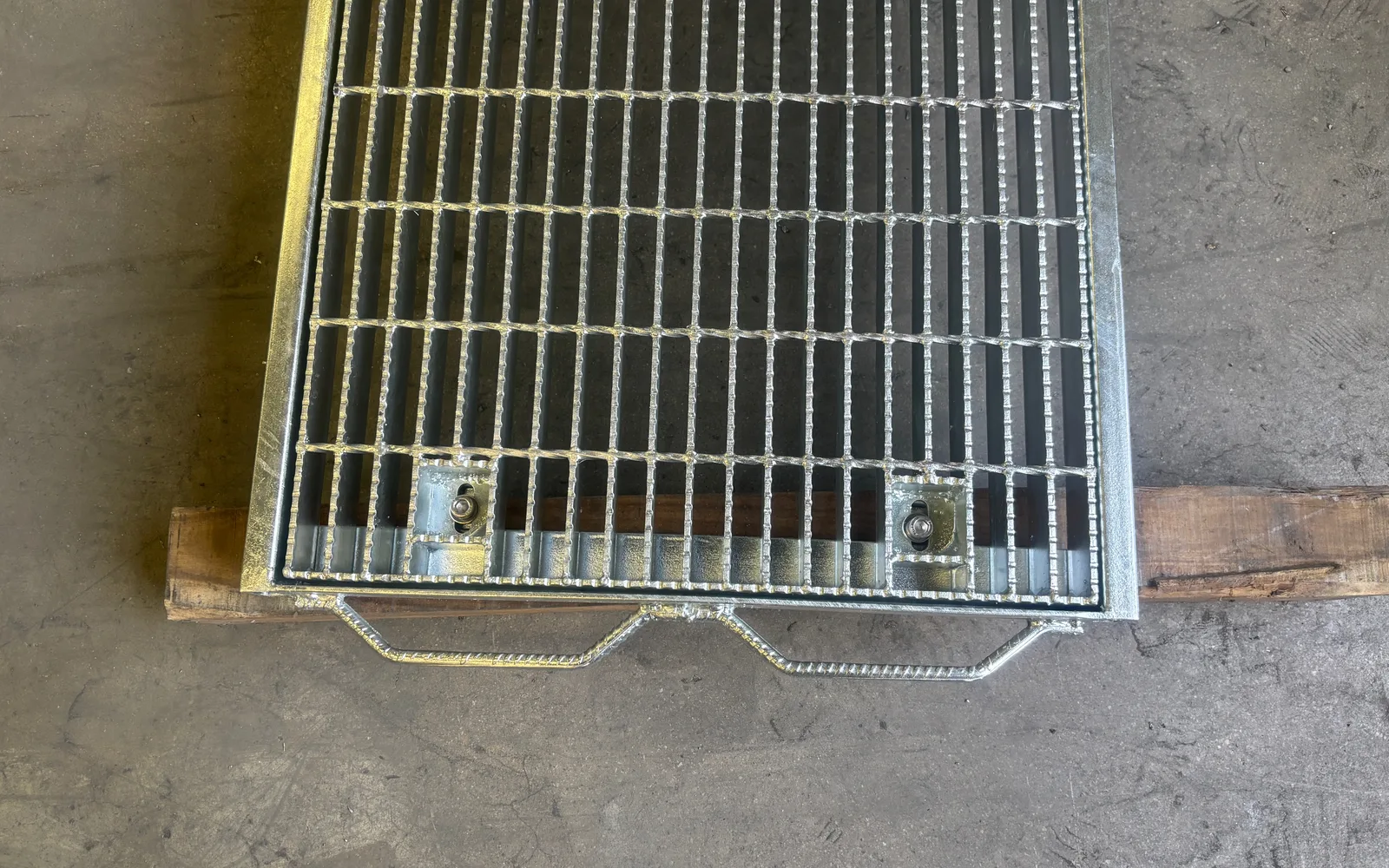
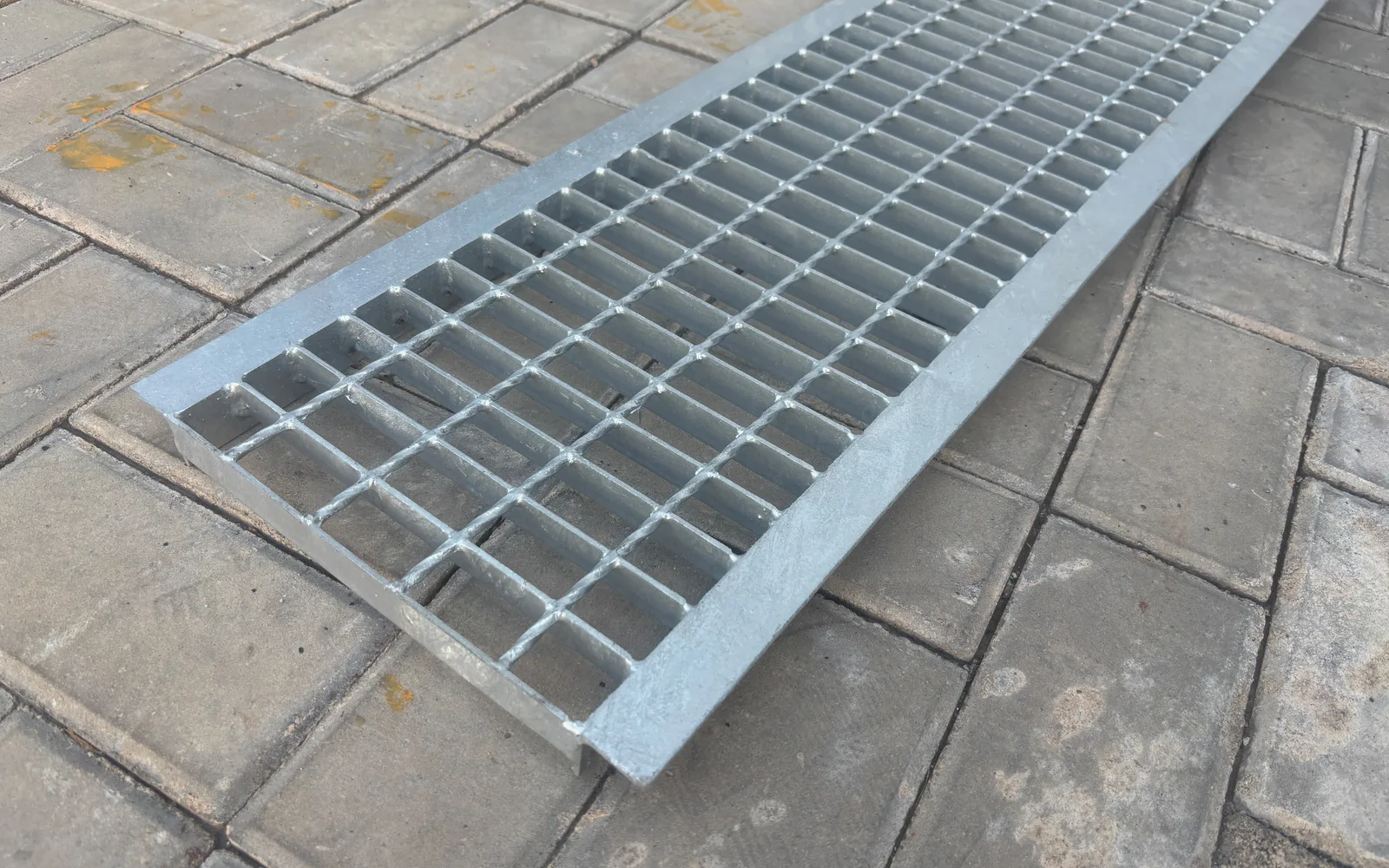
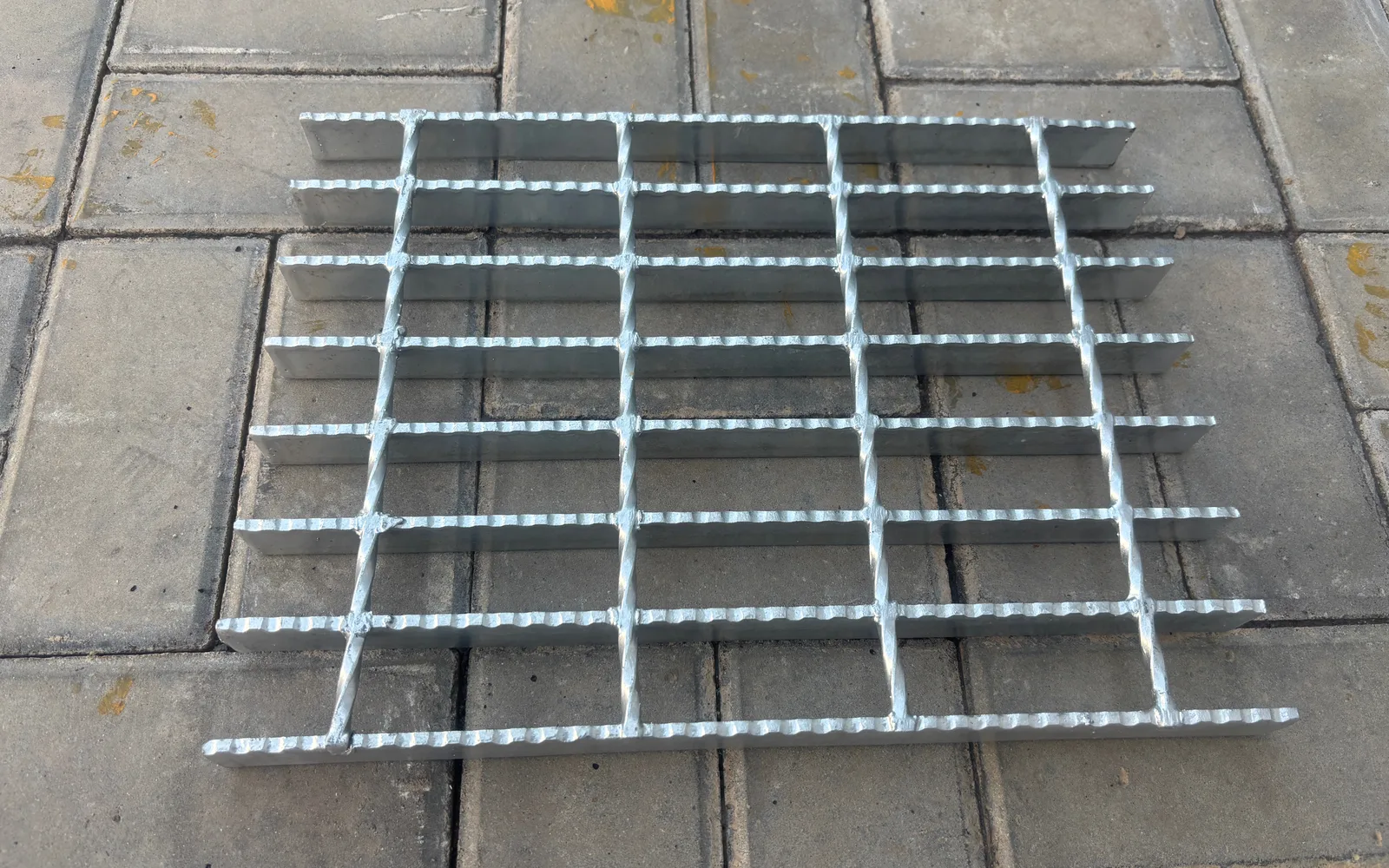
A steel product made by arranging flat bars at a certain pitch crosswise with cross bars and welding them into a grid with square openings in the middle. Steel grating is mainly used for trench covers, steel platform floors and stair treads of steel stairs. Cross bars are usually twisted square bars.
Steel grating is usually made of carbon steel with a hot-dip galvanized surface to prevent oxidation; stainless steel can also be used. Steel grating offers ventilation, daylighting, heat dissipation, anti-slip and explosion-proof performance.
Power plantsteel grating surface treatment: Hot-dip galvanized, cold galvanized, spray-painted.
The above points can serve as a pre-purchase checklist; confirm each item before moving to the quotation stage.
The most easily overlooked items in a specification table are tolerances and end treatment. The length direction of power plant steel grating usually retains machining allowance; if site installation is recessed, edge closing and corner-cutting requirements should be stated in advance. Hot-dip galvanized steel grating is handled similarly in such details; mark them clearly on the drawings.
Fabrication Method of Power Plant Steel Grating
Power plant steel grating goes through multiple processes from raw material to finished product, with control requirements at each stage as follows:
Welded steel grating is made by arranging bearing flat bars and cross bars at fixed pitches in a grid, welded into base panels by 200-ton hydraulic resistance welding automation equipment, then cut, punched and edge-banded into products per customer requirements.
Bearing bar pitch: the center distance between two adjacent bearing bars, commonly 30mm or 40mm.
Cross bar pitch: the center distance between two adjacent cross bars is usually 50mm or 100mm; other pitches can be produced on request.
Only when control points of each process are implemented can dimensional accuracy and appearance quality of finished products be guaranteed.
A practical tip for specification confirmation: write all four items - bearing bar specs, bearing bar center pitch, cross bar pitch and overall dimensions - into the purchase list; specifying only one or two often leads to mismatched deliveries. The specification notation of power plant steel grating is fully mapped on the product page; number and check each panel against the layout drawing before ordering, and the same applies to galvanized grating.
Features of Power Plant Steel Grating
Power plant steel grating is widely used in engineering because of its outstanding overall performance in load bearing, drainage, anti-corrosion and later maintenance. Compared with traditional solutions such as cast iron covers and checkered plates, its advantages mainly include the following:
Attractive appearance: clean, simple lines with a silver finish and modern look.
Best drainage: open area reaches 83.3%, more than twice that of cast iron.
Hot-dip galvanized: strong rust resistance, maintenance-free, no replacement needed.
Design: cover and frame connected by hinges, safe and easy to open.
Cost saving: large span. Under heavy loads, cheaper than cast iron and saves the cost of replacement due to theft or crushing.
High strength: strength and toughness far exceed cast iron; suitable for docks, airports and other large-span, heavy-load environments.
Many specifications: meeting requirements of different environments, loads, spans, sizes and shapes.
Overall, selection should weigh span, load and service environment together.
Do not simply pursue high material grades. The material of power plant steel grating should match load requirements and service environment; over-specifying causes unnecessary cost increases. For galvanized grating, refer to the product page and select per actual working conditions.
Further reading: Sizing reference for galvanized grating and hot-dip galvanized steel grating
Galvanized grating and hot-dip galvanized steel grating are different specification forms within the same product system. The selection logic is the same as described in this article: first the usage type, then span and load to determine specifications, and finally the environment to determine surface treatment. Their corrosion protection and anti-slip requirements may differ; state them separately when ordering rather than writing one general technical requirement.
- For all product specifications and theoretical weights by series, visit Steel Grating Product Center
- To estimate cost by size and quantity, use Instant Quote PageSubmit Requirements
- To see how similar projects were executed, refer to Project Cases field applications
Selection Points of Power Plant Steel Grating
Confirm each item in the order below during selection to avoid most later rework. Record the conclusion of each step and submit it with your inquiry:
- Step 1 · Define Span and Support Conditions: First measure the clear span between support beams, then confirm the support surface width is sufficient; these two items determine the usable series range.
- Step 2 · Verify Service Load: Check separately for pedestrian, maintenance or vehicular traffic; maintenance and vehicular use differ greatly in bearing bar requirements.
- Step 3 · Determine Material and Surface Treatment: Ordinary carbon steel works for dry indoor environments; hot-dip galvanizing is recommended for outdoor or humid environments; chemical and coastal environments need separate confirmation.
- Step 4 · Confirm Shape and Fixing Method: Including whether cutouts, corner notches and banding are needed, and whether to use welded fixing or special clips.
Once the above conditions are confirmed, proceed to Instant Quote PageEstimate quantities by dimensions, or send the condition list to customer service for model recommendations from our technicians.
Working Condition Comparison of Power Plant Steel Grating
The same specifications last very differently in different environments. The table below gives recommended practices by common service environment for your selection reference:
| Operating Environment | Recommended Practices | Note: |
|---|---|---|
| Indoor Dry Environments | Made of standard carbon steel with surface treatment as required | Focus on span and load; environmental impact is minimal |
| Outdoor and Open-Air Environments | Hot-dip galvanized surface treatment recommended | Check zinc coating integrity and re-zinc cut edges |
| Humid or Water Treatment Environments | Use a higher corrosion protection grade with matching fasteners | Regularly inspect fixing points and surface corrosion |
| Chemical or Coastal Environments | Confirm material and anti-corrosion scheme per medium | Avoid galvanic corrosion from direct contact between different metals |
| High-Temperature or Large Temperature-Difference Environments | Select material and connection method by temperature | Watch for loosening caused by thermal expansion and contraction |
| Clean Rooms and Food & Pharmaceutical | Prioritize surface treatment and cleaning convenience | Avoid dust-collecting structures and cleaning dead corners |
Custom Fabrication & Quotation
Before ordering, we recommend providing site photos, trench or platform dimensions and traffic requirements together, so we can give the model and layout plan in one go and reduce on-site cutting and rework. Common specifications are usually in stock; lead times for shaped parts and bulk orders depend on specification and quantity. For reference on similar projects, seeProject Cases; for a quotation, go directly to Instant Quote Page.
FAQ
How to handle deformation or damage that occurs later?
First confirm the location and cause of the deformation; in most cases it results from loose fixings or local overload. Replacing the single panel is enough, with no full removal needed; contact customer service with site photos for assessment.
How long from order to installation?
Standard specifications have shorter lead times; shaped parts, thicker zinc coatings or bulk orders need appropriately longer ones. Exact lead times depend on specification and quantity; consult customer service.
Can on-site measurement and layout design be provided?
Yes. After providing site photos and trench or platform dimensions, we can help produce layout drawings and selection plans, reducing on-site cutting and rework.
Power plant steel grating projects focus mainly on span and traffic load in selection. If you need load verification or layout drawings, you canInstant Quote PageSubmit dimensions and we will assist with selection.
The above is general guidance. For a specific project, we still recommend submitting span, load class and service environment to our technicians for review. Steel grating is a load-bearing component; rework caused by wrong specification choices costs far more than the time spent on upfront calculation.