
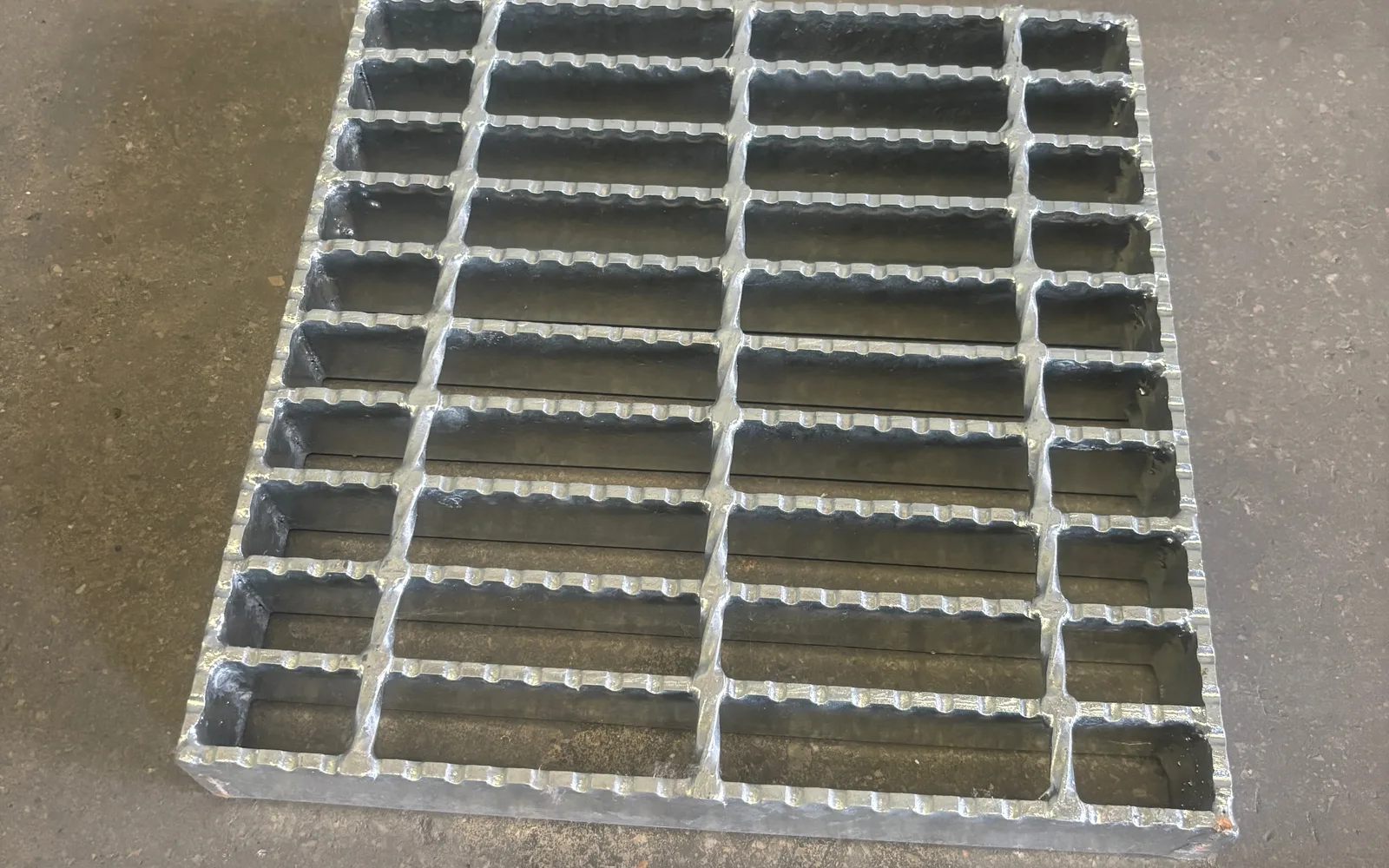
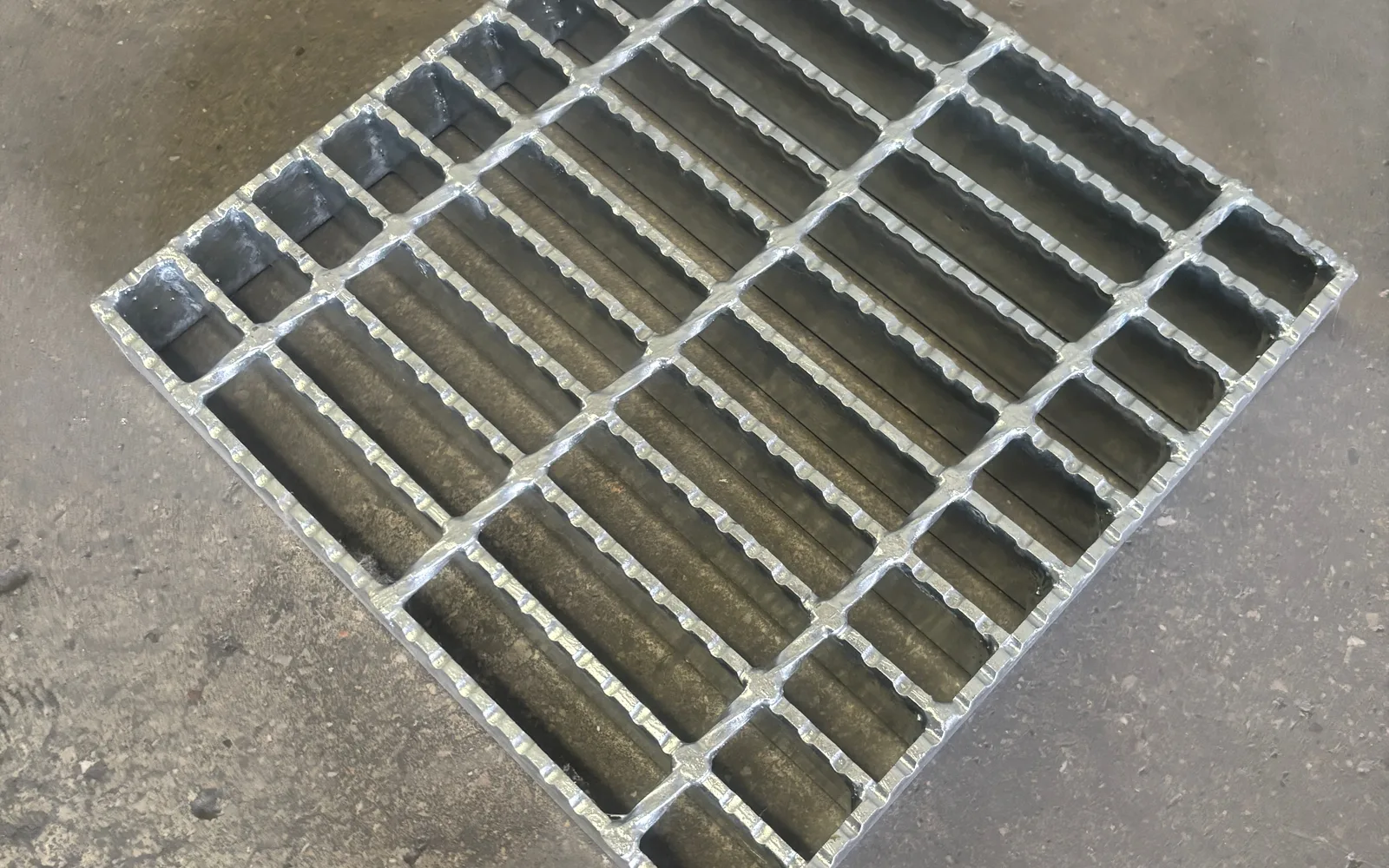
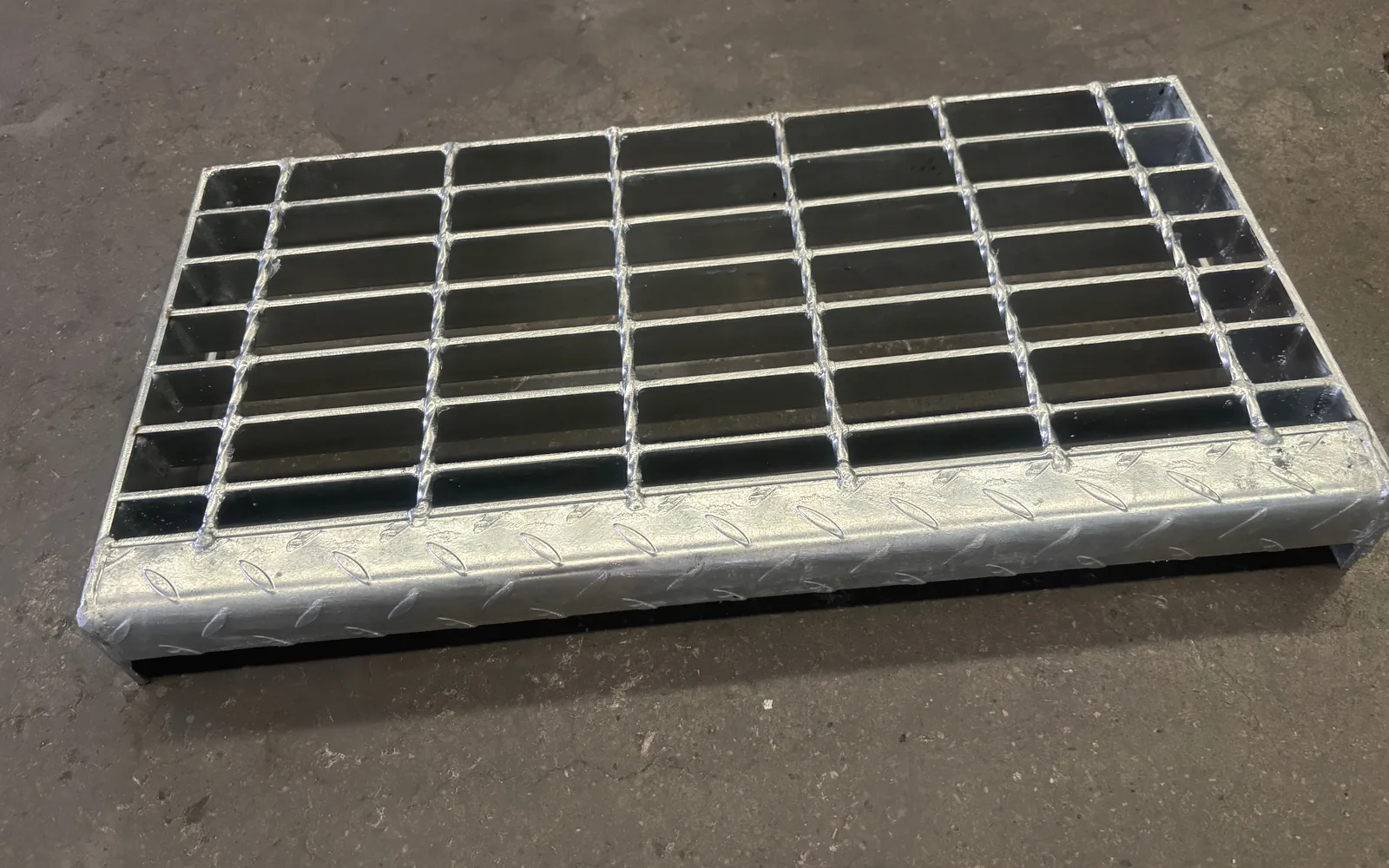




Press-locked steel grating, also called interlocked steel grating, is made from ordinary low-carbon flat bars, stainless steel, brass plates or aluminum plates of specified sizes through slotting (punching), interlocking, welding and finishing. The product has firm weld points, uniform hole spacing and an elegant, practical design. Press-locked steel grating has all the features of ordinary steel grating - high strength, corrosion resistance, maintenance-free - plus unique characteristics of uniform and precise combination, light and refined structure, natural harmony and elegant style. It is both a functional product and a work of art, and has been widely applied.
Many projects habitually quote only dimensions when purchasing press-locked steel grating, but the same dimensions correspond to different models under different loads and environments. This page lists the key conditions that affect the model separately and explains how to confirm each one, helping to clarify the technical conditions at the quotation stage.
Items to Confirm When Selecting Press-Locked Steel Grating
This page does not list a fixed specification table, as such products are usually custom-fabricated to site conditions. We recommend confirming each item in the table above before inquiry: once mismatched with actual site conditions, refabrication is often required later.ProductsCommon specifications are organized by series for reference.
| Items to Confirm | What Needs to Be Clarified | Common Practices |
|---|---|---|
| Span and Support | Clear span between support beams and support surface width | Determine by field-measured dimensions |
| Material Requirements | Carbon steel or stainless steel, grade requirements | Determine by corrosion grade of service environment |
| Surface Treatment | Hot-dip galvanized, painted, or untreated | Hot-dip galvanizing recommended for outdoor and humid environments |
| Dimensions | Panel length and width, whether openings or notches are needed | Custom fabrication per layout drawing |
| Fixing Method | Welded fixing or special clips | Removable covers recommended for positions requiring maintenance |
| Packaging & Shipping | Whether packing and moisture protection are needed | Packing and cushioning recommended for long-distance shipping |
Press-Locked Steel Grating Types
For easy comparison, press-locked steel grating is listed below by common classification methods, with the applicable situation of each:
By different insertion methods and insertion angles, it can be divided into press-locked steel grating, heavy-duty steel grating, integral steel grating, sunshade steel grating, etc.
u Press-locked type press-locked steel grating: after the bearing flat bars are slotted, the cross flat bars are press-locked into shape. Generally, the maximum fabrication height for ordinary type steel grating is 100mm; the grating length is usually under 2000mm.
u Heavy-duty press-locked steel grating is a product where tall bearing bars and cross flat bars interlock and are pressed tight under 1200 tons of pressure. It is suitable for high-load, long-span applications.
u Integral type press-locked steel grating: the bearing bars and cross flat bars have the same height, with slot depth equal to 1/2 of the bearing bar. Grating height does not exceed 100mm; length is usually under 2000mm.
u Sunshade type press-locked steel grating: the bearing bars have 30° or 45° angled slots, and the cross bar flat bars are slotted and press-locked into shape. We can fabricate gratings with other pitches and specifications as needed, using ordinary carbon steel, stainless steel, aluminum and other materials. Grating height is under 100mm.
Determine the category first and then the specific model; this saves detours and makes comparison with other materials easier.
Press-Locked Steel Grating Selection Key Points
Confirm each item in the order below during selection to avoid most later rework. Record the conclusion of each step and submit it with your inquiry:
- Step 1 · Balance Appearance vs. Load Capacity: Press-locked panels have a neat appearance and uniform hole spacing, suitable for appearance-critical platforms; load capacity must be checked by series.
- Step 2 · Confirm Bearing Bar Specs and Pitch: Determined by span and load; the smaller the pitch, the denser the surface, with correspondingly higher self-weight and price.
- Step 3 · Confirm Whether Banding Is Needed: Open edges should be banded, both to protect the panel and to prevent edges lifting and injuring people.
- Step 4 · Confirm Installation and Maintenance Convenience: For areas needing frequent opening for maintenance, removable fixings rather than welding are recommended.
Once the above conditions are confirmed, proceed to Instant Quote PageEstimate quantities by dimensions, or send the condition list to customer service for model recommendations from our technicians.
Typical Application Scenarios of Press-Locked Steel Grating
Press-locked steel grating suits a variety of working conditions, with typical application scenarios mainly including:
- Industrial Platforms & Maintenance Walkways: equipment platforms and inspection passages in power plants, chemical plants and steel-structure workshops;
- Municipal & Landscape: road drainage trench covers, rainwater grates, tree grates, park boardwalks;
- Transportation & Ports: wharf trestles, multi-story parking garage lanes, railway bridge walkways;
- Environmental & Water Treatment: walkways in wastewater treatment plants, tank platforms, screening machine platforms;
- Others: elevated tower platforms, stair treads, fences and railings, etc.
If your working conditions fall outside the above range, you can provide site photos and dimensions, and our technicians will help assess them.
Key Conditions to Confirm During Selection
To avoid selection errors and later rework, confirm the following items before purchasing press-locked steel grating:
- First clarify the span and support beam spacing to determine the required series;
- Then check load requirements by usage type (pedestrian, maintenance, vehicular);
- Finally, determine the surface treatment by service environment (dry indoor, outdoor, coastal, chemical).
Placing the order after confirming these items effectively avoids specification mismatch and on-site rework.
Press-Locked Steel Grating Service Condition Comparison
The same specifications last very differently in different environments. The table below gives recommended practices by common service environment for your selection reference:
| Operating Environment | Recommended Practices | Note: |
|---|---|---|
| Indoor Dry Environments | Made of standard carbon steel with surface treatment as required | Focus on span and load; environmental impact is minimal |
| Humid or Water Treatment Environments | Use a higher corrosion protection grade with matching fasteners | Regularly inspect fixing points and surface corrosion |
| Chemical or Coastal Environments | Confirm material and anti-corrosion scheme per medium | Avoid galvanic corrosion from direct contact between different metals |
| Pedestrian and Maintenance Walkways | Choose standard series, balancing walking comfort | Focus on surface flatness and end banding |
| High-Temperature or Large Temperature-Difference Environments | Select material and connection method by temperature | Watch for loosening caused by thermal expansion and contraction |
| Temporary or Short-Term Use | Can be configured with the light-duty series | For short schedules, prioritize easy disassembly and turnover |
Custom Fabrication & Quotation
Common specifications are usually in stock; lead times for shaped parts and bulk orders are determined by specification and production scheduling. For projects needing site measurement and layout design, provide photos and dimensions and we will assist with drawings to reduce on-site cutting. For practices on similar projects, seeProject Cases, for model comparison see Products.
FAQ
Which surface treatment should I choose?
Hot-dip galvanizing is recommended for outdoor or humid environments; for dry indoor environments, untreated or painted is fine; coastal, chemical and other strongly corrosive environments need thicker zinc coatings or stainless steel, depending on the expected service life.
What Are the Common Specifications of Press-Locked Steel Grating?
Common specifications are determined by combinations of bearing bar width and thickness, bearing bar pitch, and cross bar pitch; different combinations correspond to different load capacities and theoretical weights. Our Products section lists common models by series; you can also send span and load requirements to customer service for sizing help.
What mistakes are easy to make during installation?
Three main points: first, bearing bars installed in the wrong direction so loads are carried by cross bars; second, insufficient or missing fixing points; third, welding slag not removed and zinc-rich paint not reapplied after welding. These three cause the most on-site problems.
Quotations can be given once the specifications and surface treatment of press-locked steel grating are confirmed. For custom fabrication to drawings or load calculations, you canInstant Quote PageSubmit dimensions, or contact us directly for technical support.