







Stainless steel grating is not complicated to apply in real projects; the challenge is matching specifications, material and service environment. This article covers material selection for stainless steel grating, typical applications and basic concepts in turn, giving you a complete framework for judging hot-dip galvanized steel grating.
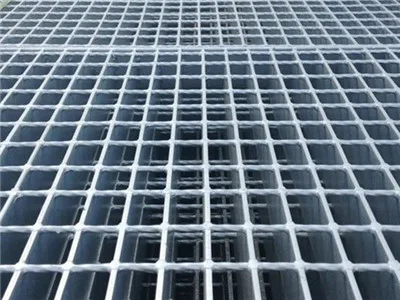
How to Choose the Material of Stainless Steel Grating
Common materials and surface treatments are as follows:
Steel grating is generally welded from Q235 flat bearing bars and twisted square cross bars. However, special industries such as food processing plants have very high material requirements and mostly choose stainless steel grating. From our experience, the grade customers select most often is 304,Grade 304 resists corrosion from sulfuric acid, phosphoric acid, potassium acid and urea, and suits applications with low corrosivity or no direct material contact, such as general process water, control gas, wine, milk and CIP cleaning solutions. 304 stainless steel is non-magnetic and its metallographic structure cannot be changed by heat treatment. 304 stainless steel grating meets food plant standards. Higher grades also meet them, but at higher cost, so most food businesses choose 304 stainless steel grating.
Compared with 304, 316 stainless steel contains added molybdenum, giving it a special corrosion-resistant structure with stronger resistance to chloride corrosion; it is also used as "marine steel". For aquatic processing and shipbuilding applications, 316 stainless steel grating is the more suitable choice.
Once material and surface treatment are decided, we recommend writing zinc coating thickness and appearance requirements into the technical agreement.
Do not simply chase higher grades when choosing material. The material of stainless steel grating should match the load requirements and service environment; over-specifying adds unnecessary cost. The corresponding treatment for galvanized bar grating can be found on the product page - select according to actual working conditions.
Typical Applications
Typical applications mainly include the following categories, which can help you judge suitability for your project:
- Industrial Platforms & Maintenance Walkways: equipment platforms and inspection passages in power plants, chemical plants and steel-structure workshops;
- Municipal & Landscape: road drainage trench covers, rainwater grates, tree grates, park boardwalks;
- Transportation & Ports: wharf trestles, multi-story parking garage lanes, railway bridge walkways;
- Environmental & Water Treatment: walkways in wastewater treatment plants, tank platforms, screening machine platforms;
- Others: elevated tower platforms, stair treads, fences and railings, etc.
If your working conditions fall outside the above range, you can provide site photos and dimensions, and our technicians will help assess them.
Stainless steel grating is used more widely than many people think, from industrial platforms to municipal landscaping. The difference: industrial applications focus on load capacity and corrosion protection, while municipal ones also consider appearance, theft prevention and pedestrian safety. Common practices for galvanized steel grating in these settings can be found on the project cases page.
Key Conditions to Confirm During Selection
- First clarify the span and support beam spacing to determine the required series;
- Then check load requirements by usage type (pedestrian, maintenance, vehicular);
- Finally, determine the surface treatment by service environment (dry indoor, outdoor, coastal, chemical).
Actual parameters for the same model may vary slightly between manufacturers, so acceptance should be based on measured values. Spot-check the key dimensions of stainless steel grating, especially on bulk deliveries. The corresponding parameters of hot-dip galvanized steel grating can be verified the same way; report any deviation promptly.
Further reading: Sizing reference for hot-dip galvanized steel grating and galvanized grating
In engineering, galvanized grating is often used together with the components mentioned in this article. The two differ in load carrying and installation practices; when combining them, pay special attention to the connection of support conditions and fixing methods, as junction treatment is often where problems arise. For unified drawings, submit dimensions of both types and our technicians will process them under the same layout logic.
- For all product specifications and theoretical weights by series, visit Steel Grating Product Center
- To estimate cost by size and quantity, use Instant Quote PageSubmit Requirements
- To see how similar projects were executed, refer to Project Cases field applications
FAQ
Can the values in the article be applied directly?
Values in this article come from relevant standard clauses or common industry practice. For actual selection, recalculate based on site span, load class and service environment; direct copying is not recommended.
What maintenance is required during daily use?
Maintenance mainly involves periodically checking whether fasteners are loose, whether touch-up paint has peeled off, and whether the panel surface shows obvious deformation or rust. Issues found should be dealt with promptly; overall maintenance is minimal.
What information is needed for custom sizes?
Usually you need to provide the panel dimensions (length x width), bearing bar specs and direction, center-to-center pitch of bearing bars and cross bars, surface treatment, and special requirements such as cutouts, corner notches and banding. Site photos or sketches are even better.
The above is for sizing and construction reference. To verify specific parameters or request a quotation, please visitInstant Quote Page, or contact our technical staff.
If you already have drawings or site dimensions, submit them directly and we will help verify specifications and layout, avoiding on-site cutting and rework caused by mismatched models. Without drawings, site photos and approximate dimensions are enough for an estimate.