
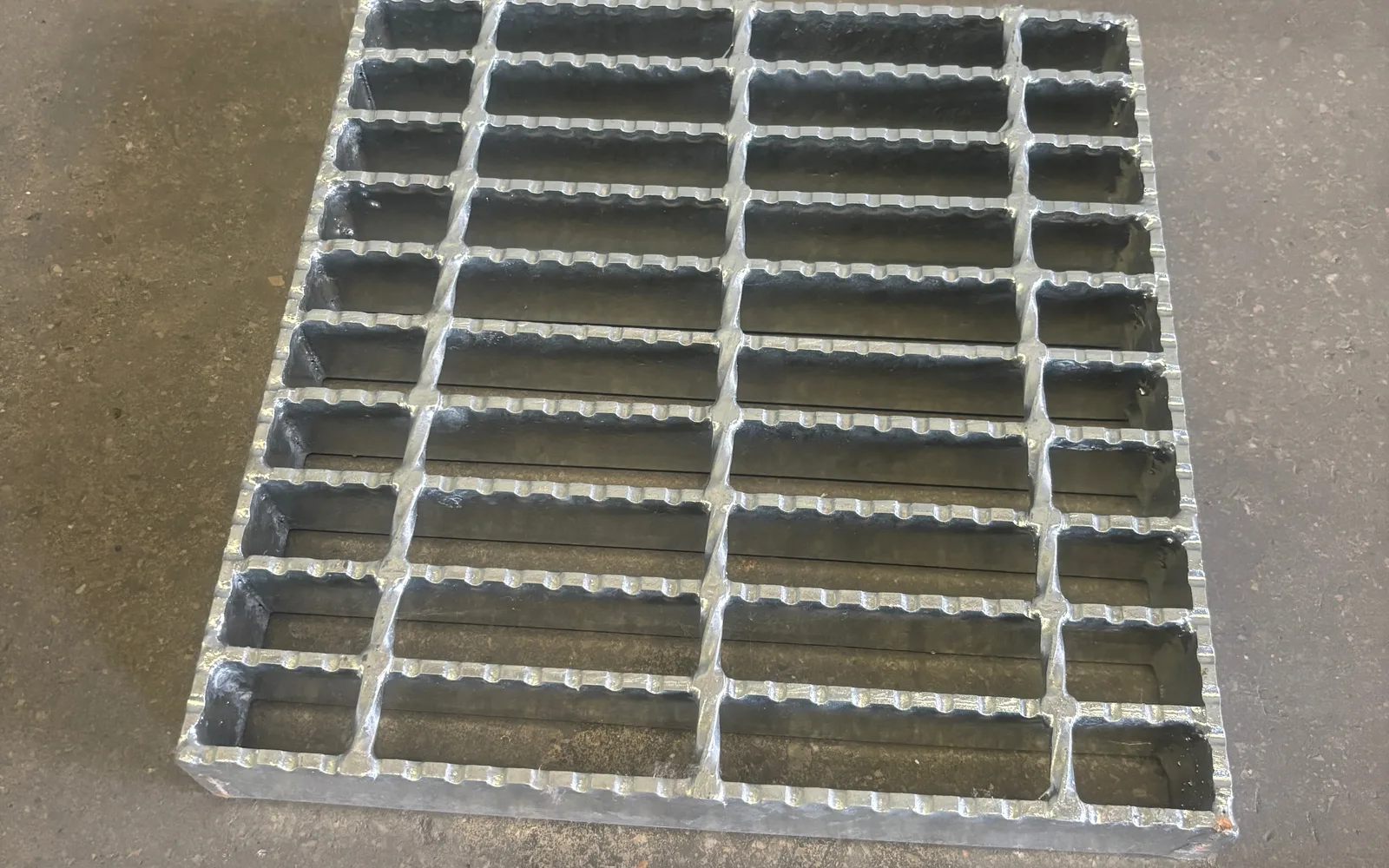
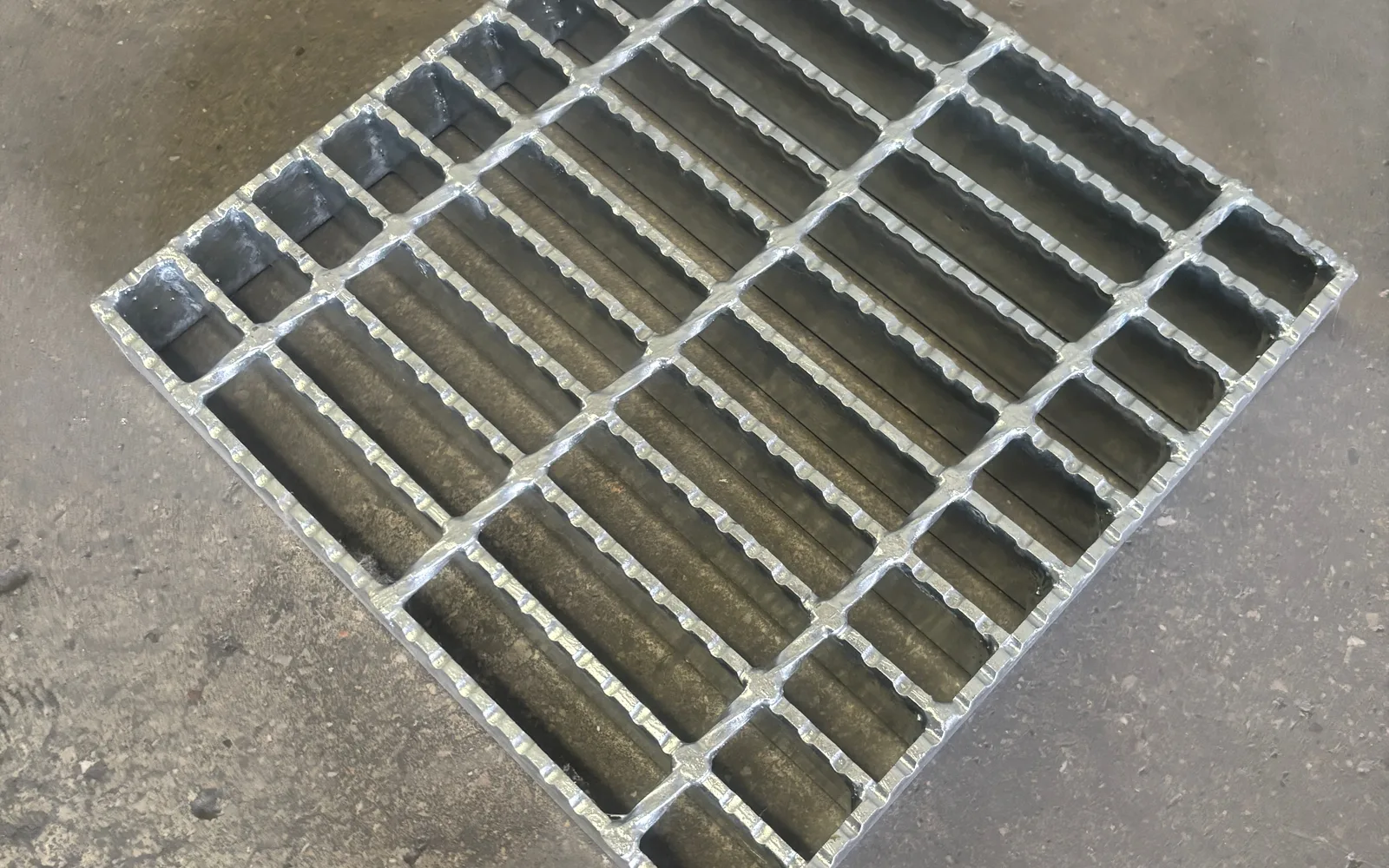
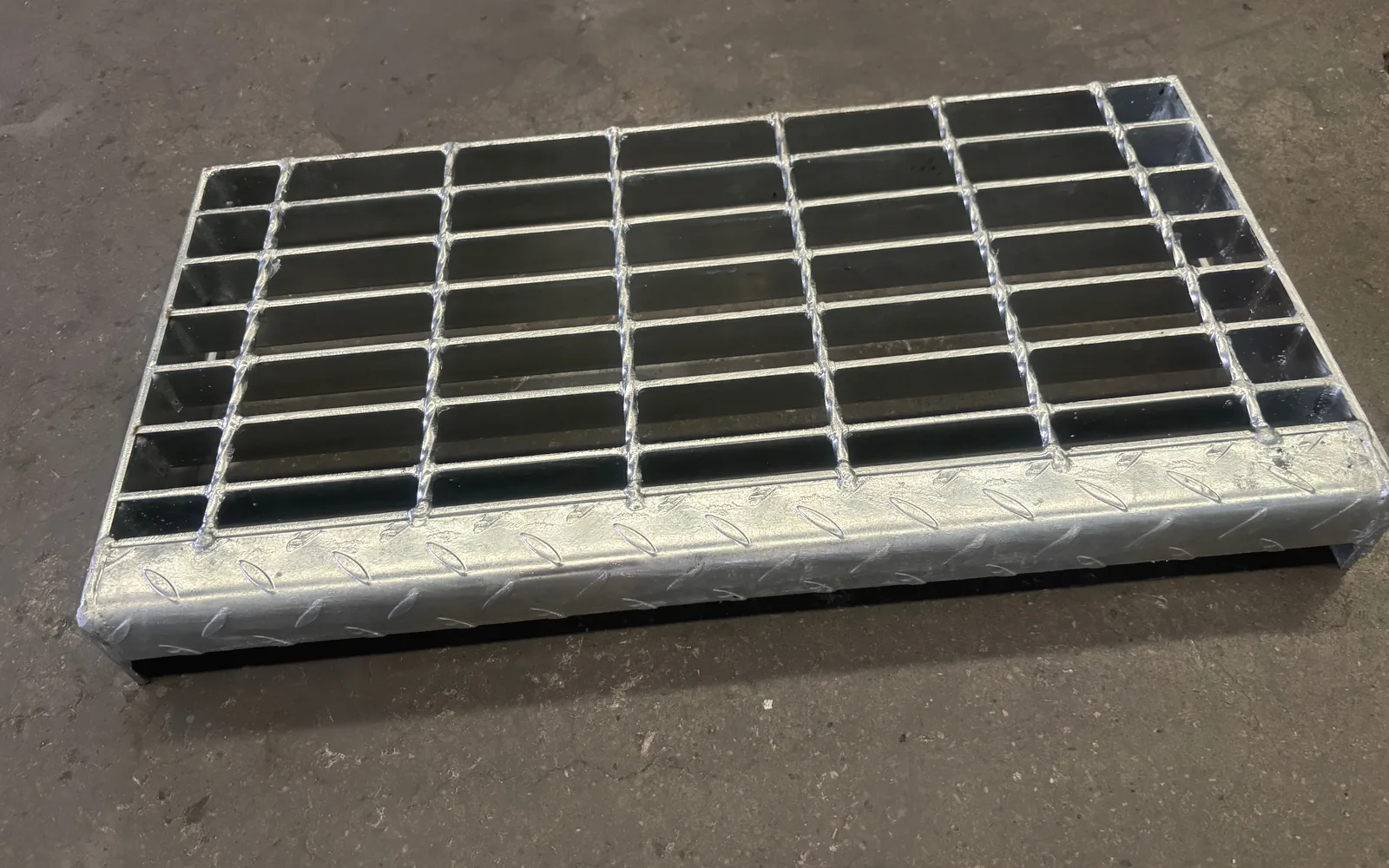




Welded steel grating is a product that can be custom-fabricated from drawings: overall dimensions, flat bar specifications, pitch, edge banding, and openings can all be determined according to site conditions. This page explains its composition and common specification forms, and gives selection suggestions for different service environments; for estimation by dimensions, you can directly use theInstant Quote Page.
Welded steel grating quick specification reference table
The table below summarizes the specification markings on this page and their meanings for quick reference; see the detailed explanation later. Actual orders are subject to drawing annotations and the layout drawing; specifications not included in the table can be custom-fabricated to drawings.
| Marking/Item | Meaning and Description |
|---|---|
| Reduced investment | Saves materials, labor, and construction time, with no cleaning or maintenance required |
| Simple construction | Fixed with bolt clips or welding on pre-installed supports; one person can complete it |
| Time saving | No on-site re-processing needed; installation is very fast |
| Durable | Hot-dip galvanized for corrosion protection before delivery, with strong resistance to impact and heavy pressure |
| Modern look | Attractive appearance, standardized design, ventilation and light transmission, giving a smooth modern impression |
| Light structure | Less material, light structure, and easy to hoist |
| No dirt accumulation | No accumulation of rainwater, ice, snow, or dust |
| Reduced wind resistance | Good ventilation means low wind resistance in strong winds, reducing wind damage |
What Is Welded Steel Grating
To judge whether welded steel grating suits your project, first understand what it is and how it is made. This section provides basic explanations from the perspectives of basic concepts, structural features, and common processing methods, laying the groundwork for the parameter comparison and selection judgment that follow.
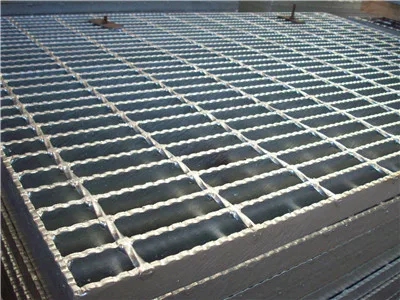
1. Welded steel grating: steel grating is made by arranging load-bearing flat bars and cross bars at certain pitches in a grid pattern and welding them into base panels on high-pressure resistance welding machines, then deep-processed through cutting, slitting, opening, edge banding, and other processes into finished products as required by customers.
Once you grasp these basic concepts, the specifications and sizing recommendations that follow will be much easier to understand.
Common models and dimensions of welded steel grating
Specification parameters are the items most frequently checked during selection. The common models, pitch combinations, and corresponding unit weights of welded steel grating are organized below as a technical basis before procurement and production scheduling:
2. Flat bar and cross bar pitch of welded steel grating: normally, the center pitch of flat bars is classified by series: Series 1 is 30mm; Series 2 is 40mm; Series 3 is 60mm. The cross bar pitch is 100mm for Series 1 and 50mm for Series 2.
The above are common specifications; actual ordered dimensions and tolerance requirements shall be confirmed against the layout drawing.
3. Flat bar and cross bar specifications of welded steel grating
The specification parameters of welded steel grating mainly consist of load-bearing flat bar specifications, flat bar center pitch, cross bar pitch, and overall panel dimensions; each item should be confirmed before ordering. The common parameter comparison is as follows:
1. Flat bars of welded steel grating: made of Q235A or stainless steel, available in ordinary flat type, anti-slip serrated type, and I-section type. Common specifications include 20*5, 25*5, 25*3, 32*5, 32*5, 40*5, 40*3, 50*5, 65*5, 75*6, 100*8, 100*10, etc.
2. Cross bars of welded steel grating: round bars, twisted square cross bars, square bars, or hexagonal bars made of Q235A or 304 stainless steel. Twisted square cross bars are made from wire rod drawn through square dies and twisted; their common specifications are 5*5, 6*6, 8*8mm, etc.
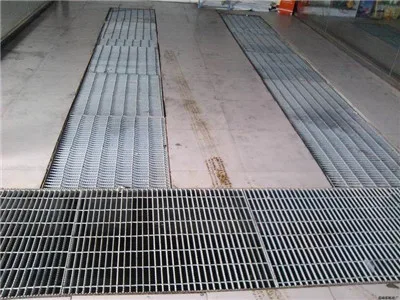
The above are common specifications; actual ordered dimensions and tolerance requirements shall be confirmed against the layout drawing.
4. Features of welded steel grating
The main reason welded steel grating is widely used in projects is its outstanding comprehensive performance in load capacity, drainage, corrosion protection, and later maintenance. Compared with traditional solutions such as cast iron covers and checkered plate, its advantages are mainly concentrated in the following aspects:
Welded steel grating features high strength, light structure, attractive appearance, durability, good ventilation, lighting, heat dissipation, explosion-proof and anti-slip performance, no accumulation of dirt, rain, snow or water, self-cleaning, and easy maintenance.
Overall, selection should weigh span, load and service environment together.
5. Types of welded steel grating
There are many types of welded steel grating; the common classifications are as follows:
By surface shape: serrated welded steel grating, flat type, I-type, and compound welded steel grating. By surface treatment: hot-dip galvanized welded steel grating, spray-painted welded steel grating, and untreated welded steel grating.
6. Applications of welded steel grating: steel gratings are widely used for platforms, walkways, trestle trench covers, manhole covers, ladders, fences, and handrails in petrochemical plants, power plants, waterworks, sewage treatment plants, municipal engineering, environmental sanitation engineering, and other fields.
7. Advantages of welded steel grating - material saving: under the same load conditions, it is the most material-saving solution, correspondingly reducing materials for supporting structures.
Reduced investment: saves materials, labor and construction time, and is cleaning- and maintenance-free.
Simple construction: fixed with bolt clips or welding on pre-installed supports; one person can complete it.
Saves construction time: no on-site reprocessing needed; installation is very fast.
Long-lasting durability: hot-dip galvanized for corrosion protection before leaving the factory, with strong resistance to impact and heavy pressure.
Modern style: attractive appearance, standardized design, ventilated and light-transmitting, giving a smooth, modern overall impression.
Light structure: less material, light structure, and easy to hoist.
No dirt accumulation: no accumulation of rainwater, ice, snow, or dust.
Reduced wind resistance: good ventilation means low wind resistance in strong winds, reducing wind damage.
Simple design: no secondary beams needed, simple structure, simplified design; no detailed grating drawings required, just specify the model, and the manufacturer can design the layout drawing for the customer. Good ventilation, lighting, heat dissipation, explosion-proof and anti-slip performance: acid and alkali corrosion resistance: within the range of PH 6 to PH 12.5, a stable protective film forms on the zinc layer surface with good corrosion resistance.
Determine the category first and then the specific model; this saves detours and makes comparison with other materials easier.
Selection key points for welded steel grating
Confirm each item in the order below during selection to avoid most later rework. Record the conclusion of each step and submit it with your inquiry:
- Step 1 · Define Span and Support Conditions: First measure the clear span between support beams, then confirm the support surface width is sufficient; these two items determine the usable series range.
- Step 2 · Verify Service Load: Check separately for pedestrian, maintenance or vehicular traffic; maintenance and vehicular use differ greatly in bearing bar requirements.
- Step 3 · Determine Material and Surface Treatment: Ordinary carbon steel works for dry indoor environments; hot-dip galvanizing is recommended for outdoor or humid environments; chemical and coastal environments need separate confirmation.
- Step 4 · Confirm Shape and Fixing Method: Including whether cutouts, corner notches and banding are needed, and whether to use welded fixing or special clips.
Once the above conditions are confirmed, proceed to Instant Quote PageEstimate quantities by dimensions, or send the condition list to customer service for model recommendations from our technicians.
Working condition comparison for welded steel grating
The same specifications last very differently in different environments. The table below gives recommended practices by common service environment for your selection reference:
| Operating Environment | Recommended Practices | Note: |
|---|---|---|
| Indoor Dry Environments | Made of standard carbon steel with surface treatment as required | Focus on span and load; environmental impact is minimal |
| Outdoor and Open-Air Environments | Hot-dip galvanized surface treatment recommended | Check zinc coating integrity and re-zinc cut edges |
| Humid or Water Treatment Environments | Use a higher corrosion protection grade with matching fasteners | Regularly inspect fixing points and surface corrosion |
| Pedestrian and Maintenance Walkways | Choose standard series, balancing walking comfort | Focus on surface flatness and end banding |
| Clean Rooms and Food & Pharmaceutical | Prioritize surface treatment and cleaning convenience | Avoid dust-collecting structures and cleaning dead corners |
| Temporary or Short-Term Use | Can be configured with the light-duty series | For short schedules, prioritize easy disassembly and turnover |
Custom Fabrication & Quotation
Before ordering, we recommend providing site photos, trench or platform dimensions and traffic requirements together, so we can give the model and layout plan in one go and reduce on-site cutting and rework. Common specifications are usually in stock; lead times for shaped parts and bulk orders depend on specification and quantity. For reference on similar projects, seeProject Cases; for a quotation, go directly to Instant Quote Page.
FAQ
Which surface treatment should I choose?
Hot-dip galvanizing is recommended for outdoor or humid environments; for dry indoor environments, untreated or painted is fine; coastal, chemical and other strongly corrosive environments need thicker zinc coatings or stainless steel, depending on the expected service life.
How is the price of welded steel grating calculated?
Usually calculated as the theoretical weight for the model times the material unit price, plus hot-dip galvanizing or other surface treatment costs, and fluctuating with steel and zinc prices. You canInstant Quote PageEnter specifications and dimensions for a quick estimate.
What are the common specifications of welded steel grating?
Common specifications are determined by combinations of bearing bar width and thickness, bearing bar pitch, and cross bar pitch; different combinations correspond to different load capacities and theoretical weights. Our Products section lists common models by series; you can also send span and load requirements to customer service for sizing help.
Once the specifications and surface treatment of welded steel grating are determined, a quotation can be provided. For custom fabrication from drawings or load calculations, you can use theInstant Quote PageSubmit dimensions, or contact us directly for technical support.