







Many projects focus only on price when procuring trench cover grating, ignoring specification matching and anti-corrosion requirements, which often leads to rework. This article lists, in order, the pricing factors, scope of application and engineering fields, and material and surface treatment of trench cover grating, explaining trade-offs under common working conditions; content related to hot-dip galvanized steel grating can be used directly as a technical disclosure reference.
Pricing Factors of Trench Cover Grating
The main factors affecting quotation are as follows:
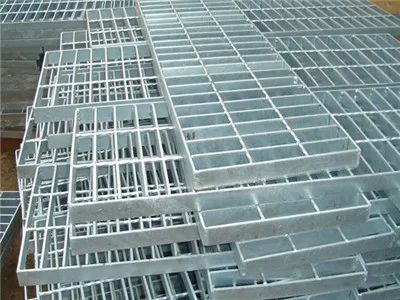
Trench cover grating prices are generally calculated per square meter or per piece. Prices vary by specification; small pedestrian trench covers are around RMB 70/piece, and we accept customization. Of course, different sizes have different prices. If interested, please message us on WhatsApp.
Confirm the above items before requesting a quote; the quotation will be more accurate and back-and-forth communication reduced.
Bigger specifications are not always better. The selection of trench cover grating should be as economical as possible while meeting load requirements; excessive thickening increases self-weight and cost and complicates installation. The product page provides more complete reference for hot-dip galvanized steel grating; refer to it before making a decision.
Scope of Application & Engineering Fields
Main applications are as follows:
Series classification of steel grating by use: Series 1 (30mm pitch) steel grating is the most common type, widely used in various industrial fields. Its bearing flat bar center pitch is 30mm, meeting US standard requirements, and it has the strongest resistance to surface impact in the whole steel grating series. It is widely used for platforms, walkways and trench covers, stair treads, etc. in power plants, refineries, wastewater treatment plants, granaries, chemical plants, highways, airports and docks. Serrated steel grating can be used in wet and slippery places, especially offshore oil platforms. 1. On-site cutting: holes and corners are cut from existing Anping stair tread grating per site installation needs; this is fast with small errors, but cutting damages the zinc layer and cut edges have no edge binding. 2. Factory cutting: this requires accurate drawings with no later changes. The advantage is that the factory performs edge binding after cutting special-shaped stair tread grating, followed by hot-dip galvanizing; intermittent welding is not allowed and full welding is required.
If your working conditions fall outside the above range, you can provide site photos and dimensions, and our technicians will help assess them.
A practical tip for specification confirmation: write all four items - bearing bar specs, bearing bar center pitch, cross bar pitch and overall dimensions - into the purchase list; specifying only one or two often leads to mismatched deliveries. The specification notation of trench cover grating is fully mapped on the product page; number and check each panel against the layout drawing before ordering, and the same applies to hot-dip galvanized steel grating.
Material and Surface Treatment of Trench Cover Grating
Common materials and surface treatments are as follows:
Stainless steel grating is commonly made of 304, 201, 316 and other materials. Customization is available. Prices are higher than those of low-carbon steel grating.
Once material and surface treatment are decided, we recommend writing zinc coating thickness and appearance requirements into the technical agreement.
Regarding corrosion protection, one thing is easily overlooked: on-site cutting and welding damage the original coating, and these areas need zinc touch-up after construction, otherwise rust often starts from the cut edges. Hot-dip galvanized steel grating has the same issue; it is best to include this in the technical requirements at the construction disclosure.
Installation and Fixing Method
Key points for construction and fixing are as follows:
Controlling welding deformation is the most critical issue for improving the welding quality of stainless steel grating. During welding, quality must be controlled at every step, and operators should strengthen daily welding skill training to improve welding skills and accumulate experience, so that the welding quality of stainless steel grating improves. Press-locked steel grating is a grid panel assembled from welded flat bars; after galvanizing, it is widely used for anti-slip walkways in power plants, boiler plants and chemical plants, protection covers for highway power and communication channels, car paint booths, municipal facilities, etc., with advantages of firmness, beauty and ventilation. It has strong load capacity and light self-weight. Press-locked steel grating replaces concrete or asphalt as large-area pavement on steel structure bridges, offering low vehicle noise, a flat top surface, no water pooling corners and good corrosion resistance.
After installation, check each panel's fixing points and flatness; put into use only after confirming no warping or looseness.
Choosing a surface treatment is essentially a trade-off between initial investment and later maintenance. Requirements can be relaxed for trench cover grating in dry indoor environments, but raised for outdoor or humid environments. Galvanized grating can be selected with the same approach.
Further reading: Sizing reference for hot-dip galvanized steel grating and galvanized grating
If a project uses both hot-dip galvanized steel grating and galvanized grating, we recommend planning them on the same layout drawing. This way edge closing, fixing and cutouts at junctions can be handled uniformly, avoiding dimension conflicts during installation and making later maintenance easier.
- For all product specifications and theoretical weights by series, visit Steel Grating Product Center
- To estimate cost by size and quantity, use Instant Quote PageSubmit Requirements
- To see how similar projects were executed, refer to Project Cases field applications
FAQ
What is most often overlooked during installation and acceptance?
First, bearing bars installed in the wrong direction reduce load capacity; second, insufficient fixing points or missing zinc touch-up paint; third, support beam spacing inconsistent with the layout drawing. These three items are most often overlooked on site.
Why do different manufacturers quote different weights for the same specifications?
The main difference lies in the actual measured thickness and tolerance control of the bearing bars. When bars are supplied at the lower tolerance limit, weight per unit area falls below the theoretical value, and load capacity drops accordingly. We recommend specifying thickness tolerance clearly when purchasing.
What information is needed for custom sizes?
Usually you need to provide the panel dimensions (length x width), bearing bar specs and direction, center-to-center pitch of bearing bars and cross bars, surface treatment, and special requirements such as cutouts, corner notches and banding. Site photos or sketches are even better.
The above is for sizing and construction reference. To verify specific parameters or request a quotation, please visitInstant Quote Page, or contact our technical staff.
Note that this article presents sizing approaches and general practice, and does not constitute a strength commitment for any specific project. For load-bearing safety-critical areas, the design drawings and on-site calculations shall prevail; contact our technical staff if in doubt.