
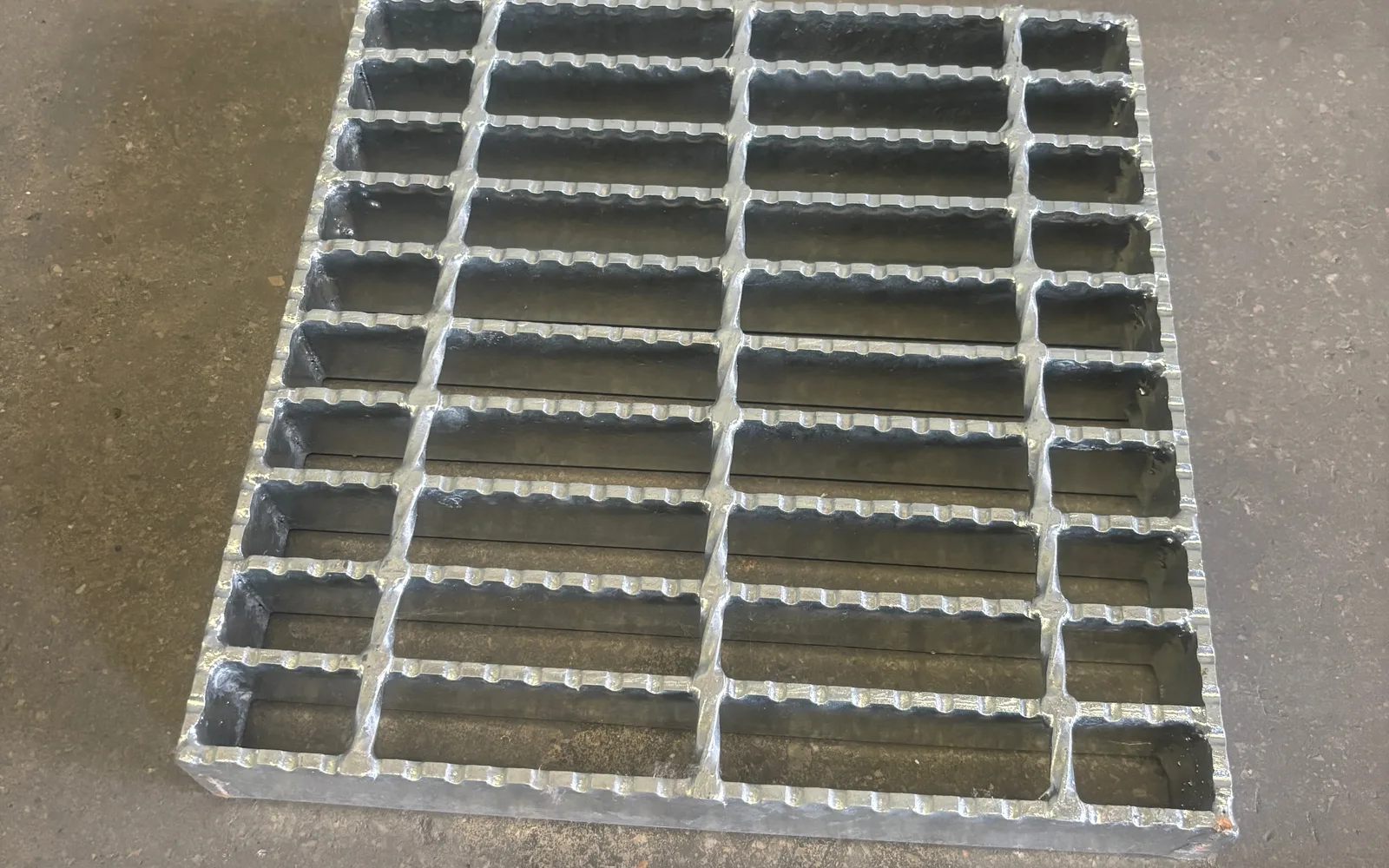
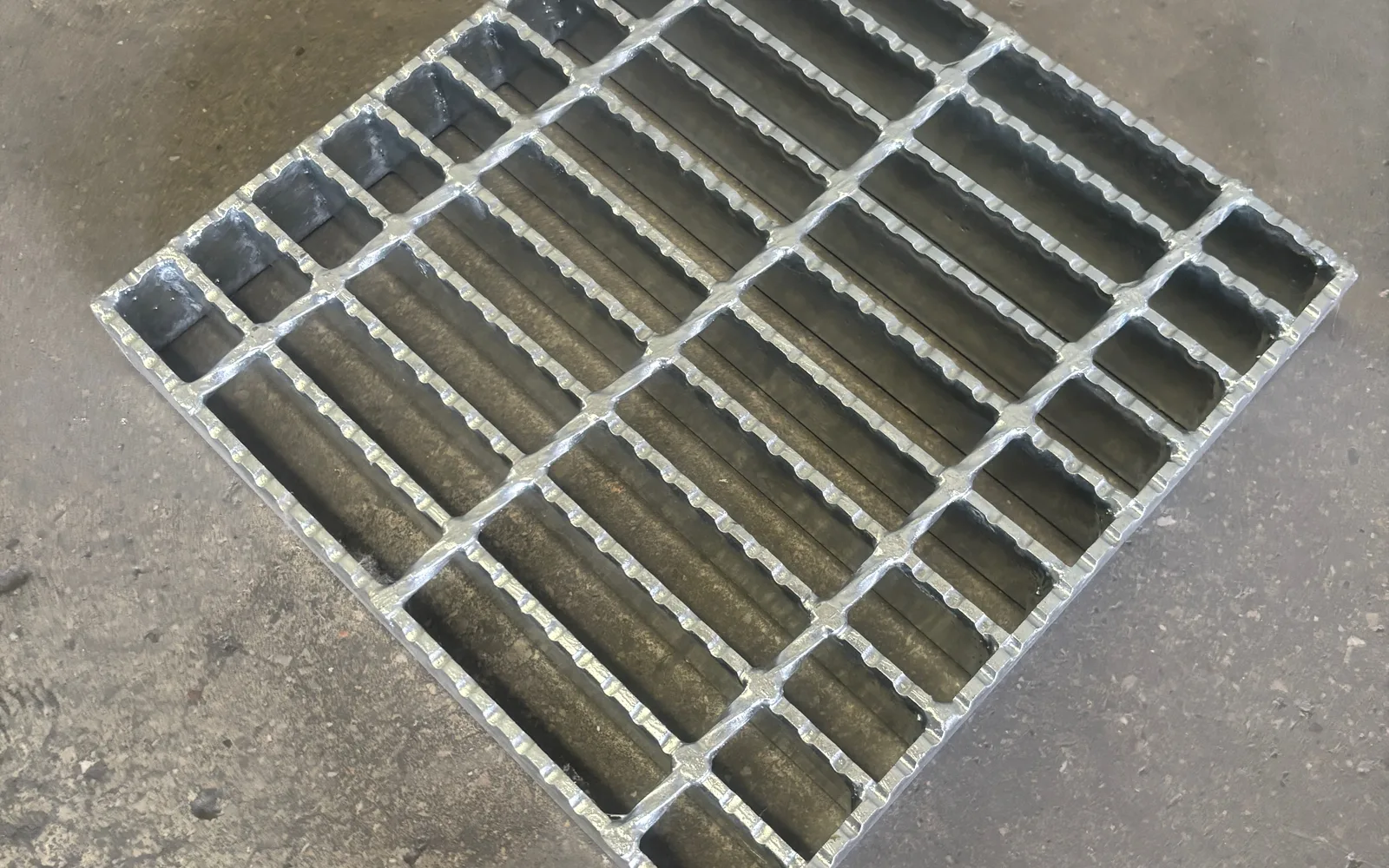
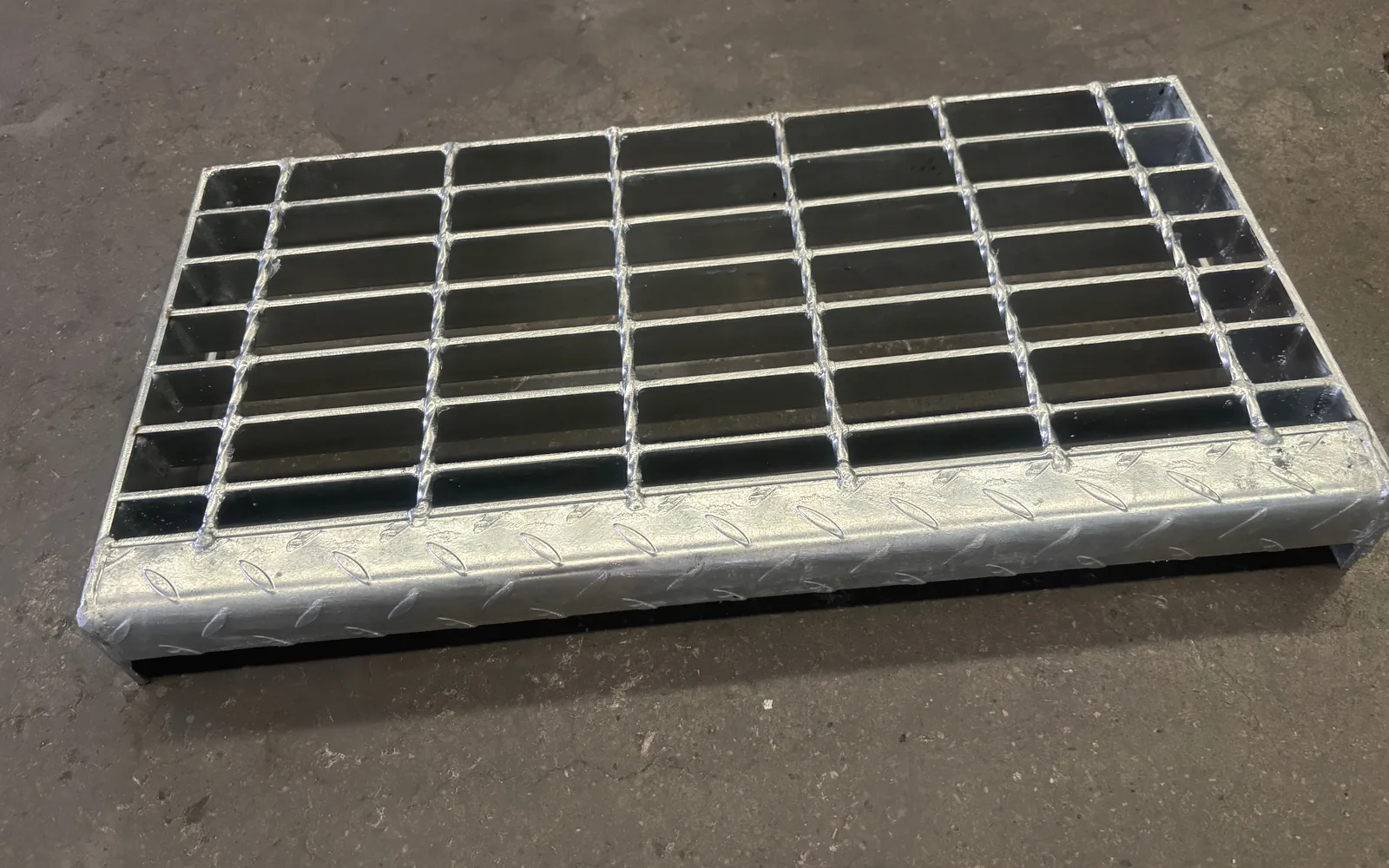




Trench covers are used to cover channels, drainage ditches and cable trenches; they must provide load capacity for traffic as well as drainage and anti-theft performance. This page explains channel forms, load classes, cover types and installation fixing one by one, and gives selection advice for different traffic conditions; drainage trench covers can follow the same decision sequence.
Trench Cover Specifications Quick Reference
The table below summarizes the specification markings on this page and their meanings for quick reference; see the detailed explanation later. Actual orders are subject to drawing annotations and the layout drawing; specifications not included in the table can be custom-fabricated to drawings.
| Marking/Item | Meaning and Description |
|---|---|
| 2. By cover shape, trench covers can be divided into | ordinary trench covers, U-type trench covers, tube-type trench covers and openable trench covers |
| Light-Duty | 25 t/m2; for cars and pedestrians in campuses, residential communities, parks, underground parking lots and kitchens |
| Heavy-Duty | 70 t/m2; for factory areas carrying vehicles under 20 t, ordinary highways, roadside areas of arterial roads, parking lots and streets |
| Extra Heavy-Duty | 140 t/m2; for arterial highways carrying heavy trailers, container forklifts, cranes and aircraft, extra-large parking lots, mines, docks and airports |
Trench Cover Application Scenarios
Trench covers are used across many industrial and municipal scenarios. The most typical applications are listed below to help you quickly judge whether they suit your project:
Trench Cover
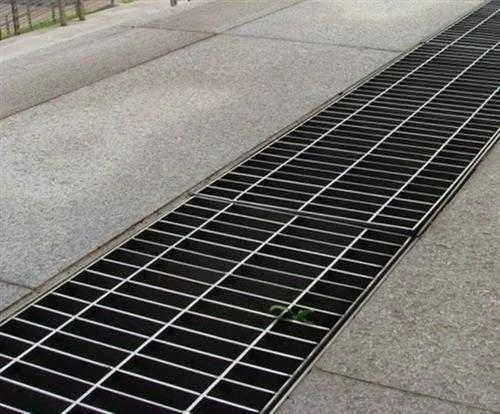
A trench cover is a channel (or pit) cover made of steel grating, available in multiple models to suit different spans, loads and requirements. It is widely used in municipal roads, garden facilities, residential communities, schools, stadiums and other sites. Depending on the application, trench (pit) covers of different specifications can be hot-dip galvanized, cold galvanized (electro-galvanized) or untreated. Trench covers are mainly used in factories and high-grade residential communities, mainly because cement ditch covers are often crushed and the road surface is also damaged; trench covers made of steel grating are therefore used to suit different load requirements. Since 2000, trench covers in China have come into much wider use in municipal roads, garden facilities, residential communities, schools, stadiums, factory construction and other sites. National design requirements for steel grating products contain relevant provisions for steel grating and similar products.
If your working conditions fall outside the above range, you can provide site photos and dimensions, and our technicians will help assess them.
Trench Cover Product Classification
Trench covers come in many types; the common classifications are as follows:
1. By material, trench covers can be divided into hot-dip galvanized trench covers, stainless steel trench covers, powder-coated trench covers, etc.
2. By shape, trench covers can be divided into: ordinary trench covers, U-type trench covers, tube-type trench covers and openable trench covers.
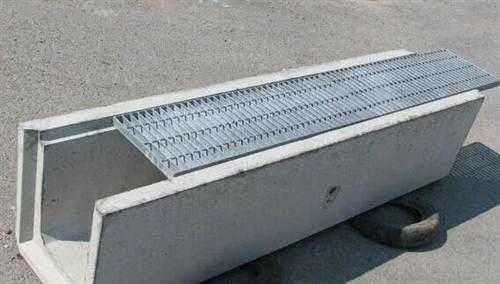
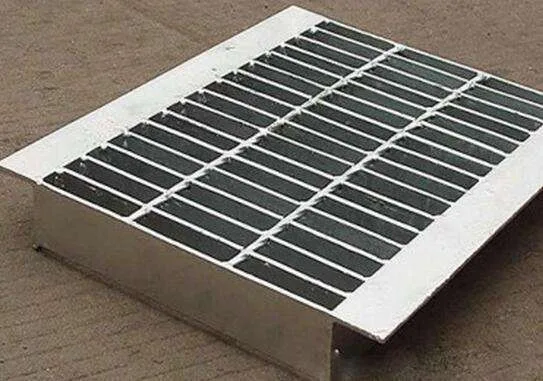
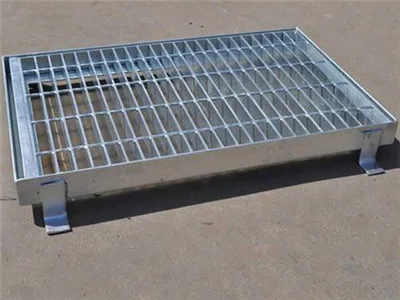
Determine the category first and then the specific model; this saves detours and makes comparison with other materials easier.
Trench Cover Product Dimensions
Specification parameters are the items most often checked in selection. The common models, pitch combinations and corresponding unit weights of trench covers are summarized below as a technical basis for procurement and production scheduling:
The above are common specifications; actual ordered dimensions and tolerance requirements shall be confirmed against the layout drawing.
Selection Notes
Trench covers are common steel grating components in industrial plants and municipal engineering, widely applied and with a complete specification system. This section first clarifies the definition, structural forms and common names, to avoid deviations caused by inconsistent terminology in later communication.
- For trench covers the bearing bar direction is the load-bearing (support) direction; the bar length L is set with clearance according to the channel (or pit) width
- Lay out along the channel (or pit) length using a standard panel width of 995mm that matches the processing module, with 5mm gaps between panels
- The remaining channel (or pit) length under 1 meter is sized by the module
- Select the steel grating model according to the channel (or pit) width and load requirements.
- Standard-size trench covers are recommended for design and construction; other specifications can be customized.
Once you grasp these basic concepts, the specifications and sizing recommendations that follow will be much easier to understand.
Trench Cover Materials
The common materials and surface treatments for trench covers are listed below, with selection advice by service environment:
Bearing bars: Q235A or stainless steel, in plain flat, anti-slip serrated and I-shaped sections. Common specifications include 20*5, 25*5, 25*3, 32*5, 40*5, 40*3, 50*5, 65*5, 75*6, 100*8, 100*10, etc.; as a direct-sale manufacturer we offer a wide range of specifications.
Cross bars: round bar, twisted square bar, square bar or hexagonal bar in Q235A or 304 stainless steel. Twisted square bar is drawn from wire rod through a square die and twisted; common specifications include 5*5, 6*6, 8*8mm, etc.
Once material and surface treatment are decided, we recommend writing zinc coating thickness and appearance requirements into the technical agreement.
Trench Cover Features
The core reason trench covers are so widely adopted in engineering is their outstanding overall performance in load capacity, drainage, corrosion protection and later maintenance. Compared with traditional solutions such as cast iron covers and checkered plate, the advantages are mainly as follows:
| Item | Description |
|---|---|
| Attractive Appearance | Clean lines and a silvery look, in line with modern trends. |
| Optimal Drainage | The drainage area reaches 83.3%, more than twice that of cast iron. |
| Hot-Dip Galvanizing | Strong rust resistance, maintenance-free and replacement-free. |
| Anti-Theft Design | The cover is hinged to the frame: anti-theft, safe and easy to open. |
| Cost Savings | For large spans and heavy loads, it costs less than cast iron and saves the cost of replacing stolen or crushed covers. |
| High Strength | Strength and toughness far exceed cast iron; suitable for docks, airports and other large-span, heavy-load environments. |
| Wide Range of Specifications | Meeting requirements for different environments, loads, spans, sizes and shapes. |
The product is simple to construct, lightweight, high in load capacity, impact-resistant, bends rather than breaks, high in drainage capacity, and after hot-dip galvanizing is attractive, durable and corrosion-resistant, with advantages cast iron covers cannot match. Hinged or hook connections make it easy to open, with anti-theft function.
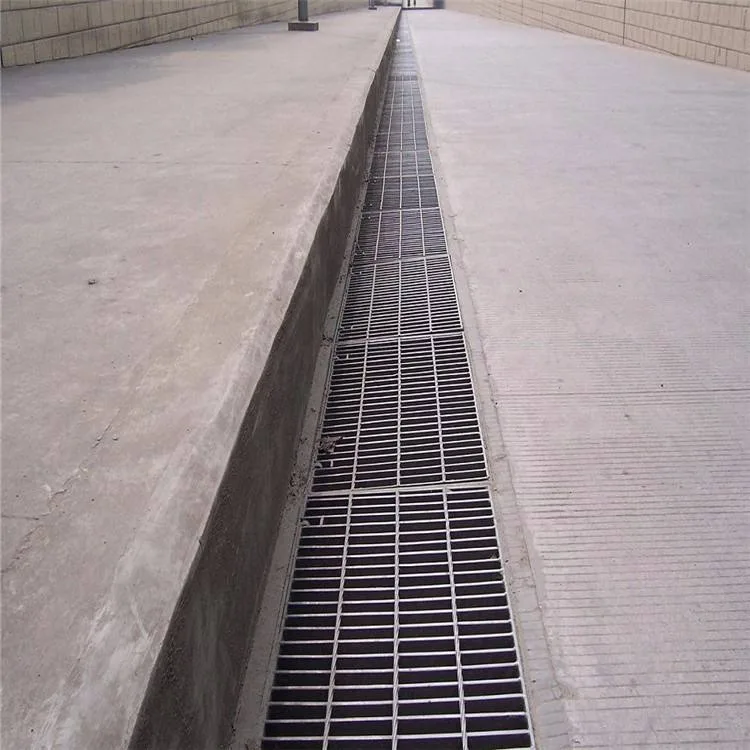
Overall, selection should weigh span, load and service environment together.
Trench Cover Classification
A steel grating trench cover usually consists of a fixed frame and a removable steel grating cover, with fastening accessories and anti-theft devices as required.
GT-type trench cover
: GT-type ordinary side-channel and cross-channel steel grating trench covers for roadways. Roadway steel grating trench covers are divided into side-channel covers and cross-channel covers by direction of travel: covers whose bearing bars are perpendicular to the direction of travel are side-channel covers, and those whose bearing bars are parallel to it are cross-channel covers.
GU Type Trench Cover
GU-type steel grating trench covers: for most ordinary concrete channels without a lip, U-type covers are simple and economical and require no special channel lip.
For loads T6-14, embedding angle steel in the channel edge is recommended; precast U-type channel blocks can also be used to build the ditch, effectively preventing sewage from leaking into the ground. When vehicles must pass, this U-type steel grating trench cover is suitable only for side channels
GM Type Trench Cover
: GM-type pit steel grating covers can be used for rainwater wells, sand wells, sewers, sewage wells and other drainage wells, vents and manholes of roads, parks and other municipal facilities. GM-type pit covers are generally designed as flip-up covers, usually opening through an angle of 110 degrees. Covers with angle lugs are not only anti-theft but also simplify the procedure
Trench Cover Selection
Trench Cover Dimension Selection
1. For trench covers used on sidewalks, roadways and parking lots along traffic roads, on docks or on building floors, design and selection must take actual conditions into account, because loads and directions of travel differ.
2. For road ditches and cross-channel covers (direction of travel parallel to the bearing bars), wheel pressure and impact must be considered as well as the risk of the cover bouncing or shifting; the cover must be fixed to the angle steel or support beam (by welding or with steel grating installation clips).
Trench Cover Load Selection
Light duty: 25 t/m2; for cars and pedestrians in campuses, residential communities, parks, underground parking lots and kitchens
Heavy duty: 70 t/m2; for factory areas carrying vehicles under 20 t, ordinary highways, roadside areas of arterial roads, parking lots and streets
Extra-heavy duty: 140 t/m2; for arterial highways carrying heavy trailers, container forklifts, cranes and aircraft, extra-large parking lots, mines, docks and airports.
Trench Cover Installation
- Installation notes: the anchor plates of the support frame must be firmly embedded in the concrete layer
- The supporting surfaces on both sides of the ditch must be flat and solid
- The bearing bar direction is the load-bearing (support) direction; the bar length L is set with clearance according to the channel (or pit) width
- Lay out along the channel (or pit) length using a standard panel width of 995mm that matches the processing module, with 5mm gaps between panels
- The remaining channel (or pit) length under 1 meter is sized by the module
- Select the steel grating model according to the channel (or pit) width and load requirements.
- Standard sizes are recommended for design and construction.
Key Points for Trench Cover Selection
Confirm each item in the order below during selection to avoid most later rework. Record the conclusion of each step and submit it with your inquiry:
- Step 1 · Confirm Trench Type and Edge Detail: Concrete trenches without flanges and trenches with support flanges correspond to different panel types; whether the flange needs angle steel protection must be clarified in advance.
- Step 2 · Confirm Vehicle Types: Whether it carries pedestrians, light vehicles or heavy vehicles directly determines the panel type and load class.
- Step 3 · Confirm Trench Width and Laying Direction: Side trench covers and cross trench covers have different bearing bar orientations, which must match the traffic direction to avoid reversed installation affecting load capacity.
- Step 4 · Confirm Anti-Theft and Fixing Requirements: For outdoor public areas, hinged or bolted fixing is recommended to reduce displacement and theft risk.
Once the above conditions are confirmed, proceed to Instant Quote PageEstimate quantities by dimensions, or send the condition list to customer service for model recommendations from our technicians.
Trench Cover Service Conditions Comparison
The same specifications last very differently in different environments. The table below gives recommended practices by common service environment for your selection reference:
| Operating Environment | Recommended Practices | Note: |
|---|---|---|
| Indoor Dry Environments | Made of standard carbon steel with surface treatment as required | Focus on span and load; environmental impact is minimal |
| Chemical or Coastal Environments | Confirm material and anti-corrosion scheme per medium | Avoid galvanic corrosion from direct contact between different metals |
| Vehicle Traffic Areas | Check load class against vehicle types | Note that bearing bars must run parallel to traffic direction |
| Pedestrian and Maintenance Walkways | Choose standard series, balancing walking comfort | Focus on surface flatness and end banding |
| Clean Rooms and Food & Pharmaceutical | Prioritize surface treatment and cleaning convenience | Avoid dust-collecting structures and cleaning dead corners |
| Temporary or Short-Term Use | Can be configured with the light-duty series | For short schedules, prioritize easy disassembly and turnover |
Custom Fabrication & Quotation
Common specifications are usually in stock; lead times for shaped parts and bulk orders are determined by specification and production scheduling. For projects needing site measurement and layout design, provide photos and dimensions and we will assist with drawings to reduce on-site cutting. For practices on similar projects, seeProject Cases, for model comparison see Products.
FAQ
How is the price of a trench cover calculated?
Usually calculated as the theoretical weight for the model times the material unit price, plus hot-dip galvanizing or other surface treatment costs, and fluctuating with steel and zinc prices. You canInstant Quote PageEnter specifications and dimensions for a quick estimate.
Can it be custom-made to site dimensions?
Yes. Bearing bar specs, pitch, panel dimensions and banding forms can all be custom-made to drawings; cutouts, corner notches and shaped cutting are also supported. For bulk orders, a layout drawing can be confirmed before production.
What mistakes are easy to make during installation?
Three main points: first, bearing bars installed in the wrong direction so loads are carried by cross bars; second, insufficient or missing fixing points; third, welding slag not removed and zinc-rich paint not reapplied after welding. These three cause the most on-site problems.
A quotation can be given once the specifications and surface treatment of the trench cover are confirmed. For customization per drawings or load verification, please reach us viaInstant Quote PageSubmit dimensions, or contact us directly for technical support.