







This article explains steel grating trench covers step by step, in the order of specifications, typical applications and basic concepts, offering practical decision rules rather than theory alone. If you have drawings or on-site dimensions at hand, check them against the points listed here; hot-dip galvanized steel grating can follow the same sequence.
Steel Grating Specifications
Main specification comparison is as follows:
Trench cover selection comes down to three points:Load Class, Size and Frame, Opening Method.
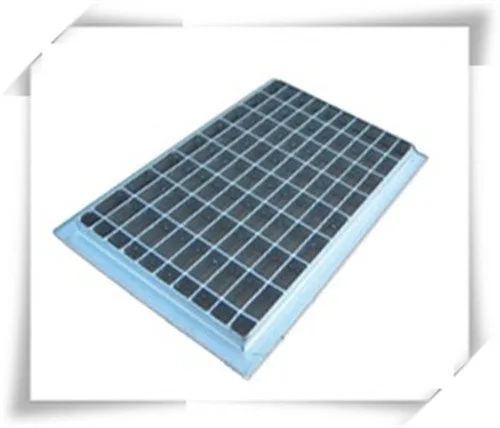
Load classes fall into three tiers: pedestrian (light), trolleys (medium) and fire engines/trucks (heavy). Heavy-duty use requires thicker bearing bars or an angle-steel frame. Sizes are made to the trench width, with a common single panel width of 300-500mm. For easy cleaning, we recommendhinged openablecovers with anti-theft locks. Serrated trench covers are slip-resistant and suit wet environments. Simply state load class + trench width + openable or not when ordering.
| Class | Scenario | Specifications |
|---|---|---|
| Load Class | Applicable | Recommended Specification |
| Light-Duty | Pedestrian | G255/30/100 |
| Medium | Trolley Lane | G303/30/100 + frame |
| Heavy-Duty | Truck / Fire Engine | G405/30/100 + reinforced frame |
The above are common specifications; actual ordered dimensions and tolerance requirements shall be confirmed against the layout drawing.
Bigger specifications are not always better. Steel grating trench covers should be selected as economically as possible while meeting load requirements; over-thickening adds weight and cost and complicates installation. The product page gives a fuller comparison for hot-dip galvanized steel grating, which you can consult before deciding.
Typical Applications
Typical applications mainly include the following categories, which can help you judge suitability for your project:
- Industrial Platforms & Maintenance Walkways: equipment platforms and inspection passages in power plants, chemical plants and steel-structure workshops;
- Municipal & Landscape: road drainage trench covers, rainwater grates, tree grates, park boardwalks;
- Transportation & Ports: wharf trestles, multi-story parking garage lanes, railway bridge walkways;
- Environmental & Water Treatment: walkways in wastewater treatment plants, tank platforms, screening machine platforms;
- Others: elevated tower platforms, stair treads, fences and railings, etc.
If your working conditions fall outside the above range, you can provide site photos and dimensions, and our technicians will help assess them.
Requirements often differ between areas of the same site. With steel grating trench covers, for example, main walkways and corner zones, or frequently used areas and occasional maintenance areas, can take different specifications. Mixing hot-dip galvanized steel grating should also be planned by zone, balancing safety and cost.
Key Conditions to Confirm During Selection
- First clarify the span and support beam spacing to determine the required series;
- Then check load requirements by usage type (pedestrian, maintenance, vehicular);
- Finally, determine the surface treatment by service environment (dry indoor, outdoor, coastal, chemical).
The details most often overlooked in a specification table are tolerances and end treatment. Steel grating trench covers usually leave a machining allowance along the length; for recessed installation, edge sealing and corner cutting requirements must be stated in advance. Hot-dip galvanized steel grating is handled similarly in such details, so mark them clearly on the drawings.
Further notes: How to combine hot-dip galvanized steel grating and galvanized grating in use
In engineering, galvanized grating is often used together with the components mentioned in this article. The two differ in load carrying and installation practices; when combining them, pay special attention to the connection of support conditions and fixing methods, as junction treatment is often where problems arise. For unified drawings, submit dimensions of both types and our technicians will process them under the same layout logic.
- For all product specifications and theoretical weights by series, visit Steel Grating Product Center
- To estimate cost by size and quantity, use Instant Quote PageSubmit Requirements
- To see how similar projects were executed, refer to Project Cases field applications
FAQ
Can the values in the article be applied directly?
Values in this article come from relevant standard clauses or common industry practice. For actual selection, recalculate based on site span, load class and service environment; direct copying is not recommended.
What maintenance is required during daily use?
Maintenance mainly involves periodically checking whether fasteners are loose, whether touch-up paint has peeled off, and whether the panel surface shows obvious deformation or rust. Issues found should be dealt with promptly; overall maintenance is minimal.
Where can I find specific specifications?
our websiteProductsCommon specifications and theoretical weights are organized by series, also available in Instant Quote PageEstimate by size, or contact us directly for sizing advice.
The above is for sizing and construction reference. To verify specific parameters or request a quotation, please visitInstant Quote Page, or contact our technical staff.
If you already have drawings or site dimensions, submit them directly and we will help verify specifications and layout, avoiding on-site cutting and rework caused by mismatched models. Without drawings, site photos and approximate dimensions are enough for an estimate.