
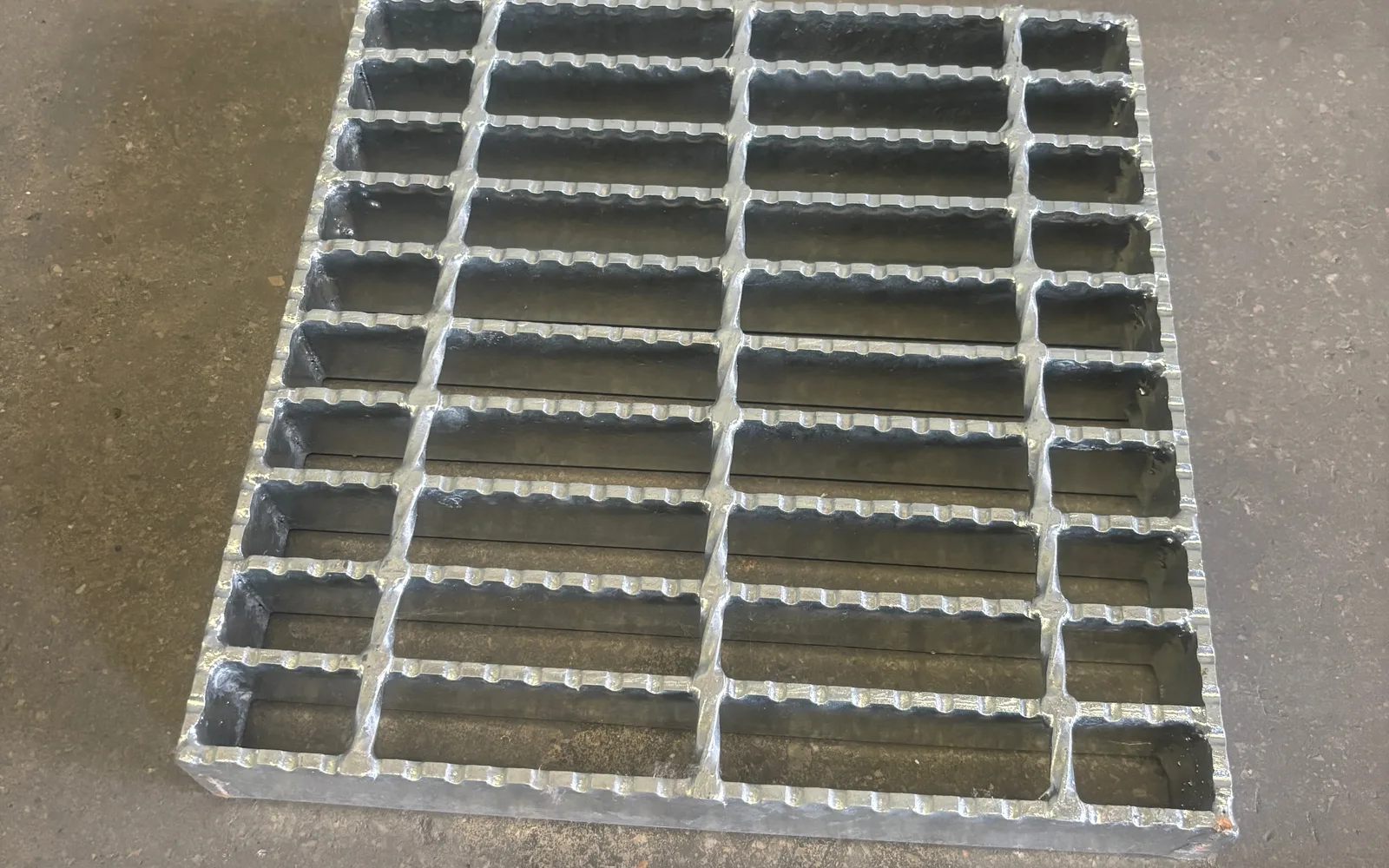
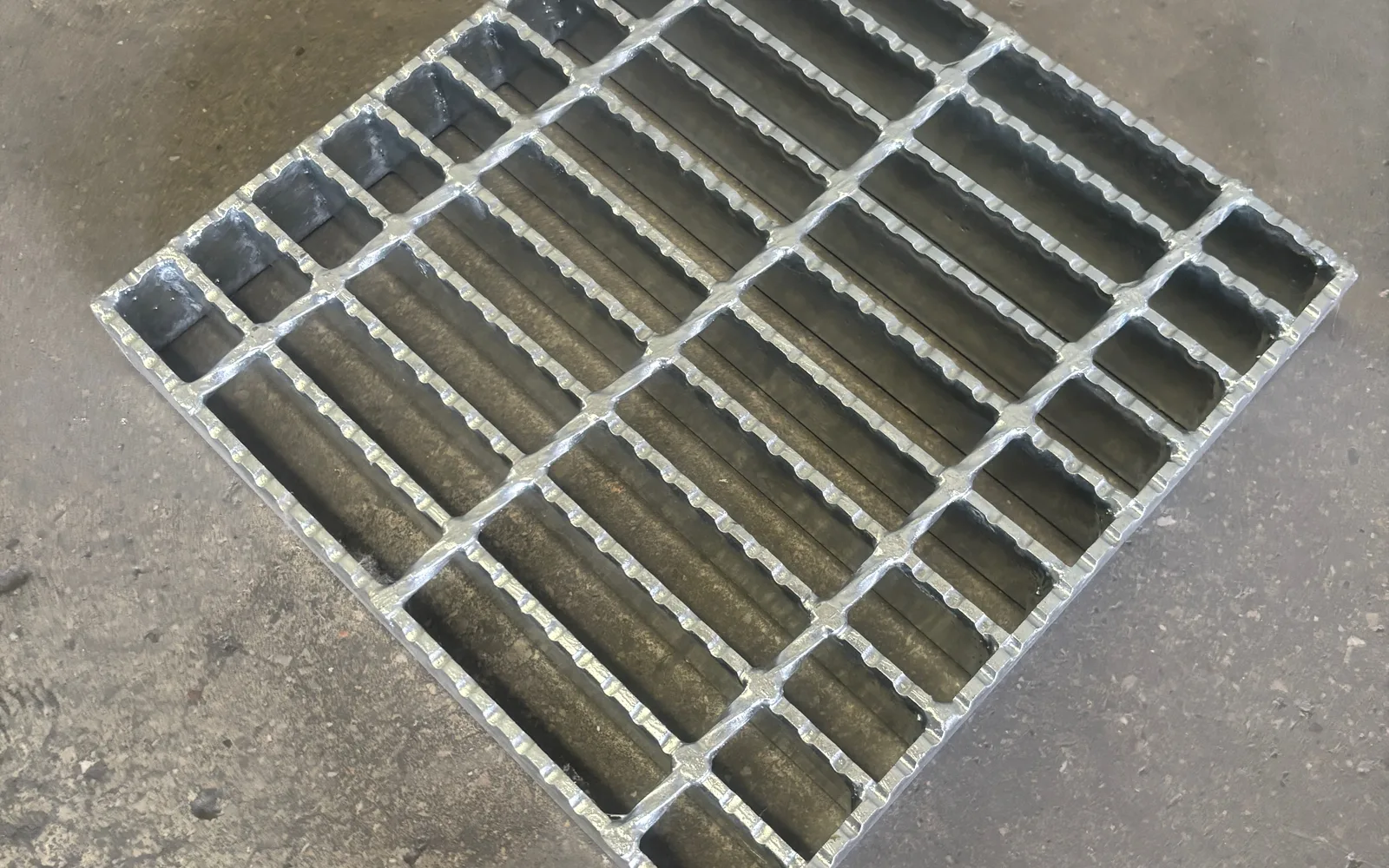
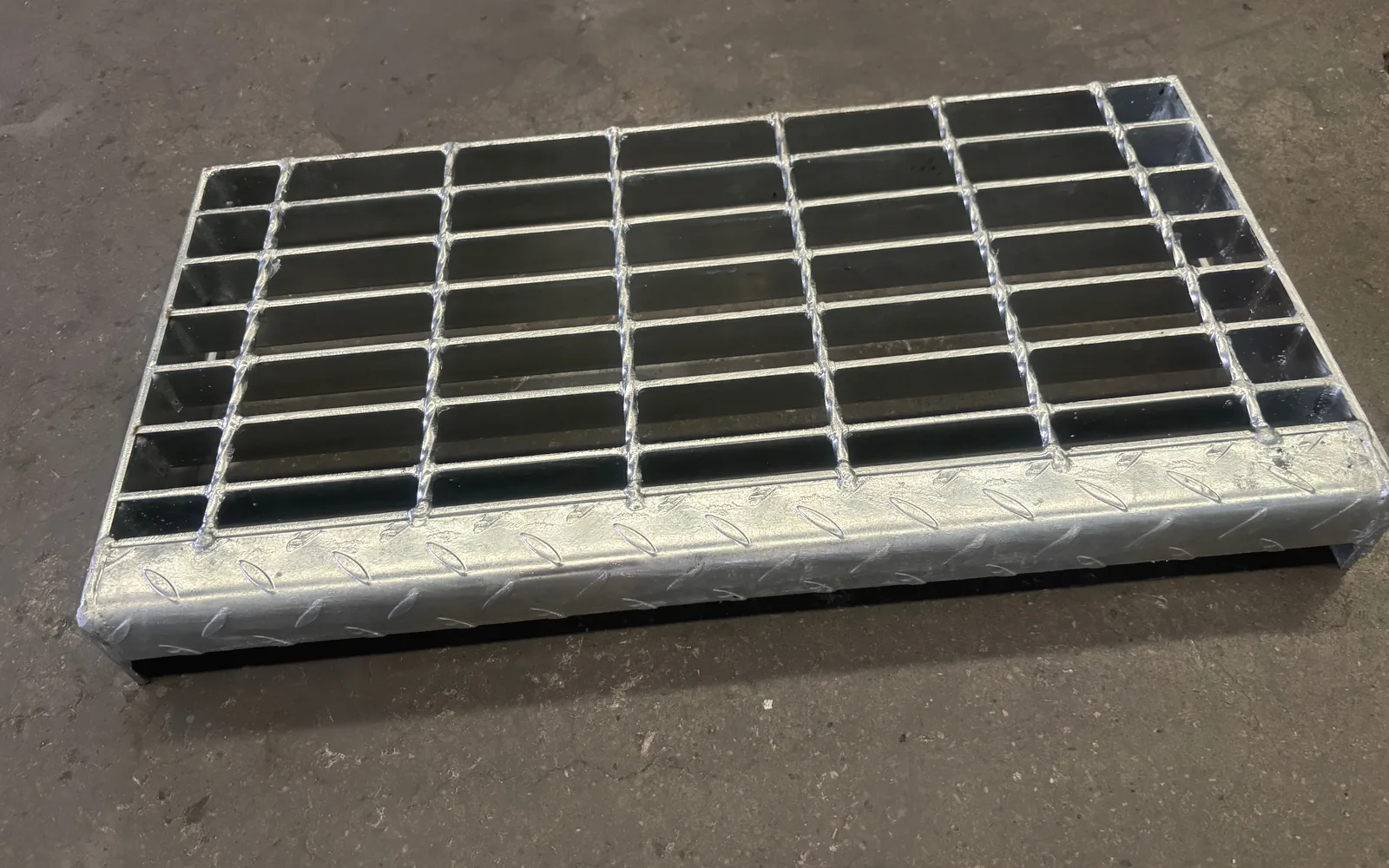




The core of compound steel grating selection is span, load and environment: span determines the series, load determines bearing bar specs and pitch, and environment determines surface treatment. This page follows that order and explains common pairing of steel cover plates in real projects, giving a complete judgment framework.
Compound steel grating quick specification table
The table below summarizes the specification markings on this page and their meanings for quick reference; see the detailed explanation later. Actual orders are subject to drawing annotations and the layout drawing; specifications not included in the table can be custom-fabricated to drawings.
| Marking/Item | Meaning and Description |
|---|---|
| 1 | High strength, lightweight structure |
| 3 | Attractive appearance with a bright surface |
| 5 | Good ventilation, lighting, heat dissipation, anti-slip and explosion-proof performance |
| 6 | Easy to install and disassemble |
What is compound steel grating
Compound steel grating is a specification form within the steel grating product family; its structure, material requirements and processing have corresponding standard bases. Clarifying its basic definition and forming principle is the prerequisite for checking parameters and judging suitability, explained below in several aspects.
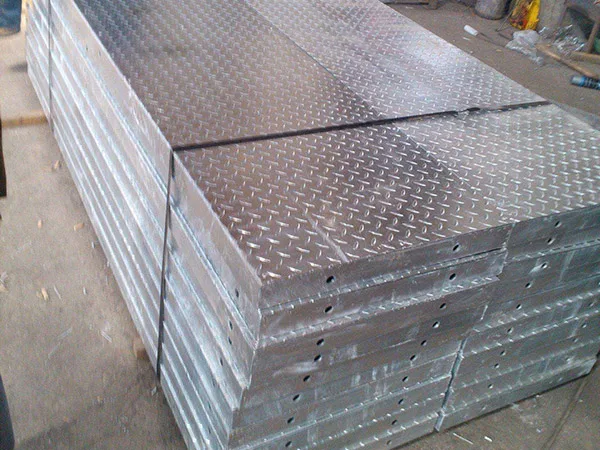
Compound steel grating is a product combining steel grating with spanning capability and a sealed checkered plate surface. It can be composed with any grating model and different thicknesses of checkered steel plate. The most common base is G323/40/100 grating; the checkered plate is usually 3mm thick, with 4mm, 5mm or 6mm also used.
Once you grasp these basic concepts, the specifications and sizing recommendations that follow will be much easier to understand.
Common models and dimensions of compound steel grating
Specifications are the most checked items in selection. The common models, pitch combinations and unit weights of compound steel grating are compiled below as a technical basis for procurement and production scheduling:
Compound steel grating commonly uses Series 3 (60mm bearing bar pitch) grating as the base, or Series 1 (30mm) or Series 2 (40mm); the checkered plate is commonly 3mm thick, with 4mm, 5mm and 6mm also available.
The above are common specifications; actual ordered dimensions and tolerance requirements shall be confirmed against the layout drawing.
Performance features of compound steel grating
Compound steel grating is widely adopted in engineering for its outstanding combined performance in load bearing, drainage, anti-corrosion and maintenance. Compared with cast iron covers and checkered steel plates, its advantages mainly lie in:
Features of compound steel grating: high strength, light structure, strong corrosion resistance and durability. With an attractive appearance, glossy surface and no dirt accumulation, it sheds rain and snow without pooling water, self-cleans, is easy to maintain, and has been widely used in recent years. It offers ventilation, lighting, heat dissipation, slip resistance and explosion protection, and is very convenient to install and disassemble.
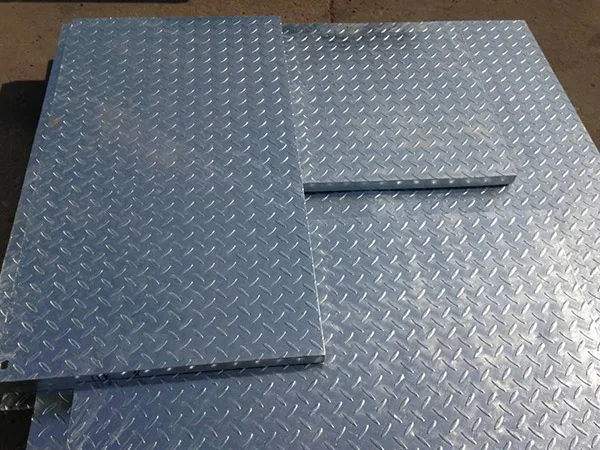
Overall, selection should weigh span, load and service environment together.
Specification parameters of compound steel grating
Uses of compound steel grating: generally Series 3 grating is used as the base, with Series 1 or Series 2 available on request. If welded wire mesh is welded on the front or bottom to form a mesh compound panel, it prevents small parts from falling; used in granaries, canteens and warehouses, it prevents mice and other small animals from entering.
Key selection points for compound steel grating
Confirm each item in the order below during selection to avoid most later rework. Record the conclusion of each step and submit it with your inquiry:
- Step 1 · Define Span and Support Conditions: First measure the clear span between support beams, then confirm the support surface width is sufficient; these two items determine the usable series range.
- Step 2 · Verify Service Load: Check separately for pedestrian, maintenance or vehicular traffic; maintenance and vehicular use differ greatly in bearing bar requirements.
- Step 3 · Determine Material and Surface Treatment: Ordinary carbon steel works for dry indoor environments; hot-dip galvanizing is recommended for outdoor or humid environments; chemical and coastal environments need separate confirmation.
- Step 4 · Confirm Shape and Fixing Method: Including whether cutouts, corner notches and banding are needed, and whether to use welded fixing or special clips.
Once the above conditions are confirmed, proceed to Instant Quote PageEstimate quantities by dimensions, or send the condition list to customer service for model recommendations from our technicians.
Application scenarios of compound steel grating
Compound steel grating is widely used in power plants, chemical plants, refineries, steel mills, paper mills, machinery plants, cement plants, municipal engineering, wastewater treatment and sanitation projects for platforms, walkways, trestles, trench covers, manhole covers, ladders and more.
Compound Steel Grating Features
1: High strength, lightweight structure
2: Strong corrosion resistance, durable
3: Attractive appearance, bright surface
4: No dirt accumulation, no rain or snow buildup, no water pooling; self-cleaning and easy to maintain
5: Good ventilation, lighting, heat dissipation, anti-slip and explosion-proof performance.
6: Easy to install and disassemble.
Compound steel grating working-condition comparison
The same specifications last very differently in different environments. The table below gives recommended practices by common service environment for your selection reference:
| Operating Environment | Recommended Practices | Note: |
|---|---|---|
| Indoor Dry Environments | Made of standard carbon steel with surface treatment as required | Focus on span and load; environmental impact is minimal |
| Humid or Water Treatment Environments | Use a higher corrosion protection grade with matching fasteners | Regularly inspect fixing points and surface corrosion |
| Chemical or Coastal Environments | Confirm material and anti-corrosion scheme per medium | Avoid galvanic corrosion from direct contact between different metals |
| Vehicle Traffic Areas | Check load class against vehicle types | Note that bearing bars must run parallel to traffic direction |
| Clean Rooms and Food & Pharmaceutical | Prioritize surface treatment and cleaning convenience | Avoid dust-collecting structures and cleaning dead corners |
| Temporary or Short-Term Use | Can be configured with the light-duty series | For short schedules, prioritize easy disassembly and turnover |
Custom Fabrication & Quotation
Common specifications are usually in stock; lead times for shaped parts and bulk orders are determined by specification and production scheduling. For projects needing site measurement and layout design, provide photos and dimensions and we will assist with drawings to reduce on-site cutting. For practices on similar projects, seeProject Cases, for model comparison see Products.
FAQ
What mistakes are easy to make during installation?
Three main points: first, bearing bars installed in the wrong direction so loads are carried by cross bars; second, insufficient or missing fixing points; third, welding slag not removed and zinc-rich paint not reapplied after welding. These three cause the most on-site problems.
How is the price of compound steel grating calculated?
Usually calculated as the theoretical weight for the model times the material unit price, plus hot-dip galvanizing or other surface treatment costs, and fluctuating with steel and zinc prices. You canInstant Quote PageEnter specifications and dimensions for a quick estimate.
Which surface treatment should I choose?
Hot-dip galvanizing is recommended for outdoor or humid environments; for dry indoor environments, untreated or painted is fine; coastal, chemical and other strongly corrosive environments need thicker zinc coatings or stainless steel, depending on the expected service life.
Once the specifications and surface treatment of compound steel grating are determined, a quotation can be provided. For custom fabrication or load calculation, you canInstant Quote PageSubmit dimensions, or contact us directly for technical support.