







This article focuses on compound steel grating and covers three parts in turn: compound steel grating, features, and basic concepts, with practical advice added after each part. If you are comparing options or preparing a purchase, check the items in the order given; parts relating to hot-dip galvanized steel grating can be cross-checked against the entries here, and adjusted where site conditions differ.
Compound Steel Grating
The following aspects most need to be confirmed in advance in actual procurement and use:
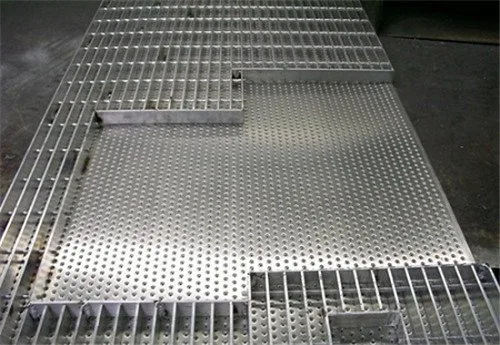
is standard steel grating fully covered with a layer of checkered steel plate and welded into a composite panel, combining the high strength of grating with the leak-proof, anti-slip and fall-through protection of checkered plate.
| Feature | Description |
|---|---|
| Feature | Description |
| Leak-proof | Closed checkered surface |
| Anti-Slip | Raised pattern |
| Stiffness | Composite reinforcement |
| Applicable | Sealed platform |
The above points can serve as a pre-purchase checklist; confirm each item before moving to the quotation stage.
Different areas within the same scenario often have different requirements. Taking compound steel grating as an example, specifications for main walkways and edge zones, or for regularly used areas and occasional maintenance areas, can be chosen separately; mixed use with galvanized grating should also be considered by zone to balance safety and cost.
Features
Its overall performance focuses on the following aspects; we suggest comparing item by item in actual selection:
(1) Closed surface prevents small objects and tools from falling through; (2) checkered surface is anti-slip; (3) high overall stiffness and resistance to deformation; (4) can be hot-dip galvanized for corrosion protection.Applicable to:Grain silo walkways, pharmaceutical and food platforms, floor opening covers, ship decks and other places requiring sealing. The drawbacks are higher dead weight and no ventilation. The standard composite layer uses 3mm checkered plate.
Overall, selection should weigh span, load and service environment together.
Regarding corrosion protection, one thing is easily overlooked: on-site cutting and welding damage the original coating, and these areas need zinc touch-up after construction, otherwise rust often starts from the cut edges. Hot-dip galvanized steel grating has the same issue; it is best to include this in the technical requirements at the construction disclosure.
Further notes: Common combinations of hot-dip galvanized steel grating and galvanized grating
Hot-dip galvanized steel grating and galvanized grating are different specification forms within the same product system. The selection logic is the same as described in this article: first the usage type, then span and load to determine specifications, and finally the environment to determine surface treatment. Their corrosion protection and anti-slip requirements may differ; state them separately when ordering rather than writing one general technical requirement.
- For all product specifications and theoretical weights by series, visit Steel Grating Product Center
- To estimate cost by size and quantity, use Instant Quote PageSubmit Requirements
- To see how similar projects were executed, refer to Project Cases field applications
FAQ
What maintenance is required during daily use?
Maintenance mainly involves periodically checking whether fasteners are loose, whether touch-up paint has peeled off, and whether the panel surface shows obvious deformation or rust. Issues found should be dealt with promptly; overall maintenance is minimal.
What is most often overlooked during installation and acceptance?
First, bearing bars installed in the wrong direction reduce load capacity; second, insufficient fixing points or missing zinc touch-up paint; third, support beam spacing inconsistent with the layout drawing. These three items are most often overlooked on site.
How to choose between hot-dip galvanizing and cold galvanizing?
The two anti-corrosion mechanisms differ: hot-dip galvanizing immerses steel in molten zinc to form a metallurgically bonded coating, thick and long-lasting, suitable for outdoor and humid environments; cold galvanizing is electrochemical deposition with a thinner, more uniform appearance, suitable for dry indoor environments or applications requiring high dimensional precision.
The above is for sizing and construction reference. To verify specific parameters or request a quotation, please visitInstant Quote Page, or contact our technical staff.
If you already have drawings or site dimensions, submit them directly and we will help verify specifications and layout, avoiding on-site cutting and rework caused by mismatched models. Without drawings, site photos and approximate dimensions are enough for an estimate.