
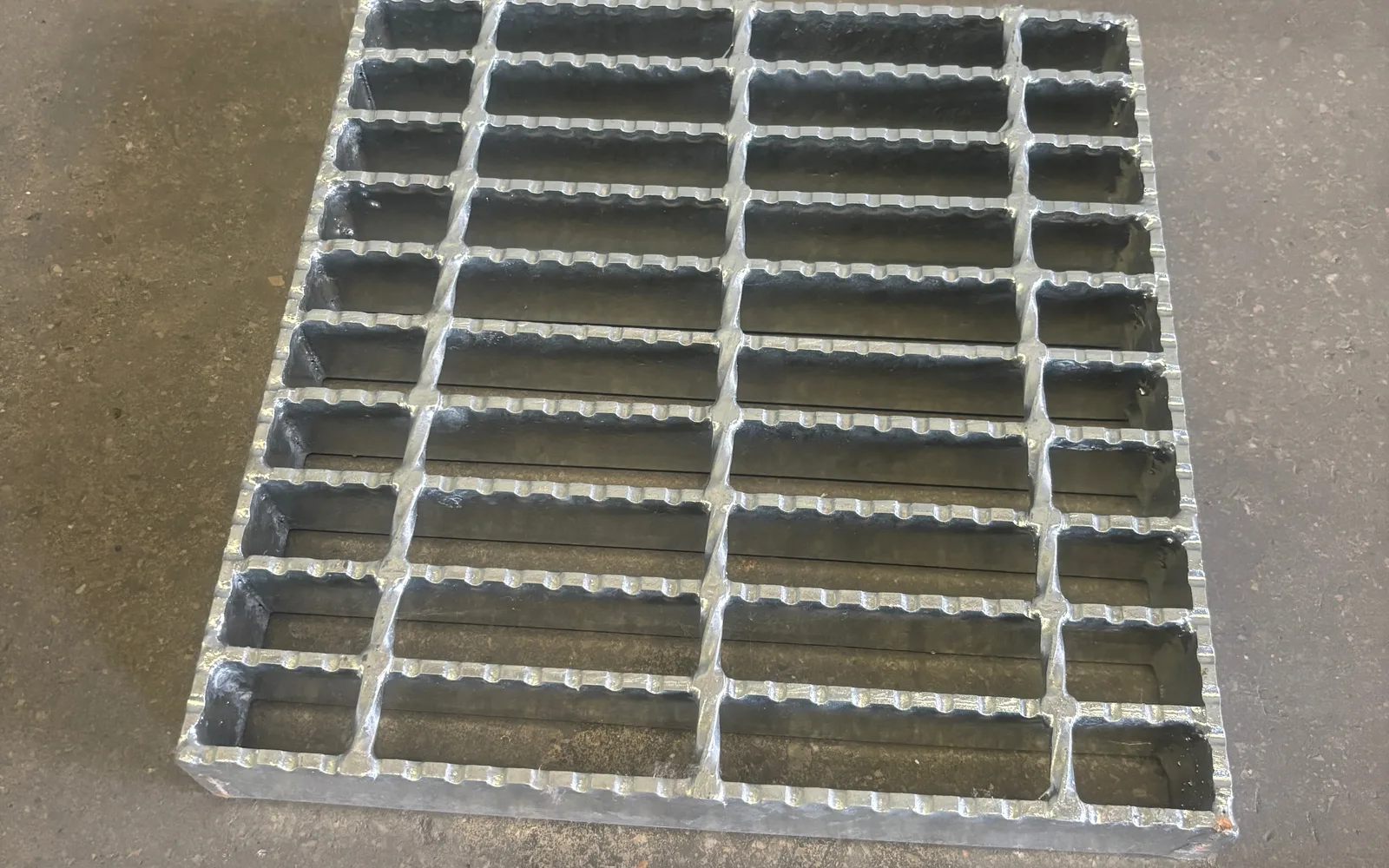
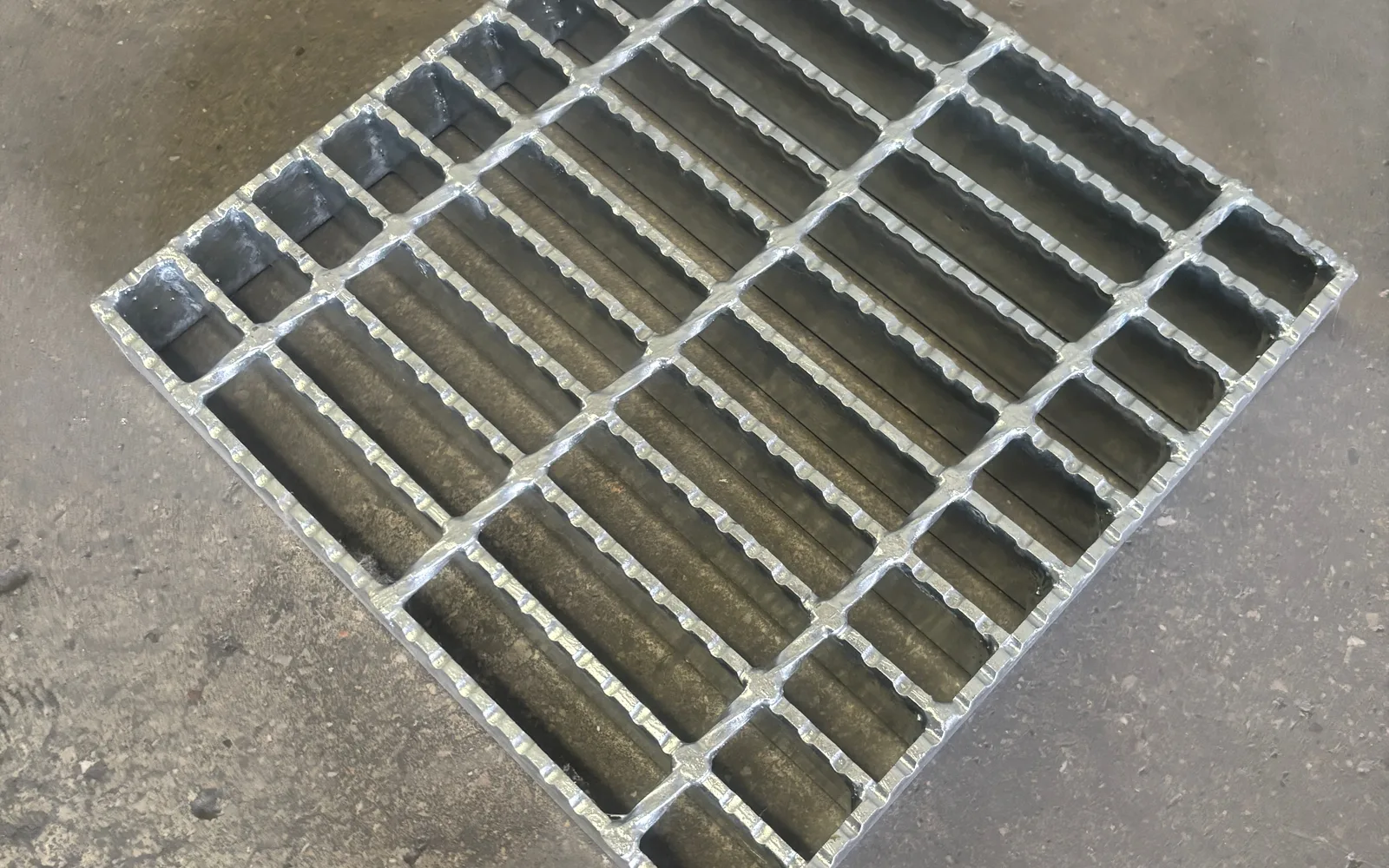
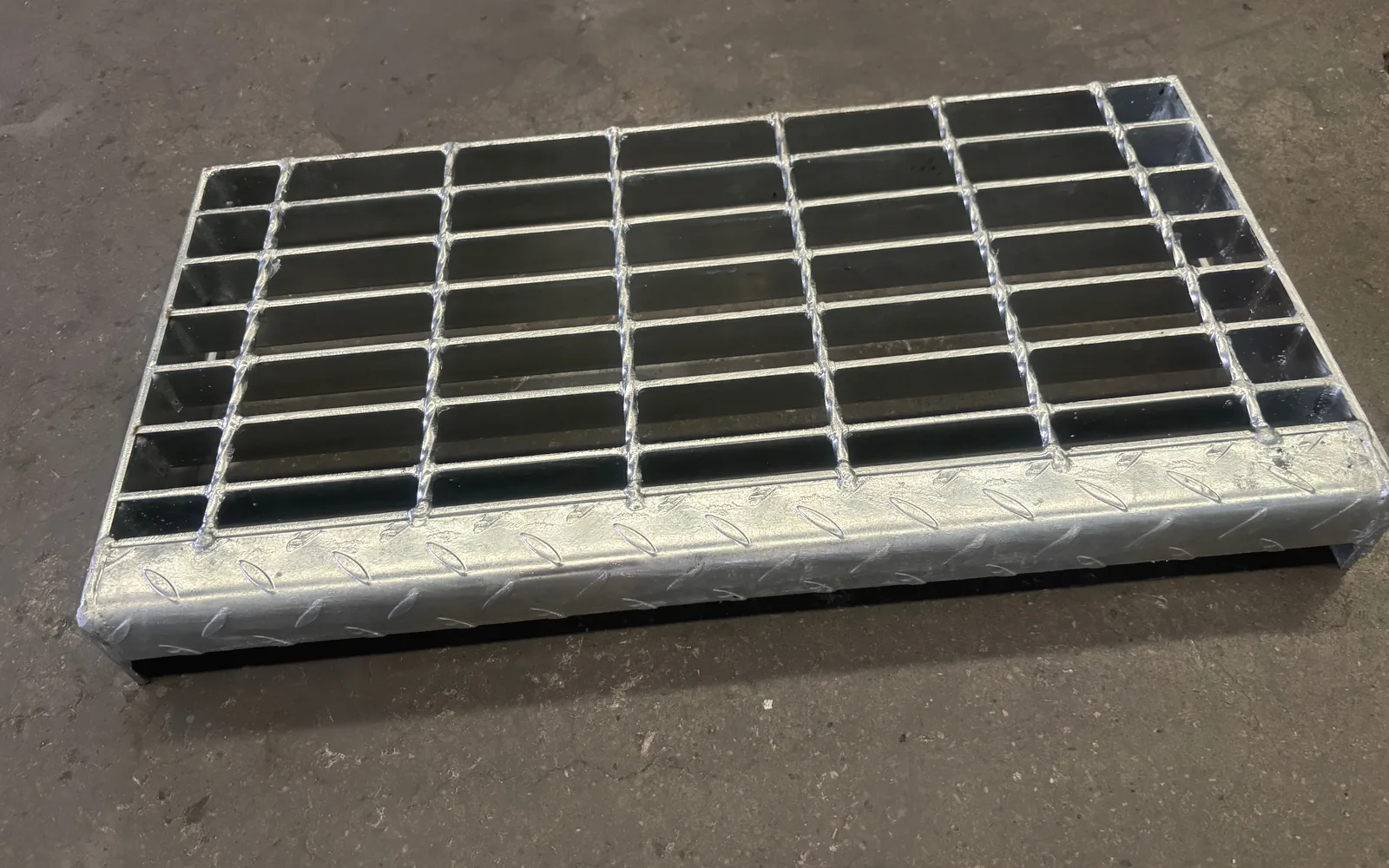



Steel grating, also called steel grating panel or grating, is an open steel structural member made by arranging bearing bars at a set pitch at right angles to cross bars (twisted square bars) and fixing them by pressure welding or press-locking, forming regular square mesh openings. Steel grating is usually made of carbon steel with a hot-dip galvanized surface to prevent oxidation; stainless steel or no surface treatment can be chosen for particular conditions. Lightweight, high-strength, ventilated and translucent, and free of accumulated rain and snow, it is one of the most commonly used flooring materials for industrial platforms, walkways, trench covers and treads.

The core of steel grating selection is three things - span, load and environment. Span determines the series, load determines the bearing bar size and pitch, and environment determines the surface treatment. This page follows that order and explains how load-bearing steel grating is commonly paired in real projects, so that reading it gives you a complete decision framework.
Items to Confirm for Steel Grating Selection
This page does not list a fixed specification table, as such products are usually custom-fabricated to site conditions. We recommend confirming each item in the table above before inquiry: once mismatched with actual site conditions, refabrication is often required later.ProductsCommon specifications are organized by series for reference.
| Items to Confirm | What Needs to Be Clarified | Common Practices |
|---|---|---|
| Span and Support | Clear span between support beams and support surface width | Determine by field-measured dimensions |
| Material Requirements | Carbon steel or stainless steel, grade requirements | Determine by corrosion grade of service environment |
| Surface Treatment | Hot-dip galvanized, painted, or untreated | Hot-dip galvanizing recommended for outdoor and humid environments |
| Dimensions | Panel length and width, whether openings or notches are needed | Custom fabrication per layout drawing |
| Acceptance Requirements | Acceptance Criteria for Flatness, Tolerances and Appearance | Recommended to specify in the technical agreement |
| Packaging & Shipping | Whether packing and moisture protection are needed | Packing and cushioning recommended for long-distance shipping |
1. Load-Bearing Characteristics of Steel Grating
The main performance features of steel grating can be summarized as follows, for item-by-item checking during scheme comparison and technical disclosure:
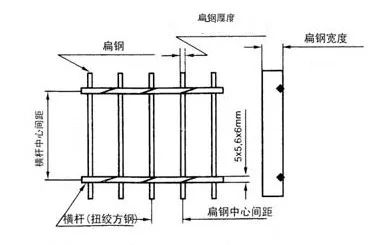
Almost all surface loads are carried by theBearing Bar, while the cross bars only fix the bearing bars and keep the pitch. Therefore, when installing, the bearing bars must run along the span direction with both ends resting on the supporting beams; reversing the direction greatly reduces load capacity (see Correct Installation of Bearing Bar Direction for Steel Grating). Compared with checkered steel plate, steel grating uses less steel at the same load capacity, is lighter, easier to hoist, and does not require removing whole panels for later maintenance.
Overall, selection should weigh span, load and service environment together.
2. How to Choose Among the Three Types
For easy comparison, the types of steel grating are listed one by one below by common classification, with the applicable conditions of each:
By bearing bar cross-section, steel grating is divided into plain, serrated and I-types; selection mainly depends on anti-slip requirements and steel cost:
| Type | Section feature | Key Advantages | Application Scenarios |
|---|---|---|---|
| Flat Type | Flat top edge on the bearing bar | Widest application, best cost-effectiveness | Platforms, walkways, trench covers, stair treads |
| Serrated | Anti-slip teeth cut into the bearing bar top | Clearly better slip resistance than the plain type | Wet and oily areas, offshore oil platforms |
| I-Shape | I-shaped bearing bar section | Load capacity hardly reduced while lighter and more material-efficient | Long-span platforms sensitive to self-weight |
Determine the category first and then the specific model; this saves detours and makes comparison with other materials easier.
3. Common Series and Bearing Bar Pitch
The specification parameters of steel grating mainly consist of bearing bar size, bearing bar center pitch, cross bar pitch and overall panel dimensions; confirm each item before ordering. The common parameters are compared below:
By bearing bar center pitch there are three common series; the smaller the pitch, the stronger the resistance to surface impact, but the higher the steel usage and price:
| Series | Bearing Bar Center-to-Center Pitch | Positioning | Typical Uses |
|---|---|---|---|
| Series 1 | 30mm | Most commonly used, strongest resistance to surface impact | Power plant, chemical plant and sewage plant platform walkways, drainage trench covers, stair treads |
| Series 2 | 40mm | Most economical and lightweight | Short-span walkways, warehouse racks, mezzanine decking, trestles, protective fencing |
| Series 3 | 60mm | Large openings, material-drop type | Mining crushing system decking, conveyor line walkways, ball mills and transfer stations |
The above are common specifications; actual ordered dimensions and tolerance requirements shall be confirmed against the layout drawing.
4. Permitted Deviations and Acceptance Points
Production and acceptance of steel grating follow relevant national and industry standards covering material, dimensional deviation and load requirements. The main clauses and key points are as follows:
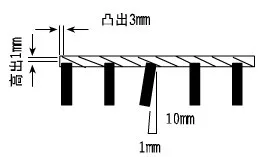
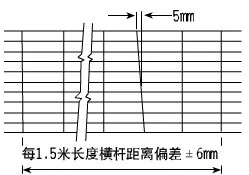
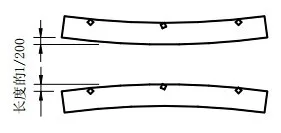
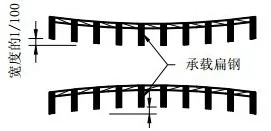
Dimensional deviations of steel grating directly affect laying flatness and joints. Common acceptance requirements are as follows (with reference to YB/T 4001; the contract drawings prevail):
- Length tolerance -0.5mm, width tolerance ±5mm
- Out-of-square of bearing bars not greater than 10% of the bar width
- Cross bar position deviation: the cross bar surface must not protrude more than 1mm above the bearing bar surface, and the cross bar ends usually must not overhang the two side faces of the panel by more than 2mm
- Longitudinal bow: longitudinal deflection not greater than 1/200 of the length
- Transverse bow: transverse deflection less than 1/100 of the width
- Diagonal deviation: relative diagonal deviation caused by dimensional tolerance not greater than ±5mm.
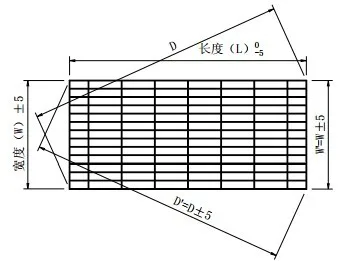
The simplest on-site acceptance method is to lay each panel flat on the supporting beams and step on it panel by panel, checking for obvious warping, rattling or abnormal noise; at the same time spot-check whether the galvanized coating is uniform and free of missed plating and zinc dross build-up.
We recommend checking each clause above during acceptance and keeping the factory inspection records.
Key Points for Steel Grating Selection
Confirm each item in the order below during selection to avoid most later rework. Record the conclusion of each step and submit it with your inquiry:
- Step 1 · Define Span and Support Conditions: First measure the clear span between support beams, then confirm the support surface width is sufficient; these two items determine the usable series range.
- Step 2 · Verify Service Load: Check separately for pedestrian, maintenance or vehicular traffic; maintenance and vehicular use differ greatly in bearing bar requirements.
- Step 3 · Determine Material and Surface Treatment: Ordinary carbon steel works for dry indoor environments; hot-dip galvanizing is recommended for outdoor or humid environments; chemical and coastal environments need separate confirmation.
- Step 4 · Confirm Shape and Fixing Method: Including whether cutouts, corner notches and banding are needed, and whether to use welded fixing or special clips.
Once the above conditions are confirmed, proceed to Instant Quote PageEstimate quantities by dimensions, or send the condition list to customer service for model recommendations from our technicians.
5. Typical Application Scenarios
Steel grating is used across many industrial and municipal scenarios. The most typical applications are listed below to help you quickly judge whether it suits your project:
The applications of steel grating cover almost all industrial and municipal scenarios that need load bearing plus ventilation plus slip resistance: platform walkways of power plants and substations, tank tops and trench covers of sewage treatment plants, operating platforms and towers of chemical plants, municipal drainage trench covers and tree grates, steel structure stair treads, approach bridges and maintenance access at ports and docks, panels for grain silos and warehouse racks, scenic trestle walkways, and maintenance walkways of photovoltaic power stations.
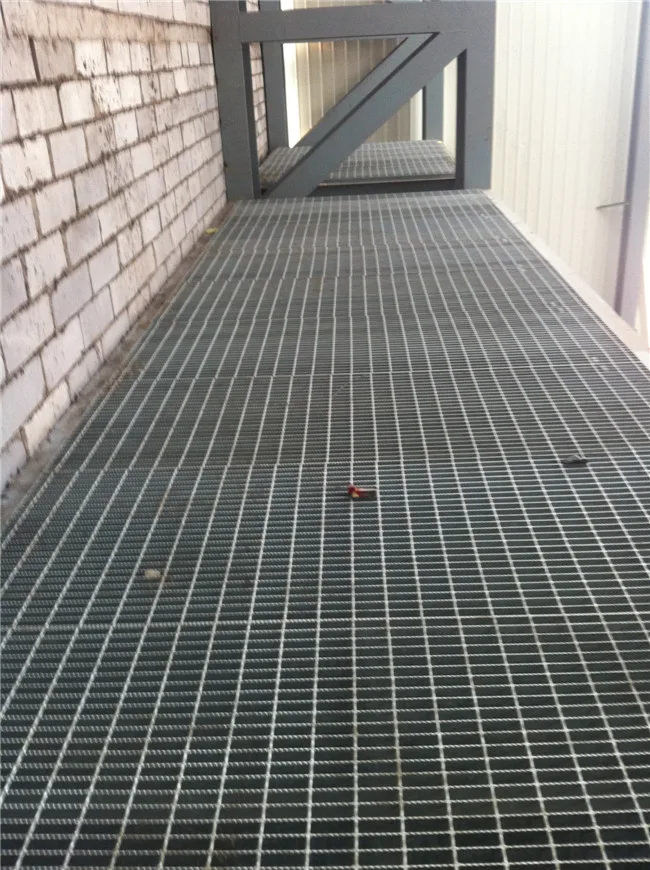
If your working conditions fall outside the above range, you can provide site photos and dimensions, and our technicians will help assess them.
6. Selection and Purchasing Advice
When choosing steel grating, check span, load and service environment in turn. The following points are for reference:
| Item to confirm | Description |
|---|---|
| Set the direction first | Bearing bars run along the span with both ends resting on the supporting beams; bearing length at each end not less than 25mm |
| Then set the type | Plain type for dry indoor use, serrated type for wet, oily or outdoor use, I-type for long spans sensitive to self-weight |
| Then set the pitch | 30mm series for pedestrian walkways, 40mm series for maintenance access and equipment platforms, 60mm series where material drop-through is needed |
| Surface Treatment | Hot-dip galvanizing is required outdoors and in humid environments; spray-painted or untreated finishes can be chosen indoors to save cost |
| Fixing Method | Fix each panel at no fewer than four points, preferably with hot-dip galvanized or stainless steel clips; avoid random on-site cutting that leaves bar ends unsupported. |
To size per drawings or request a quotation, you can directly submit your dimensions and load requirements via Steel Grating Online Quote, or browse Steel Grating, Hot-Dip Galvanized Steel Grating, Serrated Steel Grating, Heavy-Duty Steel Grating and other product series. Our factory is located in Anping, Hebei, keeps common specifications in ready stock all year round, supports customization per drawings and delivers to site.
Placing the order after confirming these items effectively avoids specification mismatch and on-site rework.
Steel Grating Service Conditions Comparison
The same specifications last very differently in different environments. The table below gives recommended practices by common service environment for your selection reference:
| Operating Environment | Recommended Practices | Note: |
|---|---|---|
| Outdoor and Open-Air Environments | Hot-dip galvanized surface treatment recommended | Check zinc coating integrity and re-zinc cut edges |
| Chemical or Coastal Environments | Confirm material and anti-corrosion scheme per medium | Avoid galvanic corrosion from direct contact between different metals |
| Pedestrian and Maintenance Walkways | Choose standard series, balancing walking comfort | Focus on surface flatness and end banding |
| High-Temperature or Large Temperature-Difference Environments | Select material and connection method by temperature | Watch for loosening caused by thermal expansion and contraction |
| Clean Rooms and Food & Pharmaceutical | Prioritize surface treatment and cleaning convenience | Avoid dust-collecting structures and cleaning dead corners |
| Temporary or Short-Term Use | Can be configured with the light-duty series | For short schedules, prioritize easy disassembly and turnover |
Custom Fabrication & Quotation
Common specifications are usually in stock; lead times for shaped parts and bulk orders are determined by specification and production scheduling. For projects needing site measurement and layout design, provide photos and dimensions and we will assist with drawings to reduce on-site cutting. For practices on similar projects, seeProject Cases, for model comparison see Products.
FAQ
How is the price of steel grating calculated?
Usually calculated as the theoretical weight for the model times the material unit price, plus hot-dip galvanizing or other surface treatment costs, and fluctuating with steel and zinc prices. You canInstant Quote PageEnter specifications and dimensions for a quick estimate.
Can it be custom-made to site dimensions?
Yes. Bearing bar specs, pitch, panel dimensions and banding forms can all be custom-made to drawings; cutouts, corner notches and shaped cutting are also supported. For bulk orders, a layout drawing can be confirmed before production.
What are the common specifications of steel grating?
Common specifications are determined by combinations of bearing bar width and thickness, bearing bar pitch, and cross bar pitch; different combinations correspond to different load capacities and theoretical weights. Our Products section lists common models by series; you can also send span and load requirements to customer service for sizing help.
The above covers the common parameters and application scenarios of steel grating. Models differ greatly with span and load, so we recommend firstInstant Quote PageEnter actual dimensions for an estimate, or contact customer service to confirm the final selection.