







This article introduces trench covers in the order of fabrication and installation, main uses, and basic concepts. Each section gives practical, actionable criteria; if you only need quick conclusions, start with the key points at the beginning of each section. The same approach applies to hot-dip galvanized steel grating.
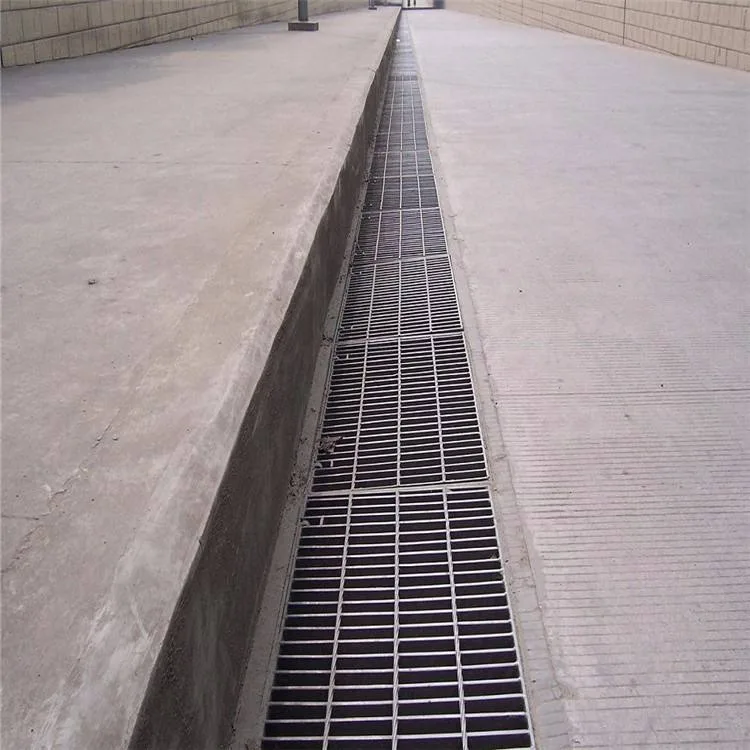
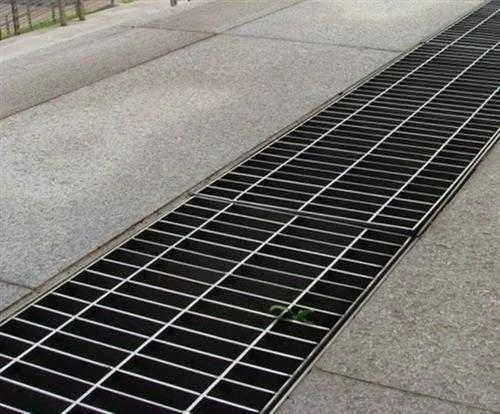
Trench covers are also known as "Ditch Cover", "manhole cover grating", made by press-welding steel grating. It is easy to install, lightweight, strong in load capacity and impact resistance, and excellent in drainage. After hot-dip galvanizing, the surface is attractive and durable, rust-proof and corrosion-resistant, with advantages unmatched by cast iron trench covers. Steel grating trench covers are used on sidewalks, roadways, courtyards, and building floors as covers for ditches, pipeline trenches, underpasses, ventilation shafts, light wells, inspection wells, etc. They usually consist of a fixed frame and a removable steel grating cover; fastening mechanisms or anti-theft devices can be added as needed.
Fabrication and Installation
On-site construction generally follows the steps and technical requirements below; complete the technical disclosure before starting work:
Welded from steel grating, it is simple to install, lightweight, strong in load capacity and impact resistance, flexible rather than brittle, and high in drainage volume. After hot-dip galvanizing it is attractive, durable, rust-proof and corrosion-resistant, with advantages unmatched by cast iron trench covers. Connected by hinges, the covers are easy to open and feature anti-theft protection.
After installation, check each panel's fixing points and flatness; put into use only after confirming no warping or looseness.
Actual parameters of the same model may vary slightly between manufacturers; rely on measured values at acceptance. Sampling inspection of key dimensions of trench covers is recommended, especially for bulk deliveries. Corresponding parameters of hot-dip galvanized steel grating can be checked the same way; communicate promptly if deviations are found.
Main Uses
Main applications are as follows:
Trench covers are widely used in municipal roads, garden facilities, residential communities, schools, sports venues, and many other places.
If your working conditions fall outside the above range, you can provide site photos and dimensions, and our technicians will help assess them.
A practical tip for confirming specifications: write all four items - flat bar specs, bearing bar pitch, cross bar pitch, and overall dimensions - into the purchase list together; specifying only one or two often leads to mismatched deliveries. The complete specification marking of trench covers is on the product page; number and check panel by panel against the layout drawing before ordering, and the same applies to hot-dip galvanized steel grating.
Further notes: How to combine hot-dip galvanized steel grating and hot-dip galvanized steel grating in use
If a project uses both hot-dip galvanized steel grating and hot-dip galvanized steel grating, we recommend planning them on the same layout drawing. This way edge closing, fixing and cutouts at junctions can be handled uniformly, avoiding dimension conflicts during installation and making later maintenance easier.
- For all product specifications and theoretical weights by series, visit Steel Grating Product Center
- To estimate cost by size and quantity, use Instant Quote PageSubmit Requirements
- To see how similar projects were executed, refer to Project Cases field applications
FAQ
What maintenance is required during daily use?
Maintenance mainly involves periodically checking whether fasteners are loose, whether touch-up paint has peeled off, and whether the panel surface shows obvious deformation or rust. Issues found should be dealt with promptly; overall maintenance is minimal.
Why do different manufacturers quote different weights for the same specifications?
The main difference lies in the actual measured thickness and tolerance control of the bearing bars. When bars are supplied at the lower tolerance limit, weight per unit area falls below the theoretical value, and load capacity drops accordingly. We recommend specifying thickness tolerance clearly when purchasing.
How to choose between hot-dip galvanizing and cold galvanizing?
The two anti-corrosion mechanisms differ: hot-dip galvanizing immerses steel in molten zinc to form a metallurgically bonded coating, thick and long-lasting, suitable for outdoor and humid environments; cold galvanizing is electrochemical deposition with a thinner, more uniform appearance, suitable for dry indoor environments or applications requiring high dimensional precision.
The above is for sizing and construction reference. To verify specific parameters or request a quotation, please visitInstant Quote Page, or contact our technical staff.
The above is general guidance. For a specific project, we still recommend submitting span, load class and service environment to our technicians for review. Steel grating is a load-bearing component; rework caused by wrong specification choices costs far more than the time spent on upfront calculation.