




The application of steel grating in real projects is not complicated; the difficulty lies in matching specifications, materials and service environment. This article explains the typical applications of the water purification project, the conditions to confirm in selection, and basic concepts, giving you a complete judgment framework for drainage trench covers.
Our steel grating series products have been widely applied in highways, petrochemicals, chemicals, ports, alloys, power, papermaking, steel, building materials, municipal works, petroleum, sewage treatment, general industrial plants, municipal construction and other fields. With reliable product quality and timely after-sales service, strong technical R&D capability and rich engineering experience, our customers now span more than 30 provinces, municipalities and autonomous regions across China and some Southeast Asian countries, in power, petroleum, chemical, metallurgical and other industries and large industrial enterprises. Our solid product quality and timely after-sales service have won widespread praise and trust from customers.
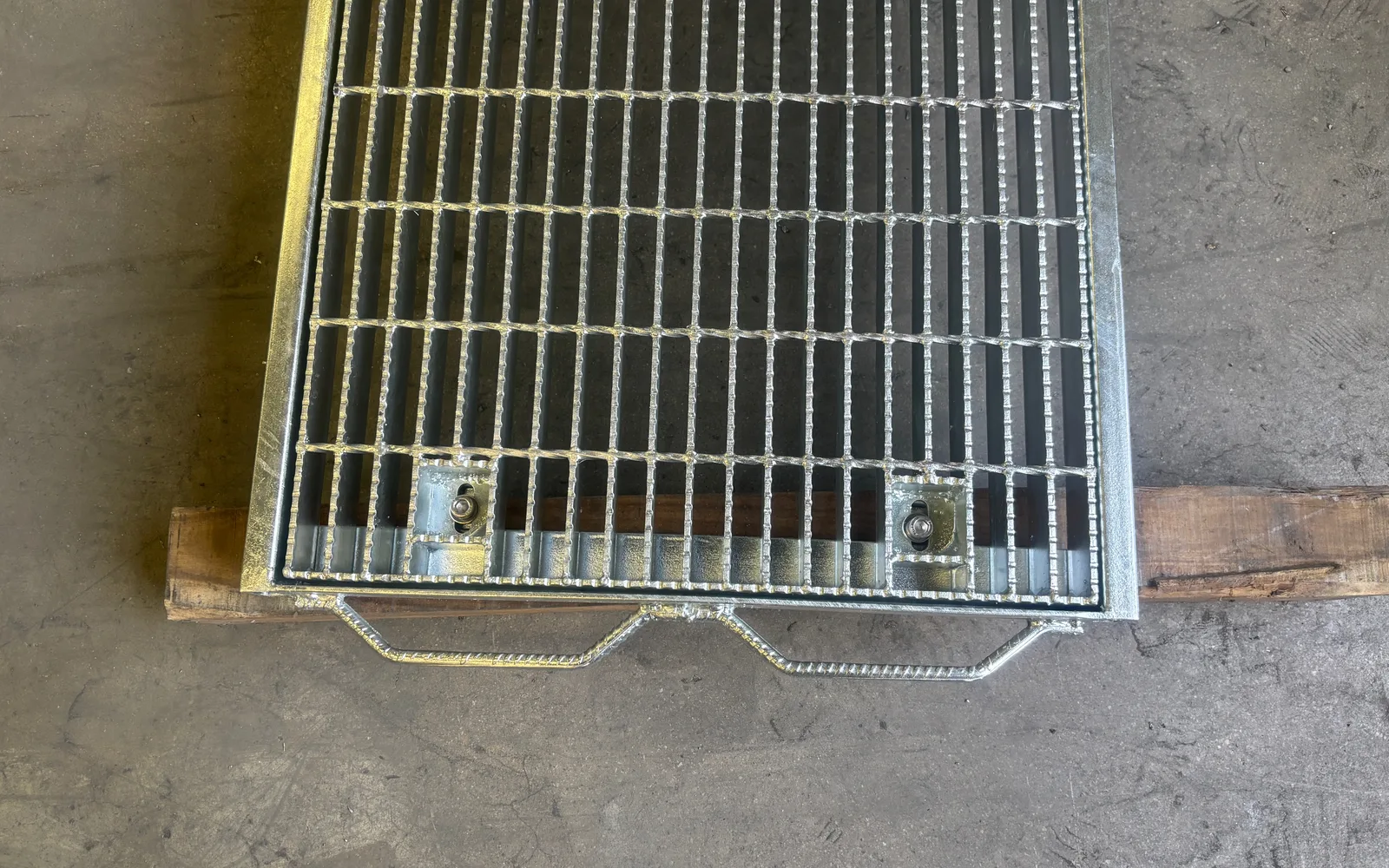
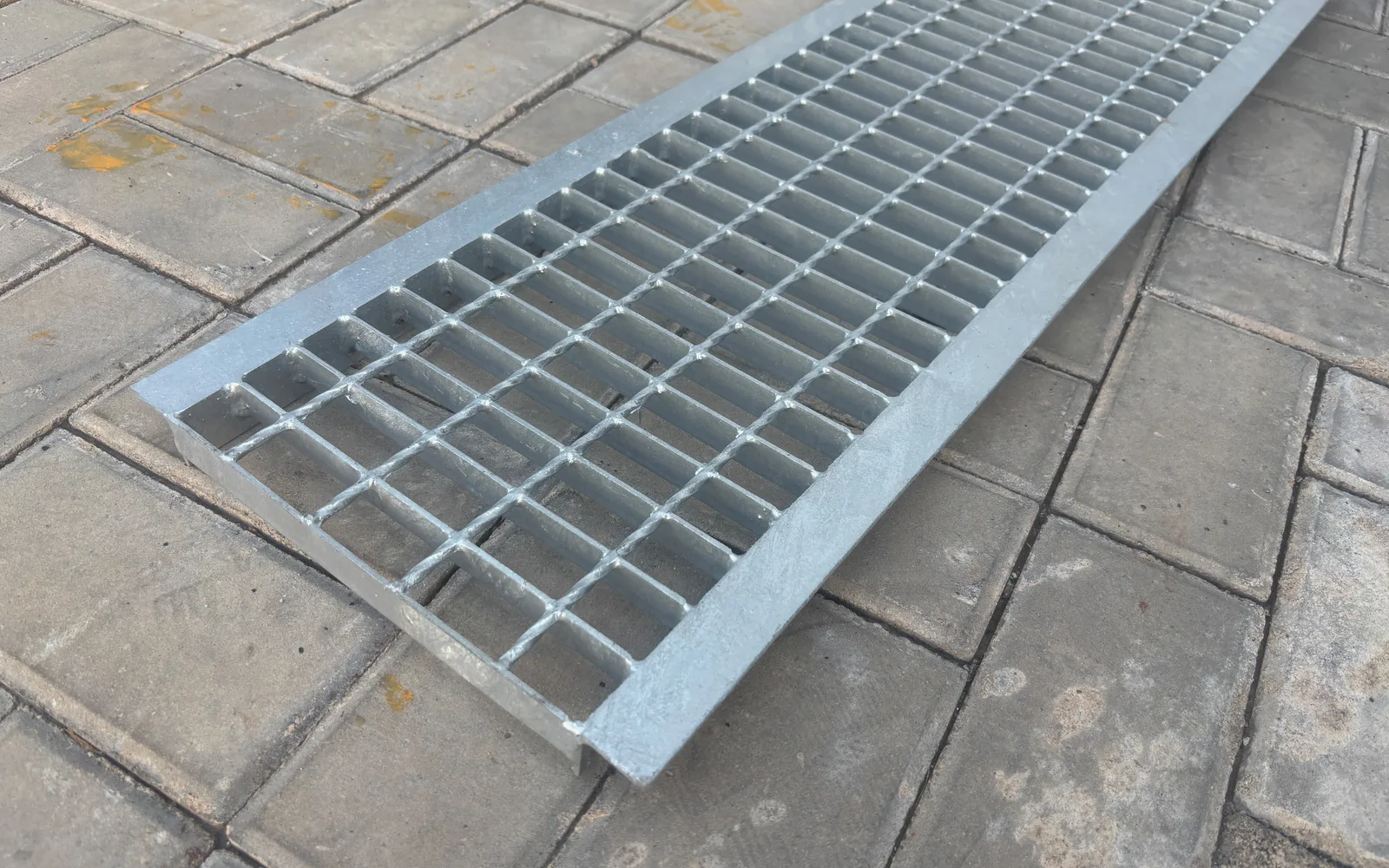
Steel grating for the water purification project covers trenches, drainage ditches and ground channels, and must meet both traffic loads and drainage and anti-theft needs. This page explains trench form, load class, panel types and installation and fixing item by item, with selection suggestions for different traffic conditions; drainage trench covers can follow the same judgment sequence.
Items to Confirm When Selecting Steel Grating for the Water Purification Project
This page does not list a fixed specification table, as such products are usually custom-fabricated to site conditions. We recommend confirming each item in the table above before inquiry: once mismatched with actual site conditions, refabrication is often required later.ProductsCommon specifications are organized by series for reference.
| Items to Confirm | What Needs to Be Clarified | Common Practices |
|---|---|---|
| Trench Type | Whether there is a raised edge and whether it is protected by angle steel | Match cover type to trench construction |
| Traffic Type | Pedestrians, light vehicles or heavy vehicles | Determine load class by vehicle types |
| Trench Width and Direction | Clear trench width; bearing bars vs. traffic direction | Side trench covers and cross trench covers must not be mixed |
| Fixing and Anti-Theft | Whether hinge or bolt fixing is needed | Anti-theft type recommended for public areas |
| Drainage Requirements | Whether drainage gaps need to be reserved | Determine by drainage volume and debris conditions |
| Dimensions and Quantity | Panel size and total quantity | Count after layout by trench length and width |
Typical Application Scenarios of the Water Purification Project
The steel grating water purification project suits various service conditions; typical application scenarios mainly include:
- Industrial Platforms & Maintenance Walkways: equipment platforms and inspection passages in power plants, chemical plants and steel-structure workshops;
- Municipal & Landscape: road drainage trench covers, rainwater grates, tree grates, park boardwalks;
- Transportation & Ports: wharf trestles, multi-story parking garage lanes, railway bridge walkways;
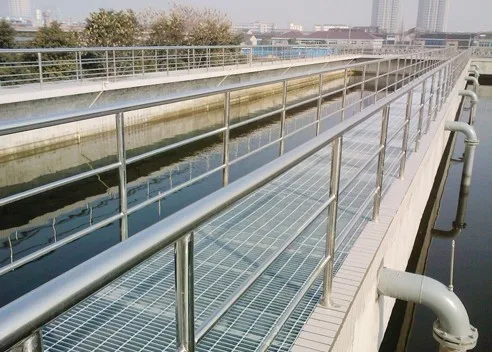
- Environmental & Water Treatment: walkways in wastewater treatment plants, tank platforms, screening machine platforms;
- Others: elevated tower platforms, stair treads, fences and railings, etc.
If your working conditions fall outside the above range, you can provide site photos and dimensions, and our technicians will help assess them.
Different parts of the same site often have different requirements. For steel grating, specifications for main walkways versus edge areas, and for frequently used versus occasional maintenance areas, can be set separately; drainage trench covers should also be arranged by zone, balancing safety and cost.
Key Conditions to Confirm During Selection
When selecting steel grating for the water purification project, check span, load and service environment in turn; refer to the following points:
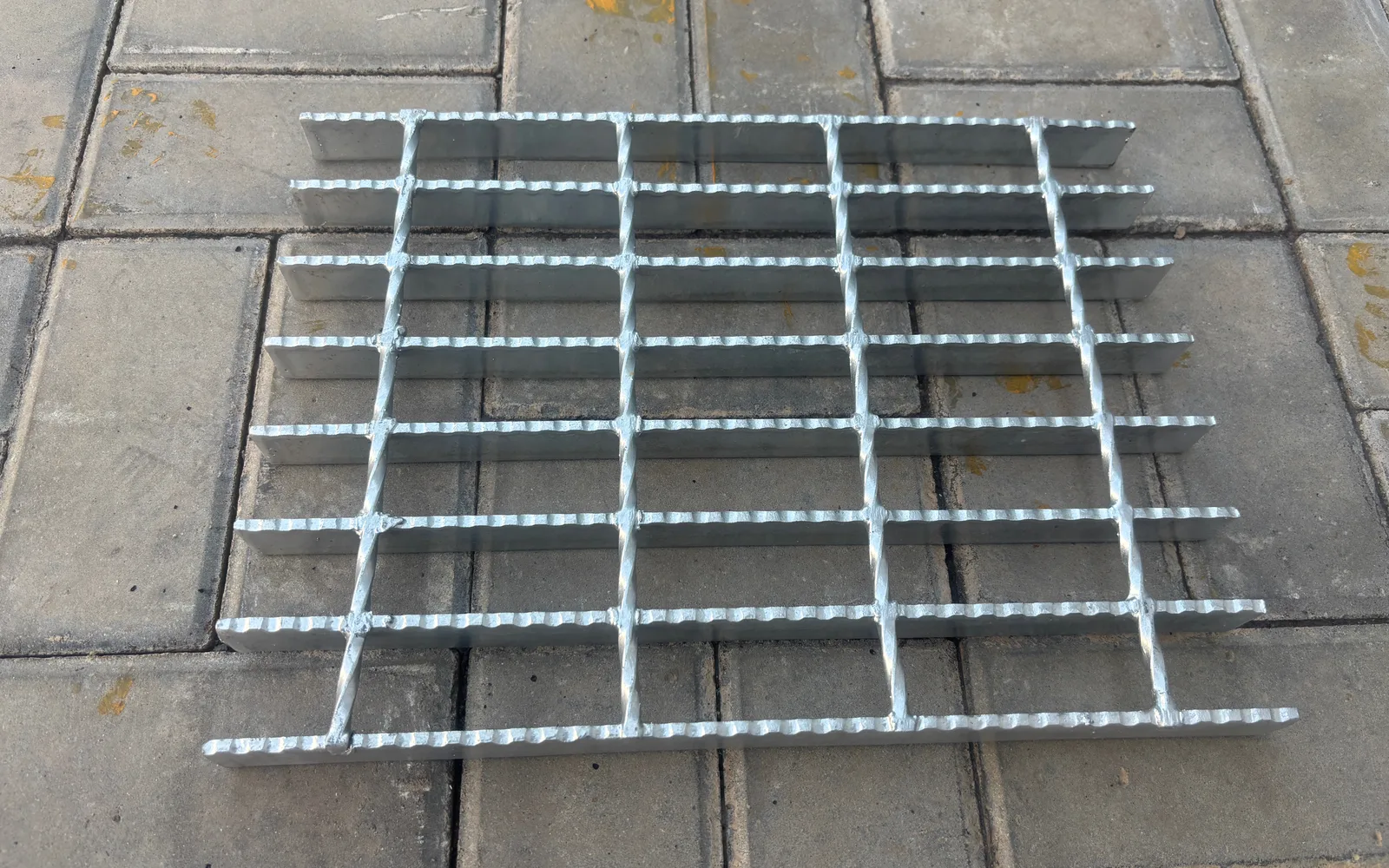
- First clarify the span and support beam spacing to determine the required series;
- Then check load requirements by usage type (pedestrian, maintenance, vehicular);
- Finally, determine the surface treatment by service environment (dry indoor, outdoor, coastal, chemical).
Placing the order after confirming these items effectively avoids specification mismatch and on-site rework.
The most easily overlooked items in a specification table are tolerances and end treatment. Steel grating usually has machining allowance along its length; if the site uses recessed installation, state the closing edge and corner-cut requirements in advance. Drainage trench covers need similar details, which should be clearly marked on the drawings.
Further reading: Sizing reference for drainage trench covers and hot-dip galvanized trench covers
Besides what this article covers, drainage trench covers are also common in actual projects. It shares similarities with this article's subject in structure and fabrication; for selection, check span, load and service environment in the same order. If both types of components are used in the same project, we recommend unifying material and surface treatment to avoid later galvanic corrosion or inconsistent appearance.
- For all product specifications and theoretical weights by series, visit Steel Grating Product Center
- To estimate cost by size and quantity, use Instant Quote PageSubmit Requirements
- To see how similar projects were executed, refer to Project Cases field applications
Selection Points for the Steel Grating Water Purification Project
Confirm each item in the order below during selection to avoid most later rework. Record the conclusion of each step and submit it with your inquiry:
- Step 1 · Confirm Trench Type and Edge Detail: Concrete trenches without flanges and trenches with support flanges correspond to different panel types; whether the flange needs angle steel protection must be clarified in advance.
- Step 2 · Confirm Vehicle Types: Whether it carries pedestrians, light vehicles or heavy vehicles directly determines the panel type and load class.
- Step 3 · Confirm Trench Width and Laying Direction: Side trench covers and cross trench covers have different bearing bar orientations, which must match the traffic direction to avoid reversed installation affecting load capacity.
- Step 4 · Confirm Anti-Theft and Fixing Requirements: For outdoor public areas, hinged or bolted fixing is recommended to reduce displacement and theft risk.
Once the above conditions are confirmed, proceed to Instant Quote PageEstimate quantities by dimensions, or send the condition list to customer service for model recommendations from our technicians.
Application Conditions Comparison
The same specifications last very differently in different environments. The table below gives recommended practices by common service environment for your selection reference:
| Operating Environment | Recommended Practices | Note: |
|---|---|---|
| Outdoor and Open-Air Environments | Hot-dip galvanized surface treatment recommended | Check zinc coating integrity and re-zinc cut edges |
| Humid or Water Treatment Environments | Use a higher corrosion protection grade with matching fasteners | Regularly inspect fixing points and surface corrosion |
| Chemical or Coastal Environments | Confirm material and anti-corrosion scheme per medium | Avoid galvanic corrosion from direct contact between different metals |
| Vehicle Traffic Areas | Check load class against vehicle types | Note that bearing bars must run parallel to traffic direction |
| Pedestrian and Maintenance Walkways | Choose standard series, balancing walking comfort | Focus on surface flatness and end banding |
| Temporary or Short-Term Use | Can be configured with the light-duty series | For short schedules, prioritize easy disassembly and turnover |
Custom Fabrication & Quotation
Common specifications are usually in stock; lead times for shaped parts and bulk orders are determined by specification and production scheduling. For projects needing site measurement and layout design, provide photos and dimensions and we will assist with drawings to reduce on-site cutting. For practices on similar projects, seeProject Cases, for model comparison see Products.
FAQ
What specifications are generally used for such projects?
The specific specifications must be calculated from span, load and traffic requirements; common practices for similar projects are described in this article, and the final model should be confirmed by technical staff according to site conditions.
How to handle deformation or damage that occurs later?
First confirm the location and cause of the deformation; in most cases it results from loose fixings or local overload. Replacing the single panel is enough, with no full removal needed; contact customer service with site photos for assessment.
Who is responsible for installation?
Installation is generally carried out on site by the purchaser or the contractor, with the manufacturer providing installation drawings, fixing instructions and technical guidance. For complex projects, technical personnel can be arranged on site as needed.
For projects like the steel grating water purification project, selection mainly depends on span and traffic loads. For calculation or layout drawings, pleaseInstant Quote PageSubmit dimensions and we will assist with selection.
Note that this article presents sizing approaches and general practice, and does not constitute a strength commitment for any specific project. For load-bearing safety-critical areas, the design drawings and on-site calculations shall prevail; contact our technical staff if in doubt.