







Applying hot-dip galvanized steel grating in real projects is not complicated; the challenge lies in matching specifications, material and service environment. This article covers methods to improve grating installation accuracy, typical applications and basic concepts in turn, giving you a complete framework for evaluating hot-dip galvanized steel grating.
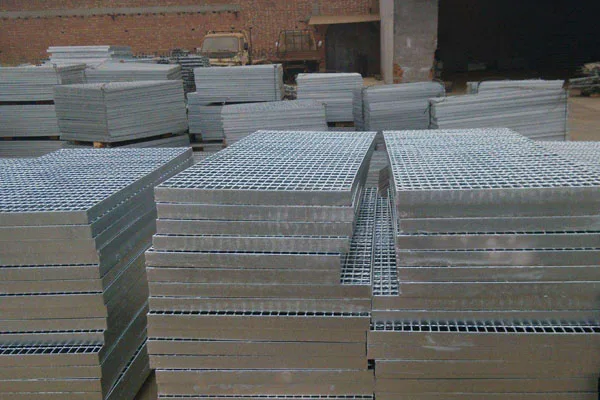
Hot-dip galvanized steel grating is a steel product made by arranging flat bearing bars and cross bars at set pitches and welding them with a pressure welder or by hand into a panel with square mesh openings. It is mainly used for trench covers, steel platform decks and steel stair treads. Cross bars are generally made of twisted square steel.
What Are the Methods to Improve Steel Grating Installation Accuracy?
On-site construction generally follows the steps and technical requirements below; complete the technical disclosure before starting work:
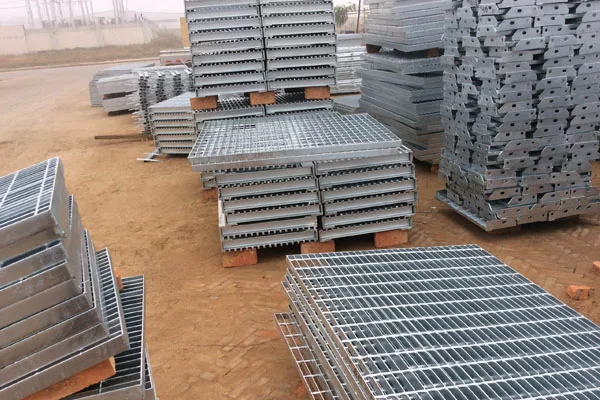
- Strictly inspect the factory quality of steel grating and return any non-conforming products immediately. Deformed grating panels can be flattened under heavy weights, while minor deformation can be corrected locally by hammering.
- Follow specifications strictly and avoid fatigue-related errors. Work under professional supervision and strengthen training. Reduce manual cutting and use automatic cutting wherever possible.
- Increase the sampling inspection frequency of QC inspectors and make timely adjustments when problems are found.
- Organize training for workers, stress the importance of installation accuracy, and improve their skills and awareness. Establish clear quality responsibility and rework any non-conforming work.
After installation, check each panel's fixing points and flatness; put into use only after confirming no warping or looseness.
Installation has the greatest impact on long-term performance. When laying hot-dip galvanized steel grating, make sure the direction is not reversed: the flat bearing bars must run parallel to the main load direction, a point most often overlooked on site. Fasteners must also be supplied in full according to the layout drawing; a single missing clip can cause local loosening. The same applies to hot-dip galvanized steel grating.
Typical Applications
Typical applications mainly include the following categories, which can help you judge suitability for your project:
- Industrial Platforms & Maintenance Walkways: equipment platforms and inspection passages in power plants, chemical plants and steel-structure workshops;
- Municipal & Landscape: road drainage trench covers, rainwater grates, tree grates, park boardwalks;
- Transportation & Ports: wharf trestles, multi-story parking garage lanes, railway bridge walkways;
- Environmental & Water Treatment: walkways in wastewater treatment plants, tank platforms, screening machine platforms;
- Others: elevated tower platforms, stair treads, fences and railings, etc.
If your working conditions fall outside the above range, you can provide site photos and dimensions, and our technicians will help assess them.
Even within the same project, requirements vary by area. Taking hot-dip galvanized steel grating as an example, main walkways and edge zones, frequently used areas and occasional maintenance areas can be specified differently. Combining hot-dip galvanized steel grating products by zone is also recommended to balance safety and cost.
Key Conditions to Confirm During Selection
- First clarify the span and support beam spacing to determine the required series;
- Then check load requirements by usage type (pedestrian, maintenance, vehicular);
- Finally, determine the surface treatment by service environment (dry indoor, outdoor, coastal, chemical).
Tolerances and end treatment are the easiest details to overlook in a specification table. Hot-dip galvanized steel grating normally leaves machining allowance along its length; for recessed installation, edge banding and corner-cutting requirements should be stated in advance. Similar details apply to hot-dip galvanized steel grating, so mark them all clearly on the drawing.
Further notes: Common combinations of hot-dip galvanized steel grating and hot-dip galvanized steel grating
Hot-dip galvanized steel grating and hot-dip galvanized steel grating are different specification forms within the same product system. The selection logic is the same as described in this article: first the usage type, then span and load to determine specifications, and finally the environment to determine surface treatment. Their corrosion protection and anti-slip requirements may differ; state them separately when ordering rather than writing one general technical requirement.
- For all product specifications and theoretical weights by series, visit Steel Grating Product Center
- To estimate cost by size and quantity, use Instant Quote PageSubmit Requirements
- To see how similar projects were executed, refer to Project Cases field applications
FAQ
What is most often overlooked during installation and acceptance?
First, bearing bars installed in the wrong direction reduce load capacity; second, insufficient fixing points or missing zinc touch-up paint; third, support beam spacing inconsistent with the layout drawing. These three items are most often overlooked on site.
What maintenance is required during daily use?
Maintenance mainly involves periodically checking whether fasteners are loose, whether touch-up paint has peeled off, and whether the panel surface shows obvious deformation or rust. Issues found should be dealt with promptly; overall maintenance is minimal.
Why do different manufacturers quote different weights for the same specifications?
The main difference lies in the actual measured thickness and tolerance control of the bearing bars. When bars are supplied at the lower tolerance limit, weight per unit area falls below the theoretical value, and load capacity drops accordingly. We recommend specifying thickness tolerance clearly when purchasing.
The above is for sizing and construction reference. To verify specific parameters or request a quotation, please visitInstant Quote Page, or contact our technical staff.
Note that this article presents sizing approaches and general practice, and does not constitute a strength commitment for any specific project. For load-bearing safety-critical areas, the design drawings and on-site calculations shall prevail; contact our technical staff if in doubt.