







Many projects purchase galvanized steel gratings on price alone and ignore specification matching and anti-corrosion requirements, which often leads to rework. This article lists, in order, welding precautions for steel grating, typical application scenarios and the conditions to confirm before selection, and explains how to weigh them under common working conditions; content related to hot-dip galvanized steel grating can be used directly as a technical disclosure reference.
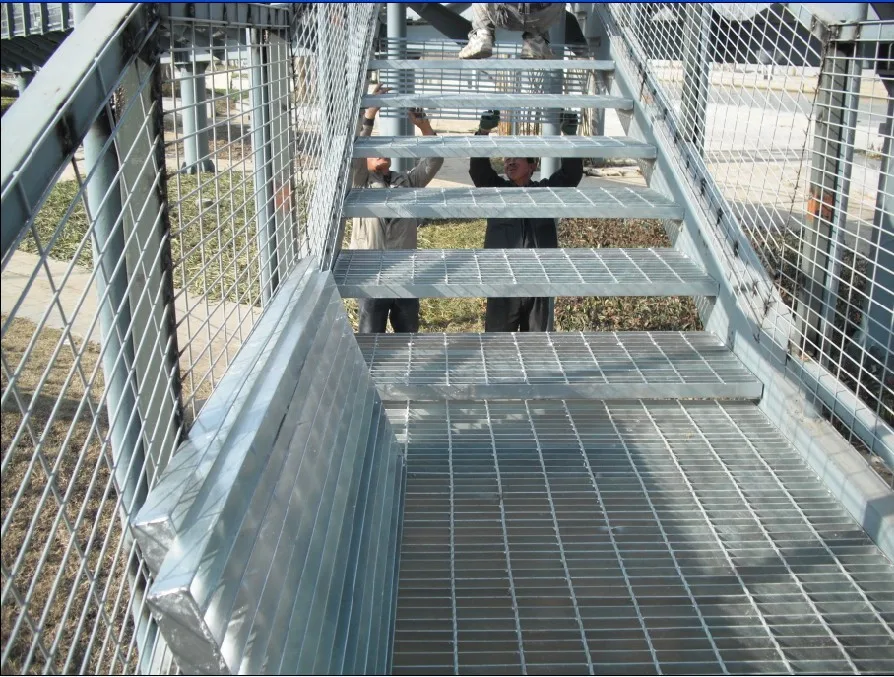
Steel grating is an essential construction material for building steel structure platforms, and many details need attention during construction. Platform construction should have a plan prepared in advance, and raw materials of suitable thickness and length should be selected according to site requirements. The platform design should pay special attention to avoiding safety hazards from falling objects at height. When installing the platform, consider flatness and safety from many aspects: the level error of structural steel beams must not exceed 3mm; also ensure platform anti-slip performance, especially for platforms with large slopes or prone to liquid accumulation, where checkered plate grating and other anti-slip facilities are best added.
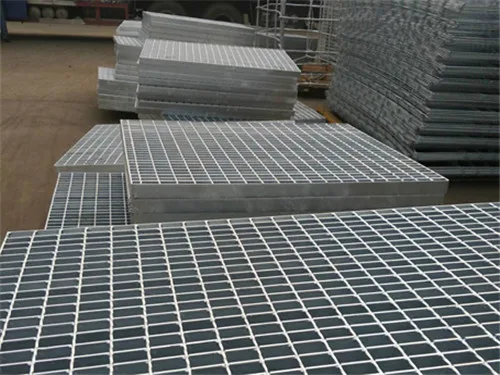
Welding Precautions for Steel Grating
On-site construction generally follows the steps and technical requirements below; complete the technical disclosure before starting work:
- At every intersection of bearing flat bars and cross bars, fixing should be done by welding, riveting or press-locking.
- Pressure resistance welding is preferred for welding steel grating on structural platforms; arc welding is also acceptable.
- For press-locking steel grating of structural platforms, a press can press the cross bars into the bearing flat bars to fix them.
- Steel grating for structural platforms should be processed into shapes of various dimensions according to user needs.
- The pitch of bearing flat bars and cross bars can be determined by supplier and buyer according to design requirements. For industrial platforms, the bearing bar pitch should not exceed 40mm and the cross bar pitch should not exceed 165mm.
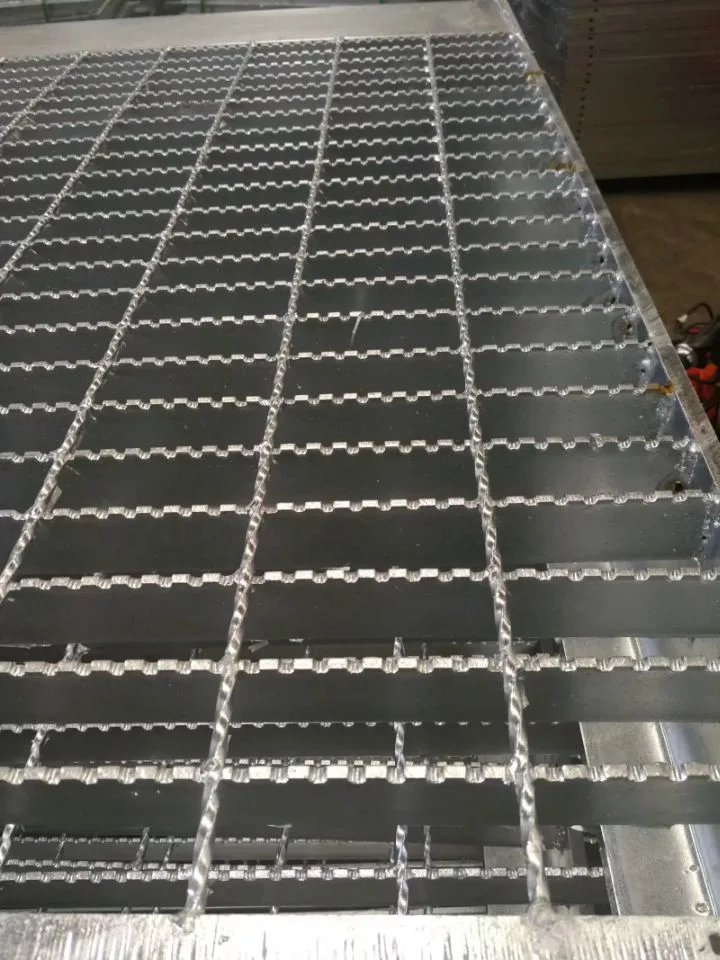
In addition, for industrial platforms, the bearing bar pitch should not exceed 40mm and the cross bar pitch should not exceed 165mm; at the ends of bearing flat bars, banding should use flat bars of the same specification. For special applications, sectional steel or edge plates can be used for banding, but the cross-sectional area of the banding bar must not be less than that of the bearing flat bars. Banding uses single-side fillet welds with weld height not less than the bearing bar thickness and weld length not less than 4 times the bearing bar thickness. Where banding bars bear no load, welding at intervals of 4 bearing bars is allowed, but the spacing must not exceed 180mm. Where banding bars bear loads, interval welding is not allowed and full welding is required. Stair tread end bars must be fully welded on one side. Banding bars parallel to the bearing bars must be welded to every cross bar. Openings or holes of 180mm or more in steel grating should be banded.
After installation, check each panel's fixing points and flatness; put into use only after confirming no warping or looseness.
After installation, an overall check is recommended: whether panels are warped, fixings are complete, and height differences between adjacent panels are obvious. Such issues with galvanized steel gratings cost least to fix at the acceptance stage and are troublesome after commissioning. Acceptance points for hot-dip galvanized steel gratings can follow the same criteria.
Typical Applications
Main applications are as follows:
- Industrial Platforms & Maintenance Walkways: equipment platforms and inspection passages in power plants, chemical plants and steel-structure workshops;
- Municipal & Landscape: road drainage trench covers, rainwater grates, tree grates, park boardwalks;
- Transportation & Ports: wharf trestles, multi-story parking garage lanes, railway bridge walkways;
- Environmental & Water Treatment: walkways in wastewater treatment plants, tank platforms, screening machine platforms;
- Others: elevated tower platforms, stair treads, fences and railings, etc.
If your working conditions fall outside the above range, you can provide site photos and dimensions, and our technicians will help assess them.
Different parts of the same scene often have different requirements. Take galvanized steel gratings: main walkways and edge areas, frequently used areas and occasional maintenance areas can be specified separately; combined use of hot-dip galvanized steel gratings is also suggested by zones, balancing safety and cost.
Key Conditions to Confirm During Selection
Items to confirm before procurement are as follows:
- First clarify the span and support beam spacing to determine the required series;
- Then check load requirements by usage type (pedestrian, maintenance, vehicular);
- Finally, determine the surface treatment by service environment (dry indoor, outdoor, coastal, chemical).
Placing the order after confirming these items effectively avoids specification mismatch and on-site rework.
The most easily overlooked items in a specification table are tolerance and end treatment. Galvanized steel gratings usually have machining allowance in length; if the site uses recessed installation, state the trimming and corner-cutting requirements in advance. Hot-dip galvanized steel gratings are handled similarly; mark these details clearly on drawings.
Further notes: How to combine hot-dip galvanized steel grating and hot-dip galvanized steel grating in use
If a project uses both hot-dip galvanized steel grating and hot-dip galvanized steel grating, we recommend planning them on the same layout drawing. This way edge closing, fixing and cutouts at junctions can be handled uniformly, avoiding dimension conflicts during installation and making later maintenance easier.
- For all product specifications and theoretical weights by series, visit Steel Grating Product Center
- To estimate cost by size and quantity, use Instant Quote PageSubmit Requirements
- To see how similar projects were executed, refer to Project Cases field applications
FAQ
What maintenance is required during daily use?
Maintenance mainly involves periodically checking whether fasteners are loose, whether touch-up paint has peeled off, and whether the panel surface shows obvious deformation or rust. Issues found should be dealt with promptly; overall maintenance is minimal.
Can the values in the article be applied directly?
Values in this article come from relevant standard clauses or common industry practice. For actual selection, recalculate based on site span, load class and service environment; direct copying is not recommended.
Where can I find specific specifications?
our websiteProductsCommon specifications and theoretical weights are organized by series, also available in Instant Quote PageEstimate by size, or contact us directly for sizing advice.
The above is for sizing and construction reference. To verify specific parameters or request a quotation, please visitInstant Quote Page, or contact our technical staff.
Note that this article presents sizing approaches and general practice, and does not constitute a strength commitment for any specific project. For load-bearing safety-critical areas, the design drawings and on-site calculations shall prevail; contact our technical staff if in doubt.