







When purchasing steel gratings, many projects focus only on price while neglecting specification matching and anti-corrosion requirements, which easily leads to rework later. This article lists the conditions to be confirmed one by one, in the order of tolerances, quality of flat bar raw materials, and straightening and welding of flat bars, and explains how to make trade-offs based on common working conditions. The content related to hot-dip galvanized steel gratings can be directly used as a reference for technical disclosure.
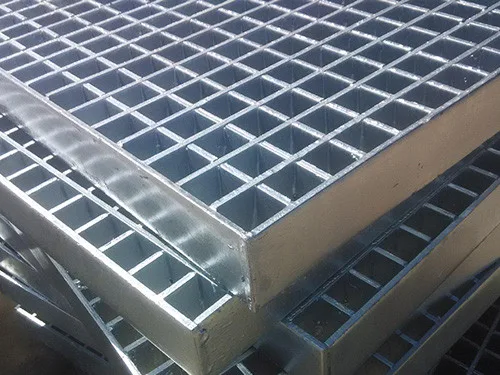
The uses and applications of galvanized steel gratings are clear to many people. As a professional steel grating manufacturer, one certainly knows how to produce qualified and standard-compliant steel gratings. Unqualified steel gratings need to be effectively prevented. Next, let us see how steel grating manufacturers prevent the production of unqualified steel gratings.
Tolerances
The standards and inspection items to check are as follows:
This includes the diagonal tolerance of flat bars, which needs to be controlled within a specific range, and whether the flat bar tolerances meet the steel grating standard requirements.
We recommend checking each clause above during acceptance and keeping the factory inspection records.
For the installation sequence, it is recommended to lay out first and fix later, avoiding adjustments while laying. Once the layout drawing is confirmed, avoid random cutting on site; when adjustments are truly needed, the fixing and edge finishing of galvanized gratings should be adjusted simultaneously to avoid leaving hidden loosening risks.
Quality of flat bar raw materials
Additional key points are as follows:
In steel gratings, flat bars are the main load-bearing material, carrying extremely large loads in the entire structure. Some steel grating manufacturers, in order to reduce production costs and increase middle profits, use flat bars made from reprocessed scrap steel.
The above points can serve as a pre-purchase checklist; confirm each item before moving to the quotation stage.
When requesting a quotation, it is recommended to provide the span, load requirements, and approximate area, so that the quotation is useful for reference. Quoting only a model without describing the working conditions often results in a wide quotation range that is difficult to compare. The quotation logic for hot-dip galvanized steel gratings is the same and can be estimated directly by dimensions.
Straightening and welding of flat bars
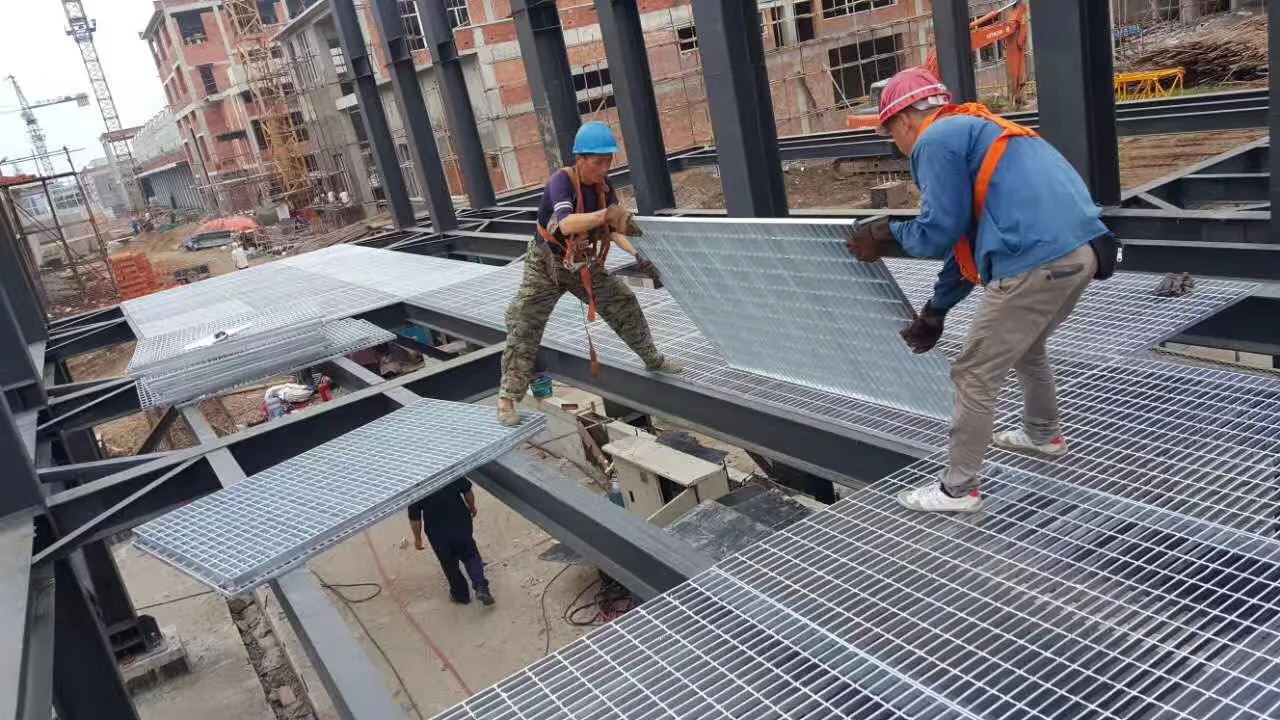
On-site construction generally follows the steps and technical requirements below; complete the technical disclosure before starting work:
After purchasing flat bars, they may not be completely parallel; in addition, during transport, hoisting may cause the flat bars to bend slightly. Never underestimate these bends: if the steel grating has any bends, it may ultimately fail to be welded, or the welded steel grating may deform. Early straightening is very important. Panel welding is a critical point; welding quality directly affects the load capacity and service life of the steel grating.
After installation, check each panel's fixing points and flatness; put into use only after confirming no warping or looseness.
Installation most affects the later user experience. When laying steel gratings, the direction must not be reversed: the direction of the bearing flat bars should be consistent with the main load direction, which is most easily overlooked on site. The number of fasteners should also be complete according to the layout drawing; a single missing one may cause local loosening. This requirement applies equally to galvanized gratings.
Surface Treatment
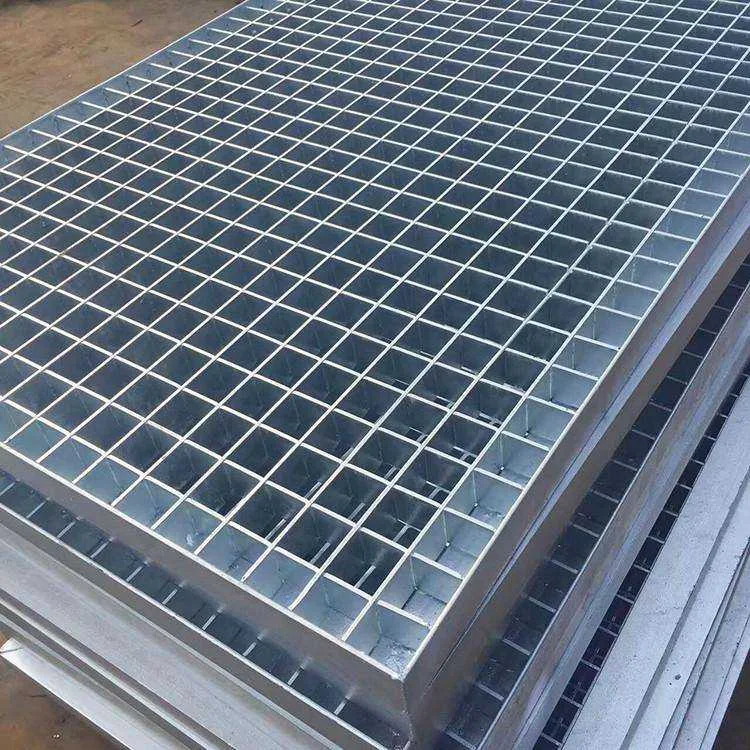
This is very important for steel gratings: the appearance of the panels. Many customers' first judgment is based on the appearance of the steel grating. Hot-dip galvanizing is not only attractive; it also has anti-corrosion and anti-rust properties. Good hot-dip galvanizing quality greatly extends the service life.
For material selection, it is not advisable to simply pursue high grades. The materials should match the load requirements and service environment; over-specifying materials causes unnecessary cost increases. For the corresponding treatment of hot-dip galvanized steel gratings, refer to the product page instructions and choose according to actual working conditions.
Packing and shipping
When loading, do not assume that steel gratings are solid and hard to damage and place them casually with forklifts; steel gratings should be handled gently when loading. When using a forklift, never just pick them up casually. Compare the thickness of the steel gratings: if too thin, they may deform. The steel grating manufacturer reminds everyone here: handle steel gratings properly when moving them.
This section describes the common practices for inspecting steel gratings in most projects. If your site conditions are special, for example with corrosive media, large temperature differences, or frequent disassembly and assembly, the treatment should be adjusted accordingly. Hot-dip galvanized steel gratings also need separate confirmation under such working conditions; you can consult with site photos before deciding.
Further reading: Selection points for hot-dip galvanized steel grating and galvanized grating
In engineering, galvanized grating is often used together with the components mentioned in this article. The two differ in load carrying and installation practices; when combining them, pay special attention to the connection of support conditions and fixing methods, as junction treatment is often where problems arise. For unified drawings, submit dimensions of both types and our technicians will process them under the same layout logic.
- For all product specifications and theoretical weights by series, visit Steel Grating Product Center
- To estimate cost by size and quantity, use Instant Quote PageSubmit Requirements
- To see how similar projects were executed, refer to Project Cases field applications
FAQ
What information is needed for custom sizes?
Usually you need to provide the panel dimensions (length x width), bearing bar specs and direction, center-to-center pitch of bearing bars and cross bars, surface treatment, and special requirements such as cutouts, corner notches and banding. Site photos or sketches are even better.
Can the values in the article be applied directly?
Values in this article come from relevant standard clauses or common industry practice. For actual selection, recalculate based on site span, load class and service environment; direct copying is not recommended.
How to choose between hot-dip galvanizing and cold galvanizing?
The two anti-corrosion mechanisms differ: hot-dip galvanizing immerses steel in molten zinc to form a metallurgically bonded coating, thick and long-lasting, suitable for outdoor and humid environments; cold galvanizing is electrochemical deposition with a thinner, more uniform appearance, suitable for dry indoor environments or applications requiring high dimensional precision.
The above is for sizing and construction reference. To verify specific parameters or request a quotation, please visitInstant Quote Page, or contact our technical staff.
Note that this article presents sizing approaches and general practice, and does not constitute a strength commitment for any specific project. For load-bearing safety-critical areas, the design drawings and on-site calculations shall prevail; contact our technical staff if in doubt.