
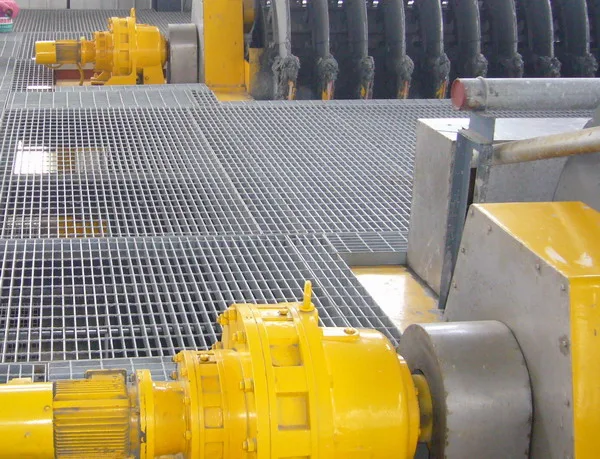
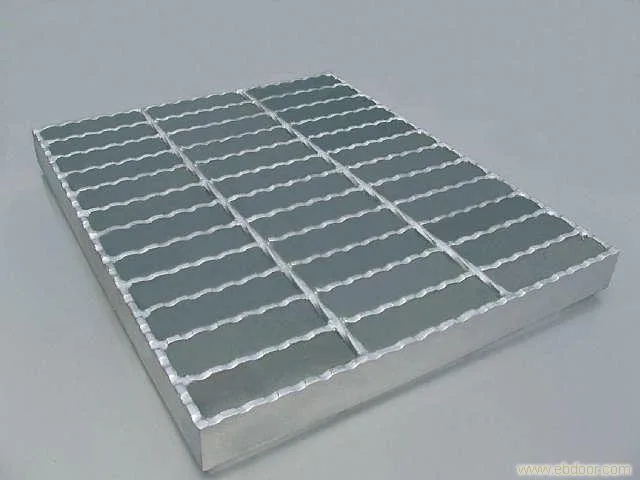
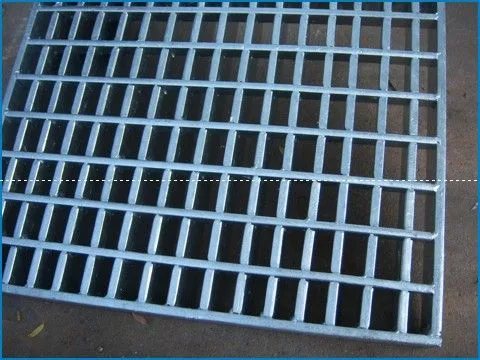
When purchasing hot-dip galvanized steel gratings for thermal power plants, many projects focus only on price while neglecting specification matching and anti-corrosion requirements, which easily leads to rework later. This article lists the conditions to be confirmed one by one, in the order of galvanized steel grating for power plant platforms, manufacturing process of power plant steel gratings, and features of steel gratings, and explains how to make trade-offs based on common working conditions. The content related to hot-dip galvanized steel gratings can be directly used as a reference for technical disclosure.
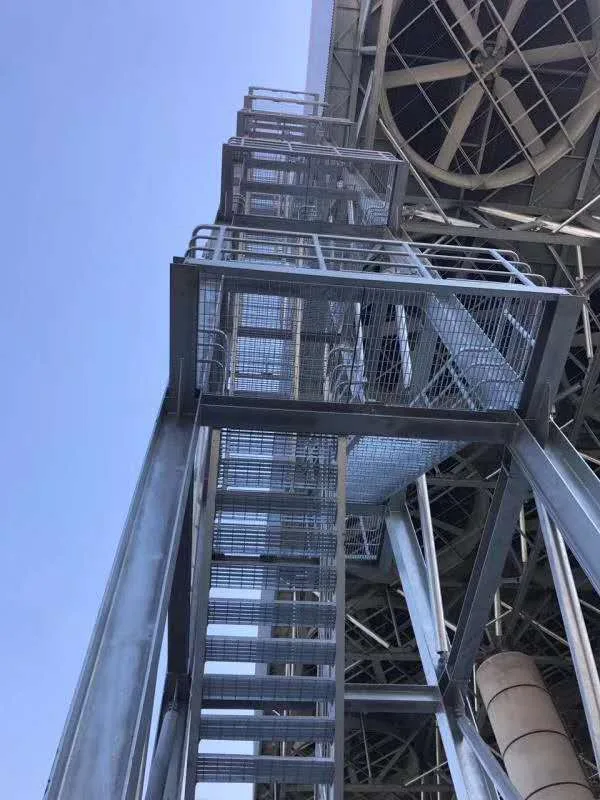
Technical provisions and requirements for the product design of galvanized steel gratings on power plant platforms
The main standard clauses and acceptance requirements involved are as follows:
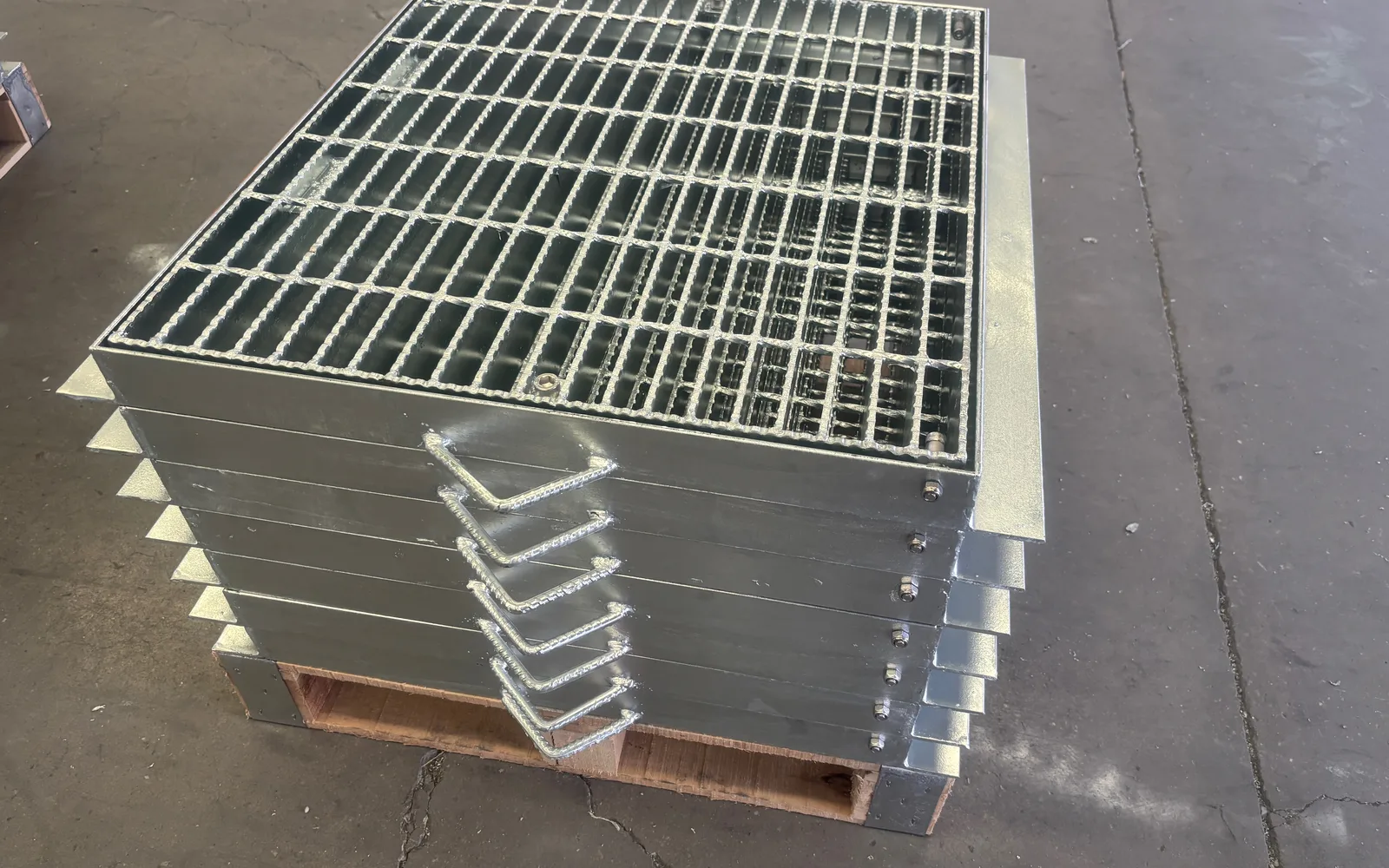
Steel gratings shall comply with YB/T4001-2007. Platform steel gratings are welded with argon shielded welding or mixed gas shielded welding, and the finished products are free of welding slag and spatter. For the welding of steel gratings, stainless steel gratings use welding wire grade A102; the edge banding of steel gratings shall be continuously welded, with no broken or missed welds allowed. Thermal power platform steel gratings are mostly made of type G323/30/100, and the finished surface is hot-dip galvanized. Circular steel structure platforms can be divided according to the corresponding dimensions into small fan-shaped gratings, trapezoidal gratings, or rectangular steel gratings.
We recommend checking each clause above during acceptance and keeping the factory inspection records.
Regarding corrosion protection, one thing is easily overlooked: on-site cutting and welding damage the original coating, and these areas need zinc touch-up after construction, otherwise rust often starts from the cut edges. Galvanized grating has the same issue; it is best to include this in the technical requirements at the construction disclosure.
Manufacturing process of power plant steel gratings
Main processing steps and requirements are as follows:
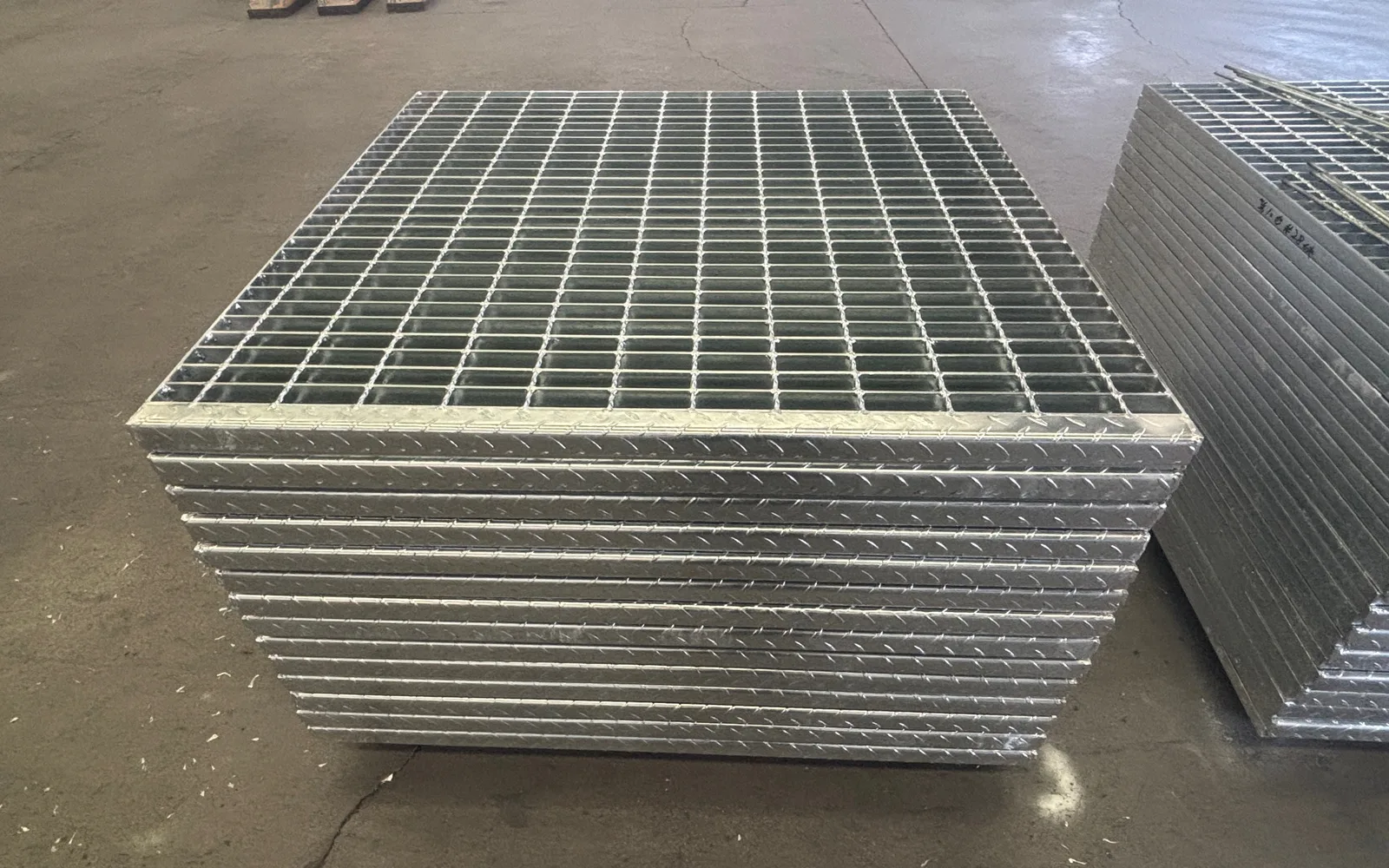
Power plant compound steel grating is a new type of steel grating product composed of steel grating with a certain span load capacity and a surface-sealed checkered plate or steel mesh. Compound steel grating can be made of any type of steel grating combined with checkered plates of different thicknesses.
Only when control points of each process are implemented can dimensional accuracy and appearance quality of finished products be guaranteed.
Bigger specifications are not always better. The selection of hot-dip galvanized steel gratings for thermal power plants should be as economical as possible while meeting load requirements; excessive thickening increases weight and cost and also causes inconvenience in installation. The product page provides more complete comparison notes on hot-dip galvanized steel gratings for reference before making a decision.
Features of steel gratings
Its overall performance focuses on the following aspects; we suggest comparing item by item in actual selection:
Overall, selection should weigh span, load and service environment together.
It is recommended to fix the selection sequence: first determine the span and support conditions, then the load requirements, and finally the surface treatment. Following this sequence, the specifications of hot-dip galvanized steel gratings for thermal power plants can basically be determined; choosing the model first and then fitting the conditions tends to cause repeated revisions. The same sequence applies to hot-dip galvanized steel gratings.
High strength, lightweight structure
The following aspects most need to be confirmed in advance in actual procurement and use:
The above points can serve as a pre-purchase checklist; confirm each item before moving to the quotation stage.
Quotations for the same specification may fluctuate with the steel market across different batches, which is normal for steel products such as hot-dip galvanized steel gratings for thermal power plants. If the procurement schedule allows, the price can be locked in advance; the procurement of hot-dip galvanized steel gratings can also be planned at the same pace.
Strong corrosion resistance, durable
For material selection, it is not advisable to simply pursue high grades. The materials for hot-dip galvanized steel gratings for thermal power plants should match the load requirements and service environment; over-specifying materials causes unnecessary cost increases. For the corresponding treatment of hot-dip galvanized steel gratings, refer to the product page instructions and choose according to actual working conditions.
Attractive appearance with a bright surface
This part on hot-dip galvanized steel gratings for thermal power plants may seem basic, but it is often the source of later disputes. Specifying the structural form, material, and surface treatment clearly in communication is far more reliable than agreeing on a name only. The same breakdown approach can be applied to the selection of hot-dip galvanized steel gratings.
No dirt accumulation, no rain or snow buildup, no water pooling; self-cleaning and easy to maintain
5. Good ventilation, lighting, heat dissipation, anti-slip and explosion-proof performance.
6. Easy to install and dismantle.
Installation most affects the later user experience. When laying hot-dip galvanized steel gratings for thermal power plants, the direction must not be reversed: the direction of the bearing flat bars should be consistent with the main load direction, which is most easily overlooked on site. The number of fasteners should also be complete according to the layout drawing; a single missing one may cause local loosening. This requirement applies equally to hot-dip galvanized steel gratings.
Fixing methods for power plant steel gratings
Two fixing methods are available: welding and mounting clips. The advantage of welding is permanent fixation without loosening; the welds are located on the first flat bar at each corner of the steel grating, with fillet welds no less than 20mm long and no less than 3mm high. The advantage of mounting clips is that they do not damage the hot-dip galvanized coating and allow easy disassembly; each panel requires at least 4 sets of clips, and the number increases with panel length. The safest method is to omit the bottom clip and weld the screw heads directly onto the beam, ensuring that the steel grating will not slide off the beam due to loose clips.
Regarding corrosion protection, one thing is easily overlooked: on-site cutting and welding damage the original coating, and these areas need zinc touch-up after construction, otherwise rust often starts from the cut edges. Hot-dip galvanized steel grating has the same issue; it is best to include this in the technical requirements at the construction disclosure.
Steel Grating Installation Methods
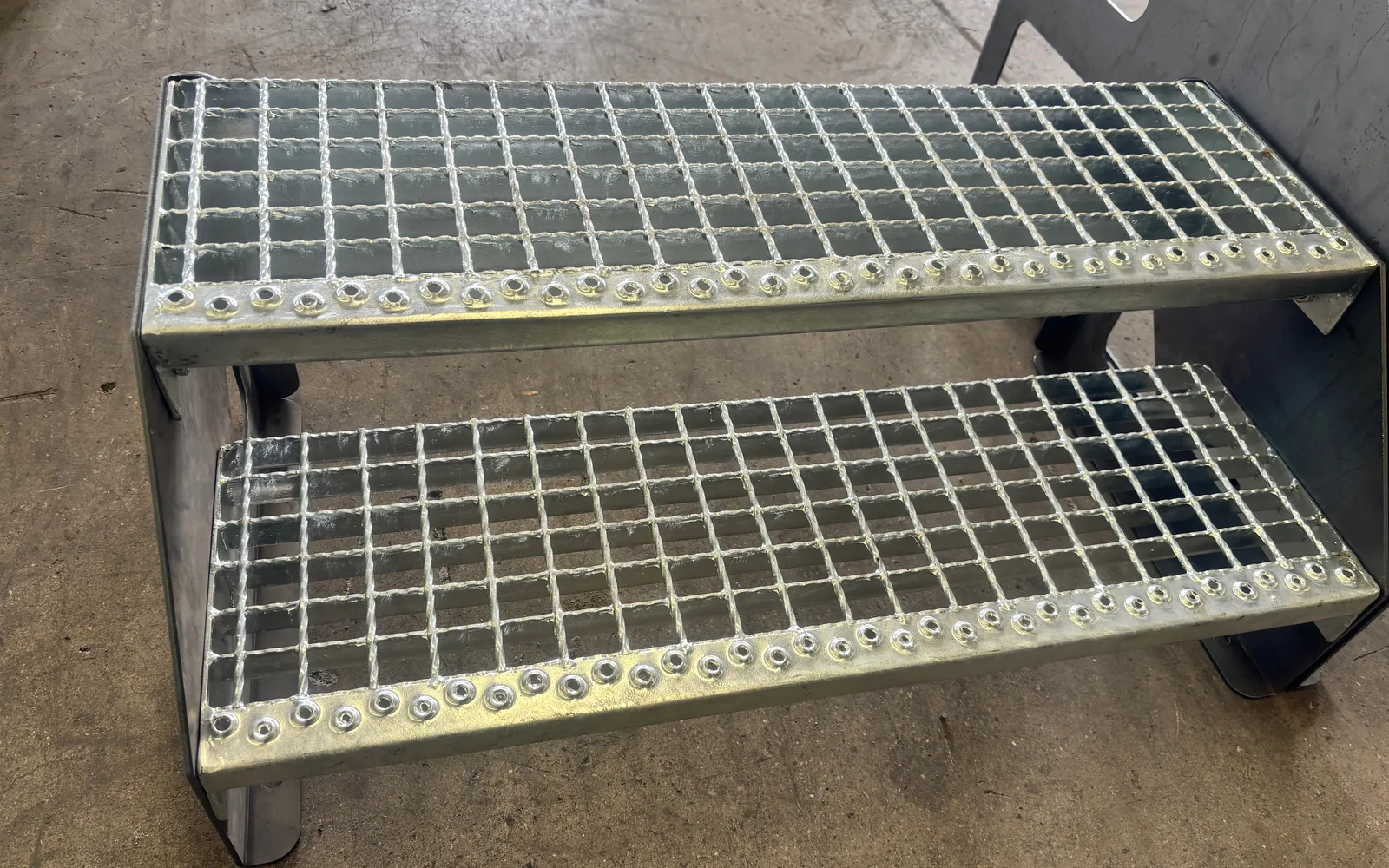
- Weld the steel grating or stair treads directly onto the supporting steel structure, and apply two coats of zinc-rich primer paint at the weld points.
- Stainless steel installation clips or bolted connections and other fastening methods can be provided as needed.
- Mounting clips are used for installation, which does not damage the galvanized coating and allows easy disassembly. Each set of clips includes one top clip, one bottom clip, one M8 round-head bolt and one nut.
- Make sure the installation is firm and reliable, and check regularly to prevent clips from loosening or falling off. Steel grating near vibration sources is best welded or fitted with rubber pads.
- The installation gap for steel grating is generally 100mm.
Choosing a surface treatment is essentially a trade-off between initial investment and later maintenance. Requirements for hot-dip galvanized steel gratings for thermal power plants can be appropriately relaxed in dry indoor environments and should be raised accordingly outdoors or in humid environments. The selection of hot-dip galvanized steel gratings can also be judged along the same lines.
Further reading: Sizing reference for hot-dip galvanized steel grating and galvanized grating
Hot-dip galvanized steel grating and galvanized grating are different specification forms within the same product system. The selection logic is the same as described in this article: first the usage type, then span and load to determine specifications, and finally the environment to determine surface treatment. Their corrosion protection and anti-slip requirements may differ; state them separately when ordering rather than writing one general technical requirement.
- For all product specifications and theoretical weights by series, visit Steel Grating Product Center
- To estimate cost by size and quantity, use Instant Quote PageSubmit Requirements
- To see how similar projects were executed, refer to Project Cases field applications
FAQ
What is most often overlooked during installation and acceptance?
First, bearing bars installed in the wrong direction reduce load capacity; second, insufficient fixing points or missing zinc touch-up paint; third, support beam spacing inconsistent with the layout drawing. These three items are most often overlooked on site.
What maintenance is required during daily use?
Maintenance mainly involves periodically checking whether fasteners are loose, whether touch-up paint has peeled off, and whether the panel surface shows obvious deformation or rust. Issues found should be dealt with promptly; overall maintenance is minimal.
What information is needed for custom sizes?
Usually you need to provide the panel dimensions (length x width), bearing bar specs and direction, center-to-center pitch of bearing bars and cross bars, surface treatment, and special requirements such as cutouts, corner notches and banding. Site photos or sketches are even better.
The above is for sizing and construction reference. To verify specific parameters or request a quotation, please visitInstant Quote Page, or contact our technical staff.
Note that this article presents sizing approaches and general practice, and does not constitute a strength commitment for any specific project. For load-bearing safety-critical areas, the design drawings and on-site calculations shall prevail; contact our technical staff if in doubt.