







The application of stainless steel grating and hot-dip galvanized steel grating in actual projects is not complicated; the difficulty lies in matching specifications, materials and service environment. This article explains in sections: different corrosion protection principles, key differences comparison, and how to distinguish stainless steel grades, giving you a complete judgment approach for galvanized steel gratings.
The core difference between stainless steel grating and hot-dip galvanized steel grating lies in the corrosion protection method: the former relies on the corrosion resistance of the stainless steel material itself (201, 304, 316, etc.) and only needs surface polishing; the latter uses Q235 carbon steel formed and then hot-dip galvanized as a whole, relying on the zinc layer for protection. In price, stainless steel is significantly higher than carbon steel. How to choose depends on the corrosion level of the service environment and budget; the item-by-item comparison follows.
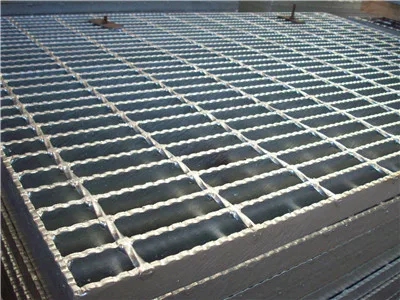
1. Different Corrosion Protection Principles
Stainless Steel Grating: The material itself contains chromium-nickel alloy elements, and corrosion resistance comes from the material, requiring no spray painting or hot-dip galvanizing; the production process is similar to ordinary steel grating, except that welds need surface polishing to remove welding slag and scars.
Hot-Dip Galvanized Steel Grating: The carbon steel finished product is immersed in molten zinc at about 450℃, forming a zinc-iron alloy layer and a pure zinc layer that separate the steel substrate from air and moisture. The national standard (YB/T4001.1) requires the average zinc coating thickness to be no less than 65μm.
When selecting materials, do not simply pursue high grades. The materials of stainless steel grating and hot-dip galvanized steel grating should match load requirements and service environment; over-specifying materials causes unnecessary cost increases. For the corresponding treatment of galvanized steel gratings, refer to the product pages and select according to actual working conditions.
2. Comparison of Key Differences
| Comparison Item | Stainless Steel Grating | Hot-Dip Galvanized Steel Grating |
|---|---|---|
| Base material | 201, 304, 316 and other stainless steels | Q235 carbon steel (GB/T700) |
| Corrosion protection method | Corrosion resistance of the material itself | Hot-dip zinc layer protection, average thickness ≥65μm |
| Post-weld treatment | Surface polishing to remove welding slag and scars | Cut edges and weld spots must be touched up with zinc-rich paint |
| Appearance | Silver-white luster, attractive | Silver zinc layer |
| Price | More expensive than carbon steel (hot-dip galvanized) | Economical, cost-effective |
| Applicable Environments | Strong corrosion, food and pharmaceutical, coastal areas | Normal atmosphere, general indoor and outdoor projects |
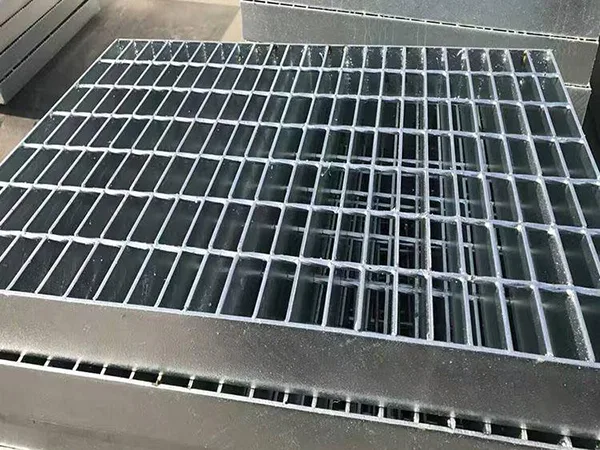
Choosing a surface treatment is essentially a trade-off between initial investment and later maintenance. Requirements can be appropriately relaxed when stainless steel grating and hot-dip galvanized steel grating are used in dry indoor environments, and raised accordingly outdoors or in humid environments. Hot-dip galvanized steel grating can be judged by the same approach.
3. How to Distinguish Stainless Steel Grades
- 201: Low nickel content, average corrosion resistance, lowest price;
- 304: Medium corrosion resistance, most commonly used, recommended for general projects;
- 316: Contains molybdenum, stronger resistance to chloride corrosion, suitable for strong corrosive environments such as coastal and chemical plants.
Material and surface treatment determine the on-site durability of stainless steel grating and hot-dip galvanized steel grating. Even for the same steel grating, treatment differs greatly between dry indoor use and coastal or chemical environments; the service environment should be raised as the primary condition during selection. This judgment also holds for galvanized steel gratings.
4. Choose by Service Environment
- Dry inland and indoor platforms: hot-dip galvanizing is sufficient, with a service life of 40-50 years;
- Ordinary outdoor atmosphere: hot-dip galvanizing, with a reference life of 20-30 years;
- Coastal and humid environments: hot-dip galvanizing about 10-15 years; switch to 304 stainless steel when corrosion requirements are high;
- Chemical plants and acid-alkali areas: hot-dip galvanizing about 5-10 years; 304/316 stainless steel recommended for long-term strong corrosion.
The above life data are quoted from this site'sHow Long Can Hot-Dip Galvanized Steel Grating Last; actual performance depends on zinc coating thickness and on-site corrosion level.
Regarding corrosion protection, one thing is easily overlooked: on-site cutting and welding damage the original coating, and these areas need zinc touch-up after construction, otherwise rust often starts from the cut edges. Galvanized grating has the same issue; it is best to include this in the technical requirements at the construction disclosure.
5. Frequently Asked Questions
Does stainless steel grating never rust?
Not absolutely rust-free. Grade 201 has average corrosion resistance and may still develop rust spots after long exposure to humid or salt-fog environments; 304 or 316 should be chosen for coastal or chemical environments. Choosing the right grade matters more than whether it is stainless steel.
Which industries use stainless steel grating?
It is mostly used in ships, food plants, power plants, chemical plants, refineries, steel mills, machinery manufacturing, papermaking, cement, pharmaceuticals, food processing, bridge engineering, municipal engineering and other occasions with hygiene or corrosion requirements.
How big is the price difference between the two?
Stainless steel raw material prices are higher than carbon steel and fluctuate with the market; the specific difference is calculated at current material prices. You canInstant Quote Pagerequest a quotation by specification.
Choosing a surface treatment is essentially a trade-off between initial investment and later maintenance. Requirements can be relaxed for stainless steel grating and hot-dip galvanized steel grating in dry indoor environments, and raised accordingly outdoors or in humid environments. Galvanized steel grating selection can follow the same approach.
6. Summary
For normal atmospheric environments with controlled budgets: choose hot-dip galvanized steel grating; for strong corrosion and hygienic occasions such as food and pharmaceutical: choose stainless steel grating (usually 304). If unsure, tell the manufacturer your service environment and set the type and surface treatment by corrosion level.
When selecting materials, do not simply pursue high grades. The materials of stainless steel grating and hot-dip galvanized steel grating should match load requirements and service environment; over-specifying materials causes unnecessary cost increases. For the corresponding treatment of galvanized steel gratings, refer to the product pages and select according to actual working conditions.
Further reading: Sizing reference for galvanized grating and hot-dip galvanized steel grating
Galvanized grating and hot-dip galvanized steel grating are different specification forms within the same product system. The selection logic is the same as described in this article: first the usage type, then span and load to determine specifications, and finally the environment to determine surface treatment. Their corrosion protection and anti-slip requirements may differ; state them separately when ordering rather than writing one general technical requirement.
- For all product specifications and theoretical weights by series, visit Steel Grating Product Center
- To estimate cost by size and quantity, use Instant Quote PageSubmit Requirements
- To see how similar projects were executed, refer to Project Cases field applications
If you already have drawings or site dimensions, submit them directly and we will help verify specifications and layout, avoiding on-site cutting and rework caused by mismatched models. Without drawings, site photos and approximate dimensions are enough for an estimate.