







This article introduces I-type steel grating in the order of what it is and its main advantages, and the cross-section shape of I-type bearing bars. Each section provides actionable judgment methods; if you only need quick conclusions, read the key points at the beginning of each section. The same approach applies to drainage trench covers.
What Are the Applications and Features of I-Type Steel Grating
This section first clarifies the basic concepts, structural forms and common names, laying the groundwork for what follows.
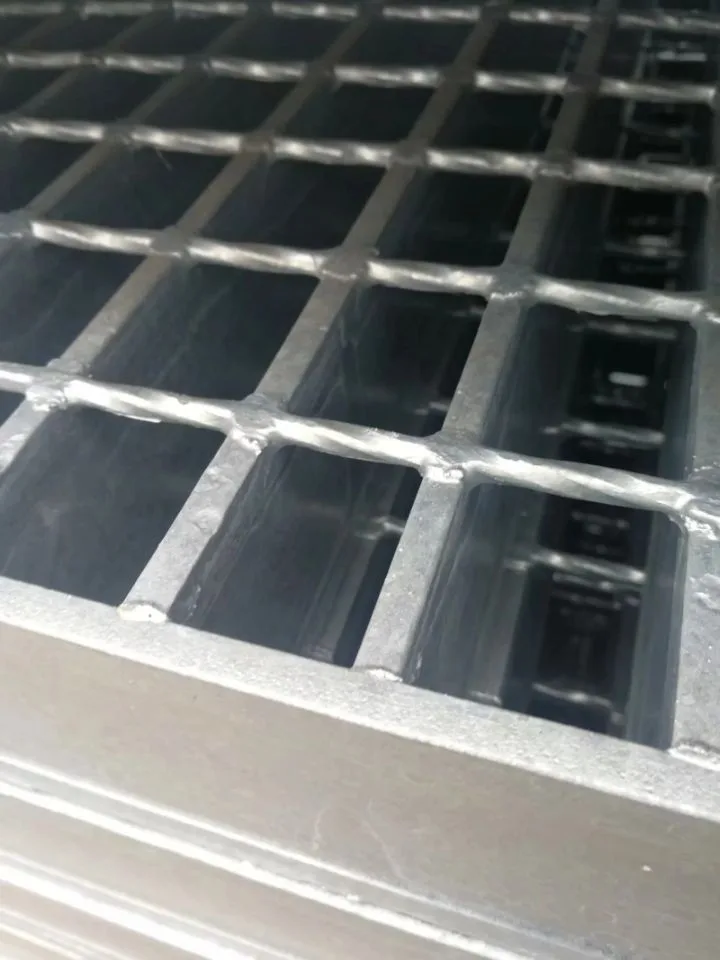
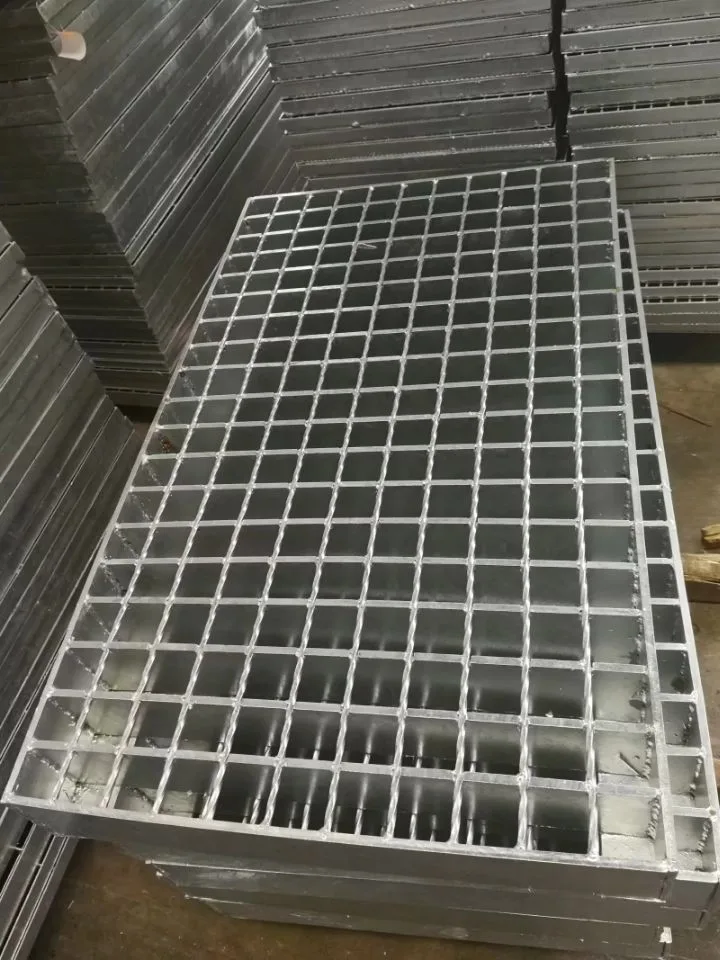
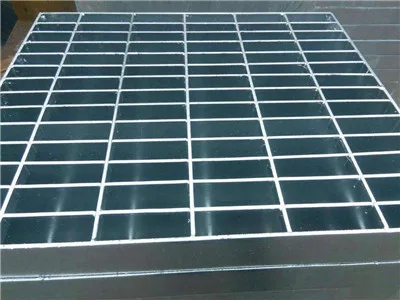
Steel grating is a steel structural component made of bearing bars and cross bars combined and press-welded in a regular pattern. It is widely used in metallurgy, petrochemical, transportation, light industry, municipal and environmental protection fields, generally for making platforms, floors, trench covers, treads, fences, water supply and drainage works and other metal structures. In July 2007, China issued the new industry standard YB/T4001.1-2007 for steel gratings, which led to rapid development of steel grating production and application in China.
Once you grasp these basic concepts, the specifications and sizing recommendations that follow will be much easier to understand.
Different parts in the same scenario often have different requirements. Taking I-type steel grating as an example, the specifications of main passages and corner areas, frequently used areas and occasional maintenance areas can be set separately; the combined use of drainage trench covers is also recommended by zones, balancing safety and cost.
Key Advantages
Main features can be summarized as follows:
In service, steel grating mainly bears the weight of objects. Therefore, the bearing bar - the main load-bearing component arranged vertically - is checked and calculated for bending strength and stiffness as a simply supported beam under uniformly distributed or concentrated loads. Accordingly, the requirement on the cross-section shape of the bearing bar is: with a given cross-sectional area, maximize strength and stiffness about the vertical bending axis, while also having good lateral stability against buckling.
Overall, selection should weigh span, load and service environment together.
Once you understand the structural composition of I-type steel grating, reading specification tables and quotations becomes much easier. Remember it as three parts: bearing bars + cross bars + surface treatment; a change in any one affects the finished product's performance. The same breakdown applies when selecting hot-dip galvanized trench covers.
Cross-Section Shape of I-Type Bearing Bars
Additional key points are as follows:
Bearing bars of steel grating currently in use are mainly made of rectangular-section flat bars with thickness T=3, 4, 5, 6mm, and an I-shaped section flat bar with a thinner middle web and thicker ends. The I-shaped section flat bar is a lightweight, economical section that saves metal. Rectangular and I-shaped section flat bars together constitute the nominal thickness series of steel grating bearing bars. The geometric and mechanical properties of the I-shaped section flat bar are much superior to those of the rectangular section flat bar. With equal bar height and cross-sectional area, the bending section modulus of the I-shaped flat bar is W2=0.200~0.203FH, while that of the rectangular section flat bar is W=0.167FH; therefore, the I-shaped flat bar has much higher bending capacity. However, due to the shape characteristics and limitations of the I-shaped section, not all rectangular flat bar specifications can be replaced by I-shaped bars of equal strength and equal height, and the usable specification range of current I-shaped flat bars is also limited. The main reasons: when the bar height is small, the end values of the I-shaped flat bar are too small, making it difficult to hot-roll and unfavorable for embedded press-welding; when the bar height is large, the web depth-to-thickness ratio of the I-shaped flat bar is too large, causing insufficient lateral stability. Therefore, rectangular section flat bars are currently the main choice in the steel grating industry.
The above points can serve as a pre-purchase checklist; confirm each item before moving to the quotation stage.
It should be noted that the specific practices of I-type steel grating vary with project conditions; what is given here is a general approach rather than a fixed answer. In actual execution, it is recommended to first confirm the site span, support conditions and traffic requirements, then implement item by item against this section; for hot-dip galvanized trench covers, the judgment logic is the same, and it is still recommended to recheck before ordering.
Features of Type I Steel Grating
Main features can be summarized as follows:
Using I-shaped section flat bars instead of rectangular section flat bars to produce steel grating can save 18% of steel weight. Under conditions where height, moment of inertia and bending section modulus are completely identical, replacing the latter with the former can reduce the unit weight by about 18% while ensuring product quality, meaning the steel grating manufacturer can produce 18% more welded steel grating, thus increasing production economic benefits and reducing project cost.
In recent years, international trade has put forward new requirements for steel used in welded steel grating, and replacing all rectangular section flat bars with I-shaped section flat bars conforms to this new international trend. I-shaped economical section steel grating fully complies with the YB/T4001.1-2007 standard and can serve as an upgraded product: it increases output and economic benefits for manufacturers, while reducing weight and consumption for construction units.
Overall, selection should weigh span, load and service environment together.
Bigger specifications are not always better. The selection of I-type steel grating should be as economical as possible while meeting load requirements; over-thickening increases self-weight and cost and complicates installation. The product pages provide more complete comparisons of hot-dip galvanized trench covers for reference before deciding.
Further notes: Common combinations of drainage trench covers and hot-dip galvanized trench covers
Besides what this article covers, drainage trench covers are also common in actual projects. It shares similarities with this article's subject in structure and fabrication; for selection, check span, load and service environment in the same order. If both types of components are used in the same project, we recommend unifying material and surface treatment to avoid later galvanic corrosion or inconsistent appearance.
- For all product specifications and theoretical weights by series, visit Steel Grating Product Center
- To estimate cost by size and quantity, use Instant Quote PageSubmit Requirements
- To see how similar projects were executed, refer to Project Cases field applications
FAQ
Can the values in the article be applied directly?
Values in this article come from relevant standard clauses or common industry practice. For actual selection, recalculate based on site span, load class and service environment; direct copying is not recommended.
Why do different manufacturers quote different weights for the same specifications?
The main difference lies in the actual measured thickness and tolerance control of the bearing bars. When bars are supplied at the lower tolerance limit, weight per unit area falls below the theoretical value, and load capacity drops accordingly. We recommend specifying thickness tolerance clearly when purchasing.
What maintenance is required during daily use?
Maintenance mainly involves periodically checking whether fasteners are loose, whether touch-up paint has peeled off, and whether the panel surface shows obvious deformation or rust. Issues found should be dealt with promptly; overall maintenance is minimal.
The above is for sizing and construction reference. To verify specific parameters or request a quotation, please visitInstant Quote Page, or contact our technical staff.
If you already have drawings or site dimensions, submit them directly and we will help verify specifications and layout, avoiding on-site cutting and rework caused by mismatched models. Without drawings, site photos and approximate dimensions are enough for an estimate.