







This article introduces steel grating in everyday life in the order of what steel grating is, common models and sizes, and basic concepts. Each section gives actionable criteria where possible; if you only need a quick conclusion, start with the opening points of each section. The same approach applies to galvanized steel grating.
What Is Steel Grating
Below we first briefly explain the relevant concepts and basic construction to make the following parameters and sizing content easier to understand.
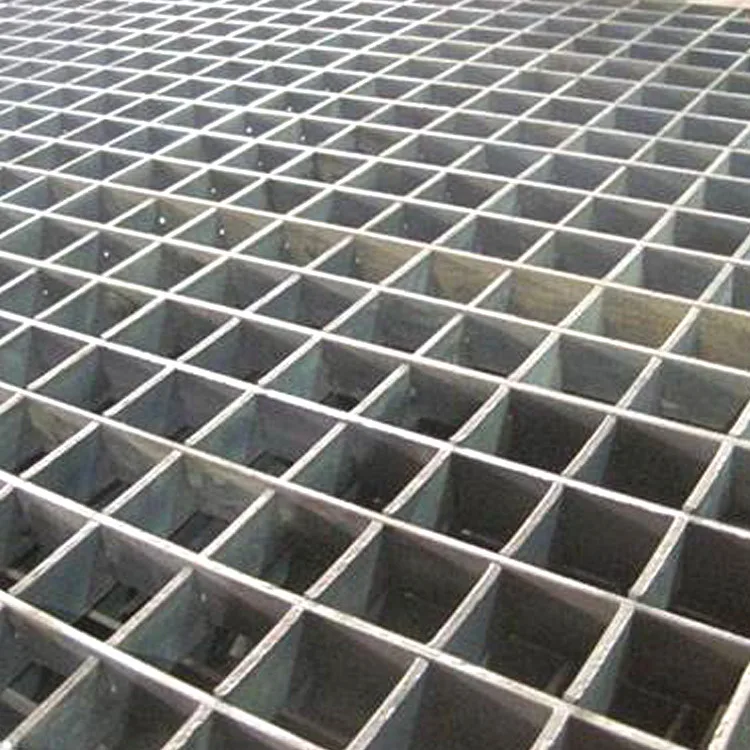
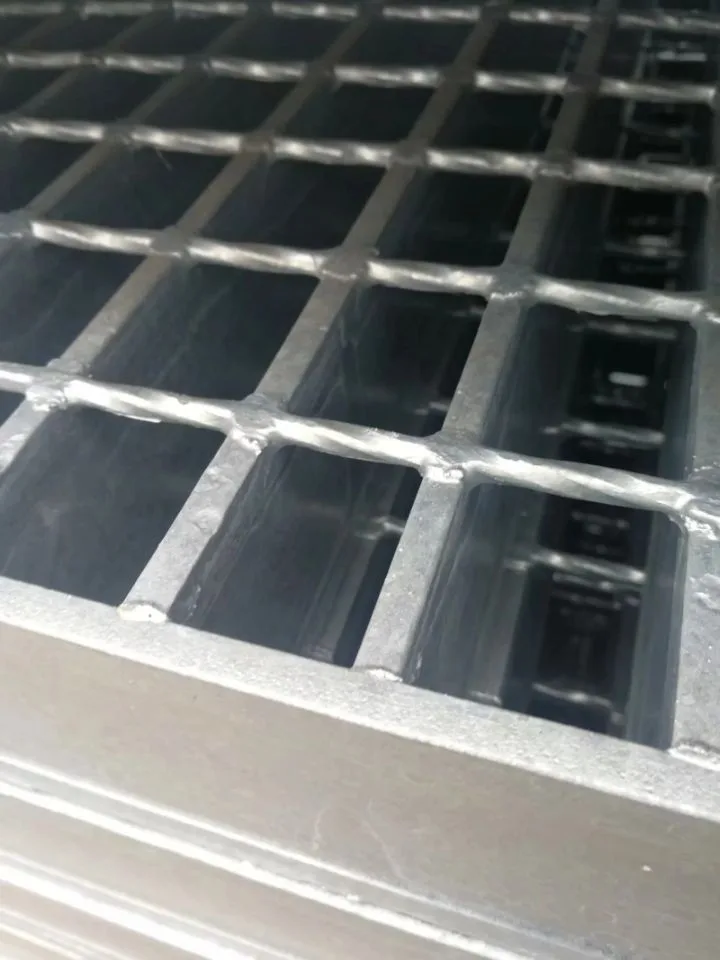
The appearance of steel grating today is different from the past; styles have become increasingly attractive and better suited to people's aesthetics, so it is undeniable that users feel more comfortable with it. Pressure-welded steel grating is produced on 200-ton hydraulic resistance welding automated equipment, where flat bearing bars and cross bars are welded at set intervals, then cut, opened and edged to meet customer requirements.
Once you grasp these basic concepts, the specifications and sizing recommendations that follow will be much easier to understand.
A practical tip for specification confirmation: list the flat bar size, bearing bar pitch, cross bar pitch and overall dimensions together on the purchase order. Listing only one or two of them often results in a delivery mismatch. The full specification notation for steel grating in everyday use is given on the product page; number each panel against the layout drawing before ordering, and the same applies to hot-dip galvanized steel grating.
Common Steel Grating Models and Sizes
Common specifications and corresponding parameters are summarized below; confirm each item before ordering:
Hand-made steel grating starts with punched flat bearing bars; cross bars are inserted into the holes and spot welded, leaving gaps between the bars. Each contact point is welded to form a bond comparable to a fused joint, making the welds very secure, but the appearance is less attractive than that of pressure-welded grating!
The above are common specifications; actual ordered dimensions and tolerance requirements shall be confirmed against the layout drawing.
Bigger is not always better. Steel grating for everyday use should be selected as economically as possible while meeting load requirements; over-thickening adds weight and cost and complicates installation. The product page gives a fuller comparison for hot-dip galvanized steel grating, which is worth checking before deciding.
Basic Concepts of Steel Grating
Compound steel grating is a steel product made by crossing flat bars and cross bars at set pitches and welding them into a square grid in the middle. It is mainly used for trench covers, steel platform decks and steel stair treads.
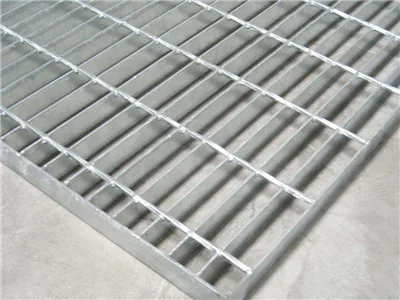
Hot-dip galvanized steel grating mainly refers to steel grating with a hot-dip galvanized surface. There are currently two ways to produce it: machine pressure welding and manual fabrication. A pressure welder uses high-pressure resistance welding, with a manipulator automatically placing cross bars onto the flat bars and welding them to the flat bars through a powerful welding current and hydraulic pressure, producing strong, consistent, high-strength weld points.
Regarding corrosion protection, one thing is easily overlooked: on-site cutting and welding damage the original coating, and these areas need zinc touch-up after construction, otherwise rust often starts from the cut edges. Galvanized grating has the same issue; it is best to include this in the technical requirements at the construction disclosure.
Further notes: Common combinations of galvanized grating and hot-dip galvanized steel grating
In engineering, hot-dip galvanized steel grating is often used together with the components mentioned in this article. The two differ in load carrying and installation practices; when combining them, pay special attention to the connection of support conditions and fixing methods, as junction treatment is often where problems arise. For unified drawings, submit dimensions of both types and our technicians will process them under the same layout logic.
- For all product specifications and theoretical weights by series, visit Steel Grating Product Center
- To estimate cost by size and quantity, use Instant Quote PageSubmit Requirements
- To see how similar projects were executed, refer to Project Cases field applications
FAQ
What information is needed for custom sizes?
Usually you need to provide the panel dimensions (length x width), bearing bar specs and direction, center-to-center pitch of bearing bars and cross bars, surface treatment, and special requirements such as cutouts, corner notches and banding. Site photos or sketches are even better.
What maintenance is required during daily use?
Maintenance mainly involves periodically checking whether fasteners are loose, whether touch-up paint has peeled off, and whether the panel surface shows obvious deformation or rust. Issues found should be dealt with promptly; overall maintenance is minimal.
What is most often overlooked during installation and acceptance?
First, bearing bars installed in the wrong direction reduce load capacity; second, insufficient fixing points or missing zinc touch-up paint; third, support beam spacing inconsistent with the layout drawing. These three items are most often overlooked on site.
The above is for sizing and construction reference. To verify specific parameters or request a quotation, please visitInstant Quote Page, or contact our technical staff.
The above is general guidance. For a specific project, we still recommend submitting span, load class and service environment to our technicians for review. Steel grating is a load-bearing component; rework caused by wrong specification choices costs far more than the time spent on upfront calculation.