







Many projects focus only on price when purchasing galvanized platform steel grating, ignoring specification matching and anti-corrosion requirements, which often leads to rework later. This article lists the conditions to confirm one by one - following the order of uses and features, installation and fixing methods, and basic concepts - and explains how to make trade-offs under common working conditions. Content relating to galvanized grating can be used directly as a reference for technical briefings.
Application Scenarios for the Uses and Features of Galvanized Platform Steel Grating
Main applications are as follows:
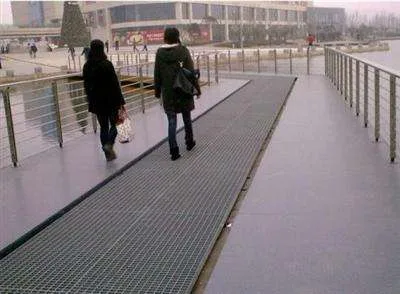
Platform steel grating is made by arranging flat bars and cross beams at set distances in a cross pattern and welding them into a square grid. It is mainly used for trench covers, steel structure platform panels and steel stair treads. The cross bars are generally twisted square steel.
Classification of platform steel grating: by welding method, it can be divided into welded platform steel mesh, press-locked platform steel mesh and welded platform steel plate. By the load condition of the flat bars, bar shapes are divided into flat, serrated and I-type grating. By use, it can be divided into general-purpose grating and special-purpose grating such as trench covers and tread plates.
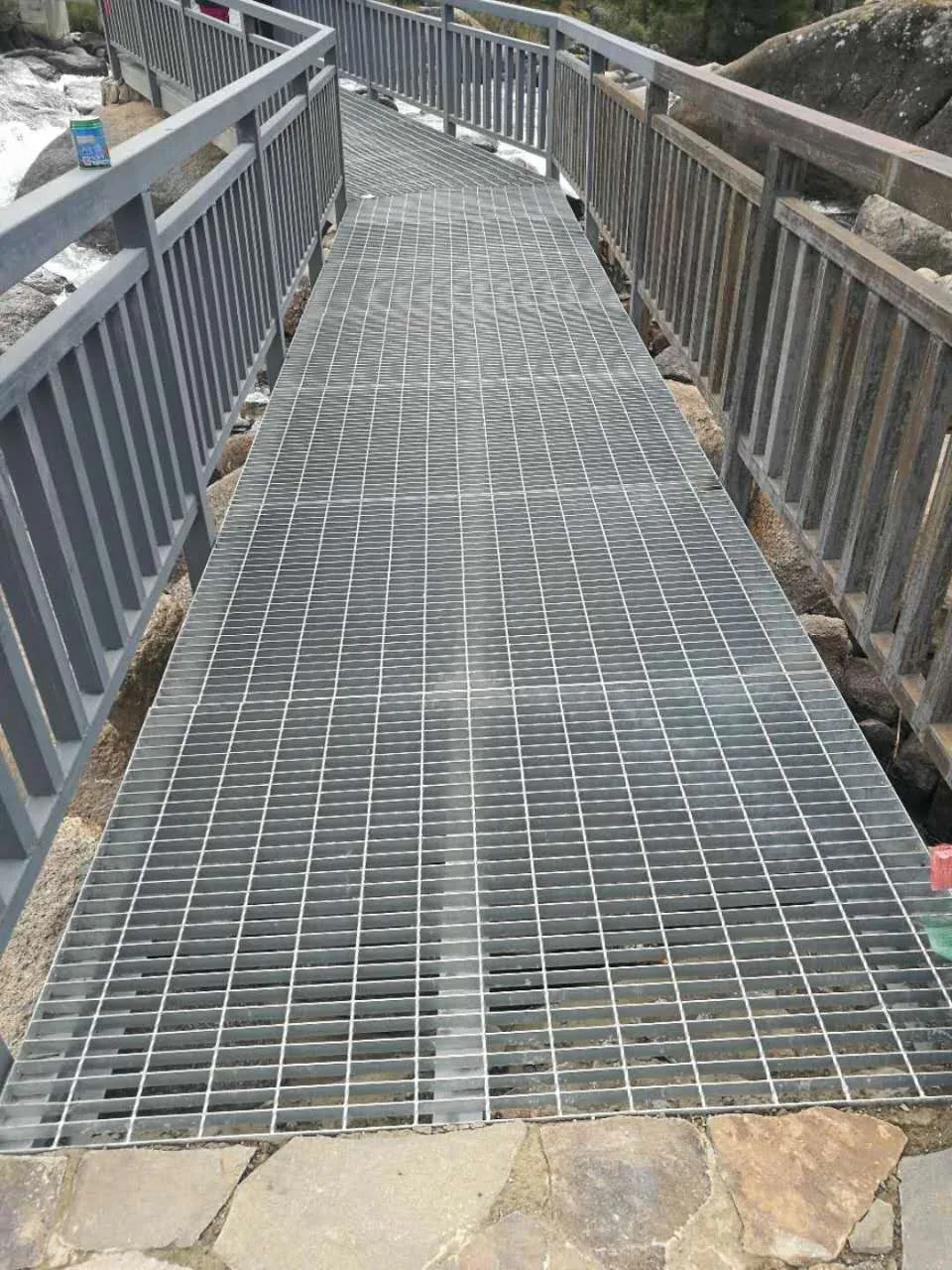
If your working conditions fall outside the above range, you can provide site photos and dimensions, and our technicians will help assess them.
Regarding corrosion protection, one thing is easily overlooked: on-site cutting and welding damage the original coating, and these areas need zinc touch-up after construction, otherwise rust often starts from the cut edges. Hot-dip galvanized steel grating has the same issue; it is best to include this in the technical requirements at the construction disclosure.
Installation and Fixing Method
Key points for construction and fixing are as follows:
Fabrication of platform steel grating: pressure welding uses 200-ton hydraulic resistance welding automation equipment to weld the original form, then cutting, punching and edging processes meet customer requirements.
After installation, check each panel's fixing points and flatness; put into use only after confirming no warping or looseness.
For the installation sequence, lay out first, then fix; avoid changing while laying. Once the layout drawing of galvanized platform steel grating is confirmed, avoid random cutting on site; if adjustment is really needed, the fixing and edging of galvanized grating should be adjusted accordingly to avoid leaving a loosening hazard.
Performance Features of the Uses and Features of Galvanized Platform Steel Grating
Features of platform steel grating: high strength, light structure, strong corrosion resistance, durability, good looks, bright surface, no dirt build-up, no rain or snow accumulation, no water retention, self-cleaning, easy maintenance, ventilation, light transmission, heat dissipation, anti-slip, good explosion-proof performance and easy installation.
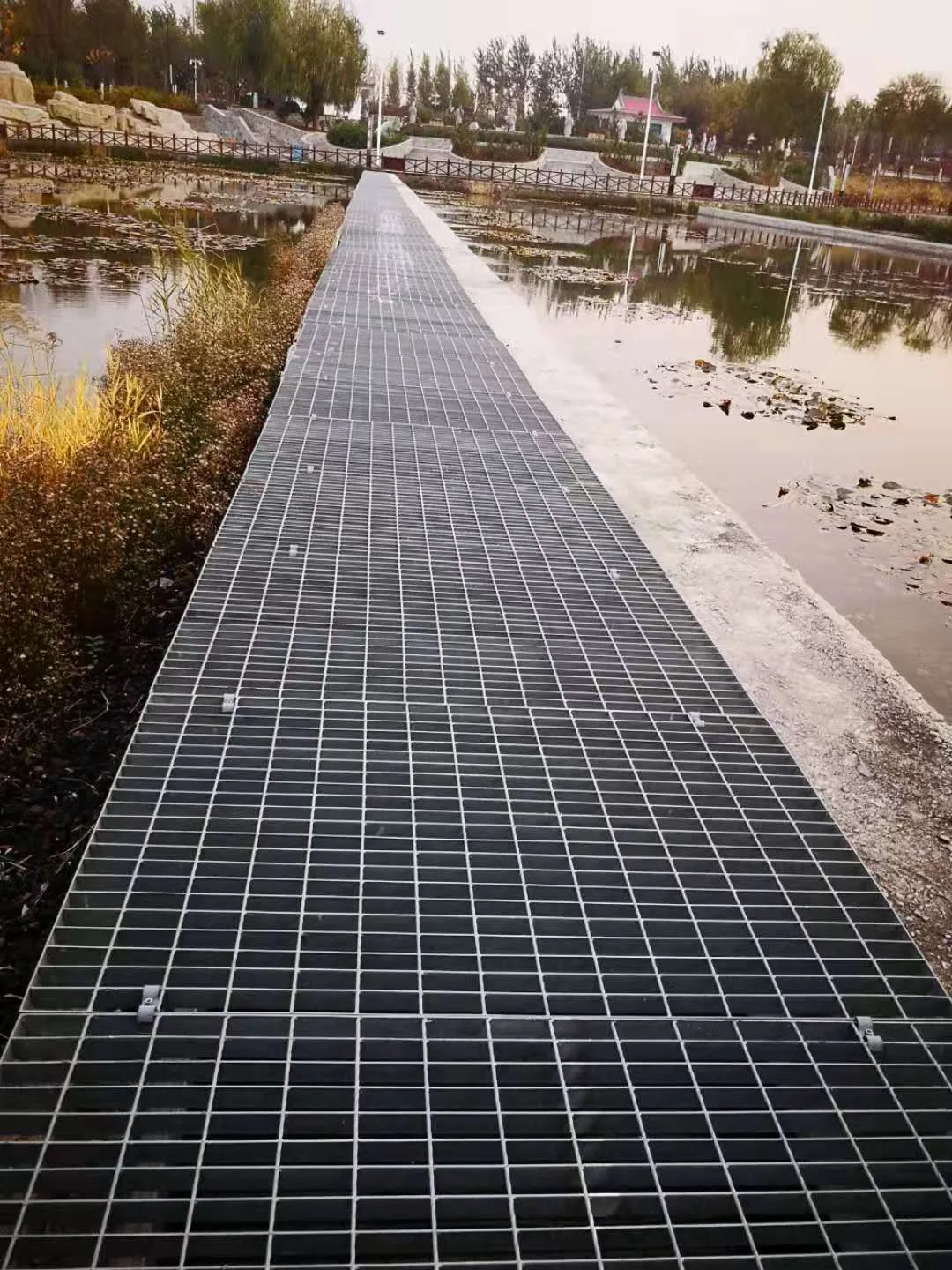
For material selection, do not simply chase high grades. The material of galvanized platform steel grating should match the load requirements and service environment; over-specifying causes unnecessary cost increases. The corresponding treatment for hot-dip galvanized steel grating can be found on the product page, chosen against actual conditions.
Scope of Application & Engineering Fields
Applications of platform steel grating: widely used for platforms, walkways, trench covers, manhole covers, ladders and fences in petrochemical, power, tap water, sewage treatment, port terminals, building renovation, shipbuilding, self-propelled parking, municipal engineering and environmental sanitation.
Different application scenarios place different emphases on galvanized platform steel grating: pedestrian walkways value anti-slip and comfort, vehicle areas value panel stiffness and fixing reliability, and drainage trench covers value open water area and anti-theft. Clarify the use first, then look at the specifications to avoid detours; galvanized grating follows the same logic.
Further reading: Selection points for galvanized grating and hot-dip galvanized steel grating
In engineering, hot-dip galvanized steel grating is often used together with the components mentioned in this article. The two differ in load carrying and installation practices; when combining them, pay special attention to the connection of support conditions and fixing methods, as junction treatment is often where problems arise. For unified drawings, submit dimensions of both types and our technicians will process them under the same layout logic.
- For all product specifications and theoretical weights by series, visit Steel Grating Product Center
- To estimate cost by size and quantity, use Instant Quote PageSubmit Requirements
- To see how similar projects were executed, refer to Project Cases field applications
FAQ
Can the values in the article be applied directly?
Values in this article come from relevant standard clauses or common industry practice. For actual selection, recalculate based on site span, load class and service environment; direct copying is not recommended.
What is most often overlooked during installation and acceptance?
First, bearing bars installed in the wrong direction reduce load capacity; second, insufficient fixing points or missing zinc touch-up paint; third, support beam spacing inconsistent with the layout drawing. These three items are most often overlooked on site.
What maintenance is required during daily use?
Maintenance mainly involves periodically checking whether fasteners are loose, whether touch-up paint has peeled off, and whether the panel surface shows obvious deformation or rust. Issues found should be dealt with promptly; overall maintenance is minimal.
The above is for sizing and construction reference. To verify specific parameters or request a quotation, please visitInstant Quote Page, or contact our technical staff.
The above is general guidance. For a specific project, we still recommend submitting span, load class and service environment to our technicians for review. Steel grating is a load-bearing component; rework caused by wrong specification choices costs far more than the time spent on upfront calculation.