







This article explains serrated steel grating in order - what it is, its main advantages and the basic concepts - and focuses on practical, actionable checks rather than theory alone. If you have drawings or site dimensions at hand, verify them point by point against the checklist below; the same sequence also applies to hot-dip galvanized steel grating.
What Is Serrated Steel Grating
This section first clarifies the basic concepts, structural forms and common names, laying the groundwork for what follows.
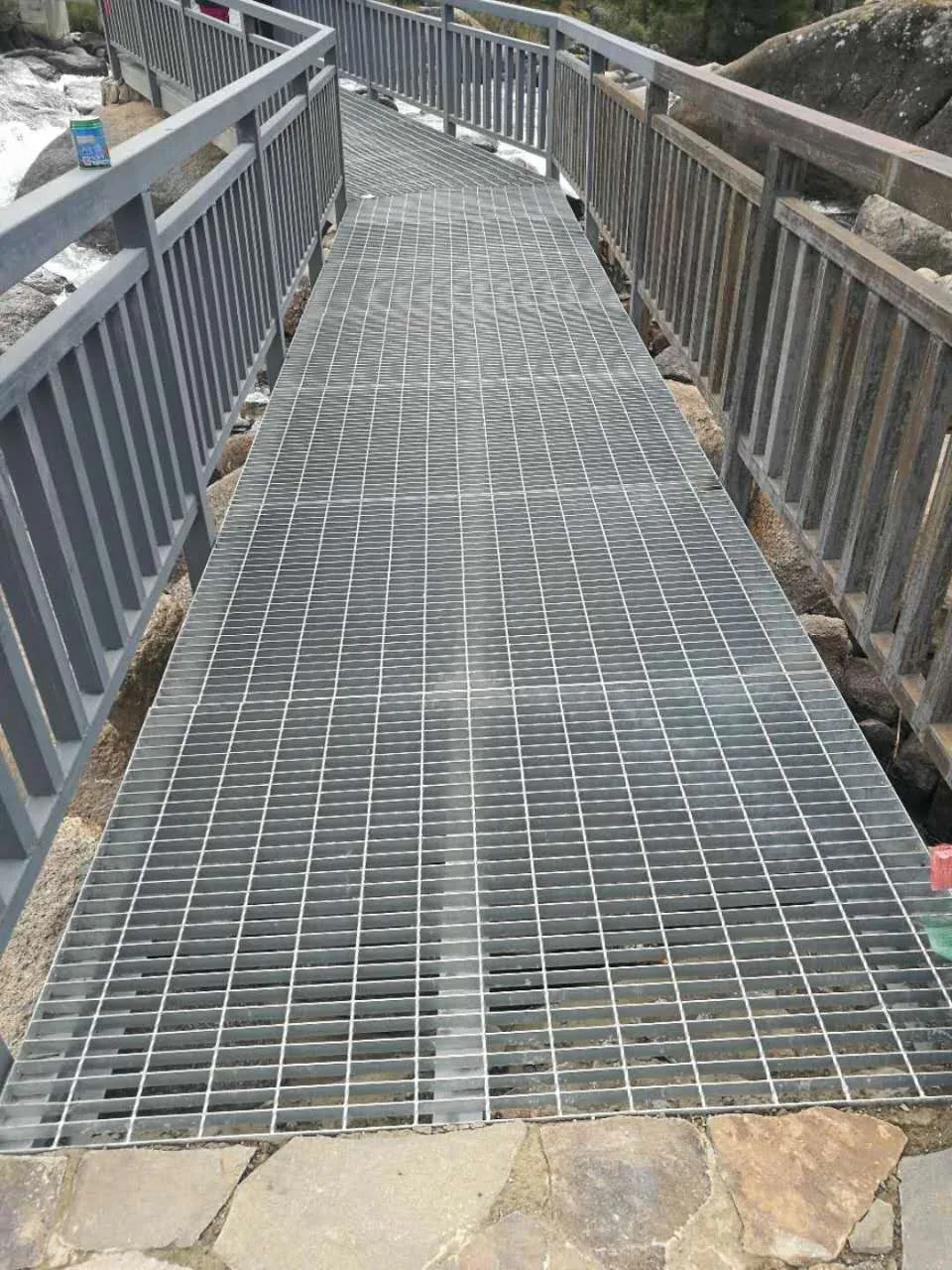
Serrated steel grating is welded from flat bearing bars with one serrated edge. In addition to the features and uses of standard steel grating, it offers much stronger slip resistance, making it especially suitable for damp, greasy locations such as offshore oil platforms. Hot-dip galvanizing gives it excellent rust protection and 30 years free of maintenance or replacement. It is, however, more expensive, so cost should be considered when purchasing.
Once you grasp these basic concepts, the specifications and sizing recommendations that follow will be much easier to understand.
To decide quickly whether serrated steel grating suits a site, check three things: whether corrosive media are present, whether the traffic is pedestrian or vehicular, and the approximate span. Once these are clear, you can basically determine the specifications and surface treatment required for hot-dip galvanized steel grating.
Key Advantages
Main features can be summarized as follows:
Serrated steel grating is made of high-strength carbon steel, with strength and toughness far above cast iron. Its clean lines, silver finish and modern look make it attractive, while the large mesh opening gives excellent drainage. Used as a trench cover, it can be hinged to the frame for theft-proof, safe and easy opening. It also saves material and investment: for long spans and heavy loads it costs less than cast iron, and it avoids the replacement costs of cast iron covers lost to theft or crushing.
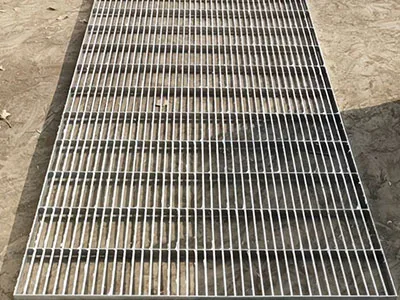
Overall, selection should weigh span, load and service environment together.
Once you understand the structure of serrated steel grating, specification tables and quotations become much easier to read. Think of it as three parts: "bearing bars + cross bars + surface treatment" - a change in any one of them affects the finished product's performance. The same breakdown works when selecting hot-dip galvanized steel grating.
Specifications of Serrated Steel Grating
The 60mm-pitch series of serrated steel grating has nominal openings of 50*60mm. It is often specified for crusher plant decks, conveyor walkways, ball mills, processing plants and transfer stations. Developed especially for mining applications, it lets most spilled material fall through, keeping the surface clean and safe and solving the problem of mineral spillage on the deck.
Actual parameters for the same model may vary slightly between manufacturers, so acceptance should be based on measured values. Spot-check the key dimensions of serrated steel grating, especially on bulk deliveries. The corresponding parameters of hot-dip galvanized steel grating can be verified the same way; report any deviation promptly.
Further notes: How to combine hot-dip galvanized steel grating and hot-dip galvanized steel grating in use
In engineering, hot-dip galvanized steel grating is often used together with the components mentioned in this article. The two differ in load carrying and installation practices; when combining them, pay special attention to the connection of support conditions and fixing methods, as junction treatment is often where problems arise. For unified drawings, submit dimensions of both types and our technicians will process them under the same layout logic.
- For all product specifications and theoretical weights by series, visit Steel Grating Product Center
- To estimate cost by size and quantity, use Instant Quote PageSubmit Requirements
- To see how similar projects were executed, refer to Project Cases field applications
FAQ
What information is needed for custom sizes?
Usually you need to provide the panel dimensions (length x width), bearing bar specs and direction, center-to-center pitch of bearing bars and cross bars, surface treatment, and special requirements such as cutouts, corner notches and banding. Site photos or sketches are even better.
What is most often overlooked during installation and acceptance?
First, bearing bars installed in the wrong direction reduce load capacity; second, insufficient fixing points or missing zinc touch-up paint; third, support beam spacing inconsistent with the layout drawing. These three items are most often overlooked on site.
What maintenance is required during daily use?
Maintenance mainly involves periodically checking whether fasteners are loose, whether touch-up paint has peeled off, and whether the panel surface shows obvious deformation or rust. Issues found should be dealt with promptly; overall maintenance is minimal.
The above is for sizing and construction reference. To verify specific parameters or request a quotation, please visitInstant Quote Page, or contact our technical staff.
Note that this article presents sizing approaches and general practice, and does not constitute a strength commitment for any specific project. For load-bearing safety-critical areas, the design drawings and on-site calculations shall prevail; contact our technical staff if in doubt.