







This article focuses on grating stair treads, covering material selection and applications, implementation standards and inspection, and basic concepts, with practical tips after each section. If you are comparing solutions or preparing for procurement, check the items in the order presented; items on galvanized grating can be confirmed against this article, adjusting for actual site conditions.
Installation and Construction Points of Grating Stair Treads
Key points for construction and fixing are as follows:
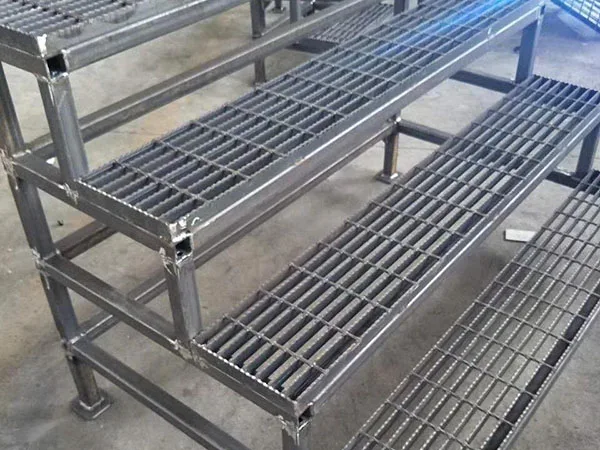
The treads we touch and use in daily life are very durable. These panels are all installed by welding or bolt fixing. So what materials are treads made of?
After installation, check each panel's fixing points and flatness; put into use only after confirming no warping or looseness.
After installation, an overall check is recommended: whether panels are warped, whether fasteners are complete, and whether height differences between adjacent panels are obvious. Such issues with grating stair treads are cheapest to fix at the acceptance stage; rework after use is troublesome. Acceptance of hot-dip galvanized steel grating can follow the same standard.
Standards and Inspection
The main standard clauses and acceptance requirements involved are as follows:
There are now many types of stair treads. Different types differ in raw materials and manufacturing processes, so selection should be based on actual conditions during installation and use, so that stair treads provide more convenience for our travel after installation.
We recommend checking each clause above during acceptance and keeping the factory inspection records.
Installation most affects the later user experience. When laying grating stair treads, the direction must not be reversed - the bearing flat bars should align with the main load direction, which is most easily overlooked on site. Fasteners must be complete per the layout drawing; a missing one can cause local loosening. The same requirement applies to hot-dip galvanized steel grating.
Specifications of Grating Stair Treads
Main specification comparison is as follows:
Indoor stair treads are the most widely used; we use them daily at work and when entering various public places. These treads are made of galvanized grating and stair anti-slip nosings. Treads facilitate our movement; there are many specifications and types, which can be flexibly processed and fabricated during installation and use.
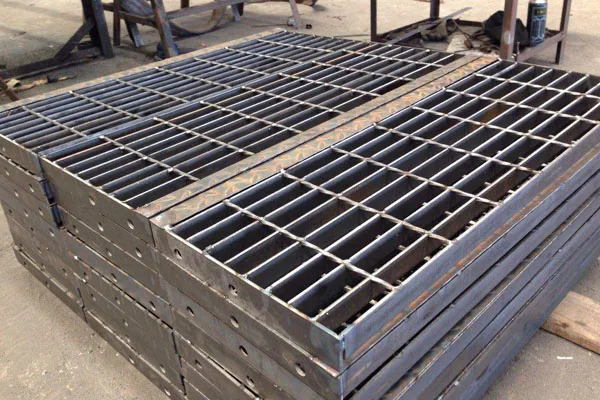
The above are common specifications; actual ordered dimensions and tolerance requirements shall be confirmed against the layout drawing.
Actual parameters of the same model may vary slightly between manufacturers; acceptance shall be based on measured values. Spot checks of key dimensions of grating stair treads are recommended, especially for bulk deliveries. Hot-dip galvanized steel grating parameters can be checked the same way, and any deviation should be communicated promptly.
Basic Concepts of Grating Stair Treads
Anti-slip treads are widely used. These panels are mainly made of serrated galvanized flat bars and are used in humid environments; after installation, they prevent slipping while walking. One side of the panel is welded from many serrated galvanized flat bars, so these treads have the advantages of ordinary steel plates, are very sturdy, and also provide anti-slip performance. They are suitable for installation on slippery surfaces and are widely used in oil production plant platforms.
Regarding corrosion protection, one thing is easily overlooked: on-site cutting and welding damage the original coating, and these areas need zinc touch-up after construction, otherwise rust often starts from the cut edges. Hot-dip galvanized steel grating has the same issue; it is best to include this in the technical requirements at the construction disclosure.
Application Scenarios of Grating Stair Treads
There are many classifications of treads today. These different types of stair treads all use steel plates as raw material for production and design, so the panels are very durable and are indispensable tools and materials in our daily travel.
To judge whether grating stair treads suit a site, check three things quickly: whether there are corrosive media, whether traffic is pedestrians or vehicles, and the approximate span range. With these three points clear, you can basically determine the specifications and surface treatment needed for galvanized grating.
Further reading: Selection points for galvanized grating and hot-dip galvanized steel grating
Galvanized grating and hot-dip galvanized steel grating are different specification forms within the same product system. The selection logic is the same as described in this article: first the usage type, then span and load to determine specifications, and finally the environment to determine surface treatment. Their corrosion protection and anti-slip requirements may differ; state them separately when ordering rather than writing one general technical requirement.
- For all product specifications and theoretical weights by series, visit Steel Grating Product Center
- To estimate cost by size and quantity, use Instant Quote PageSubmit Requirements
- To see how similar projects were executed, refer to Project Cases field applications
FAQ
What maintenance is required during daily use?
Maintenance mainly involves periodically checking whether fasteners are loose, whether touch-up paint has peeled off, and whether the panel surface shows obvious deformation or rust. Issues found should be dealt with promptly; overall maintenance is minimal.
Why do different manufacturers quote different weights for the same specifications?
The main difference lies in the actual measured thickness and tolerance control of the bearing bars. When bars are supplied at the lower tolerance limit, weight per unit area falls below the theoretical value, and load capacity drops accordingly. We recommend specifying thickness tolerance clearly when purchasing.
What information is needed for custom sizes?
Usually you need to provide the panel dimensions (length x width), bearing bar specs and direction, center-to-center pitch of bearing bars and cross bars, surface treatment, and special requirements such as cutouts, corner notches and banding. Site photos or sketches are even better.
The above is for sizing and construction reference. To verify specific parameters or request a quotation, please visitInstant Quote Page, or contact our technical staff.
Note that this article presents sizing approaches and general practice, and does not constitute a strength commitment for any specific project. For load-bearing safety-critical areas, the design drawings and on-site calculations shall prevail; contact our technical staff if in doubt.