







The application of steel stair treads in actual projects is not complicated; the difficulty lies in matching specifications, material, and service environment. This article explains, in turn, points to note during fabrication, the bolt hole positions on both side edges, and basic concepts, giving you a complete way of judging hot-dip galvanized steel grating by the end.
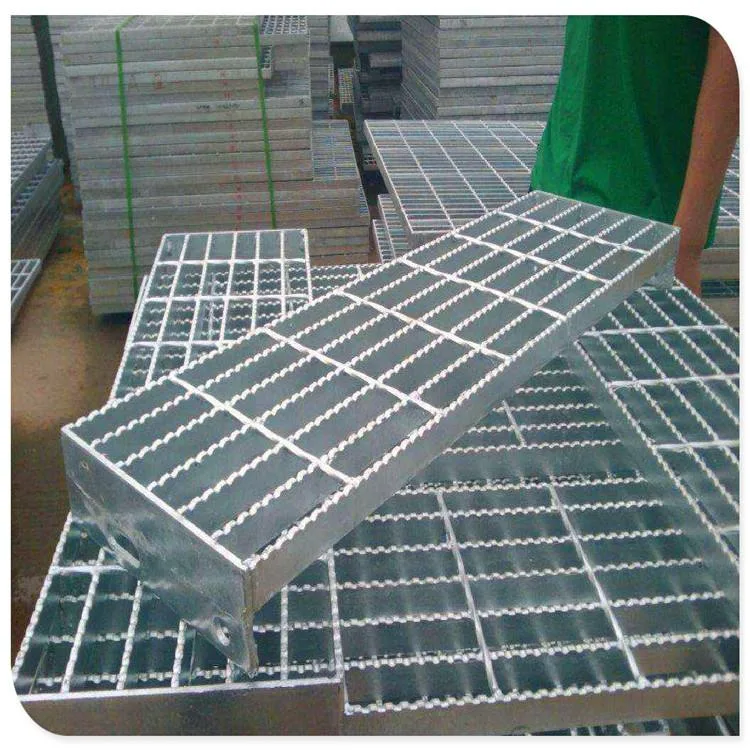
Steel stair treads, especially T4 grating stair treads, are widely used and offer many advantages such as simple installation and anti-slip performance,
but the following points should be noted during fabrication
Typical production steps and control points are as follows:
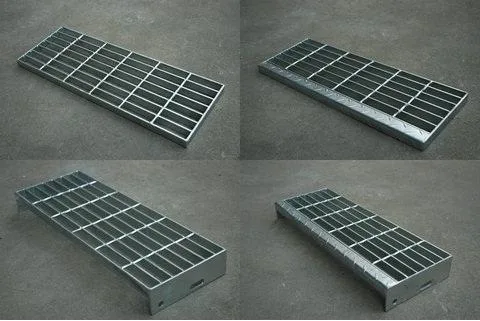
Only when control points of each process are implemented can dimensional accuracy and appearance quality of finished products be guaranteed.
Bigger specifications are not always better. Steel stair tread selection should be as economical as possible while meeting load requirements; excessive thickness adds dead weight and cost and makes installation harder. The product page has a fuller comparison for hot-dip galvanized steel grating, which can be consulted before deciding.
1. The bolt hole positions on both side edges must correspond to the supporting side beams
Key points for construction and fixing are as follows:
2 Both side edges need corner cuts, otherwise appearance and overall installation are affected
3 When producing steel stair treads, the position of the cross bars must be considered so that after installation they line up in a straight line from top to bottom
4 Points to note for welding and using checkered plate.
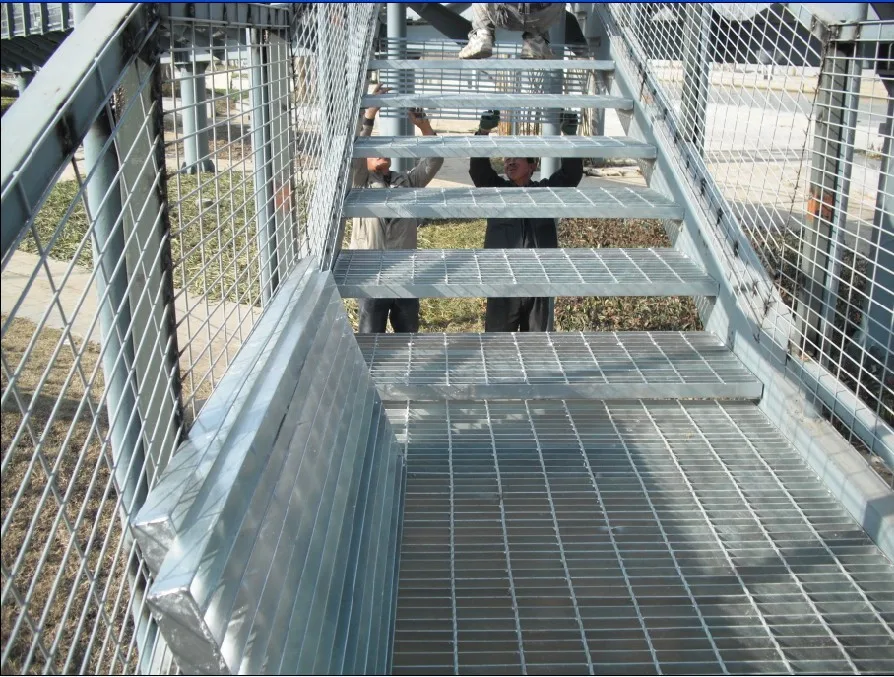
5 Double-side welding is recommended for the tread banding and supporting flat bars to avoid unnecessary accidents caused by weak or missed welds.
Recommended Size - Width ( 215 235 245 ) Length 600 800 1200mm
After installation, check each panel's fixing points and flatness; put into use only after confirming no warping or looseness.
For the installation sequence, lay out first and fix afterwards; avoid changing as you go. Once the layout drawing for steel stair treads is confirmed, avoid arbitrary on-site cutting; if adjustment is really needed, the fixing and edge banding of hot-dip galvanized steel grating should be adjusted accordingly to avoid leaving a loosening hazard.
Type 255/30/100 325/30/100
This section describes the common practice for steel stair treads in most projects. If your site conditions are unusual, such as corrosive media, large temperature differences, or frequent dismantling, the treatment needs to be adjusted accordingly. Hot-dip galvanized steel grating under such conditions also needs separate confirmation, which can be decided after consultation with site photos.
Further notes: How to combine hot-dip galvanized steel grating and hot-dip galvanized steel grating in use
Besides what this article covers, hot-dip galvanized steel grating is also common in actual projects. It shares similarities with this article's subject in structure and fabrication; for selection, check span, load and service environment in the same order. If both types of components are used in the same project, we recommend unifying material and surface treatment to avoid later galvanic corrosion or inconsistent appearance.
- For all product specifications and theoretical weights by series, visit Steel Grating Product Center
- To estimate cost by size and quantity, use Instant Quote PageSubmit Requirements
- To see how similar projects were executed, refer to Project Cases field applications
FAQ
What maintenance is required during daily use?
Maintenance mainly involves periodically checking whether fasteners are loose, whether touch-up paint has peeled off, and whether the panel surface shows obvious deformation or rust. Issues found should be dealt with promptly; overall maintenance is minimal.
What information is needed for custom sizes?
Usually you need to provide the panel dimensions (length x width), bearing bar specs and direction, center-to-center pitch of bearing bars and cross bars, surface treatment, and special requirements such as cutouts, corner notches and banding. Site photos or sketches are even better.
What is most often overlooked during installation and acceptance?
First, bearing bars installed in the wrong direction reduce load capacity; second, insufficient fixing points or missing zinc touch-up paint; third, support beam spacing inconsistent with the layout drawing. These three items are most often overlooked on site.
The above is for sizing and construction reference. To verify specific parameters or request a quotation, please visitInstant Quote Page, or contact our technical staff.
Note that this article presents sizing approaches and general practice, and does not constitute a strength commitment for any specific project. For load-bearing safety-critical areas, the design drawings and on-site calculations shall prevail; contact our technical staff if in doubt.