







This article presents how to improve the corrosion resistance of galvanized steel grating in order - what it is, material and anti-corrosion requirements, and basic concepts - with actionable checks in each part. If you only need a quick answer, read the opening point of each section; the same method applies to hot-dip galvanized steel grating.
What Is Meant by Improving the Corrosion Resistance of Galvanized Steel Grating
Below we first briefly explain the relevant concepts and basic construction to make the following parameters and sizing content easier to understand.
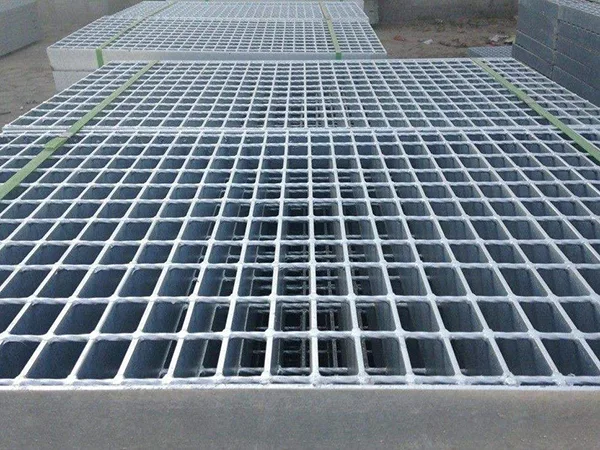
In everyday use of galvanized steel grating products, what people value most is the grating's own anti-corrosion performance. Some manufacturers fail to pay enough attention to corrosion protection, so their products do not adapt well to actual environments in service and their service life suffers. Although users have many requirements for steel grating, the requirement that still deserves attention is the product's own anti-corrosion performance. Better corrosion protection starts with improvements in production, above all in the plate itself: since some plates are inherently corrosion-resistant, such materials should be the first choice for improving anti-corrosion performance.
Check whether the manufacturer has core technology. Products from makers with real brand strength perform well in corrosion protection because their galvanized steel grating is produced with proprietary technology; only products built with that technology show their full value in real service environments.
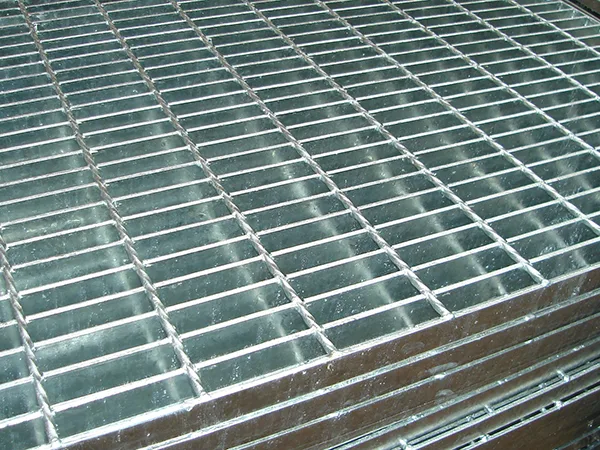
Once you grasp these basic concepts, the specifications and sizing recommendations that follow will be much easier to understand.
A practical tip for confirming specifications: put the bearing bar size, bearing bar pitch, cross bar pitch and overall dimensions in the purchase list together - listing only one or two often leads to a delivery mismatch. The full specification notation for galvanized steel grating is on the product page; before ordering, number each panel against the layout drawing. The same applies to hot-dip galvanized steel grating.
Material and Anti-Corrosion Requirements
Common materials and surface treatments are as follows:
Of course, such a production process raises the cost of galvanized steel grating, which makes some manufacturers hesitate. Also, a proper galvanizing process must be in place during production: manufacturers galvanize the product precisely to achieve better corrosion protection, so superior galvanizing practice is itself important. But some manufacturers lack the capability, and as a result their products do not offer better corrosion protection and cannot deliver better anti-corrosion results in use.
Once material and surface treatment are decided, we recommend writing zinc coating thickness and appearance requirements into the technical agreement.
Regarding corrosion protection, one thing is easily overlooked: on-site cutting and welding damage the original coating, and these areas need zinc touch-up after construction, otherwise rust often starts from the cut edges. Hot-dip galvanized steel grating has the same issue; it is best to include this in the technical requirements at the construction disclosure.
Further reading: Selection points for hot-dip galvanized steel grating and hot-dip galvanized steel grating
Besides what this article covers, hot-dip galvanized steel grating is also common in actual projects. It shares similarities with this article's subject in structure and fabrication; for selection, check span, load and service environment in the same order. If both types of components are used in the same project, we recommend unifying material and surface treatment to avoid later galvanic corrosion or inconsistent appearance.
- For all product specifications and theoretical weights by series, visit Steel Grating Product Center
- To estimate cost by size and quantity, use Instant Quote PageSubmit Requirements
- To see how similar projects were executed, refer to Project Cases field applications
FAQ
Where can I find specific specifications?
our websiteProductsCommon specifications and theoretical weights are organized by series, also available in Instant Quote PageEstimate by size, or contact us directly for sizing advice.
Why do different manufacturers quote different weights for the same specifications?
The main difference lies in the actual measured thickness and tolerance control of the bearing bars. When bars are supplied at the lower tolerance limit, weight per unit area falls below the theoretical value, and load capacity drops accordingly. We recommend specifying thickness tolerance clearly when purchasing.
Can the values in the article be applied directly?
Values in this article come from relevant standard clauses or common industry practice. For actual selection, recalculate based on site span, load class and service environment; direct copying is not recommended.
The above is for sizing and construction reference. To verify specific parameters or request a quotation, please visitInstant Quote Page, or contact our technical staff.
Note that this article presents sizing approaches and general practice, and does not constitute a strength commitment for any specific project. For load-bearing safety-critical areas, the design drawings and on-site calculations shall prevail; contact our technical staff if in doubt.