







When purchasing steel gratings, many projects focus only on price while neglecting specification matching and anti-corrosion requirements, which easily leads to rework later. This article lists the conditions to be confirmed one by one, in the order of key points of choosing steel grating specifications, common models, and applications, and explains how to make trade-offs based on common working conditions. The content related to hot-dip galvanized steel gratings can be directly used as a reference for technical disclosure.
Key points for choosing steel grating specifications
Additional key points are as follows:
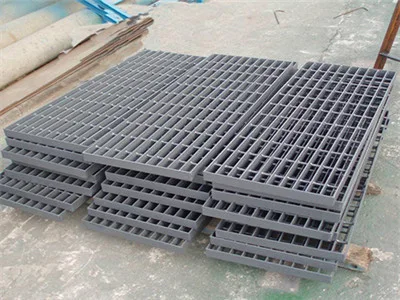
steel grating
The above points can serve as a pre-purchase checklist; confirm each item before moving to the quotation stage.
The easiest things to overlook in specification tables are tolerances and end treatment. Steel gratings usually leave machining allowance in the length direction; if the site uses recessed installation, the edge banding and corner-cut requirements should be stated in advance. Hot-dip galvanized steel gratings are handled similarly in such details, and it is recommended to mark them clearly on the drawings.
Common models and dimensions for choosing steel grating specifications
Common specifications and corresponding parameters are summarized below; confirm each item before ordering:
1. For example, DG255/30/100 means: cross bar center pitch 100mm; flat bar center pitch 30mm; flat bar thickness 5mm; flat bar width 25mm.In addition, the letter "S" can be added after the specification to indicate serrated steel grating, or the letter "I" to indicate I-section steel grating; both can also be used together to indicate I-section serrated steel grating.For example, DG325/30/50I means: cross bar center pitch 50mm; flat bar center pitch 30mm; flat bar width 32mm of I-section flat bars. Common flat bars are 255, 303, 305, 404, 405, 505. When used as stair treads, the most common tread specification is 255/30/100; common specifications include 20*5, 25*5, 25*3, 32*5, 30*5, 40*5, 40*3, 50*5, 65*5, 75*6, 100*8, 100*10, etc.Simple appearance, hot-dip galvanized, long-lasting, no painting maintenance required. Widely used for industrial and civil building ceilings such as tobacco production, industrial plants, large stadiums, convention and exhibition centers, large commercial buildings, stations, docks, and airports.
The above are common specifications; actual ordered dimensions and tolerance requirements shall be confirmed against the layout drawing.
Actual parameters of the same model may differ slightly between manufacturers; acceptance should be based on measured values. Spot checks of the key dimensions of steel gratings are recommended, especially for bulk deliveries. The corresponding parameters of hot-dip galvanized steel gratings can be checked in the same way; communicate promptly if deviations are found.
Application scenarios of choosing steel grating specifications
Main applications are as follows:
Choosing the right specification and the thickness of steel grating panels: gratings have wide applications in our daily life. For example, some stairs are made of gratings, so the thickness of the steel grating is very important at this point, because it relates to personal safety. Stair treads include 253/30/100, dense types, and compound stair treads.
If your working conditions fall outside the above range, you can provide site photos and dimensions, and our technicians will help assess them.
Bigger specifications are not always better. The selection of steel gratings should be as economical as possible while meeting load requirements; excessive thickening increases weight and cost and causes inconvenience in installation. The product page provides more complete comparison notes on galvanized gratings for reference before making a decision.
Specification parameters for choosing steel grating specifications
Common specifications and corresponding parameters are summarized below; confirm each item before ordering:
In selecting the specification model of steel gratings, the first thing to determine is the material, which is generally divided into stainless steel (304/201) and iron (Q235B). Then determine which type of steel grating to use; there are generally two types: one is press-locked steel grating (made by inserting flat bars into each other and welding), and the other is welded steel grating (made by welding twisted square bars with flat bars). Among them, welded steel gratings are used far more frequently than press-locked ones.
The above are common specifications; actual ordered dimensions and tolerance requirements shall be confirmed against the layout drawing.
There is a practical technique for confirming specifications: write the flat bar specification, flat bar center pitch, cross bar pitch, and overall dimensions into the purchase list at the same time; writing only one or two of them easily leads to mismatched deliveries. The specification notation of steel gratings is fully compared on the product page; before ordering, number and check panel by panel against the layout drawing; the same applies to hot-dip galvanized steel gratings.
2. Steel grating parameters
Main specification comparison is as follows:
Basic parameters of steel gratings: flat bar height (20mm-160mm), flat bar thickness (3mm-8mm), bearing bar pitch (20mm-100mm), cross bar pitch (50mm or 100mm), transverse width (within 1000mm), longitudinal length (within 6000mm).
3. Steel grating notation
The notation of steel gratings is: G + flat bar height + flat bar thickness + bearing bar pitch + cross bar pitch.
For example, G303/30/100: the first 30 means the flat bar height is 30mm, 3 means the flat bar thickness is 3mm, the second 30 means the bearing bar pitch is 30mm, and 100 means the cross bar pitch is 100mm.
4. Steel grating load capacity:
Take model G605/20/50 as an example: its load capacity is given for spans of 200mm, 400mm, 600mm, 800mm, 1000mm... up to 3000mm. After confirming the required span of the steel grating, for example a trench width of 400mm, i.e., a span of 400mm, look at row U in the table: at a span of 400mm, the load capacity of G605/20/50 is 1275, in KN, i.e., 127.5 tons.
The above are common specifications; actual ordered dimensions and tolerance requirements shall be confirmed against the layout drawing.
The easiest things to overlook in specification tables are tolerances and end treatment. Steel gratings usually leave machining allowance in the length direction; if the site uses recessed installation, the edge banding and corner-cut requirements should be stated in advance. Hot-dip galvanized steel gratings are handled similarly in such details, and it is recommended to mark them clearly on the drawings.
Further reading: Sizing reference for hot-dip galvanized steel grating and galvanized grating
In engineering, galvanized grating is often used together with the components mentioned in this article. The two differ in load carrying and installation practices; when combining them, pay special attention to the connection of support conditions and fixing methods, as junction treatment is often where problems arise. For unified drawings, submit dimensions of both types and our technicians will process them under the same layout logic.
- For all product specifications and theoretical weights by series, visit Steel Grating Product Center
- To estimate cost by size and quantity, use Instant Quote PageSubmit Requirements
- To see how similar projects were executed, refer to Project Cases field applications
FAQ
Can the values in the article be applied directly?
Values in this article come from relevant standard clauses or common industry practice. For actual selection, recalculate based on site span, load class and service environment; direct copying is not recommended.
What is most often overlooked during installation and acceptance?
First, bearing bars installed in the wrong direction reduce load capacity; second, insufficient fixing points or missing zinc touch-up paint; third, support beam spacing inconsistent with the layout drawing. These three items are most often overlooked on site.
How to choose between hot-dip galvanizing and cold galvanizing?
The two anti-corrosion mechanisms differ: hot-dip galvanizing immerses steel in molten zinc to form a metallurgically bonded coating, thick and long-lasting, suitable for outdoor and humid environments; cold galvanizing is electrochemical deposition with a thinner, more uniform appearance, suitable for dry indoor environments or applications requiring high dimensional precision.
The above is for sizing and construction reference. To verify specific parameters or request a quotation, please visitInstant Quote Page, or contact our technical staff.
Note that this article presents sizing approaches and general practice, and does not constitute a strength commitment for any specific project. For load-bearing safety-critical areas, the design drawings and on-site calculations shall prevail; contact our technical staff if in doubt.