
About reducing steel grating deformation, this article explains specification parameters, material and corrosion protection requirements, and basic concepts item by item, giving judgment methods that can be executed directly rather than only theory. Those with drawings or on-site dimensions can check the key points one by one; galvanized grating can follow the same judgment order.
Specification Parameters for Avoiding Deformation
Main specification comparison is as follows:
After hot-dip galvanizing, steel grating may deform under high temperature. If the steel grating has strong internal stress after welding, larger deformation will occur due to the internal stress of the steel plate substrate. Suppose that during grating welding the flat bars were not straightened but placed directly on the die.
The above are common specifications; actual ordered dimensions and tolerance requirements shall be confirmed against the layout drawing.
A practical tip for confirming specifications: write all four items - flat bar size, bearing bar pitch, cross bar pitch, and overall dimensions - into the purchase list together. Stating only one or two of them easily leads to goods that do not match. The specification notation for reducing steel grating deformation is fully compared on the product page; before ordering, check each panel one by one against the layout drawing, and the same applies to hot-dip galvanized steel grating.
Material and Anti-Corrosion Requirements
Common materials and surface treatments are as follows:
From the outside it looks straight, but in fact the hot-dip galvanized steel plate has strong internal stress. If a strong external force is added, the internal stress will reveal itself and the shape of the plate becomes a horizontal bow. So how can plate deformation be prevented?
Once material and surface treatment are decided, we recommend writing zinc coating thickness and appearance requirements into the technical agreement.
Regarding corrosion protection, one thing is easily overlooked: on-site cutting and welding damage the original coating, and these areas need zinc touch-up after construction, otherwise rust often starts from the cut edges. Galvanized grating has the same issue; it is best to include this in the technical requirements at the construction disclosure.
Selection and Purchasing Advice for Avoiding Deformation
Generally, pay attention to the following points.
Spending a little more time confirming details at the selection stage often saves a lot of rework later. Once the span, load, and environment for the steel grating are confirmed, the matching hot-dip galvanized steel grating selection can also be determined at the same time, making overall progress faster.
Common Models and Sizes for Avoiding Deformation
When welding steel grating, straighten the flat bars and weld with proper technique. If the flat bars are bent and not straightened but welded directly on the die, the surface looks straight, but in fact the steel plate has strong internal stress.
Bigger specifications are not always better. The selection of steel grating should be as economical as possible while meeting load requirements; excessive thickening increases weight and cost and makes installation inconvenient. The product page provides a more complete comparison for hot-dip galvanized steel grating, which can be consulted before making a decision.
Material and Surface Treatment for Avoiding Deformation
After pickling and hot-dip galvanizing, internal stress in the steel grating is removed. If the internal stress shows itself, the shape becomes a horizontal bow. Hot-dip galvanizing used to overlook this, but in modern industrial production there is usually no such problem.
Choosing a surface treatment is essentially a trade-off between initial investment and later maintenance. For steel grating used in dry indoor environments, the requirements can be relaxed appropriately, while for outdoor or humid environments they should be raised accordingly. The selection of galvanized grating can also be judged with this approach.
Supplementary Notes on Avoiding Deformation
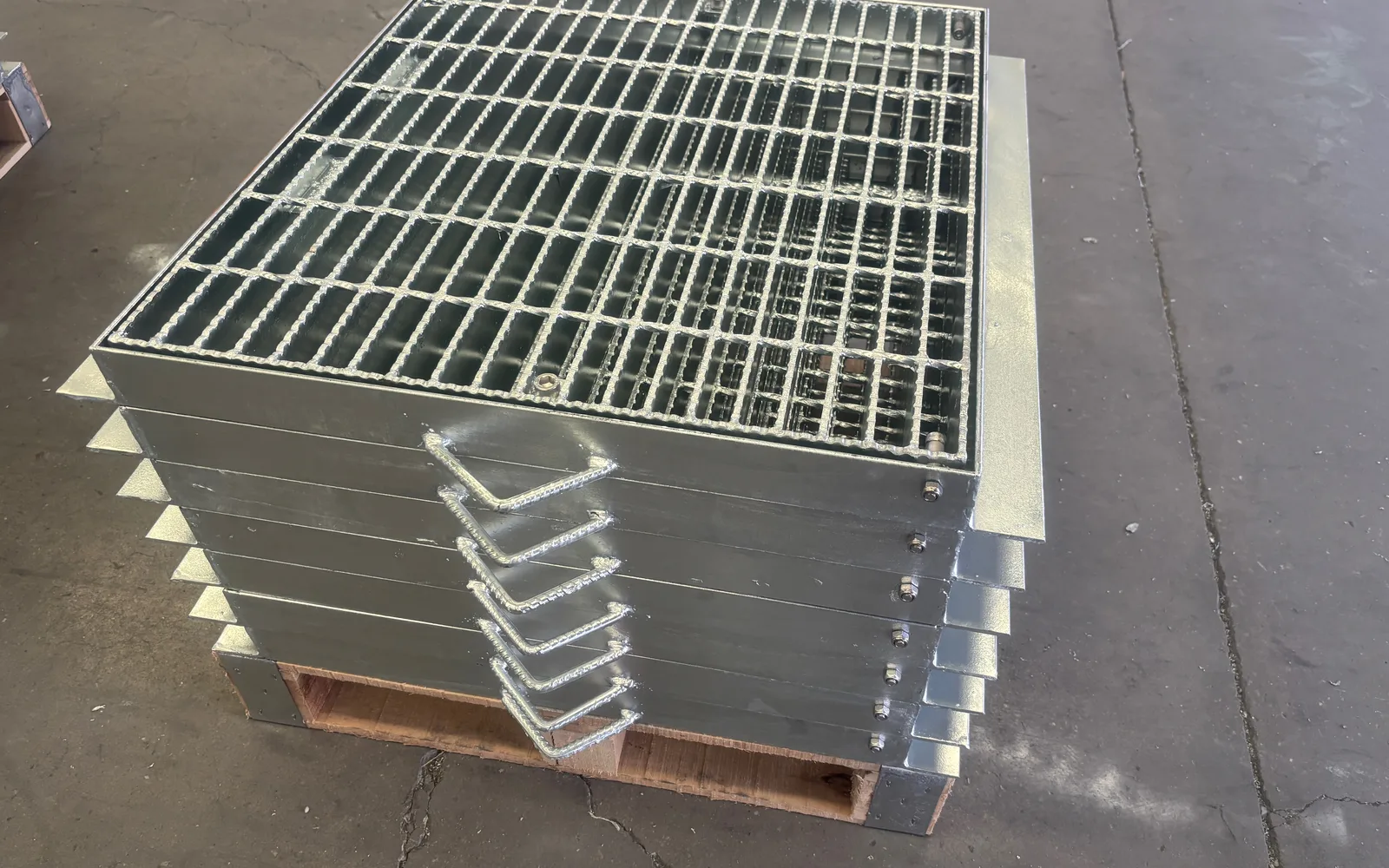
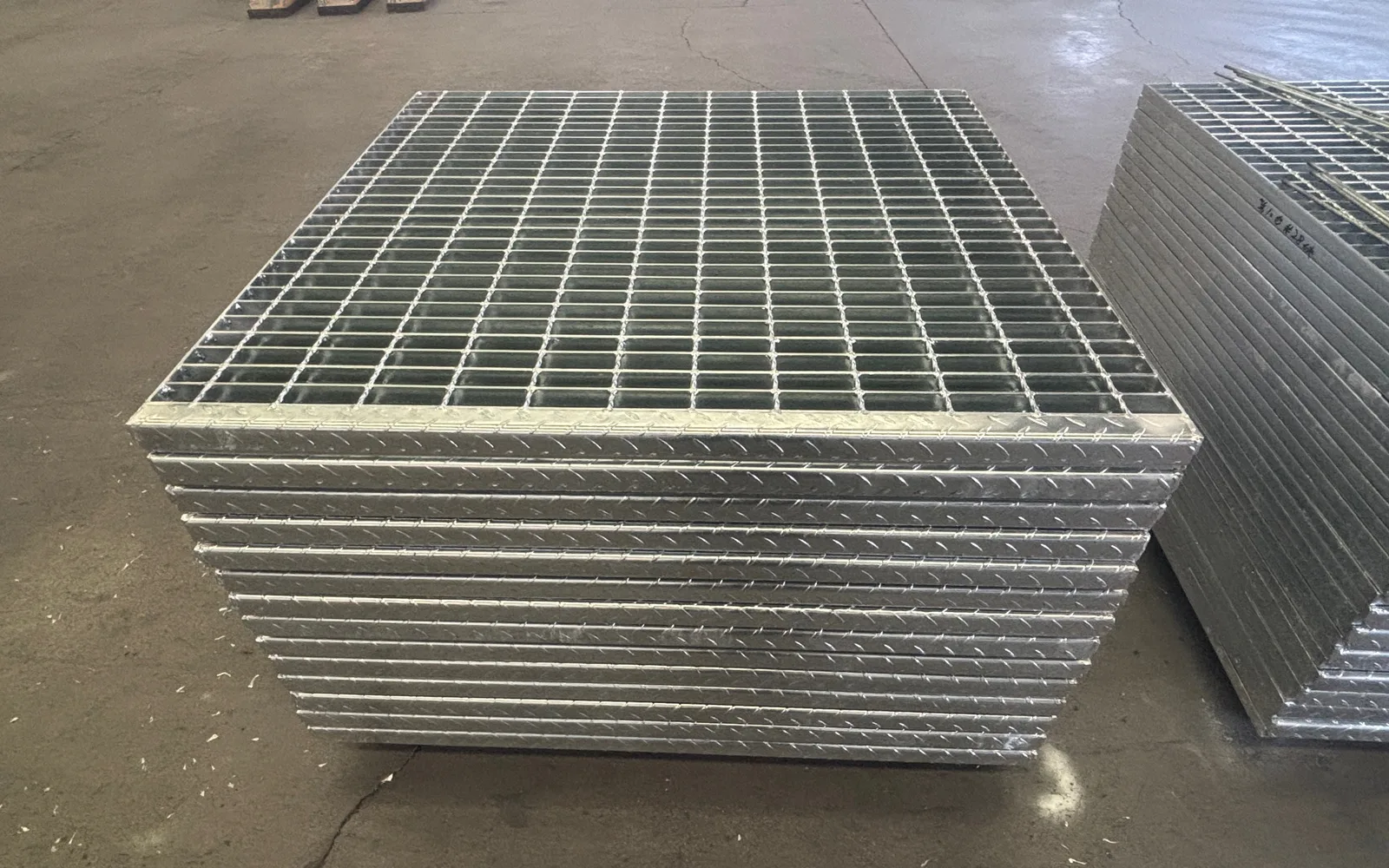
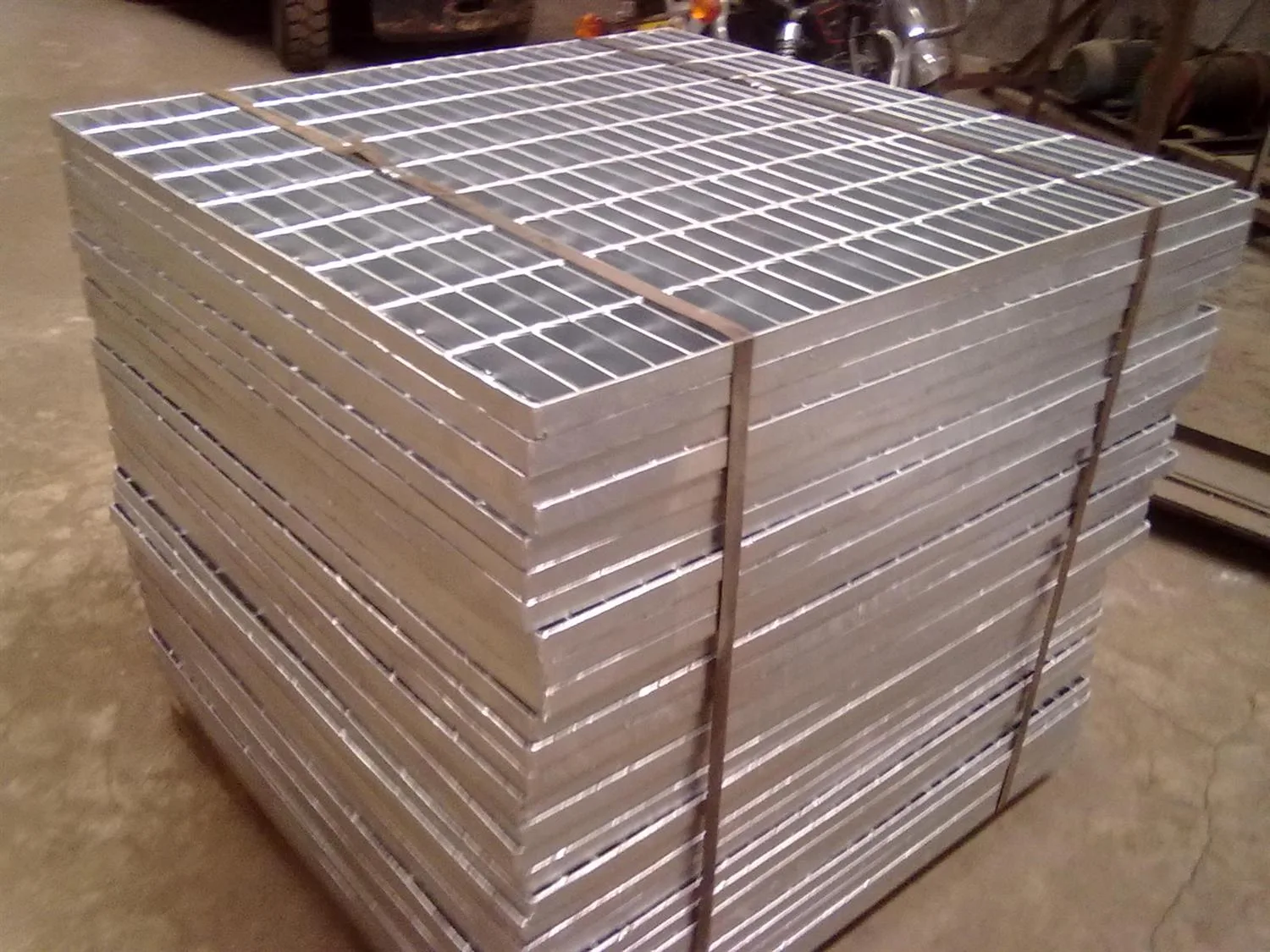
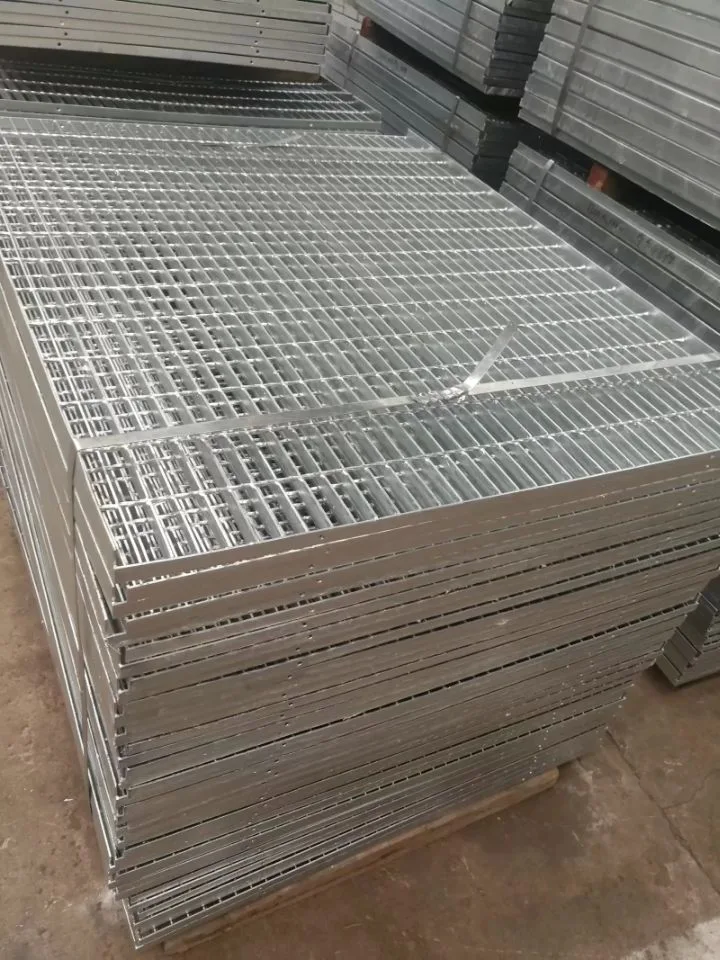
A steel grating stack should have at least three supports, which can be placed at both ends and the middle; it should not be placed only at the two ends. Without middle supports, the top of the plate will deform and become uneven. During transport it should be stable and even, so it is less likely to suffer severe impact during loading and unloading.
The selection of steel grating ultimately comes down to the drawings. It is recommended to mark the layout direction, fixing method, and end treatment together to avoid improvising on site. If design conditions are missing, submit on-site dimensions and photos; galvanized grating can also be laid out on your behalf in the same way.
Further reading: Sizing reference for galvanized grating and hot-dip galvanized steel grating
Besides what this article covers, galvanized grating is also common in actual projects. It shares similarities with this article's subject in structure and fabrication; for selection, check span, load and service environment in the same order. If both types of components are used in the same project, we recommend unifying material and surface treatment to avoid later galvanic corrosion or inconsistent appearance.
- For all product specifications and theoretical weights by series, visit Steel Grating Product Center
- To estimate cost by size and quantity, use Instant Quote PageSubmit Requirements
- To see how similar projects were executed, refer to Project Cases field applications
FAQ
What maintenance is required during daily use?
Maintenance mainly involves periodically checking whether fasteners are loose, whether touch-up paint has peeled off, and whether the panel surface shows obvious deformation or rust. Issues found should be dealt with promptly; overall maintenance is minimal.
What information is needed for custom sizes?
Usually you need to provide the panel dimensions (length x width), bearing bar specs and direction, center-to-center pitch of bearing bars and cross bars, surface treatment, and special requirements such as cutouts, corner notches and banding. Site photos or sketches are even better.
How to choose between hot-dip galvanizing and cold galvanizing?
The two anti-corrosion mechanisms differ: hot-dip galvanizing immerses steel in molten zinc to form a metallurgically bonded coating, thick and long-lasting, suitable for outdoor and humid environments; cold galvanizing is electrochemical deposition with a thinner, more uniform appearance, suitable for dry indoor environments or applications requiring high dimensional precision.
The above is for sizing and construction reference. To verify specific parameters or request a quotation, please visitInstant Quote Page, or contact our technical staff.
The above is general guidance. For a specific project, we still recommend submitting span, load class and service environment to our technicians for review. Steel grating is a load-bearing component; rework caused by wrong specification choices costs far more than the time spent on upfront calculation.