







Many projects focus only on price when procuring galvanized steel grating, ignoring specification matching and anti-corrosion requirements, which often leads to rework. This article lists, in order, the specifications of galvanized steel grating, its scope of application and engineering fields, and what galvanized steel grating is, explaining trade-offs under common working conditions; content related to hot-dip galvanized steel grating can be used directly as a technical disclosure reference.
Galvanized Steel Grating Specifications
Common specifications and corresponding parameters are summarized below; confirm each item before ordering:
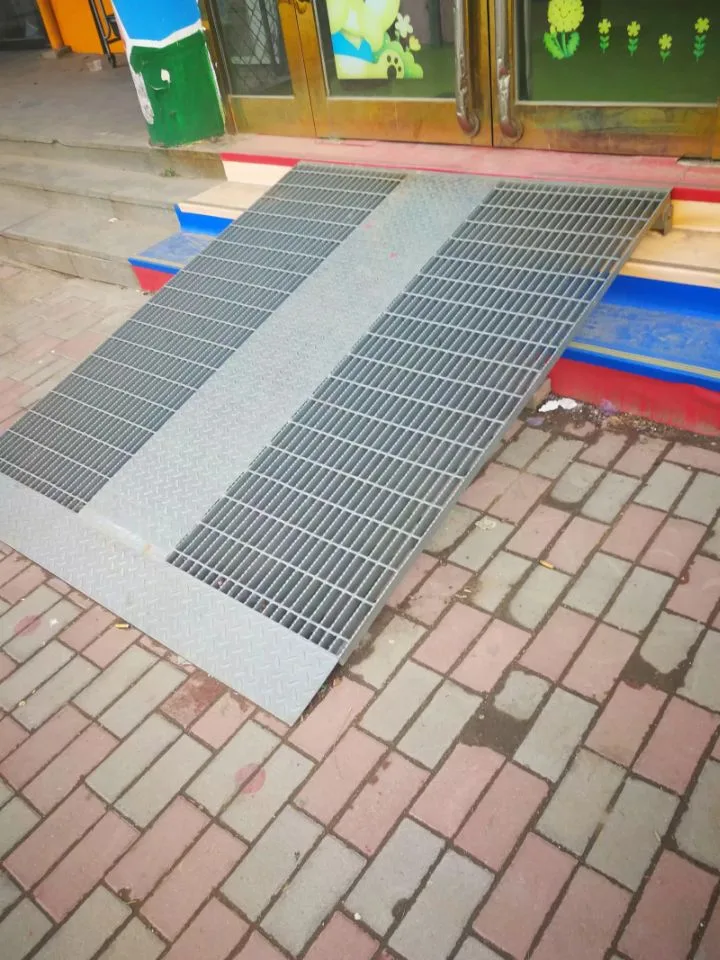
Galvanized steel grating is an open steel member made by orthogonally combining bearing flat bars and cross bars at fixed pitches, fixed by welding or press-locking; cross bars are usually twisted square bars, with round bars or flat bars also possible, in carbon steel and stainless steel. Steel grating is usually made of carbon steel with a hot-dip galvanized surface to prevent oxidation; stainless steel can also be used. Steel grating offers ventilation, daylighting, heat dissipation, anti-slip and explosion-proof performance.
The above are common specifications; actual ordered dimensions and tolerance requirements shall be confirmed against the layout drawing.
Bigger specifications are not always better. The selection of galvanized steel grating should be as economical as possible while meeting load requirements; excessive thickening increases self-weight and cost and complicates installation. The product page provides more complete reference for hot-dip galvanized steel grating; refer to it before making a decision.
Scope of Application & Engineering Fields
Main applications are as follows:
Galvanized steel grating was specially developed for the mining industry, solving the problem of ore splashing onto panel surfaces. This series has nominal 50*60mm openings, allowing most splash material to fall through, ensuring a clean and safe surface. It is often specified for panels in crushing systems, walkways on conveyor lines, ball mills, processing plants and operation stations. As a new engineering material, steel grating is mainly used in metallurgy, energy, shipbuilding, municipal, petrochemical, transportation, building materials, defense and other fields for platforms, trestles, bridges, highway guardrails, trench covers, fences, gates and other equipment. China's annual demand for steel grating is about 270,000 tons, so the market prospect is very broad.
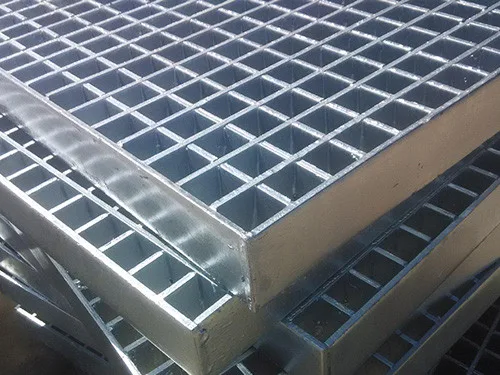
If your working conditions fall outside the above range, you can provide site photos and dimensions, and our technicians will help assess them.
The most easily overlooked items in a specification table are tolerances and end treatment. The length direction of galvanized steel grating usually retains machining allowance; if site installation is recessed, edge closing and corner-cutting requirements should be stated in advance. Hot-dip galvanized steel grating is handled similarly in such details; mark them clearly on the drawings.
What Is Galvanized Steel Grating
This section first clarifies the basic concepts, structural forms and common names, laying the groundwork for what follows.
What are the common specifications of galvanized steel grating and their differences? Galvanized steel grating usually refers to hot-dip galvanized steel grating, a widely used type of steel grating in recent years. Due to different places of use, there are many specification models of galvanized steel grating.
Once you grasp these basic concepts, the specifications and sizing recommendations that follow will be much easier to understand.
A practical tip for specification confirmation: write all four items - bearing bar specs, bearing bar center pitch, cross bar pitch and overall dimensions - into the purchase list; specifying only one or two often leads to mismatched deliveries. The specification notation of galvanized steel grating is fully mapped on the product page; number and check each panel against the layout drawing before ordering, and the same applies to hot-dip galvanized steel grating.
Common Models and Sizes of Galvanized Steel Grating
Main specification comparison is as follows:
Common specifications: by bearing bar pitch, galvanized steel grating has 30mm, 40mm and 60mm; common flat bar specs include 20*5, 25*5, 25*3, 32*5, 30*5, 40*5, 40*3, 50*5, 65*5, 75*6, 100*8, 100*10, etc.
Common cross bar pitches of galvanized steel grating are 100mm and 50mm; common cross bar specs include 5*5, 6*6, 8*8mm, etc.
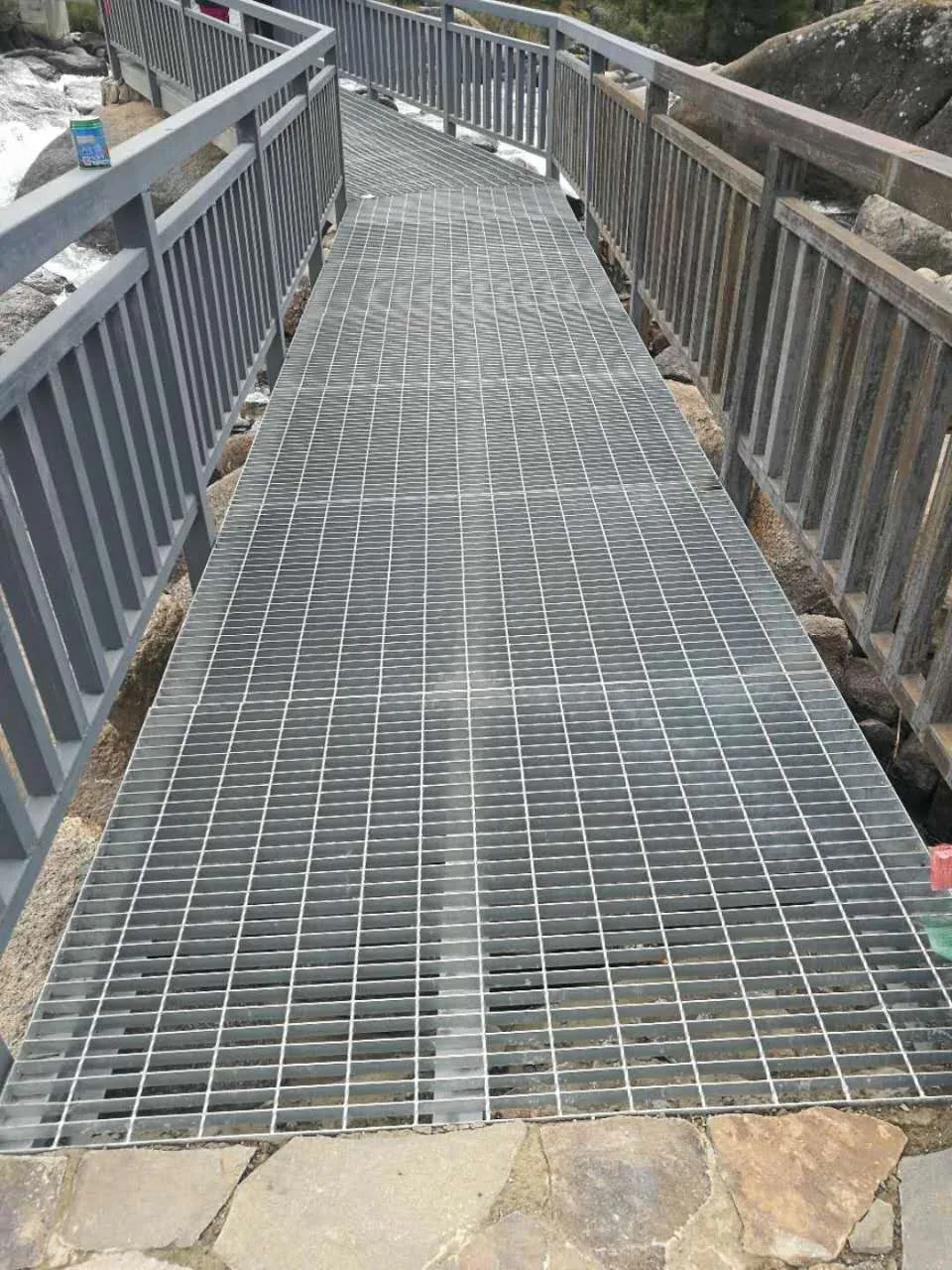
The above are common specifications; actual ordered dimensions and tolerance requirements shall be confirmed against the layout drawing.
Actual parameters of the same model may vary slightly between manufacturers; acceptance shall be based on measured values. We recommend sampling key dimensions of galvanized steel grating, especially for bulk deliveries. Corresponding parameters of hot-dip galvanized steel grating can be checked the same way; communicate promptly if deviations are found.
What are the specification differences in applications of different fields?
Main specification comparison is as follows:
Power plant platform steel grating: common galvanized steel grating specs in thermal power plant desulfurization and denitrification projects are 255/30/100, G323/30/100, G325/30/100, G405/30/100
Common stair tread specs: G255/30/100, G325/30/100.
Common tread styles are T1, T2, T3, T4, T5, T6, T7, T8. For petrochemical and refining projects, common models are G254/30/100, G255/30/100, 325/30/100,
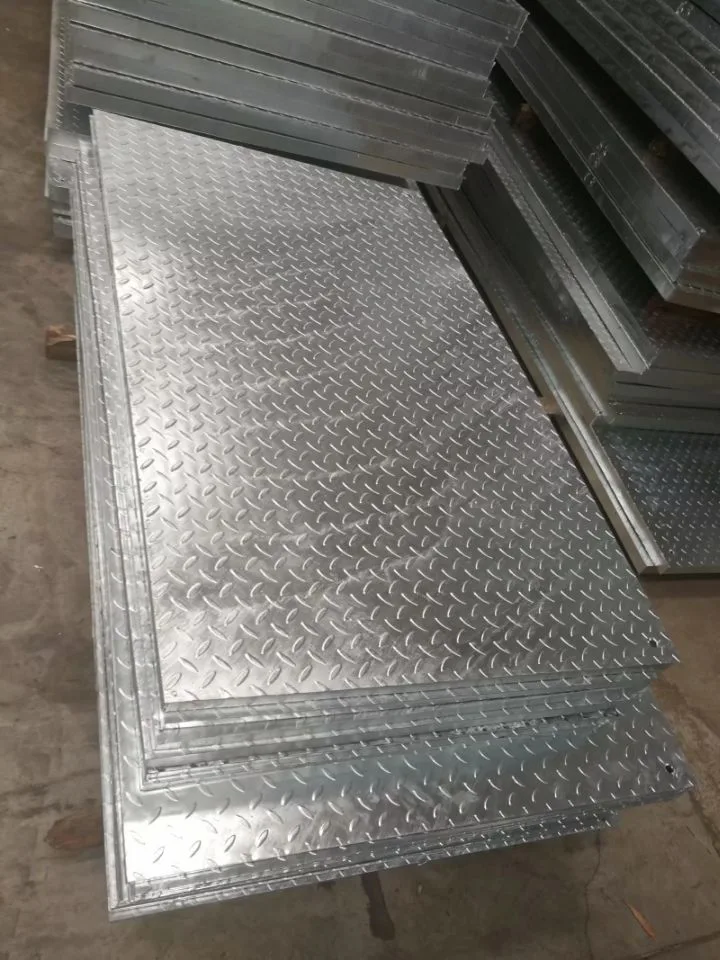
Dock and ship engineering commonly use G325/30/100, G405/30/100, G505/30/100, 605/30/100, G705/30/100, G805/30/100. Interlocked steel grating and press-locked steel grating are also common; such grating is stronger and suitable for forklifts or large engineering vehicles. Besides the above models, wastewater treatment projects also use compound steel grating to prevent odor leakage.
The above are common specifications; actual ordered dimensions and tolerance requirements shall be confirmed against the layout drawing.
A practical tip for specification confirmation: write all four items - bearing bar specs, bearing bar center pitch, cross bar pitch and overall dimensions - into the purchase list; specifying only one or two often leads to mismatched deliveries. The specification notation of galvanized steel grating is fully mapped on the product page; number and check each panel against the layout drawing before ordering, and the same applies to hot-dip galvanized steel grating.
Further reading: Sizing reference for hot-dip galvanized steel grating and hot-dip galvanized steel grating
Hot-dip galvanized steel grating and hot-dip galvanized steel grating are different specification forms within the same product system. The selection logic is the same as described in this article: first the usage type, then span and load to determine specifications, and finally the environment to determine surface treatment. Their corrosion protection and anti-slip requirements may differ; state them separately when ordering rather than writing one general technical requirement.
- For all product specifications and theoretical weights by series, visit Steel Grating Product Center
- To estimate cost by size and quantity, use Instant Quote PageSubmit Requirements
- To see how similar projects were executed, refer to Project Cases field applications
FAQ
What is most often overlooked during installation and acceptance?
First, bearing bars installed in the wrong direction reduce load capacity; second, insufficient fixing points or missing zinc touch-up paint; third, support beam spacing inconsistent with the layout drawing. These three items are most often overlooked on site.
Where can I find specific specifications?
our websiteProductsCommon specifications and theoretical weights are organized by series, also available in Instant Quote PageEstimate by size, or contact us directly for sizing advice.
What information is needed for custom sizes?
Usually you need to provide the panel dimensions (length x width), bearing bar specs and direction, center-to-center pitch of bearing bars and cross bars, surface treatment, and special requirements such as cutouts, corner notches and banding. Site photos or sketches are even better.
The above is for sizing and construction reference. To verify specific parameters or request a quotation, please visitInstant Quote Page, or contact our technical staff.
Note that this article presents sizing approaches and general practice, and does not constitute a strength commitment for any specific project. For load-bearing safety-critical areas, the design drawings and on-site calculations shall prevail; contact our technical staff if in doubt.