







This article focuses on how to identify steel grating galvanizing, covering the application of the difference between hot-dip and cold galvanizing, material and anti-corrosion requirements, and basic concepts, with practical suggestions after each section. If you are comparing options or preparing a purchase, check each item in the order given; items involving hot-dip galvanized steel grating can be checked against this article, adjusting for actual site conditions.
Application scenarios: the difference between hot-dip and cold galvanizing
Main applications are as follows:
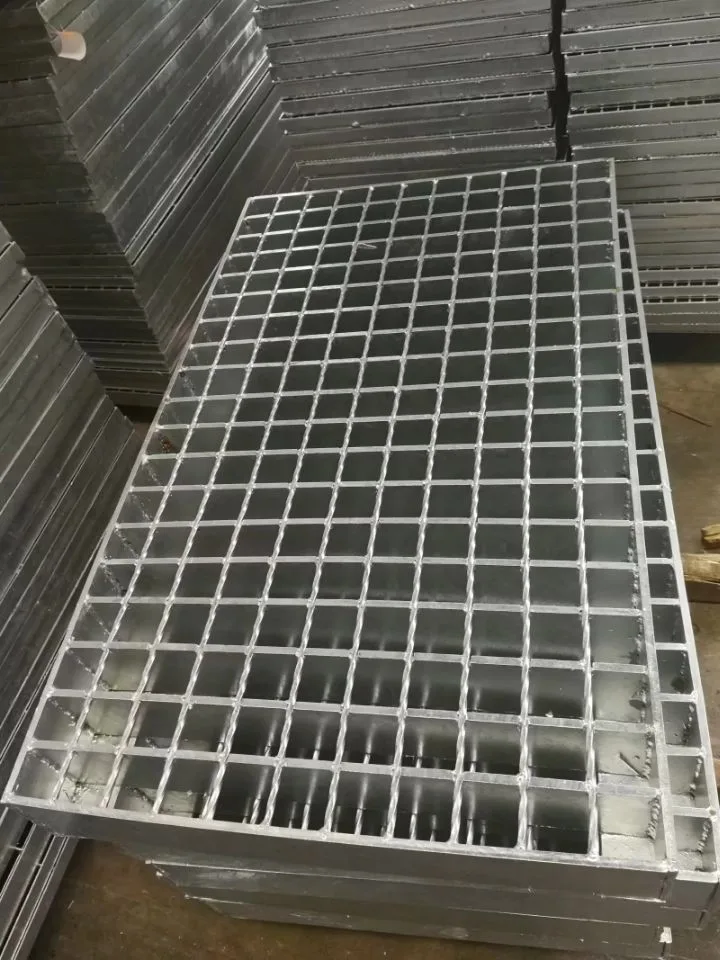
After fabrication, steel grating usually needs galvanizing. Galvanized platform grating comes in cold galvanized and hot-dip galvanized types. Grating produced by these two galvanizing methods is very similar in surface color and feel, and non-professionals usually cannot tell them apart.
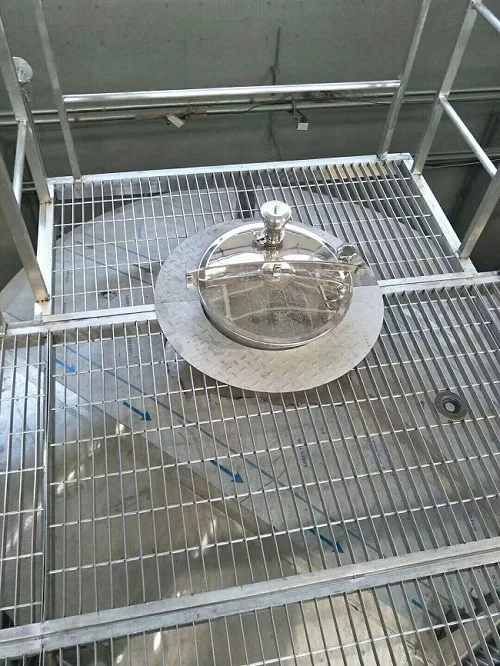
1. Process difference: hot-dip galvanized platform grating is made by immersing the pickled parent panel in a bath of molten zinc, with a zinc coating about 70um thick. Cold galvanized platform grating is electroplated: the parent panel is immersed in a salt solution and zinc is deposited onto the grating electrolytically, usually without heating, yielding a very thin coating of only about 20um.
If your working conditions fall outside the above range, you can provide site photos and dimensions, and our technicians will help assess them.
Choosing a surface treatment is essentially a trade-off between initial investment and later maintenance. Requirements can be moderately relaxed for grating in dry indoor environments, and should be raised for outdoor or humid environments. The same logic applies to selecting hot-dip galvanized steel grating.
Material and Anti-Corrosion Requirements
Common materials and surface treatments are as follows:
2. Surface color difference: hot-dip galvanized platform grating has a bright silver surface after production, with strongly adherent zinc that does not easily flake off under impact; cold galvanized platform grating has a dull silver surface with weakly adherent zinc that scrapes off easily with a hard object.
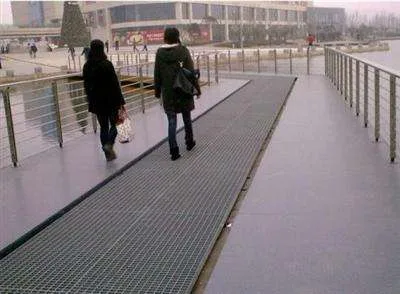
3. Corrosion resistance difference: hot-dip galvanized platform grating is dozens of times more corrosion-resistant than cold galvanized grating. Hot-dip galvanized grating lasts at least a decade or more in dark, damp environments, while cold galvanized grating rusts within days in such environments.
Once material and surface treatment are decided, we recommend writing zinc coating thickness and appearance requirements into the technical agreement.
When selecting material, do not simply chase the highest grade. The material of steel grating should match the load requirements and service environment; over-specifying adds unnecessary cost. See the products page for the corresponding treatment of galvanized grating, and choose according to actual conditions.
Price and quotation factors: the difference between hot-dip and cold galvanizing
4. Price difference: cold galvanizing costs less than half the price of hot-dip galvanizing, but hot-dip galvanizing is still recommended for its longer anti-rust life.
Material and surface treatment determine the durability of steel grating on site. For the same steel grating, the treatment differs greatly between dry indoor use and coastal or chemical environments, so the service environment should be stated as the primary condition when selecting. The same applies to galvanized grating.
Further notes: How to combine hot-dip galvanized steel grating and galvanized grating in use
If a project uses both hot-dip galvanized steel grating and galvanized grating, we recommend planning them on the same layout drawing. This way edge closing, fixing and cutouts at junctions can be handled uniformly, avoiding dimension conflicts during installation and making later maintenance easier.
- For all product specifications and theoretical weights by series, visit Steel Grating Product Center
- To estimate cost by size and quantity, use Instant Quote PageSubmit Requirements
- To see how similar projects were executed, refer to Project Cases field applications
FAQ
How to choose between hot-dip galvanizing and cold galvanizing?
The two anti-corrosion mechanisms differ: hot-dip galvanizing immerses steel in molten zinc to form a metallurgically bonded coating, thick and long-lasting, suitable for outdoor and humid environments; cold galvanizing is electrochemical deposition with a thinner, more uniform appearance, suitable for dry indoor environments or applications requiring high dimensional precision.
What information is needed for custom sizes?
Usually you need to provide the panel dimensions (length x width), bearing bar specs and direction, center-to-center pitch of bearing bars and cross bars, surface treatment, and special requirements such as cutouts, corner notches and banding. Site photos or sketches are even better.
What maintenance is required during daily use?
Maintenance mainly involves periodically checking whether fasteners are loose, whether touch-up paint has peeled off, and whether the panel surface shows obvious deformation or rust. Issues found should be dealt with promptly; overall maintenance is minimal.
The above is for sizing and construction reference. To verify specific parameters or request a quotation, please visitInstant Quote Page, or contact our technical staff.
Note that this article presents sizing approaches and general practice, and does not constitute a strength commitment for any specific project. For load-bearing safety-critical areas, the design drawings and on-site calculations shall prevail; contact our technical staff if in doubt.