







Compressed steel grating is not complicated in practical engineering; the difficulty lies in matching specifications, material and service environment. This article covers, in order, the specifications, basic concepts and common models and sizes of compressed steel grating, giving you a complete approach to evaluating galvanized grating.
Specifications of Compressed Steel Grating
Common specifications and corresponding parameters are summarized below; confirm each item before ordering:
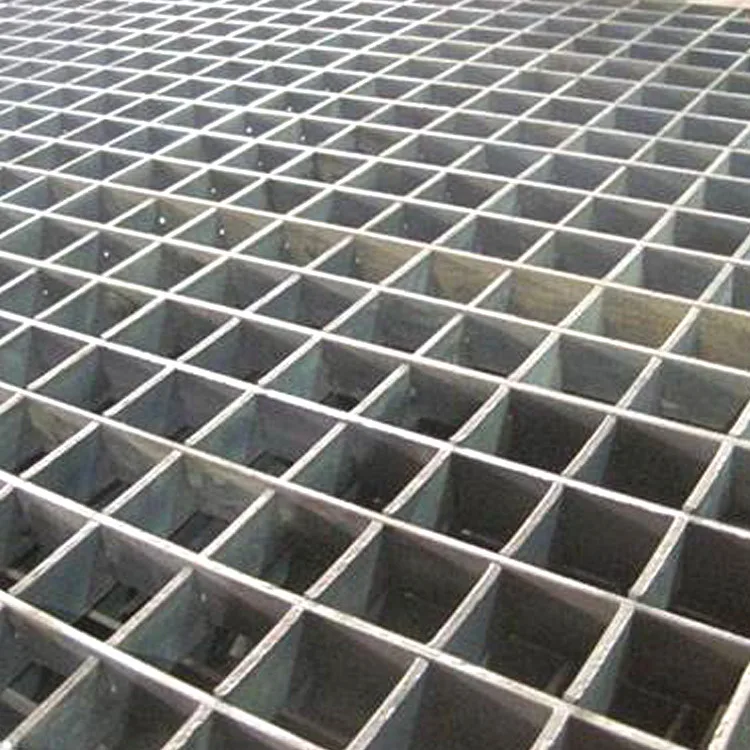
Press-locked steel grating types can be divided into four: by different insertion methods and insertion angles, it can be classified into press-fitted steel grating, heavy-duty steel grating, integral steel grating and sun-shade steel grating. 1. Press-fitted press-locked steel grating: after the bearing flat bars are notched, the cross bar flat bars are press-locked into shape. Generally, the maximum processing height for ordinary steel grating is 100mm, and grating length is usually less than 2000mm.
Press-locked steel grating (type can be divided into four types: classification of press-locked steel grating: by different insertion methods and insertion angles, it can be classified into press-fitted steel grating, heavy-duty steel grating, integral steel grating and sun-shade steel grating. 1. Press-fitted press-locked steel grating: after the bearing flat bars are notched, the cross bar flat bars are press-locked into shape. Generally, the maximum processing height for ordinary steel grating is 100mm, and grating length is usually less than 2000mm.
The above are common specifications; actual ordered dimensions and tolerance requirements shall be confirmed against the layout drawing.
Actual parameters of the same model may vary slightly between manufacturers; acceptance shall be based on measured values. Spot checks of key dimensions of compressed steel grating are recommended, especially for bulk deliveries. Corresponding parameters of galvanized grating can be checked in the same way, and any deviation should be communicated promptly.
Basic Concepts of Compressed Steel Grating
Below we first briefly explain the relevant concepts and basic construction to make the following parameters and sizing content easier to understand.
Press-locked steel grating (interlocked-type steel grating), Press-locked steel grating: also known as interlocked steel grating, it is manufactured from plain-carbon flat bars, stainless steel, brass plates or aluminum plates of specified sizes through slotting (punching), insertion and interlocking, welding and finishing processes. Press-locked steel grating not only retains the high strength, corrosion resistance and maintenance-free features of ordinary steel grating, but also features uniform and precise composition, a light and elegant structure, natural harmony and refined style. It is widely used for trench covers, stair treads and tank covers.
Once you grasp these basic concepts, the specifications and sizing recommendations that follow will be much easier to understand.
A practical tip for specification confirmation: write all four items - bearing bar specs, bearing bar center pitch, cross bar pitch and overall dimensions - into the purchase list at the same time; specifying only one or two often leads to mismatched deliveries. The specification notation of compressed steel grating is fully mapped on the product page; number and check each panel against the layout drawing before ordering, and the same applies to hot-dip galvanized steel grating.
Common Models and Sizes of Compressed Steel Grating
Common specifications and corresponding parameters are summarized below; confirm each item before ordering:
Heavy-duty press-locked steel grating is a product where tall bearing bars and cross flat bars interlock and are pressed tight under 1200 tons of pressure. It is suitable for high-load, long-span applications.
Integral press-locked steel grating: the bearing flat bars and cross bar flat bars have the same height; the notch depth is 1/2 of the bearing flat bar. Grating height is not more than 100mm, and grating length is usually less than 2000mm.
Sun-shade press-locked steel grating: the bearing flat bars have 30° or 45° inclined slots, and the cross bar flat bars are slotted and press-locked into shape. Other pitches and specifications of grating can be produced to meet different needs, using ordinary carbon steel, stainless steel, aluminum and other materials. The grating height is less than 100mm.
The above are common specifications; actual ordered dimensions and tolerance requirements shall be confirmed against the layout drawing.
Bigger specifications are not always better. The selection of compressed steel grating should be as economical as possible while meeting load requirements; excessive thickening increases self-weight and cost, and also brings inconvenience to installation. The product page provides more complete reference for galvanized grating; refer to it before making a decision.
Key Advantages
Main features can be summarized as follows:
Features: press-locked steel grating has firm weld points, uniform bar spacing and a flat mesh surface, plus attractive design, practicality, light weight, high strength, corrosion resistance, maintenance-free operation and many other advantages.
Overall, selection should weigh span, load and service environment together.
Regarding corrosion protection, one thing is easily overlooked: on-site cutting and welding damage the original coating, and these areas need zinc touch-up after construction, otherwise rust often starts from the cut edges. Galvanized grating has the same issue; it is best to include this in the technical requirements at the construction disclosure.
Application Scenarios of Compressed Steel Grating
Applications: now widely used in civil and commercial buildings, theaters, subways, light rail and other municipal engineering fields, suitable for suspended ceilings, interior and exterior decoration, platform walkways, ventilation windows (shafts), advertising signboards and various covers. Press-locked grating has firm weld points, uniform bar spacing and a flat mesh surface; attractive in design and practical, it is both a utility product and a work of art. Over the years, more than one hundred varieties have been developed, and products exported to sixteen countries are favored by customers. Press-locked steel grating is widely used for suspended ceilings or interior decoration in factory halls, theaters and shopping malls, as well as for platform walkways.
Different parts of the same scene often have different requirements. Take compressed steel grating as an example: specifications for main passages and corner areas, frequently used areas and occasional maintenance areas can be set separately; the combined use of galvanized grating is also recommended on a zoned basis, balancing safety and cost.
Further reading: Sizing reference for galvanized grating and hot-dip galvanized steel grating
Galvanized grating and hot-dip galvanized steel grating are different specification forms within the same product system. The selection logic is the same as described in this article: first the usage type, then span and load to determine specifications, and finally the environment to determine surface treatment. Their corrosion protection and anti-slip requirements may differ; state them separately when ordering rather than writing one general technical requirement.
- For all product specifications and theoretical weights by series, visit Steel Grating Product Center
- To estimate cost by size and quantity, use Instant Quote PageSubmit Requirements
- To see how similar projects were executed, refer to Project Cases field applications
FAQ
What maintenance is required during daily use?
Maintenance mainly involves periodically checking whether fasteners are loose, whether touch-up paint has peeled off, and whether the panel surface shows obvious deformation or rust. Issues found should be dealt with promptly; overall maintenance is minimal.
Can the values in the article be applied directly?
Values in this article come from relevant standard clauses or common industry practice. For actual selection, recalculate based on site span, load class and service environment; direct copying is not recommended.
Why do different manufacturers quote different weights for the same specifications?
The main difference lies in the actual measured thickness and tolerance control of the bearing bars. When bars are supplied at the lower tolerance limit, weight per unit area falls below the theoretical value, and load capacity drops accordingly. We recommend specifying thickness tolerance clearly when purchasing.
The above is for sizing and construction reference. To verify specific parameters or request a quotation, please visitInstant Quote Page, or contact our technical staff.
If you already have drawings or site dimensions, submit them directly and we will help verify specifications and layout, avoiding on-site cutting and rework caused by mismatched models. Without drawings, site photos and approximate dimensions are enough for an estimate.