
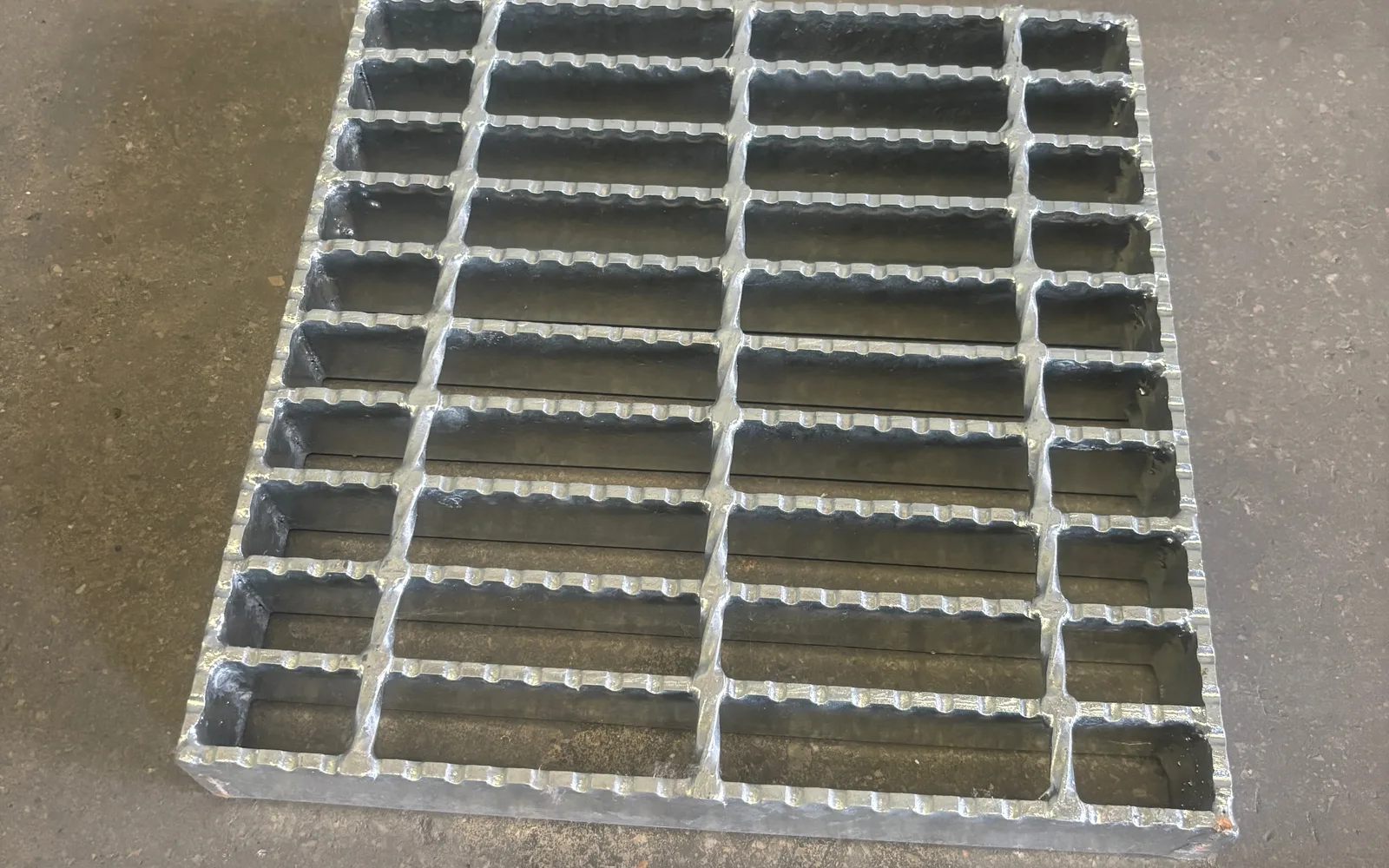
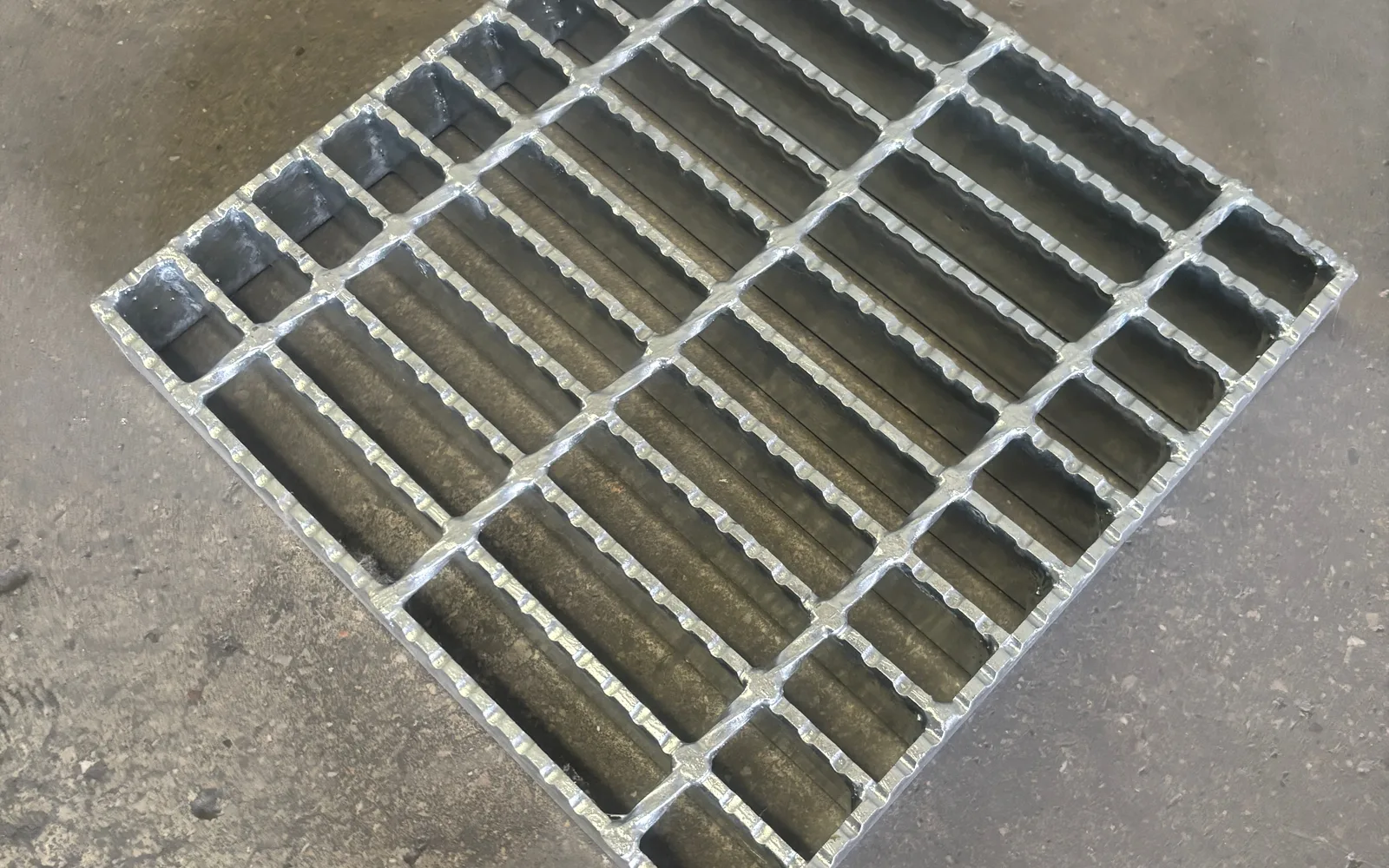
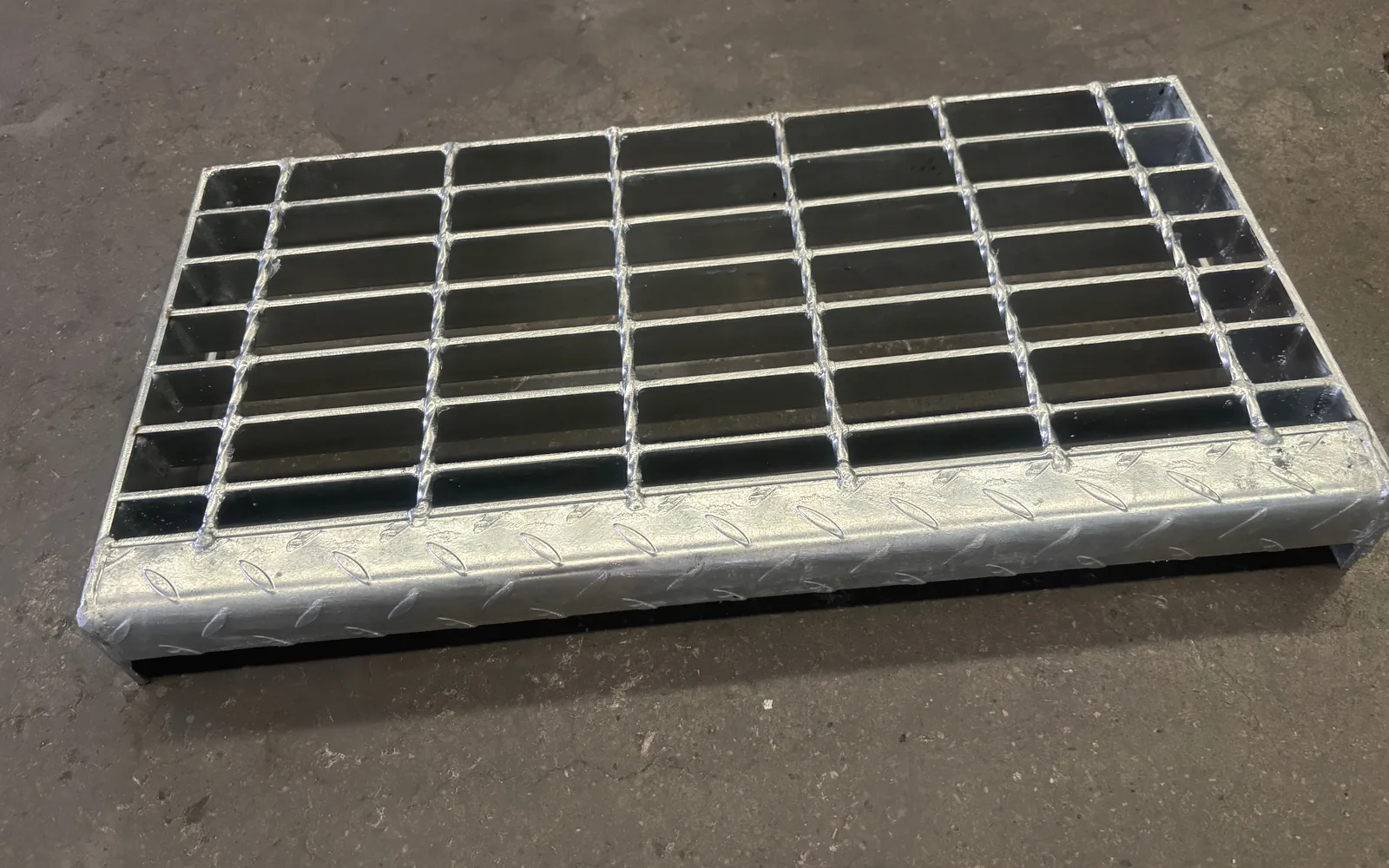




Press-locked steel grating is a widely used steel grating product in industrial and municipal engineering; steel grating specifications and models is a common related term. This page covers specification reading, materials and surface treatment, suitable conditions, installation and fixing, through to customization and quotation. If you already have drawings or site dimensions, check them against the items below, or go toInstant Quote Page to estimate quantities.
Press-Locked Steel Grating Specifications Quick Reference
The table below summarizes the specification markings on this page and their meanings for quick reference; see the detailed explanation later. Actual orders are subject to drawing annotations and the layout drawing; specifications not included in the table can be custom-fabricated to drawings.
| Marking/Item | Meaning and Description |
|---|---|
| 1 | High strength, lightweight structure |
| 3 | Attractive appearance with a bright surface |
| 5 | Good ventilation, lighting, heat dissipation, anti-slip and explosion-proof performance |
What Is Press-Locked Steel Grating
Press-locked steel grating is a common steel grating component in industrial plants and municipal engineering, with wide applications and a complete specification system. This section clarifies its definition, structure and common names to avoid deviations caused by inconsistent terminology in later communication.
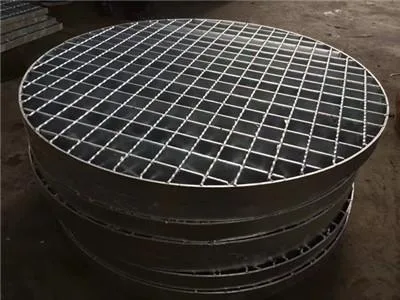
Steel grating, also called steel grating mesh, is made by arranging flat bearing bars at a set pitch with cross bars and welding them into a steel product with square openings. It is mainly used for trench covers, structural platform plates, stair treads of steel stairs, etc. Bearing bars are Q235 hot-rolled flat bars; cross bars are usually twisted square bars.
Once you grasp these basic concepts, the specifications and sizing recommendations that follow will be much easier to understand.
Common Models and Dimensions of Press-Locked Steel Grating
Different specifications correspond to different load capacities and theoretical weights. Common specifications of press-locked steel grating are listed below; actual ordered dimensions and tolerances are subject to the confirmed layout drawing:
The cross bars of press-locked steel grating are usually plain carbon flat bars, stainless steel or brass sheets of certain dimensions, pressed into the bearing bars under a powerful 200-ton press; the joints lock automatically through the extrusion force generated by deformation. The cross bars of press-locked steel grating are usually flat bars. Because its structure is formed by perpendicular interlocking in two directions, the grating provides better lateral (width-direction) load capacity and effectively prevents tilting instability of large bearing bars, making press-locked steel grating especially suitable for heavy loads. It shares all the strengths of welded steel grating - high strength, corrosion resistance and maintenance-free service - plus a uniform and precise composition, light and elegant structure, natural harmony and refined style.
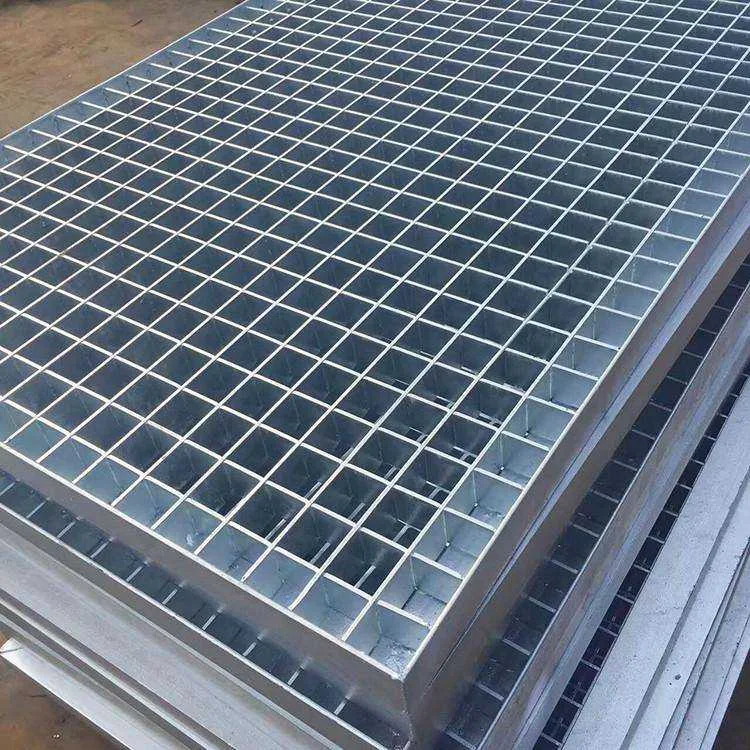
The above are common specifications; actual ordered dimensions and tolerance requirements shall be confirmed against the layout drawing.
Steel grating mainly has the following features
Compared with traditional solutions, press-locked steel grating differs noticeably in self-weight, strength, anti-corrosion life and later maintenance cost. For actual selection, the following performance items deserve priority:
1: High strength, lightweight structure
Overall, selection should weigh span, load and service environment together.
2: Strong corrosion resistance, durable
3: Attractive appearance, bright surface
4: No dirt accumulation, no rain or snow buildup, no water pooling; self-cleaning and easy to maintain
5: Good ventilation, lighting, heat dissipation, anti-slip and explosion-proof performance
6: Easy to install and disassemble
Steel grating is widely used for platforms, walkways, trestles, trench covers, manhole covers, ladders, fences, etc. in petroleum and petrochemicals, power, water supply, sewage treatment, ports and docks, architectural decoration, shipbuilding, self-service parking, municipal engineering, sanitation engineering and other fields
Press-Locked Steel Grating Selection Points
Confirm each item in the order below during selection to avoid most later rework. Record the conclusion of each step and submit it with your inquiry:
- Step 1 · Define Span and Support Conditions: First measure the clear span between support beams, then confirm the support surface width is sufficient; these two items determine the usable series range.
- Step 2 · Verify Service Load: Check separately for pedestrian, maintenance or vehicular traffic; maintenance and vehicular use differ greatly in bearing bar requirements.
- Step 3 · Determine Material and Surface Treatment: Ordinary carbon steel works for dry indoor environments; hot-dip galvanizing is recommended for outdoor or humid environments; chemical and coastal environments need separate confirmation.
- Step 4 · Confirm Shape and Fixing Method: Including whether cutouts, corner notches and banding are needed, and whether to use welded fixing or special clips.
Once the above conditions are confirmed, proceed to Instant Quote PageEstimate quantities by dimensions, or send the condition list to customer service for model recommendations from our technicians.
Press-Locked Steel Grating Application Conditions Comparison
The same specifications last very differently in different environments. The table below gives recommended practices by common service environment for your selection reference:
| Operating Environment | Recommended Practices | Note: |
|---|---|---|
| Outdoor and Open-Air Environments | Hot-dip galvanized surface treatment recommended | Check zinc coating integrity and re-zinc cut edges |
| Chemical or Coastal Environments | Confirm material and anti-corrosion scheme per medium | Avoid galvanic corrosion from direct contact between different metals |
| Vehicle Traffic Areas | Check load class against vehicle types | Note that bearing bars must run parallel to traffic direction |
| High-Temperature or Large Temperature-Difference Environments | Select material and connection method by temperature | Watch for loosening caused by thermal expansion and contraction |
| Clean Rooms and Food & Pharmaceutical | Prioritize surface treatment and cleaning convenience | Avoid dust-collecting structures and cleaning dead corners |
| Temporary or Short-Term Use | Can be configured with the light-duty series | For short schedules, prioritize easy disassembly and turnover |
Custom Fabrication & Quotation
For custom fabrication, we recommend stating tolerance ranges, zinc coating requirements and packaging in the contract or technical agreement for easy item-by-item acceptance. For batch projects, a sample can be made to confirm appearance and dimensions before mass production. For more specifications, visitProductsto view; for a quotation, go to Instant Quote Page for an estimate.
FAQ
Which surface treatment should I choose?
Hot-dip galvanizing is recommended for outdoor or humid environments; for dry indoor environments, untreated or painted is fine; coastal, chemical and other strongly corrosive environments need thicker zinc coatings or stainless steel, depending on the expected service life.
Can it be custom-made to site dimensions?
Yes. Bearing bar specs, pitch, panel dimensions and banding forms can all be custom-made to drawings; cutouts, corner notches and shaped cutting are also supported. For bulk orders, a layout drawing can be confirmed before production.
How Is the Price of Press-Locked Steel Grating Calculated?
Usually calculated as the theoretical weight for the model times the material unit price, plus hot-dip galvanizing or other surface treatment costs, and fluctuating with steel and zinc prices. You canInstant Quote PageEnter specifications and dimensions for a quick estimate.
Quotation is available once the specifications and surface treatment of press-locked steel grating are confirmed. For custom fabrication per drawings or load calculation, pleaseInstant Quote PageSubmit dimensions, or contact us directly for technical support.