







Many projects focus only on price when procuring hot-dip galvanized steel grating, ignoring specification matching and anti-corrosion requirements, which often leads to rework. This article lists the conditions to confirm in order: what hot-dip galvanized steel grating is, its scope of application and engineering fields, and its classification and features, explaining trade-offs under common working conditions; content related to galvanized grating can be used directly as a technical disclosure reference.
What Is the Classification and Features of Hot-Dip Galvanized Steel Grating
This section first clarifies the basic concepts, structural forms and common names, laying the groundwork for what follows.
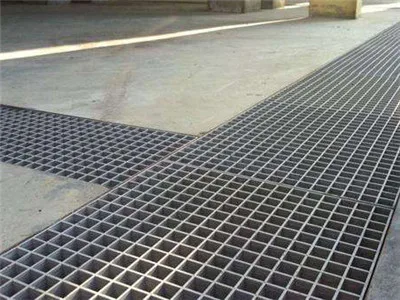
Hot-dip galvanized steel grating, also called hot-dip galvanized grating, is a steel product made by arranging flat bars and cross bars at fixed pitches and welding them into panels with square openings in the middle.
Once you grasp these basic concepts, the specifications and sizing recommendations that follow will be much easier to understand.
Bigger is not always better. The selection of hot-dip galvanized steel grating should be as economical as possible while meeting load requirements; over-thickening increases self-weight and cost and complicates installation. The product page offers a fuller comparison for galvanized grating; refer to it before deciding.
Scope of Application & Engineering Fields
Typical applications mainly include the following categories, which can help you judge suitability for your project:
Hot-dip galvanized steel grating is mainly used for platform walkways, grating stair treads, drainage grates, trench covers, steel platform floors, etc.
If your working conditions fall outside the above range, you can provide site photos and dimensions, and our technicians will help assess them.
Actual parameters of the same model may vary slightly between manufacturers; acceptance shall be based on measured values. Spot checks of key dimensions of hot-dip galvanized steel grating are recommended, especially for bulk deliveries. Galvanized grating parameters can be checked the same way, and any deviation should be communicated promptly.
Material and Surface Treatment in the Classification and Features of Hot-Dip Galvanized Steel Grating
Material and surface treatment are key to service life. Common practices and suitable environments are as follows:
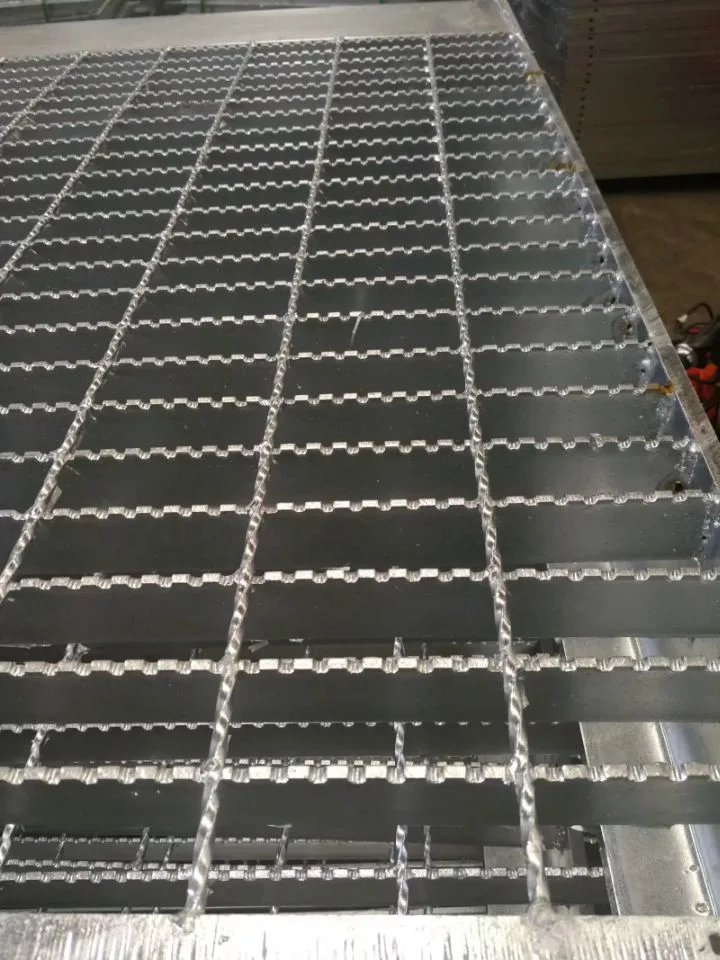
The cross bars of hot-dip galvanized steel grating are usually twisted square bars. It is generally made of carbon steel with a hot-dip galvanized surface to prevent oxidation; stainless steel can also be used. Steel grating offers ventilation, daylighting, heat dissipation, anti-slip and explosion-proof performance.
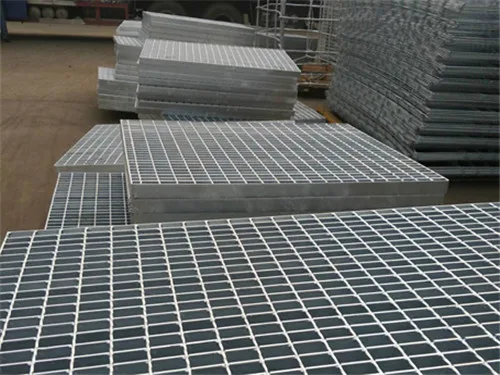
Once material and surface treatment are decided, we recommend writing zinc coating thickness and appearance requirements into the technical agreement.
Regarding corrosion protection, one thing is easily overlooked: on-site cutting and welding damage the original coating, and these areas need zinc touch-up after construction, otherwise rust often starts from the cut edges. Galvanized grating has the same issue; it is best to include this in the technical requirements at the construction disclosure.
Classification of Hot-Dip Galvanized Steel Grating
By welding method: press-welded, press-locked, riveted and through-welded types, and galvanized steel grating.
By the side shape of the bearing flat bars: flat type, serrated type and I-type, etc.
By use: general-purpose steel grating and special-purpose steel grating such as trench covers and stair treads.
By material: stainless steel grating and carbon steel grating.
Manufacturing Method
Welded steel grating is made by arranging bearing flat bars and cross bars at fixed pitches, welded into base panels by 200-ton hydraulic resistance welding automation equipment, then cut, punched and edge-banded into products per customer requirements. Bearing bar pitch: the center distance between adjacent bearing flat bars, commonly 30MM or 40MM.
Cross bar pitch: the center distance between adjacent cross bars, usually 50MM or 100MM, and can be produced per customer requirements.
Material and surface treatment determine the durability of hot-dip galvanized steel grating on site. Even for the same grating, treatment differs greatly between dry indoor use and coastal or chemical environments; the service environment should be stated as the primary condition during selection. The same judgment applies to galvanized grating.
All types of steel grating can be customized to customer requirements
Features
1: High strength, light weight
Bigger is not always better. The selection of hot-dip galvanized steel grating should be as economical as possible while meeting load requirements; over-thickening increases self-weight and cost and complicates installation. The product page offers a fuller comparison for galvanized grating; refer to it before deciding.
2: Strong corrosion resistance, durable
3: Attractive appearance, bright surface
Choosing a surface treatment is essentially a trade-off between initial investment and later maintenance. Requirements can be relaxed for hot-dip galvanized steel grating in dry indoor environments, but raised for outdoor or humid environments. Galvanized grating can be selected with the same approach.
4: No dirt, rain, snow or water accumulation; self-cleaning and easy to maintain
5: Good ventilation, lighting, heat dissipation, anti-slip and explosion-proof performance
Maintenance is actually not complicated. Daily inspection of hot-dip galvanized steel grating focuses on three points: whether fasteners are loose, whether the coating is damaged, and whether the panel is visibly deformed. Timely handling keeps overall maintenance low; galvanized grating has basically the same requirements.
6: Easy to install and remove
For the installation sequence, lay out first and then fix; avoid adjusting while laying. Once the layout drawing of hot-dip galvanized steel grating is confirmed, avoid arbitrary on-site cutting; if adjustments are needed, the fixing and edge-closing details of galvanized grating should be adjusted simultaneously to avoid loosening risks.
Further Reading: Selection Points of Galvanized Grating
If a project uses both types of galvanized grating, plan them together on the same layout drawing. This unifies edge closing, fixing and openings at junctions, avoids dimension clashes during installation, and makes later maintenance more convenient.
- For all product specifications and theoretical weights by series, visit Steel Grating Product Center
- To estimate cost by size and quantity, use Instant Quote PageSubmit Requirements
- To see how similar projects were executed, refer to Project Cases field applications
FAQ
What is most often overlooked during installation and acceptance?
First, bearing bars installed in the wrong direction reduce load capacity; second, insufficient fixing points or missing zinc touch-up paint; third, support beam spacing inconsistent with the layout drawing. These three items are most often overlooked on site.
Why do different manufacturers quote different weights for the same specifications?
The main difference lies in the actual measured thickness and tolerance control of the bearing bars. When bars are supplied at the lower tolerance limit, weight per unit area falls below the theoretical value, and load capacity drops accordingly. We recommend specifying thickness tolerance clearly when purchasing.
Where can I find specific specifications?
our websiteProductsCommon specifications and theoretical weights are organized by series, also available in Instant Quote PageEstimate by size, or contact us directly for sizing advice.
The above is for sizing and construction reference. To verify specific parameters or request a quotation, please visitInstant Quote Page, or contact our technical staff.
Note that this article presents sizing approaches and general practice, and does not constitute a strength commitment for any specific project. For load-bearing safety-critical areas, the design drawings and on-site calculations shall prevail; contact our technical staff if in doubt.