







This article introduces platform steel grating in sequence: main construction process quality requirements, typical application scenarios, and key conditions for selection. Each section provides actionable criteria; if you only need a quick conclusion, start with the key points at the beginning of each section. The same approach applies to galvanized grating.
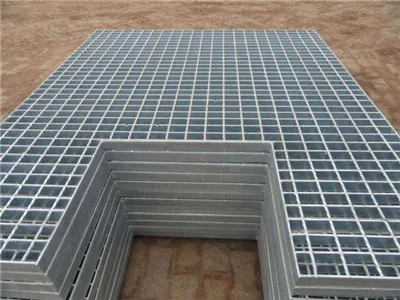
During steel grating construction, on-site cutting and openings are needed for various reasons, such as pipe openings in power plant boiler steel grating. Generally, openings larger than 200mm on platforms are fabricated at the factory, while openings smaller than 200mm are cut on site during installation as needed. To ensure that on-site cutting does not reduce load capacity and corrosion resistance, and that the grating looks neat after installation, the technical quality requirements for pipe openings in steel grating are detailed below.
Main construction process quality requirements
The main standard clauses and acceptance requirements involved are as follows:
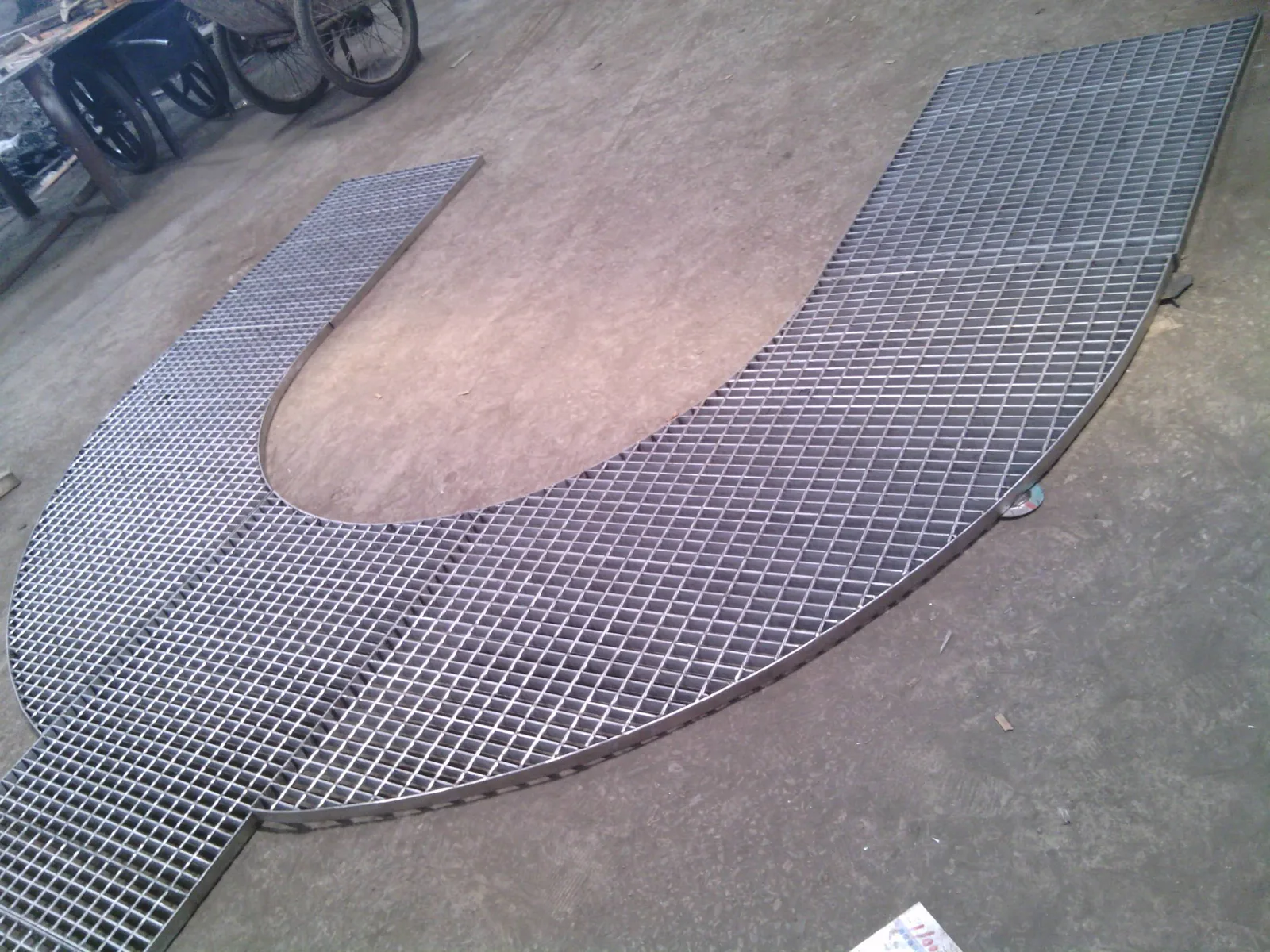
Opening types
There are two opening types in steel grating: circular openings and square (oval) openings. For pipe clusters, square (oval) openings should in principle be used; for single pipes, circular or square openings can be unified.
Reference measurement
During construction, the actual reference measurements from drawings directly affect whether the installation dimensions of steel grating are accurate. The datum points for grating openings must match those for pipe installation, and the measured deviation of the pipe outer diameter is plus or minus 10mm.
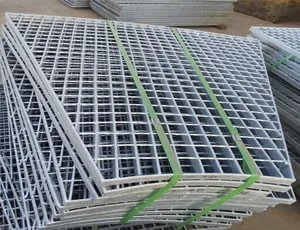
Marking lines
Mark the exact opening positions based on datum points and drawing dimensions, taking pipe thermal expansion and insulation allowance into account during marking.
Cutting openings
Steel grating is generally hot-dip galvanized. Cut the grating with a cutting machine at the marked positions, not with flame cutting, and keep the working surface as flat and smooth as possible for the next step.
Post-opening treatment
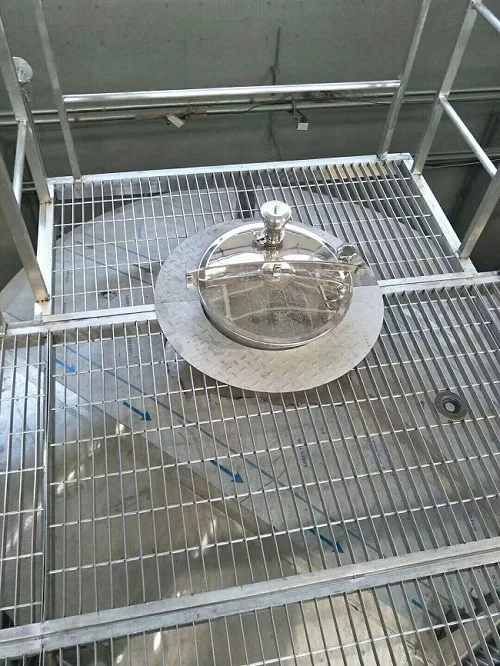
After cutting, weld flat bars along the inner edge to reinforce the grating, ensuring strength and overall workmanship. The flat bar height at opening edges should be uniform and flush with the underside of the grating. Welding at flat bar joints on opening edges should be smooth and neat, with uniform bar height, perpendicular to the grating. After installation, remove rust, residual weld spatter, and any debris that affects paint quality.
Grinding and painting
Grind and derust the installed flat bars, usually with power derusting tools. After derusting, apply one coat of primer and one coat of topcoat, with paint color basically matching the grating.
We recommend checking each clause above during acceptance and keeping the factory inspection records.
For the installation sequence, lay out first and fix later; avoid adjusting while laying. Once the layout drawing of platform steel grating is confirmed, avoid cutting on site wherever possible. If adjustment is needed, the fixing and banding details of hot-dip galvanized steel grating should be adjusted accordingly to avoid leaving loose spots.
Typical Applications
Main applications are as follows:
- Industrial Platforms & Maintenance Walkways: equipment platforms and inspection passages in power plants, chemical plants and steel-structure workshops;
- Municipal & Landscape: road drainage trench covers, rainwater grates, tree grates, park boardwalks;
- Transportation & Ports: wharf trestles, multi-story parking garage lanes, railway bridge walkways;
- Environmental & Water Treatment: walkways in wastewater treatment plants, tank platforms, screening machine platforms;
- Others: elevated tower platforms, stair treads, fences and railings, etc.
If your working conditions fall outside the above range, you can provide site photos and dimensions, and our technicians will help assess them.
Different applications emphasize different requirements for platform steel grating: pedestrian walkways value anti-slip and comfort; vehicle areas value panel stiffness and fixing reliability; drainage trench covers value open area and anti-theft. Clarify the use first, then the specifications, to avoid detours; the same thinking applies to hot-dip galvanized steel grating.
Key Conditions to Confirm During Selection
We recommend confirming the following factors in order according to service conditions during selection:
- First clarify the span and support beam spacing to determine the required series;
- Then check load requirements by usage type (pedestrian, maintenance, vehicular);
- Finally, determine the surface treatment by service environment (dry indoor, outdoor, coastal, chemical).
Placing the order after confirming these items effectively avoids specification mismatch and on-site rework.
The most easily overlooked items in a spec sheet are tolerances and end treatment. Platform steel grating usually has machining allowance along its length; for recessed installation, banding and corner-cut requirements should be stated in advance. Hot-dip galvanized steel grating is handled similarly in these details, so mark them clearly on the drawings.
Further reading: Sizing reference for galvanized grating and hot-dip galvanized steel grating
In engineering, hot-dip galvanized steel grating is often used together with the components mentioned in this article. The two differ in load carrying and installation practices; when combining them, pay special attention to the connection of support conditions and fixing methods, as junction treatment is often where problems arise. For unified drawings, submit dimensions of both types and our technicians will process them under the same layout logic.
- For all product specifications and theoretical weights by series, visit Steel Grating Product Center
- To estimate cost by size and quantity, use Instant Quote PageSubmit Requirements
- To see how similar projects were executed, refer to Project Cases field applications
FAQ
Can the values in the article be applied directly?
Values in this article come from relevant standard clauses or common industry practice. For actual selection, recalculate based on site span, load class and service environment; direct copying is not recommended.
What information is needed for custom sizes?
Usually you need to provide the panel dimensions (length x width), bearing bar specs and direction, center-to-center pitch of bearing bars and cross bars, surface treatment, and special requirements such as cutouts, corner notches and banding. Site photos or sketches are even better.
What maintenance is required during daily use?
Maintenance mainly involves periodically checking whether fasteners are loose, whether touch-up paint has peeled off, and whether the panel surface shows obvious deformation or rust. Issues found should be dealt with promptly; overall maintenance is minimal.
The above is for sizing and construction reference. To verify specific parameters or request a quotation, please visitInstant Quote Page, or contact our technical staff.
Note that this article presents sizing approaches and general practice, and does not constitute a strength commitment for any specific project. For load-bearing safety-critical areas, the design drawings and on-site calculations shall prevail; contact our technical staff if in doubt.