
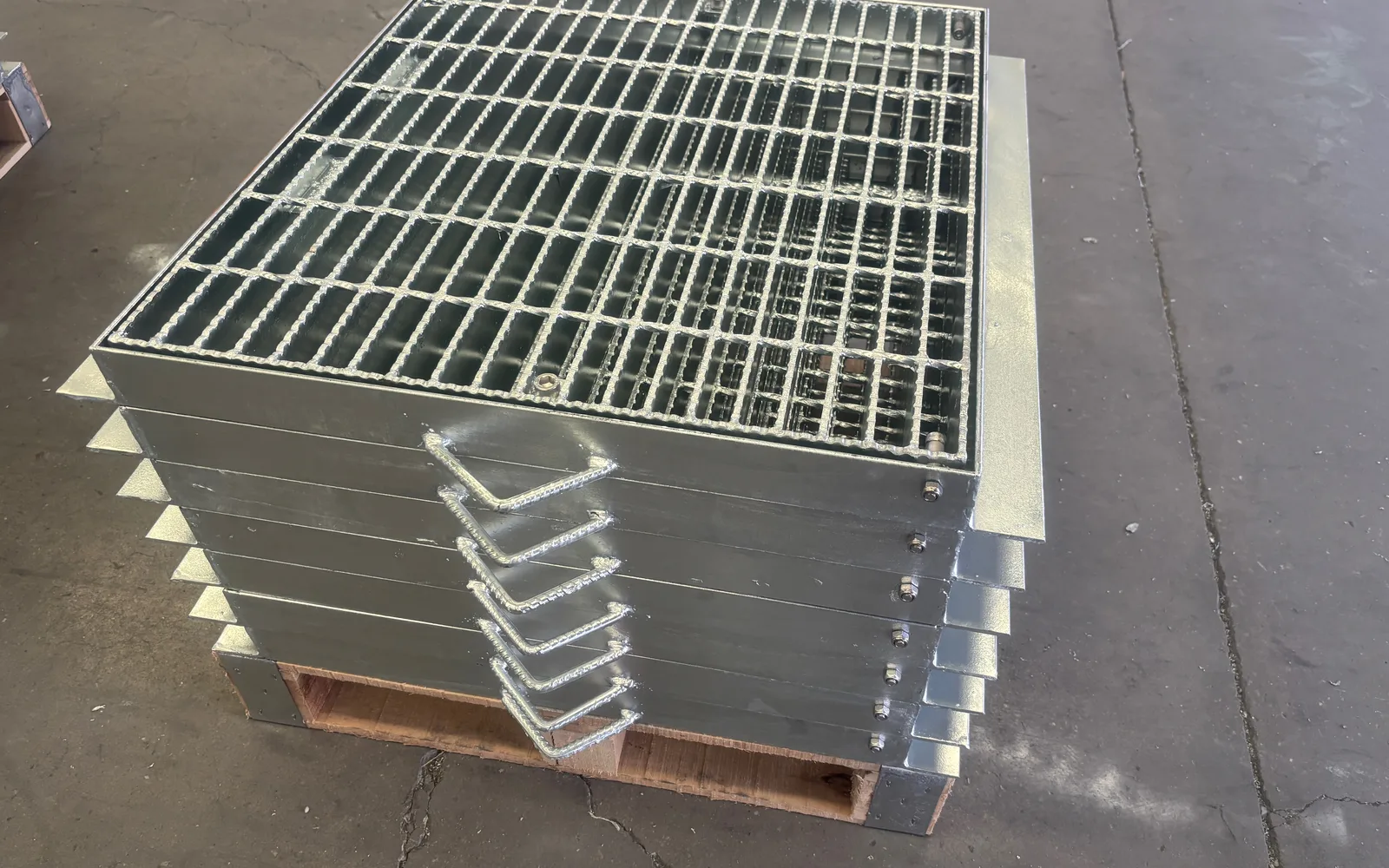
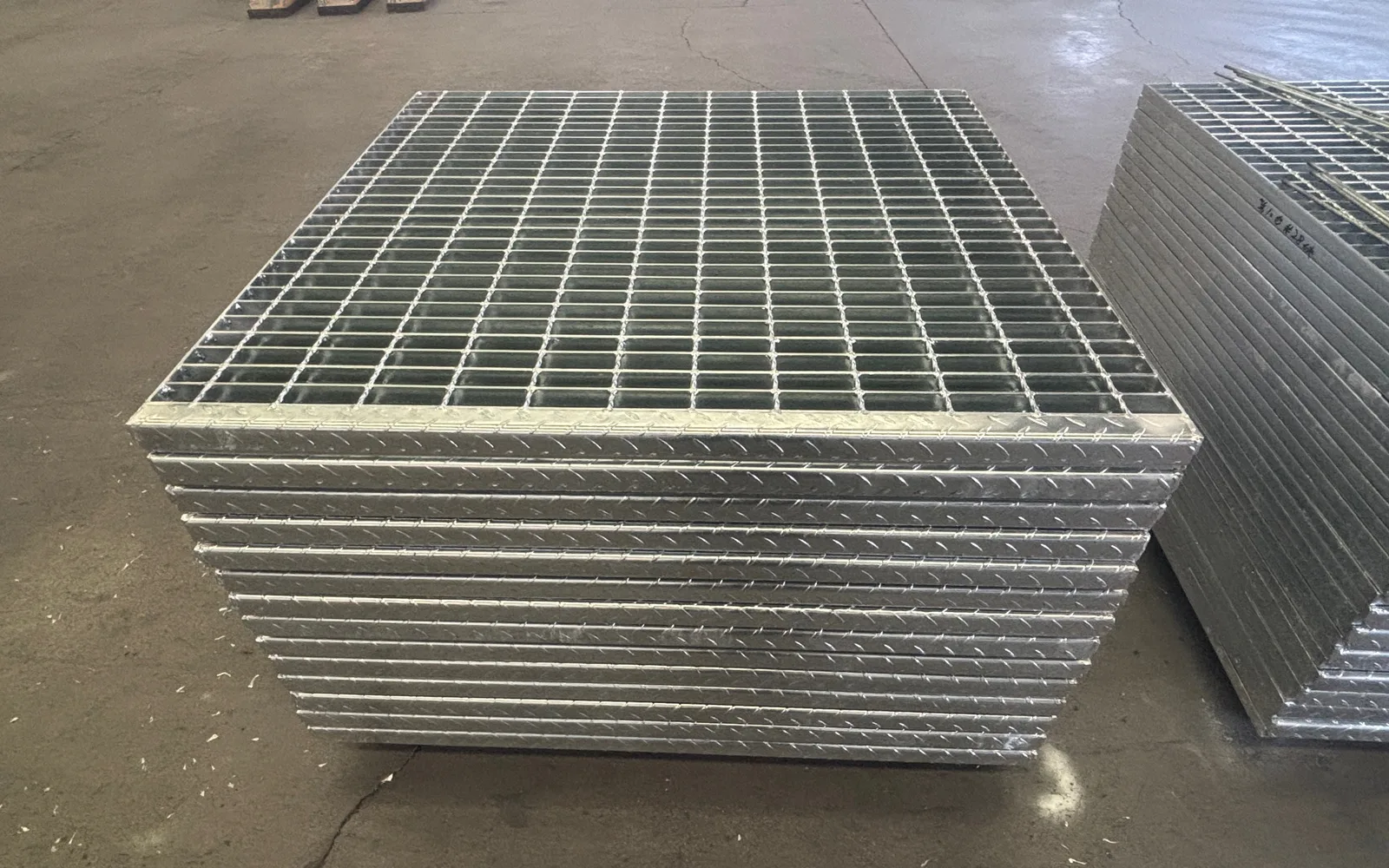
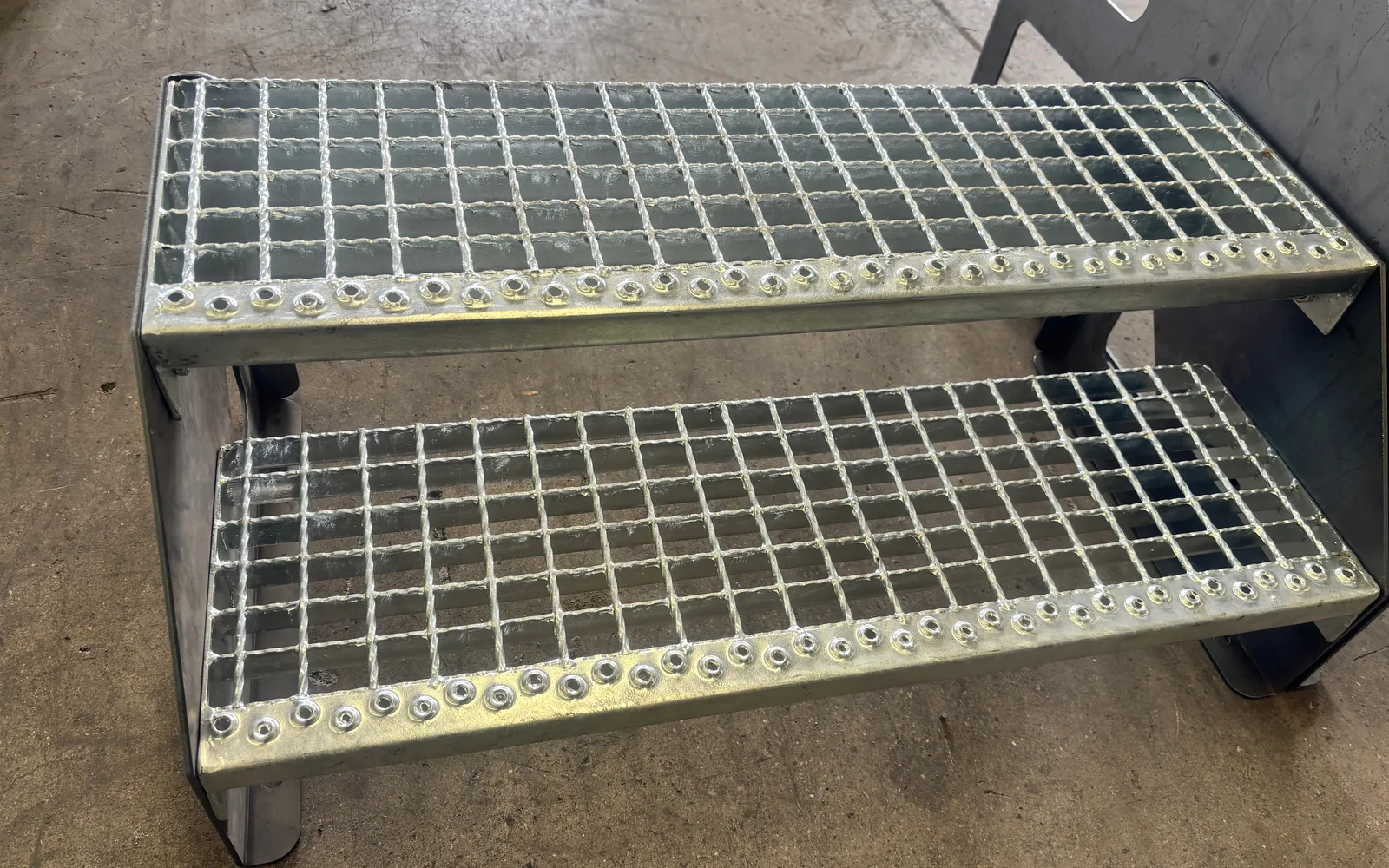
The application of cut-out steel grating in actual projects is not complicated; the difficulty lies in matching specifications, materials, and service environment. This article explains them in turn under steel grating, cut-out forms of steel gratings, and cut-out operations, so that readers can form a complete judgment framework for hot-dip galvanized steel gratings.
Steel Grating
Additional key points are as follows:
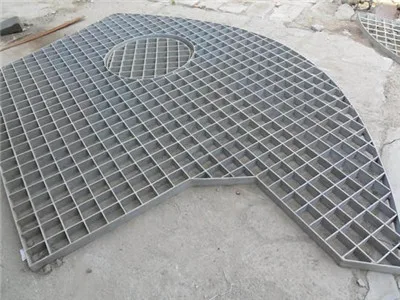
Steel gratings often need to be cut and opened on site during construction for various reasons, such as pipe openings in power plant boiler steel grating installation. Generally, openings larger than 200mm on platforms are machined at the factory, while openings smaller than 200mm are cut on site during installation as needed. To ensure that on-site cutting and opening do not reduce the load capacity and corrosion resistance of the steel grating, and that the steel grating looks neat after installation, the following notes on pipe openings in steel gratings are provided.
The above points can serve as a pre-purchase checklist; confirm each item before moving to the quotation stage.
For the installation sequence, it is recommended to lay out first and fix later, avoiding adjustments while laying. Once the layout drawing of the cut-out steel grating is confirmed, avoid random cutting on site; when adjustments are truly needed, the fixing and edge finishing of hot-dip galvanized steel gratings should be adjusted simultaneously to avoid leaving hidden loosening risks.
Cut-Out Forms of Steel Grating
Additional key points are as follows:
There are two opening forms on steel gratings: circular openings and square (oval) openings. For pipe bundles, square (oval) openings should be adopted in principle; for single pipes, circular or square openings may be unified.
The above points can serve as a pre-purchase checklist; confirm each item before moving to the quotation stage.
When requesting a quotation, it is recommended to provide the span, load requirements, and approximate area, so that the quotation is useful for reference. Quoting only a model without describing the working conditions often results in a wide quotation range for cut-out steel gratings that is difficult to compare. The quotation logic for galvanized gratings is the same and can be estimated directly by dimensions.
Cutting of Steel Grating
The following aspects most need to be confirmed in advance in actual procurement and use:
Steel gratings are generally hot-dip galvanized; cut the grating with a cutting machine according to the marked positions, as oxy-fuel cutting is not allowed, and keep the working surface as flat and clean as possible for the next step of construction.
The above points can serve as a pre-purchase checklist; confirm each item before moving to the quotation stage.
Material and surface treatment determine the durability of cut-out steel gratings on site. Even for the same steel grating, the treatment differs greatly between dry indoor environments and coastal or chemical environments; the service environment should be stated as the primary condition when selecting. This judgment also holds for hot-dip galvanized steel gratings.
Marking for Steel Grating Cut-Outs
Mark the specific positions of the openings according to the datum points and drawing dimensions, taking into account pipe thermal expansion and insulation allowance during marking.
Bigger specifications are not always better. The selection of cut-out steel gratings should be as economical as possible while meeting load requirements; excessive thickening increases weight and cost and causes inconvenience in installation. The product page provides more complete comparison notes on galvanized gratings for reference before making a decision.
Measurement for Steel Grating Cut-Outs
In construction, the actual measured drawing data directly affect whether the installation dimensions of the steel grating are accurate. The datum points of the grating openings should be consistent with those of pipe installation, and the measured actual outer diameter deviation of pipes should be within plus or minus 10 mm.
The easiest things to overlook in specification tables are tolerances and end treatment. Cut-out steel gratings usually leave machining allowance in the length direction; if the site uses recessed installation, the edge banding and corner-cut requirements should be stated in advance. Hot-dip galvanized steel gratings are handled similarly in such details, and it is recommended to mark them clearly on the drawings.
Treatment of Steel Grating Cut-Outs
After cutting, weld flat bars inside the inner ring to reinforce the grating, ensuring its strength and keeping the overall workmanship neat. The flat bar height at the edges of grating openings should be uniform and flush with the bottom of the grating. The welding at the joints of the edge flat bars of grating openings should be smooth and neat, with uniform flat bar height perpendicular to the steel grating. After installation is completed, rust, residual welding spatter, and other debris that would affect paint quality should be removed.
During fabrication, the dimensional control of cut-out steel gratings mainly relies on dies and fixtures, so mass-produced items have good consistency, while irregular parts need separate layout. When secondary processing is needed on site, the anti-corrosion treatment of the cut edges of hot-dip galvanized steel gratings must not be skipped.
Grinding and Painting of Irregular Steel Grating
Grind and derust the installed flat bars, generally using electric derusting. After derusting, apply one coat of primer and one coat of topcoat, with the paint color basically consistent with the grating color.
The installation quality of cut-out steel gratings depends largely on preparation: whether the supporting surface is flat, whether the beam spacing matches the layout, and whether fasteners are prepared in advance. With these items in place, the installation itself is not complicated. If on-site cutting is needed, the cut-edge treatment requirements for hot-dip galvanized steel gratings should also be clearly specified.
Further notes: Common combinations of hot-dip galvanized steel grating and galvanized grating
Hot-dip galvanized steel grating and galvanized grating are different specification forms within the same product system. The selection logic is the same as described in this article: first the usage type, then span and load to determine specifications, and finally the environment to determine surface treatment. Their corrosion protection and anti-slip requirements may differ; state them separately when ordering rather than writing one general technical requirement.
- For all product specifications and theoretical weights by series, visit Steel Grating Product Center
- To estimate cost by size and quantity, use Instant Quote PageSubmit Requirements
- To see how similar projects were executed, refer to Project Cases field applications
FAQ
Can the values in the article be applied directly?
Values in this article come from relevant standard clauses or common industry practice. For actual selection, recalculate based on site span, load class and service environment; direct copying is not recommended.
How to choose between hot-dip galvanizing and cold galvanizing?
The two anti-corrosion mechanisms differ: hot-dip galvanizing immerses steel in molten zinc to form a metallurgically bonded coating, thick and long-lasting, suitable for outdoor and humid environments; cold galvanizing is electrochemical deposition with a thinner, more uniform appearance, suitable for dry indoor environments or applications requiring high dimensional precision.
What information is needed for custom sizes?
Usually you need to provide the panel dimensions (length x width), bearing bar specs and direction, center-to-center pitch of bearing bars and cross bars, surface treatment, and special requirements such as cutouts, corner notches and banding. Site photos or sketches are even better.
The above is for sizing and construction reference. To verify specific parameters or request a quotation, please visitInstant Quote Page, or contact our technical staff.
The above is general guidance. For a specific project, we still recommend submitting span, load class and service environment to our technicians for review. Steel grating is a load-bearing component; rework caused by wrong specification choices costs far more than the time spent on upfront calculation.