







This article introduces steel grating use in the market in the order of application scenarios, usage and maintenance points, and applicable scope and engineering fields. Each part gives actionable judgment methods; for quick conclusions, read the key points at the start of each part. The same approach applies to hot-dip galvanized steel grating.
Application scenarios of steel grating in the market
Main applications are as follows:
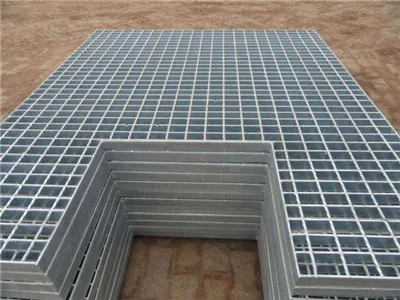
Steel grating has become the standard platform flooring of choice for various industrial platforms, commonly used as walkway flooring, platforms, trench covers and stair treads. Compared with solid flooring, its open grid structure maximizes the passage of light, air, liquids and sound and greatly reduces wind load.
Steel grating is also used around trees, known as tree grates. Besides protecting trees and beautifying the environment, tree grates have many other uses. Steel grating is a galvanized steel product made by molding processes with regularly distributed rectangular or square openings, with bidirectional isotropic mechanical properties. It is widely used in petroleum, chemical, electronics, power, papermaking, printing and dyeing, electroplating, marine exploration and wastewater treatment, usually as platforms and walkways. With hot-dip galvanized surfaces, its corrosion resistance is very strong and service life generally exceeds 10 years. It also suits ordinary civil building equipment.
If your working conditions fall outside the above range, you can provide site photos and dimensions, and our technicians will help assess them.
Within one scenario, different areas often have different requirements. For steel grating, main channels and edge areas, frequently used areas and occasional maintenance areas can take different specifications; the paired use of galvanized grating should also be considered by zone, balancing safety and cost.
Use and Maintenance Key Points
Key inspection and maintenance points during use are as follows:
Steel grating has high strength, ten times that of rigid PVC and far exceeding aluminum; it is also corrosion resistant - no rust, mildew, rot or painting, resistant to liquid media corrosion and maintenance-free. It also offers superb fatigue resistance; installation needs no lifting equipment, saving effort and providing high safety: flame-retardant and insulating, it produces no electric sparks from impact, suitable for flammable and explosive environments, preventing many accidents.
Regular inspection and maintenance as required effectively extends service life and reduces replacement costs.
Maintenance is not complicated: daily inspection of steel grating mainly covers three points - loose fixings, damaged coatings and visible deformation of panel surfaces. Prompt handling keeps overall maintenance light; the requirements for hot-dip galvanized steel grating are basically the same.
Scope of Application & Engineering Fields
Main applications are as follows:
Steel grating is widely used in petroleum, chemical, power plants, water plants, wastewater treatment, municipal engineering and sanitation projects for platforms, walkways, trestle trench covers, manhole covers, ladders, fences and railings.
If your working conditions fall outside the above range, you can provide site photos and dimensions, and our technicians will help assess them.
What is most easily overlooked in specification tables are tolerances and end treatment. The length direction of steel grating usually carries machining allowance; for recessed installation, state trimming and corner-cutting requirements in advance. Galvanized grating is handled similarly; mark these clearly on drawings.
Further notes: How to combine hot-dip galvanized steel grating and galvanized grating in use
Hot-dip galvanized steel grating and galvanized grating are different specification forms within the same product system. The selection logic is the same as described in this article: first the usage type, then span and load to determine specifications, and finally the environment to determine surface treatment. Their corrosion protection and anti-slip requirements may differ; state them separately when ordering rather than writing one general technical requirement.
- For all product specifications and theoretical weights by series, visit Steel Grating Product Center
- To estimate cost by size and quantity, use Instant Quote PageSubmit Requirements
- To see how similar projects were executed, refer to Project Cases field applications
FAQ
How to choose between hot-dip galvanizing and cold galvanizing?
The two anti-corrosion mechanisms differ: hot-dip galvanizing immerses steel in molten zinc to form a metallurgically bonded coating, thick and long-lasting, suitable for outdoor and humid environments; cold galvanizing is electrochemical deposition with a thinner, more uniform appearance, suitable for dry indoor environments or applications requiring high dimensional precision.
What maintenance is required during daily use?
Maintenance mainly involves periodically checking whether fasteners are loose, whether touch-up paint has peeled off, and whether the panel surface shows obvious deformation or rust. Issues found should be dealt with promptly; overall maintenance is minimal.
Can the values in the article be applied directly?
Values in this article come from relevant standard clauses or common industry practice. For actual selection, recalculate based on site span, load class and service environment; direct copying is not recommended.
The above is for sizing and construction reference. To verify specific parameters or request a quotation, please visitInstant Quote Page, or contact our technical staff.
Note that this article presents sizing approaches and general practice, and does not constitute a strength commitment for any specific project. For load-bearing safety-critical areas, the design drawings and on-site calculations shall prevail; contact our technical staff if in doubt.