







About steel grating, this article explains product design instructions, platform design requirements, and types of stair treads and trench covers in turn, giving directly actionable judgment methods rather than theory only. If you have drawings or site dimensions, check them item by item against the key points; the same order applies to hot-dip galvanized steel grating.
Steel Grating Product Design and Usage Instructions
Below we first briefly explain the relevant concepts and basic construction to make the following parameters and sizing content easier to understand.
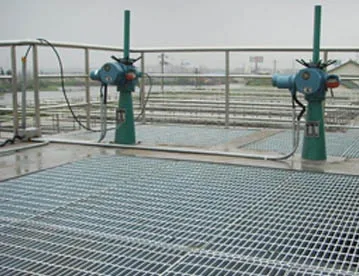
Steel grating layout design is based on bearing bar pitch series of 30mm, 40mm, 50mm and 60mm
1. Platform design requirements: when calculating the design load on a steel grating platform, deflection must not exceed 1/200 of the span, with a maximum of 10mm. Beyond these requirements, all platform panels must also comply with:
a. At 1.5 times the design load, the platform must not suffer permanent deformation;
b. At 3.0 times the design load, the platform must not fracture. Design requirements under special load conditions are subject to agreement between supplier and buyer.
2. The standard original panel size of welded steel grating is 6100LB×995mm. When laying out, use 995mm as width with 5-10mm gaps between panels; the last panel makes up the remainder. If panel width is less than 995mm, choose the nearest width from the table of bearing bar counts and nominal overall widths, e.g., a 1250LB×590mm panel should be changed to 1250LB×605mm.
Grating length can be chosen freely, but multiples of 50mm are preferred; notation: 1250LB (length) × 995mm (width), 18 pieces.
3. Stair treads and steel stair design requirements: under design load, the deflection at the midpoint of any tread must not exceed 1/200 of its span, maximum 6mm. Beyond this, all stair treads must also comply with:
Once you grasp these basic concepts, the specifications and sizing recommendations that follow will be much easier to understand.
Actual parameters of the same model may vary slightly between manufacturers; acceptance shall be based on measured values. We recommend sampling key steel grating dimensions, especially for bulk deliveries. Corresponding parameters of hot-dip galvanized steel grating can be checked the same way; communicate promptly if deviations are found.
At 1.5 times the design load, stair treads (steel stairs) must not suffer permanent deformation;
The following aspects most need to be confirmed in advance in actual procurement and use:
2. At 3.0 times the design load, stair treads (steel stairs) must not fracture.
Trench covers are made of steel grating, available in multiple models to suit different spans, loads and requirements. They are easy to install, light, high load capacity, impact resistant, bend rather than break, and offer high drainage; after hot-dip galvanizing they are attractive, durable and corrosion resistant, with advantages cast iron covers cannot match. Hinged or hook connections make opening easy and provide anti-theft function.
Our high-quality trench covers are widely used in municipal roads, garden facilities, residential communities, schools, stadiums and other places. We can also design and manufacture trench covers of other specifications and shapes per special customer requirements.
The above points can serve as a pre-purchase checklist; confirm each item before moving to the quotation stage.
What is most easily overlooked in spec tables are tolerances and end treatment. Steel grating usually has machining allowance in the length direction; if embedded installation is used on site, edge closing and corner notch requirements must be stated in advance. Hot-dip galvanized steel grating is handled similarly in these details; we recommend marking them clearly on the drawings as well.
Types of trench covers
Common classification methods are as follows:
- By material, our trench covers are divided into hot-dip galvanized trench covers, stainless steel trench covers, brass trench covers, etc.
- By shape, they can be divided into ordinary trench covers, U-type trench covers, tubular trench covers and openable trench covers.
- Trench cover dimension notes: the bearing bar direction is the load-bearing (support) direction; set bar length L by trench (well) width with clearance; lay out along trench (well) length using a standard panel width of 995mm per processing module with 5mm gaps between panels; size the remaining length under 1 meter by module; select the grating model per trench cover width and load requirements. Standard-size trench covers are recommended for design and construction; other specifications can be customized.
Any size and specification can be customized.
Determine the category first and then the specific model; this saves detours and makes comparison with other materials easier.
A practical tip for specification confirmation: write bearing bar specs, bearing bar pitch, cross bar pitch and overall dimensions into the purchase list at the same time; specifying only one or two often leads to mismatched deliveries. The specification marking system is fully cross-referenced on the product page; number and check each panel against the layout drawing before ordering. The same applies to hot-dip galvanized steel grating.
Further reading: Selection points for hot-dip galvanized steel grating and hot-dip galvanized steel grating
Hot-dip galvanized steel grating and hot-dip galvanized steel grating are different specification forms within the same product system. The selection logic is the same as described in this article: first the usage type, then span and load to determine specifications, and finally the environment to determine surface treatment. Their corrosion protection and anti-slip requirements may differ; state them separately when ordering rather than writing one general technical requirement.
- For all product specifications and theoretical weights by series, visit Steel Grating Product Center
- To estimate cost by size and quantity, use Instant Quote PageSubmit Requirements
- To see how similar projects were executed, refer to Project Cases field applications
FAQ
Why do different manufacturers quote different weights for the same specifications?
The main difference lies in the actual measured thickness and tolerance control of the bearing bars. When bars are supplied at the lower tolerance limit, weight per unit area falls below the theoretical value, and load capacity drops accordingly. We recommend specifying thickness tolerance clearly when purchasing.
What maintenance is required during daily use?
Maintenance mainly involves periodically checking whether fasteners are loose, whether touch-up paint has peeled off, and whether the panel surface shows obvious deformation or rust. Issues found should be dealt with promptly; overall maintenance is minimal.
What is most often overlooked during installation and acceptance?
First, bearing bars installed in the wrong direction reduce load capacity; second, insufficient fixing points or missing zinc touch-up paint; third, support beam spacing inconsistent with the layout drawing. These three items are most often overlooked on site.
The above is for sizing and construction reference. To verify specific parameters or request a quotation, please visitInstant Quote Page, or contact our technical staff.
Note that this article presents sizing approaches and general practice, and does not constitute a strength commitment for any specific project. For load-bearing safety-critical areas, the design drawings and on-site calculations shall prevail; contact our technical staff if in doubt.