







This article introduces steel grating in the order of standards and acceptance requirements, key advantages and basic concepts. Each section gives actionable criteria where possible; if you only need a quick conclusion, start with the opening points of each section. The same approach applies to hot-dip galvanized steel grating.
Standards and Acceptance Requirements for Steel Grating
The main standard clauses and acceptance requirements involved are as follows:
The standard for steel grating and accessories (YB/T 4001.1-2019) specifies the following main technical requirements:
We recommend checking each clause above during acceptance and keeping the factory inspection records.
After installation, carry out an overall inspection: check for panel warping, missing fasteners and noticeable height differences between adjacent panels. Such issues with steel grating are cheapest to fix at the acceptance stage; rework after commissioning is far more troublesome. Acceptance of hot-dip galvanized steel grating can follow the same standard.
Key Advantages
Main features can be summarized as follows:
Material requirements: specify the types and performance standards of raw materials for steel grating, including carbon structural steel and stainless steel.
Design and manufacturing requirements: cover the design of flat bearing bars, cross bars and connectors, as well as the manufacturing process of steel grating.
Dimension and tolerance requirements: specify the size range and allowable deviations of steel grating.
Load and deflection requirements: give the maximum deflection values for different types of steel grating under different load conditions.
Surface treatment requirements: cover galvanizing, painting, stainless steel polishing and other surface treatments, together with their quality standards.
Safety performance requirements: such as slip resistance and fatigue resistance.
Packaging, marking and quality certificate requirements: specify the packing method, the content printed on package marks, and the information to be included in the quality certificate.
Overall, selection should weigh span, load and service environment together.
Actual parameters for the same model may vary slightly between manufacturers, so acceptance should be based on measured values. Key dimensions of steel grating should be sampled, especially for bulk deliveries. The corresponding parameters of hot-dip galvanized steel grating can be checked the same way, with any deviation reported promptly.
Application Scenarios of Steel Grating
These technical requirements ensure the safety, stability and service life of steel grating and accessories, and provide clear guidance for production and application.
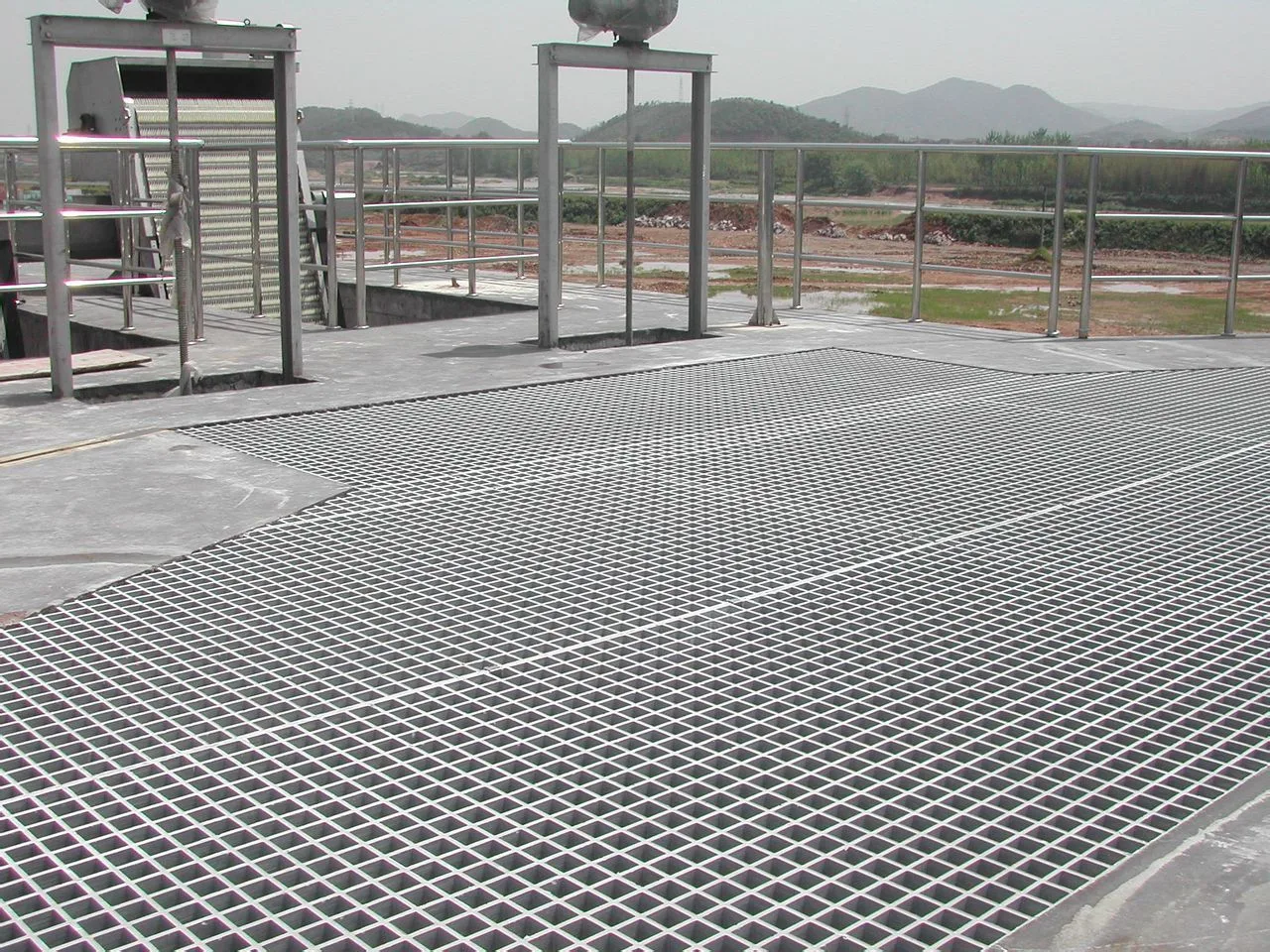
Requirements vary by application: pedestrian walkways emphasize slip resistance and comfort, vehicle areas emphasize panel stiffness and fixing reliability, and drainage trench covers emphasize water flow area and theft prevention. Define the use first, then look at specifications - this avoids detours, and the same logic applies to hot-dip galvanized steel grating.
Further notes: How to combine hot-dip galvanized steel grating and hot-dip galvanized steel grating in use
Besides what this article covers, hot-dip galvanized steel grating is also common in actual projects. It shares similarities with this article's subject in structure and fabrication; for selection, check span, load and service environment in the same order. If both types of components are used in the same project, we recommend unifying material and surface treatment to avoid later galvanic corrosion or inconsistent appearance.
- For all product specifications and theoretical weights by series, visit Steel Grating Product Center
- To estimate cost by size and quantity, use Instant Quote PageSubmit Requirements
- To see how similar projects were executed, refer to Project Cases field applications
FAQ
How to choose between hot-dip galvanizing and cold galvanizing?
The two anti-corrosion mechanisms differ: hot-dip galvanizing immerses steel in molten zinc to form a metallurgically bonded coating, thick and long-lasting, suitable for outdoor and humid environments; cold galvanizing is electrochemical deposition with a thinner, more uniform appearance, suitable for dry indoor environments or applications requiring high dimensional precision.
What information is needed for custom sizes?
Usually you need to provide the panel dimensions (length x width), bearing bar specs and direction, center-to-center pitch of bearing bars and cross bars, surface treatment, and special requirements such as cutouts, corner notches and banding. Site photos or sketches are even better.
Where can I find specific specifications?
our websiteProductsCommon specifications and theoretical weights are organized by series, also available in Instant Quote PageEstimate by size, or contact us directly for sizing advice.
The above is for sizing and construction reference. To verify specific parameters or request a quotation, please visitInstant Quote Page, or contact our technical staff.
Note that this article presents sizing approaches and general practice, and does not constitute a strength commitment for any specific project. For load-bearing safety-critical areas, the design drawings and on-site calculations shall prevail; contact our technical staff if in doubt.