







Many projects purchase stainless steel grating based on price alone, overlooking specification matching and corrosion protection requirements, which often leads to rework later. This article lists, in order, what polishing after welding means, material and corrosion protection requirements, and basic concepts, and explains how to choose for common working conditions. Content related to hot-dip galvanized steel grating can be used directly as a reference for technical disclosure.
Why Stainless Steel Grating Needs Polishing After Welding
Below we first briefly explain the relevant concepts and basic construction to make the following parameters and sizing content easier to understand.
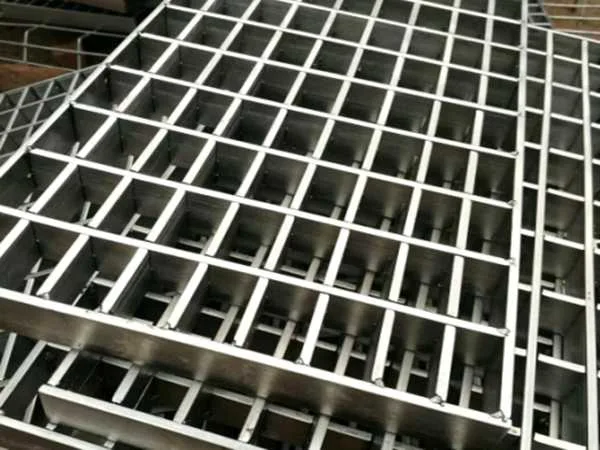
Stainless steel grating is one type of steel grating, but compared with ordinary steel grating there are some differences. First, in material, stainless steel grating is made of stainless steel, while ordinary steel grating is made of carbon steel or stainless steel. Second, the surface of stainless steel grating does not undergo anti-corrosion treatments such as spray painting or hot-dip galvanizing; instead, it is surface polished to remove welding slag, weld marks, etc. produced during the welding of the grating.
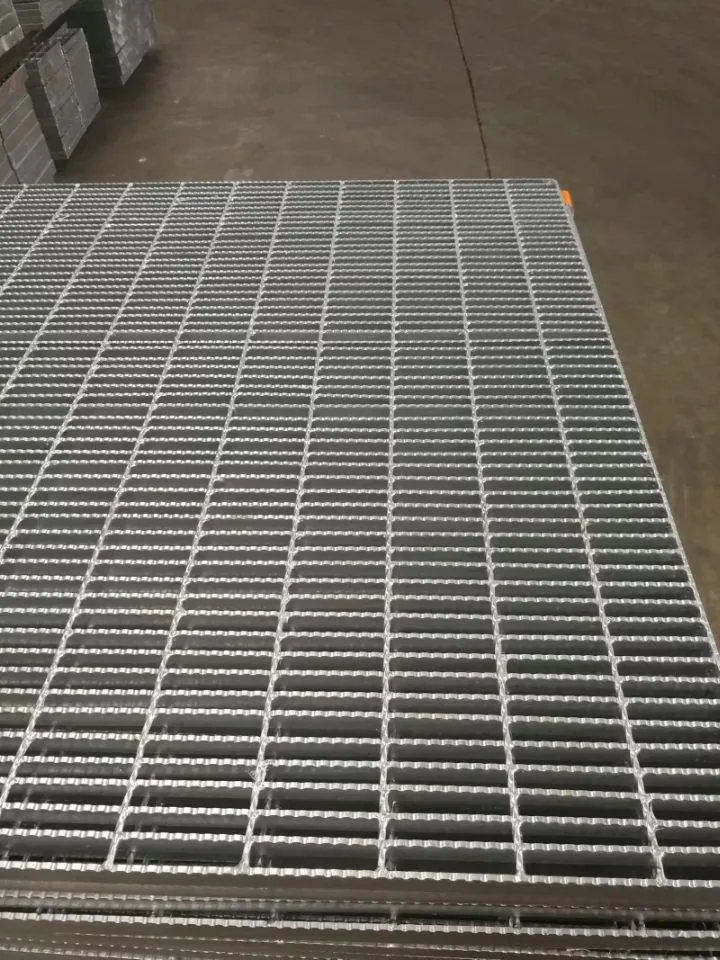
Once you grasp these basic concepts, the specifications and sizing recommendations that follow will be much easier to understand.
The actual parameters of the same model may differ slightly between manufacturers, so acceptance should be based on actual measurement. Spot checks of the key dimensions of stainless steel grating are recommended, especially for bulk deliveries. The corresponding parameters of galvanized grating can be checked in the same way; communicate promptly if deviations are found.
Material and Anti-Corrosion Requirements
Material and surface treatment are key to service life. Common practices and suitable environments are as follows:
Stainless steel grating uses stainless steel as its material, and stainless steel has different models and compositions. For use on steel grating, there are some common models: 304, 201, 316, 316L, 310, and 310S. As for which model to choose, it depends on the actual situation and usage requirements.
Stainless steel grating is made by welding stainless steel flat bars with welding wire.
Since wire welding leaves black weld spots on platform stainless steel grating, which looks unattractive, all stainless steel grating needs polishing treatment.
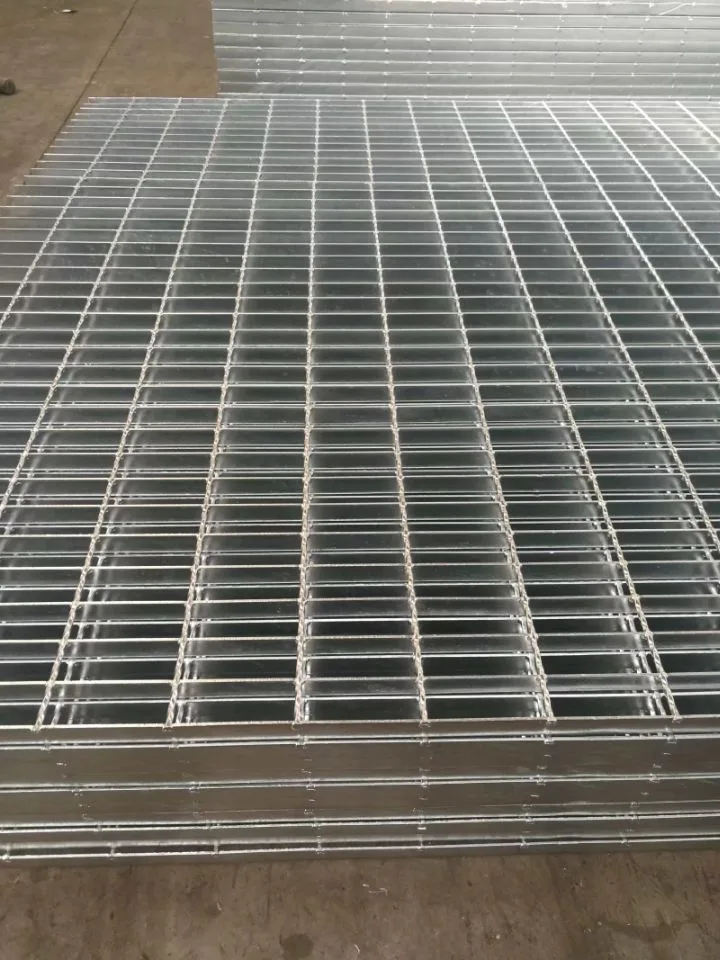
Stainless steel grating is grating made of stainless steel. Its production process is largely the same as ordinary steel grating, except that it does not use anti-corrosion treatments such as spray painting or hot-dip galvanizing; instead, surface polishing is required to remove welding slag or scars left during welding, so that the grating surface becomes bright as new and the whole product looks beautiful and elegant.As for the welding of steel grating, there are basic requirements: the weld points of the grating should be firm, without defects such as weld seams or burrs. In addition, the welded surface should be flat and smooth.
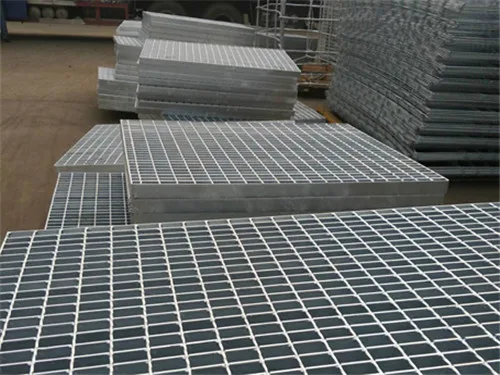
Polishing can make the metal surface very glossy. Generally, stainless steel products are polished for the sake of appearance. There are many polishing methods, including physical and chemical treatments. After polishing, not only can impurities in the stainless steel substrate and the iron-rich layer on the surface be removed, but chromium and nickel can also gather on the surface to form a passivation film, which can improve the rust resistance of stainless steel by 2-3 times.
After electrolytic polishing, the stainless steel grating is bright as new, with an attractive appearance, rust-free, and long-lasting. Only after polishing treatment can the production of stainless steel grating be truly completed.
Once material and surface treatment are decided, we recommend writing zinc coating thickness and appearance requirements into the technical agreement.
Bigger specifications are not always better. The selection of stainless steel grating should be as economical as possible while meeting load requirements; excessive thickening increases weight and cost and makes installation inconvenient. The product page provides a more complete comparison for galvanized grating, which can be consulted before making a decision.
Further notes: How to combine hot-dip galvanized steel grating and galvanized grating in use
If a project uses both hot-dip galvanized steel grating and galvanized grating, we recommend planning them on the same layout drawing. This way edge closing, fixing and cutouts at junctions can be handled uniformly, avoiding dimension conflicts during installation and making later maintenance easier.
- For all product specifications and theoretical weights by series, visit Steel Grating Product Center
- To estimate cost by size and quantity, use Instant Quote PageSubmit Requirements
- To see how similar projects were executed, refer to Project Cases field applications
FAQ
What information is needed for custom sizes?
Usually you need to provide the panel dimensions (length x width), bearing bar specs and direction, center-to-center pitch of bearing bars and cross bars, surface treatment, and special requirements such as cutouts, corner notches and banding. Site photos or sketches are even better.
Why do different manufacturers quote different weights for the same specifications?
The main difference lies in the actual measured thickness and tolerance control of the bearing bars. When bars are supplied at the lower tolerance limit, weight per unit area falls below the theoretical value, and load capacity drops accordingly. We recommend specifying thickness tolerance clearly when purchasing.
What maintenance is required during daily use?
Maintenance mainly involves periodically checking whether fasteners are loose, whether touch-up paint has peeled off, and whether the panel surface shows obvious deformation or rust. Issues found should be dealt with promptly; overall maintenance is minimal.
The above is for sizing and construction reference. To verify specific parameters or request a quotation, please visitInstant Quote Page, or contact our technical staff.
Note that this article presents sizing approaches and general practice, and does not constitute a strength commitment for any specific project. For load-bearing safety-critical areas, the design drawings and on-site calculations shall prevail; contact our technical staff if in doubt.