







Applying hot-dip galvanized steel grating in real projects is not complicated; the challenge lies in matching specifications, material and service environment. This article covers what hot-dip galvanized steel grating is, supplementary notes and basic concepts in turn, giving you a complete framework for evaluating galvanized steel grating.
What Is Hot-Dip Galvanized Steel Grating
This section first clarifies the basic concepts, structural forms and common names, laying the groundwork for what follows.
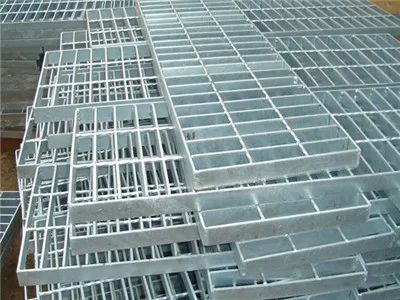
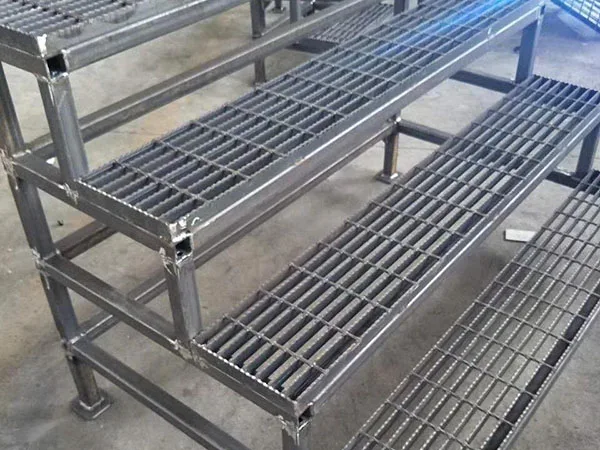
Hot-dip galvanized steel grating is the most widely used type of steel grating, seen in common products such as drainage trench covers, trench covers, trench grating, platform treads, platform steel grating and steel stair treads. It offers excellent performance with light weight and high strength, plus high wear resistance; FRP cover surfaces are given anti-slip and wear-resistant treatment.
Once you grasp these basic concepts, the specifications and sizing recommendations that follow will be much easier to understand.
Material and surface treatment determine how hot-dip galvanized steel grating performs on site over time. For the same steel grating, treatment for a dry indoor environment differs greatly from that for coastal or chemical environments, so the service environment should be stated as the primary condition during selection. The same judgment applies to hot-dip galvanized steel grating.
Supplementary Notes on Hot-Dip Galvanized Steel Grating
The following aspects most need to be confirmed in advance in actual procurement and use:
Galvanized steel grating has many popular features, and these must not be compromised during transport, so workers pack galvanized steel grating carefully. Packing is not a simple job, however, and there are many requirements to observe.
The above points can serve as a pre-purchase checklist; confirm each item before moving to the quotation stage.
Do not simply chase higher grades when selecting material. The material used for hot-dip galvanized steel grating should match load requirements and service environment; over-specifying adds unnecessary cost. The corresponding treatment for galvanized steel grating can be found on the product page - choose according to actual conditions.
Material and Surface Treatment of Hot-Dip Galvanized Steel Grating
Galvanized steel grating is a molded FRP panel with many regularly distributed rectangular and square openings, available with crescent, sanded, double-flat and flat surfaces. Hot-dip galvanized steel grating is generally packed loose or in strapped bundles, depending on the customer. For small shipments that do not need forklift handling, loose packing is more convenient; conversely, for larger shipments handled by forklift, bundling is more convenient.
In short, everything is done for the customer's convenience and to prevent damage in transit. If hot-dip galvanized steel grating is packed as described above, there is no need to worry about its normal use being affected.
Regarding corrosion protection, one thing is easily overlooked: on-site cutting and welding damage the original coating, and these areas need zinc touch-up after construction, otherwise rust often starts from the cut edges. Galvanized grating has the same issue; it is best to include this in the technical requirements at the construction disclosure.
Further notes: Common combinations of galvanized grating and hot-dip galvanized steel grating
In engineering, hot-dip galvanized steel grating is often used together with the components mentioned in this article. The two differ in load carrying and installation practices; when combining them, pay special attention to the connection of support conditions and fixing methods, as junction treatment is often where problems arise. For unified drawings, submit dimensions of both types and our technicians will process them under the same layout logic.
- For all product specifications and theoretical weights by series, visit Steel Grating Product Center
- To estimate cost by size and quantity, use Instant Quote PageSubmit Requirements
- To see how similar projects were executed, refer to Project Cases field applications
FAQ
What is most often overlooked during installation and acceptance?
First, bearing bars installed in the wrong direction reduce load capacity; second, insufficient fixing points or missing zinc touch-up paint; third, support beam spacing inconsistent with the layout drawing. These three items are most often overlooked on site.
How to choose between hot-dip galvanizing and cold galvanizing?
The two anti-corrosion mechanisms differ: hot-dip galvanizing immerses steel in molten zinc to form a metallurgically bonded coating, thick and long-lasting, suitable for outdoor and humid environments; cold galvanizing is electrochemical deposition with a thinner, more uniform appearance, suitable for dry indoor environments or applications requiring high dimensional precision.
Where can I find specific specifications?
our websiteProductsCommon specifications and theoretical weights are organized by series, also available in Instant Quote PageEstimate by size, or contact us directly for sizing advice.
The above is for sizing and construction reference. To verify specific parameters or request a quotation, please visitInstant Quote Page, or contact our technical staff.
Note that this article presents sizing approaches and general practice, and does not constitute a strength commitment for any specific project. For load-bearing safety-critical areas, the design drawings and on-site calculations shall prevail; contact our technical staff if in doubt.