







Hot-dip galvanized steel grating for wastewater treatment is not complicated to apply in real projects; the challenge is matching specifications, material and service environment. This article covers its classification, basic concepts and specifications in turn, giving you a complete framework for judging hot-dip galvanized steel grating.
Application Scenarios for the Classification of Hot-Dip Galvanized Steel Grating in Wastewater Treatment
Typical applications mainly include the following categories, which can help you judge suitability for your project:
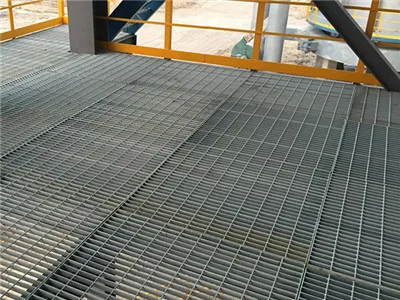
Industrial wastewater discharged without treatment may contain large suspended solids. To remove the larger suspended solids from sewage and stormwater pumping stations and from wastewater treatment plant influent, to protect downstream equipment and to reduce the load on other treatment units, a screening device - steel bar grating - must be installed in the primary treatment stage of the plant.
If your working conditions fall outside the above range, you can provide site photos and dimensions, and our technicians will help assess them.
Regarding corrosion protection, one thing is easily overlooked: on-site cutting and welding damage the original coating, and these areas need zinc touch-up after construction, otherwise rust often starts from the cut edges. Hot-dip galvanized steel grating has the same issue; it is best to include this in the technical requirements at the construction disclosure.
Basic Concepts of the Classification of Hot-Dip Galvanized Steel Grating in Wastewater Treatment
This section first clarifies the basic concepts, structural forms and common names, laying the groundwork for what follows.
The bar screen consists of a set of parallel metal bars or mesh, a screen frame and a rake, and is installed at the inlet end of the wastewater treatment plant. Its main function is to intercept large contaminants in the sewage; otherwise these would block the pumps or process pipes of downstream units.
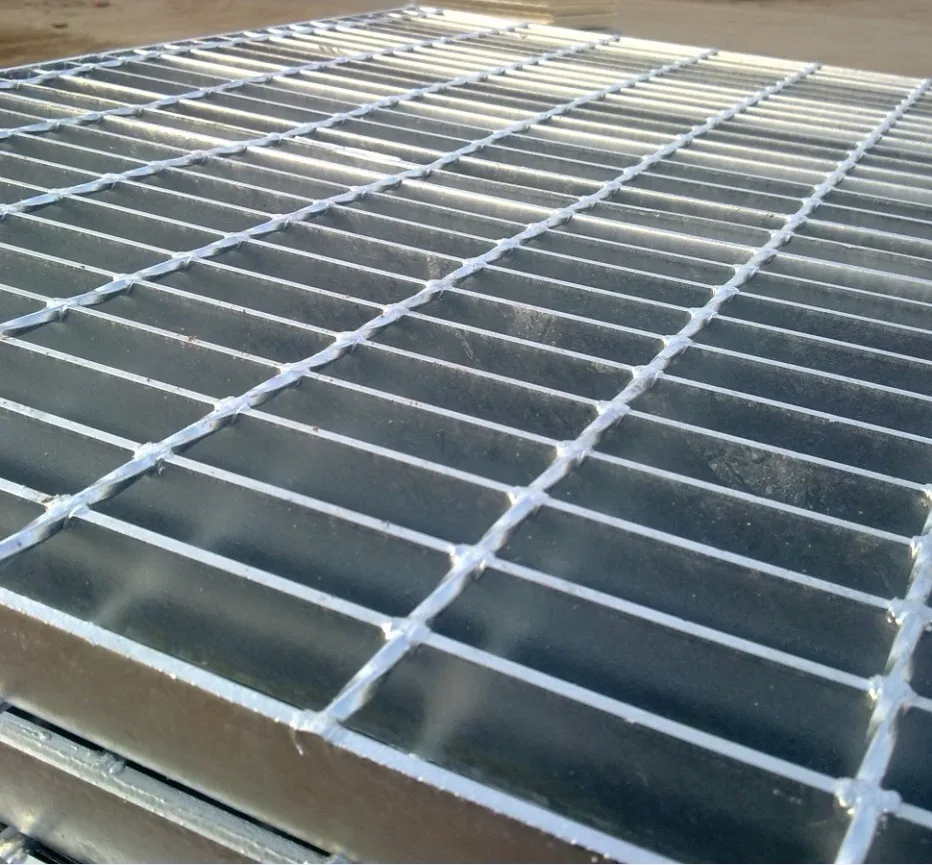
Once you grasp these basic concepts, the specifications and sizing recommendations that follow will be much easier to understand.
Do not simply chase higher grades when choosing material. The material of hot-dip galvanized steel grating for wastewater treatment should match the load requirements and service environment; over-specifying adds unnecessary cost. The corresponding treatment for hot-dip galvanized steel grating can be found on the product page - select according to actual working conditions.
Scope of Application & Engineering Fields
The bar screen is mainly used to retain floating matter larger than the bar gaps, and is generally placed at the inlet of a treatment plant or pumping station to prevent blockage of pipes, machinery and other equipment. Screenings can be removed manually or mechanically. In some cases a grinder shreds the screenings before they are returned downstream of the bar screen, solving the problem of screenings disposal.
Municipal wastewater treatment uses various facilities, equipment and process technologies to separate pollutants from water, converting harmful substances into harmless or useful ones, so the water is purified and resources are fully used.
Different locations within the same application often have different requirements. Taking hot-dip galvanized steel grating for wastewater treatment as an example, specifications for main channels versus corner areas, and for regularly used versus occasional maintenance areas, can be selected separately; combining hot-dip galvanized steel grating by zone is also recommended to balance safety and cost.
Further notes: Common combinations of hot-dip galvanized steel grating and hot-dip galvanized steel grating
Besides what this article covers, hot-dip galvanized steel grating is also common in actual projects. It shares similarities with this article's subject in structure and fabrication; for selection, check span, load and service environment in the same order. If both types of components are used in the same project, we recommend unifying material and surface treatment to avoid later galvanic corrosion or inconsistent appearance.
- For all product specifications and theoretical weights by series, visit Steel Grating Product Center
- To estimate cost by size and quantity, use Instant Quote PageSubmit Requirements
- To see how similar projects were executed, refer to Project Cases field applications
FAQ
How to choose between hot-dip galvanizing and cold galvanizing?
The two anti-corrosion mechanisms differ: hot-dip galvanizing immerses steel in molten zinc to form a metallurgically bonded coating, thick and long-lasting, suitable for outdoor and humid environments; cold galvanizing is electrochemical deposition with a thinner, more uniform appearance, suitable for dry indoor environments or applications requiring high dimensional precision.
Where can I find specific specifications?
our websiteProductsCommon specifications and theoretical weights are organized by series, also available in Instant Quote PageEstimate by size, or contact us directly for sizing advice.
What maintenance is required during daily use?
Maintenance mainly involves periodically checking whether fasteners are loose, whether touch-up paint has peeled off, and whether the panel surface shows obvious deformation or rust. Issues found should be dealt with promptly; overall maintenance is minimal.
The above is for sizing and construction reference. To verify specific parameters or request a quotation, please visitInstant Quote Page, or contact our technical staff.
Note that this article presents sizing approaches and general practice, and does not constitute a strength commitment for any specific project. For load-bearing safety-critical areas, the design drawings and on-site calculations shall prevail; contact our technical staff if in doubt.