







Many projects focus only on price when purchasing hot-dip galvanized steel grating and overlook specification matching and corrosion protection, which often leads to rework later. This article lists the conditions to confirm in order - causes of steel grating deformation, how to avoid deformation, and basic concepts - and explains how to choose under common working conditions. The parts relating to galvanized steel grating can be used directly as a technical briefing reference.
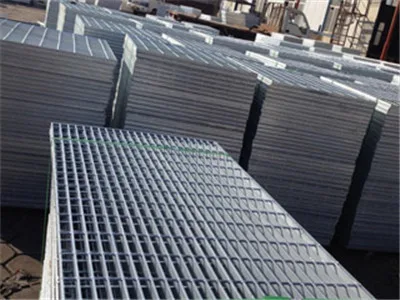
Causes of Steel Grating Deformation
Additional key points are as follows:
1. When steel grating is hot-dip galvanized, exposure to high temperature causes some degree of deformation.
If strong internal stress remains after the steel grating is welded, severe deformation will occur.
2. Internal stress in the steel grating base. If the flat bars are not straightened before welding but placed directly on the jig for welding,
the surface looks straight, but in fact the grating has developed fairly strong internal stress.
If strong external forces are then applied (such as high temperature, dropping or compression), the internal stress shows itself and the grating takes on a horizontal bow shape.
3. Avoid dropping, compression and impact as far as possible when packing and transporting steel grating.
The above points can serve as a pre-purchase checklist; confirm each item before moving to the quotation stage.
Regarding corrosion protection, one thing is easily overlooked: on-site cutting and welding damage the original coating, and these areas need zinc touch-up after construction, otherwise rust often starts from the cut edges. Galvanized grating has the same issue; it is best to include this in the technical requirements at the construction disclosure.
How to Avoid Steel Grating Deformation
The following aspects most need to be confirmed in advance in actual procurement and use:
- When welding steel grating, straighten the flat bars before the welding process. If a flat bar is bent in an arc and is placed directly on the jig for welding without straightening, the surface looks straight but the grating already contains fairly strong internal stress.
- Remove internal stress from steel grating before pickling and hot-dip galvanizing. If the internal stress shows itself, the panel takes on a horizontal bow shape - a situation that arises when hot-dip galvanizing is not handled properly. In modern industrial production this problem generally does not occur.
- Use at least three supports under the steel grating, placed at the two ends and in the middle; never support only the two ends. Too many grating panels stacked on top cause deformation and leave them out of level.
- Keep it stable during transport so that loads are even, and avoid rough handling when loading and unloading - lift and set down gently.
Following the above will prevent steel grating deformation.
The above points can serve as a pre-purchase checklist; confirm each item before moving to the quotation stage.
From order to delivery, the main intermediate steps for hot-dip galvanized steel grating are layout confirmation and surface treatment, both of which take a fairly fixed amount of time. If the schedule is tight, confirm the layout drawing first so that production of hot-dip galvanized steel grating can proceed in parallel.
Further reading: Sizing reference for galvanized grating and hot-dip galvanized steel grating
Besides what this article covers, galvanized grating is also common in actual projects. It shares similarities with this article's subject in structure and fabrication; for selection, check span, load and service environment in the same order. If both types of components are used in the same project, we recommend unifying material and surface treatment to avoid later galvanic corrosion or inconsistent appearance.
- For all product specifications and theoretical weights by series, visit Steel Grating Product Center
- To estimate cost by size and quantity, use Instant Quote PageSubmit Requirements
- To see how similar projects were executed, refer to Project Cases field applications
FAQ
Why do different manufacturers quote different weights for the same specifications?
The main difference lies in the actual measured thickness and tolerance control of the bearing bars. When bars are supplied at the lower tolerance limit, weight per unit area falls below the theoretical value, and load capacity drops accordingly. We recommend specifying thickness tolerance clearly when purchasing.
Can the values in the article be applied directly?
Values in this article come from relevant standard clauses or common industry practice. For actual selection, recalculate based on site span, load class and service environment; direct copying is not recommended.
Where can I find specific specifications?
our websiteProductsCommon specifications and theoretical weights are organized by series, also available in Instant Quote PageEstimate by size, or contact us directly for sizing advice.
The above is for sizing and construction reference. To verify specific parameters or request a quotation, please visitInstant Quote Page, or contact our technical staff.
If you already have drawings or site dimensions, submit them directly and we will help verify specifications and layout, avoiding on-site cutting and rework caused by mismatched models. Without drawings, site photos and approximate dimensions are enough for an estimate.