







Many projects buy sewage treatment plant screens focusing only on price and neglecting specification matching and corrosion protection, which easily leads to rework later. This article lists the conditions to confirm in the order of screen classification, screen bar spacing and flow velocity through the screen, and explains how to make trade-offs under common conditions; the content related to hot-dip galvanized steel grating can be used directly as a reference for technical disclosure.
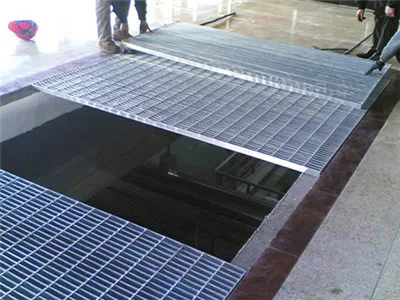
Screens are mainly used to intercept floating matter larger than the bar spacing in the sewage, and are generally installed at the inlet of sewage treatment plants or pumping stations to prevent blockage of pipes, machinery and other equipment. Screenings can be removed manually or mechanically; in some plants a grinder crushes the screenings and returns them downstream of the screen to solve their disposal. Municipal sewage treatment uses various facilities, equipment and process technologies to separate and remove the pollutants contained in the sewage, converting harmful substances into harmless and useful ones, purifying the water and making full use of resources.
Classification of Screens
Main types are classified as follows:
| Type | Features and Uses |
|---|---|
| By bar spacing | Fine, medium and coarse screens have bar spacings of 4-10mm, 15-25mm and over 40mm respectively. |
| By cleaning method | Two types: manually cleaned screens and mechanically cleaned screens. Manual cleaning is mainly for coarse screens. |
| By screen position | Front-cleaned screens and rear-cleaned screens. Front-cleaned screens are cleaned along the flow direction; rear-cleaned screens are cleaned against the flow direction. |
| By screen shape | Flat screens and serrated-face screens. Flat screens are more commonly used in actual projects. |
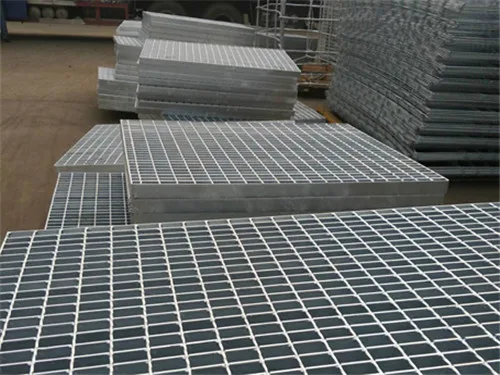
Process Parameters of Screens: three process parameters affect screen performance - bar spacing, flow velocity through the screen and head loss.
Determine the category first and then the specific model; this saves detours and makes comparison with other materials easier.
The details most easily overlooked when reading a specification table are tolerances and end treatment. Sewage treatment plant screens usually keep a machining allowance in the length direction; if the site uses embedded installation, edge sealing and corner-cutting requirements should be stated in advance. Steel grating series products are handled similarly in such details, so it is advisable to mark them clearly on the drawings as well.
Screen Bar Spacing
Additional key points are as follows:
Bar spacing is the distance between two adjacent bars. Screens with spacing over 40mm are coarse screens, those with spacing between 20-40mm are medium screens, and those with spacing under 20mm are fine screens. Generally, coarse screens do not intercept much screenings - only some very large pollutants - but they effectively protect the normal operation of the medium screens. The medium screens play the main role in intercepting screenings, with most screenings captured there, and the fine screens further intercept the remaining screenings.
The above points can serve as a pre-purchase checklist; confirm each item before moving to the quotation stage.
Actual parameters of the same model may differ slightly between manufacturers; acceptance is based on measured values. Key dimensions of sewage treatment plant screens should be spot-checked, especially for batch deliveries. The corresponding parameters of hot-dip galvanized steel grating can be checked in the same way; communicate promptly if deviations are found.
Flow Velocity Through the Screen
Additional key points are as follows:
The flow velocity in the channel before the screen is generally controlled at 0.4-0.8m/s, and the velocity through the screen at 0.6-1.0m/s. The velocity through the screen must not be too high, otherwise soft screenings that should be intercepted will be washed away. At the same time, it must not be too low either: if the velocity through the screen is below 0.6m/s, the velocity in the channel before the screen may fall below 0.4m/s, and coarser sand particles in the sewage may deposit in the channel before the screen.
The above points can serve as a pre-purchase checklist; confirm each item before moving to the quotation stage.
When digesting this content, it is advisable to read it together with the following chapters: the front part clarifies the sewage treatment plant screen itself, and only later do specifications and installation come in. If you only need quick conclusions, read the key points of each section first; for procurement, the related requirements of steel grating series products should also be written into the technical agreement.
Head Loss of Sewage Screens
The following aspects most need to be confirmed in advance in actual procurement and use:
The head loss of sewage passing through a screen is related to the velocity through the screen, generally between 0.2-0.5m. If the head loss through the screen - the water level difference before and after the screen - increases, the flow through the screen may have increased, or more likely the screen is partially blocked. If the head loss through the screen decreases, the velocity through it has dropped; in that case watch for sand deposition in the channel before the screen.
Screen Design Points
- The bar spacing of a screen should be determined by the pump's ability to pass debris.
- In the design of a sewage treatment system, two screens are installed: usually one medium screen before the pump house and one fine screen after it, and the bar spacings should meet the following requirements: 25-40mm for manual cleaning, 16-25mm for mechanical cleaning, with a maximum spacing of 40mm.
- If the screen before the pump has a bar spacing not greater than 25mm, no additional screen is needed before the sewage treatment system.
- Screenings quantity relates to regional characteristics, bar spacing, sewage flow and the type of sewer system. Without local operating data, the following may be used: for bar spacing 16-25mm,
- 1-0.05 m3/103m3/d (screenings/sewage); for bar spacing 30-50mm,
- 03-0.01 m3/103m3/d (screenings/sewage); screenings have a moisture content of 80% and a density of about 960kg/m3.
- Large screens at large sewage treatment plants or in front of pumping stations (daily screenings over 0.2m3) should generally use mechanical cleaning.
- Mechanical screens should number no fewer than 2, with a manually cleaned screen as backup.
- The velocity through the screen is generally 0.6-1.0m/s.
- The flow velocity in the channel before the screen is generally 0.4-0.9m/s.
- The screen inclination is generally 45-70 degrees. Manually cleaned screens with a smaller inclination save effort but occupy more floor area.
- The head loss through the screen is generally 0.08-0.15m.
- A working platform must be provided in the screen chamber, with its surface 0.5m above the highest design water level before the screen. The platform should be equipped with safety and flushing facilities.
- The side aisles of the working platform in the screen chamber should be at least 0.7m wide. The front aisle width: not less than 1.2m for manual cleaning and not less than 1.5m for mechanical cleaning
- The power units of mechanical screens should preferably be located indoors or otherwise protected.
- Structures equipped with screen installations must be provided with good ventilation.
- Lifting equipment should be installed in the screen chamber for maintenance of the screens and other equipment and routine removal of screenings.
The above points can serve as a pre-purchase checklist; confirm each item before moving to the quotation stage.
It is advisable to fix the selection sequence: first define the span and support conditions, then the load requirements, and finally the surface treatment. Following this order, the specifications of the sewage treatment plant screen can basically be determined; picking a model first and then fitting the conditions tends to cause repeated revisions. The same sequence applies to hot-dip galvanized steel grating.
Further Reading: Common Pairing of Hot-Dip Galvanized Steel Grating and Steel Grating Series
In engineering, steel grating series products are often used in combination with the components mentioned in this article. The two differ in load-bearing mode and installation practice, so particular attention should be paid to how support conditions and fixing methods connect; the treatment of interface positions is often where problems most easily arise. If unified drawings are needed, submit the dimensions of both types of components together so that technical staff can lay them out on the same logic.
- For all product specifications and theoretical weights by series, visit Steel Grating Product Center
- To estimate cost by size and quantity, use Instant Quote PageSubmit Requirements
- To see how similar projects were executed, refer to Project Cases field applications
FAQ
Can the values in the article be applied directly?
Values in this article come from relevant standard clauses or common industry practice. For actual selection, recalculate based on site span, load class and service environment; direct copying is not recommended.
What information is needed for custom sizes?
Usually you need to provide the panel dimensions (length x width), bearing bar specs and direction, center-to-center pitch of bearing bars and cross bars, surface treatment, and special requirements such as cutouts, corner notches and banding. Site photos or sketches are even better.
What is most often overlooked during installation and acceptance?
First, bearing bars installed in the wrong direction reduce load capacity; second, insufficient fixing points or missing zinc touch-up paint; third, support beam spacing inconsistent with the layout drawing. These three items are most often overlooked on site.
The above is for sizing and construction reference. To verify specific parameters or request a quotation, please visitInstant Quote Page, or contact our technical staff.
If you already have drawings or site dimensions, submit them directly and we will help verify specifications and layout, avoiding on-site cutting and rework caused by mismatched models. Without drawings, site photos and approximate dimensions are enough for an estimate.