







About welded steel grating, this article covers, item by item: points to note in steel grating transportation, processing plants for the mining industry, and basic concepts, trying to give directly executable judgment methods rather than just principles. If you have drawings or site dimensions, check them against the key points; hot-dip galvanized steel grating can follow the same judgment sequence.
Points to note in steel grating transportation
Items to confirm before procurement are as follows:
1. When loading steel grating, fully consider the customer's usage sequence to avoid secondary damage.
2. When unloading steel grating, use forklifts as much as possible; when hoisting, use the bottom of the packed grating bundle as the lifting position.
3. During transportation, prepare necessary measures to prevent the grating edges from deforming due to collision or even zinc coating damage.
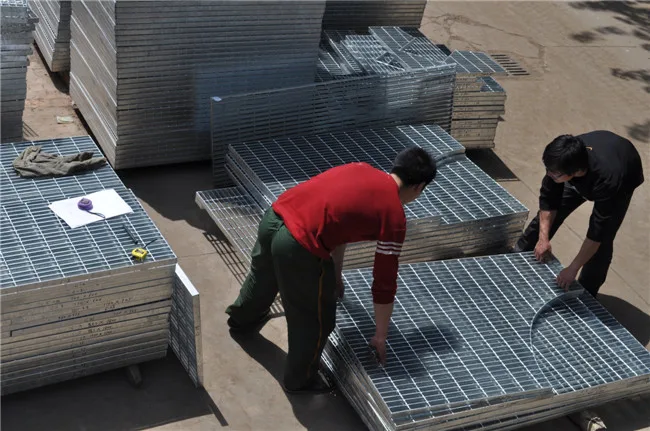
Press-welded steel grating:
Welded steel grating is platform steel grating produced by press-welding machines. It has advantages of high speed and high efficiency, and can produce prototype grating panels 1000mm wide and 6 meters long, then cut and manually welded with edging bars. For large batches of uniform sizes, welded steel grating has an absolute efficiency advantage; grating produced by press-welding machines is beautiful in appearance, smooth at joints, with high seam integrity, similar to integral forming. It accounts for a large proportion in the export industry.
Steel grating is a gully grate material gradually popularized in municipal facilities. Due to the high strength and easy processing of steel, products with corresponding loads can be produced according to different road requirements, while maximizing the water flow cross-section. After hot-dip galvanizing, appearance and long-term use requirements can be guaranteed. Steel grating gully grates have been used for up to twenty years with basically no damage requiring replacement.
Placing the order after confirming these items effectively avoids specification mismatch and on-site rework.
Spending a little more time confirming details at the selection stage often saves a lot of rework later. Once the span, load and environment of welded steel grating are confirmed, the selection of matching hot-dip galvanized steel grating can also be finalized simultaneously, advancing the whole project faster.
Processing plants for the mining industry
Main processing steps and requirements are as follows:
Galvanized steel grating is beautiful and durable: hot-dip galvanizing gives it excellent corrosion resistance and a beautiful glossy surface; good ventilation, lighting, heat dissipation and anti-slip performance; prevents dirt accumulation. It is widely used for platforms, walkways, trestles, trench covers, manhole covers, ladders, fences and railings in petrochemicals, power plants, waterworks, sewage treatment plants, municipal engineering, sanitation engineering and other fields."
Only when control points of each process are implemented can dimensional accuracy and appearance quality of finished products be guaranteed.
For material selection, do not simply pursue high grades. The material of welded steel grating should match load requirements and service environment; over-specifying materials causes unnecessary cost increases. For hot-dip galvanized steel grating, refer to the product page for the corresponding treatment and choose according to actual working conditions.
Further notes: How to combine hot-dip galvanized steel grating and hot-dip galvanized steel grating in use
Besides what this article covers, hot-dip galvanized steel grating is also common in actual projects. It shares similarities with this article's subject in structure and fabrication; for selection, check span, load and service environment in the same order. If both types of components are used in the same project, we recommend unifying material and surface treatment to avoid later galvanic corrosion or inconsistent appearance.
- For all product specifications and theoretical weights by series, visit Steel Grating Product Center
- To estimate cost by size and quantity, use Instant Quote PageSubmit Requirements
- To see how similar projects were executed, refer to Project Cases field applications
FAQ
How to choose between hot-dip galvanizing and cold galvanizing?
The two anti-corrosion mechanisms differ: hot-dip galvanizing immerses steel in molten zinc to form a metallurgically bonded coating, thick and long-lasting, suitable for outdoor and humid environments; cold galvanizing is electrochemical deposition with a thinner, more uniform appearance, suitable for dry indoor environments or applications requiring high dimensional precision.
What is most often overlooked during installation and acceptance?
First, bearing bars installed in the wrong direction reduce load capacity; second, insufficient fixing points or missing zinc touch-up paint; third, support beam spacing inconsistent with the layout drawing. These three items are most often overlooked on site.
Why do different manufacturers quote different weights for the same specifications?
The main difference lies in the actual measured thickness and tolerance control of the bearing bars. When bars are supplied at the lower tolerance limit, weight per unit area falls below the theoretical value, and load capacity drops accordingly. We recommend specifying thickness tolerance clearly when purchasing.
The above is for sizing and construction reference. To verify specific parameters or request a quotation, please visitInstant Quote Page, or contact our technical staff.
The above is general guidance. For a specific project, we still recommend submitting span, load class and service environment to our technicians for review. Steel grating is a load-bearing component; rework caused by wrong specification choices costs far more than the time spent on upfront calculation.